Advising in Language Learning (ALL) brings together examples of advising practice and research from various international contexts in a fast-developing field. A theoretical model based on constructivism and sociocultural theory (the Dialogue, Tools and Context Model) is proposed and supported thoughout the book, as each of the contributions focuses on one or more areas of the model. In this volume the editors set out the general aims and understandings of the field, illustrating the innovative manner in which advisors around the world are working with learners and researching the practice of ALL.
Advising in Language Learning (ALL) brings together examples of advising practice and research from various international contexts in a fast-developing field. A theoretical model based on constructivism and sociocultural theory (the "Dialogue, Tools and Context Model") is proposed and supported thoughout the book, as each of the contributions focuses on one or more areas of the model. In this volume the editors set out the general aims and understandings of the field, illustrating the innovative manner in which advisors around the world are working with learners and researching the practice of ALL.
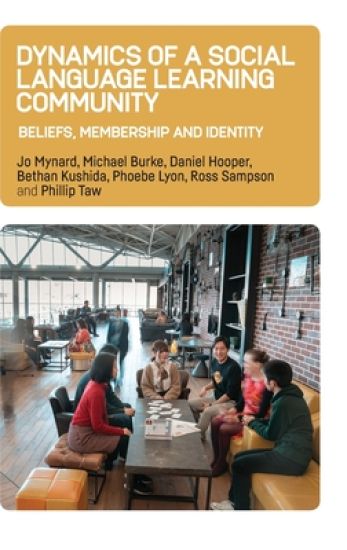
This book provides an in-depth exploration of psychological phenomena affecting language learning within a social learning space. Drawing on the literature from identity in second language learning, communities of practice and learner beliefs, in conjunction with other individual difference factors, it uncovers perceptions and assumptions that language learners have of the space and how they affect their relationship with it and the people within it. Readers will gain a greater understanding of how psychological phenomena shape a space and how a learning space can contribute to a wider learning ecology. This book will appeal to researchers interested in language learning beyond the classroom and psychological aspects of language acquisition, as well as to practitioners and professionals who are supporting learners outside the classroom.
This book provides an in-depth exploration of psychological phenomena affecting language learning within a social learning space. Drawing on the literature from identity in second language learning, communities of practice and learner beliefs, in conjunction with other individual difference factors, it uncovers perceptions and assumptions that language learners have of the space and how they affect their relationship with it and the people within it. Readers will gain a greater understanding of how psychological phenomena shape a space and how a learning space can contribute to a wider learning ecology. This book will appeal to researchers interested in language learning beyond the classroom and psychological aspects of language acquisition, as well as to practitioners and professionals who are supporting learners outside the classroom.
Reflective Dialogue presents professional educators with the necessary background and skills to engage in reflective dialogue with language learners effectively. It draws on work in the fields of advising in language learning, reflective practice, sociocultural theory, language learner autonomy, counseling, and life coaching to provide both an introduction to the field and guidance for researching advising in action. The book also includes a wide variety of practical ideas and over 30 sample dialogues that offer clear demonstrations of the concepts discussed in practice. This dynamic textbook’s practical approach illustrates how reflective dialogue can promote language learner autonomy and how language advising can be implemented successfully both inside and outside the classroom.
Reflective Dialogue presents professional educators with the necessary background and skills to engage in reflective dialogue with language learners effectively. It draws on work in the fields of advising in language learning, reflective practice, sociocultural theory, language learner autonomy, counseling, and life coaching to provide both an introduction to the field and guidance for researching advising in action. The book also includes a wide variety of practical ideas and over 30 sample dialogues that offer clear demonstrations of the concepts discussed in practice. This dynamic textbook’s practical approach illustrates how reflective dialogue can promote language learner autonomy and how language advising can be implemented successfully both inside and outside the classroom.
This volume contains a collection of articles which were originally published between 2006 and 2010 in the IATEFL Learner Autonomy SIG's newsletter Independence. All of the articles were written in connection with a project which likened exploring the multifaceted concept of learner autonomy to opening a metaphorical "can of worms." Ten "worms" were released into the academic community, resulting in a series of short articles. The following areas are explored in this collection: Assessment, Classroom research, Counselling / advising, Culture, Learner training, Motivation, Self-access, Teacher autonomy, Teacher education, and Technology. 50 authors contributed to the book and the result is a highly original and, at times, humorous take on aspects of learner autonomy. Despite the light-hearted approach, the contributions are grounded in research and practice and come from a range of countries and contexts, making this an essential resource for anyone interested in the field of language learner autonomy. The book was originally published as an ebook in 2011 by IATEFL. It has now been republished as an ebook and paperback book in the Autonomous Language Learning Series series.Themes and contributing authors Introduction by Carol J Everhard Assessment. Chapters by Hanne Thomson, Sanja Wagner, Viljo Kohonen, and Gina Oxbrow Classroom Research. Chapters by Lienhard Legenhausen, Klaus Schwienhorst, Naoko Aoki, Dieter Wolff, and Jose Lai Counselling / Advising. Chapters by Marina Mozzon McPherson, Sarah Toogood, Sara Cotterall, E. Desiree Castillo Zaragoza, Mia Victori, and Sally Logan and Moira Hobbs Culture. Chapters by Adrian Holliday, Bojana Petric, B. Kumaravadivelu, and David Palfreyman Learner Training. Chapters by Barbara Sinclair, Gail Ellis, and Leni Dam Motivation. Chapters by Ema Ushioda, Terry Lamb, Martin Lamb, Tim Murphey, and David McLoughlin Self-Access. Chapters by Richard Pemberton, Lucy Cooker, Humberto Cervera Rosado, Alex Ding, Anna Gorevanova and Jamilya Gulyamova, and Bruce Morrison Teacher Autonomy. Chapters by Fl via Vieira, Isabel Barbosa, Manuel Jim nez Raya, and Leslie Bobb Wolff Teacher Education. Chapters by Leni Dam, June Miliander, Jos Lu s Vera Batista, Anja Burkert, and Frank Lacey Technology. Chapters by Vance Stevens, Dafne Gonzalez and Rubena St. Louis, and Deborah Healey Conclusions by Jo Mynard