Kirjojen hintavertailu. Mukana 11 528 982 kirjaa ja 12 kauppaa.

Kirjahaku

Etsi kirjoja tekijän nimen, kirjan nimen tai ISBN:n perusteella.

15 kirjaa tekijältä Joan Lock

Princess Alice Disaster

Princess Alice Disaster

Joan Lock

Robert Hale Ltd
2013
nidottu
The collision of the Princess Alice pleasure steamer with the Tyne collier, Bywell Castle, in the Thames in September 1878 resulted in Britain's worst-ever inland waterway accident. Almost 650 Princess Alice passengers and crew died. Whole families were wiped out; many children were left orphans; parents childless. The nation wept. Joan Lock describes vividly the lead up to the accident, the disaster itself and its aftermath. She then delves into the quarrels that the tragedy devolved into, as each side blamed the other during the extended inquiries to discover just how the accident happened and why so many people drowned. In the process, the author makes a startling discovery...
The British Policewoman

The British Policewoman

Joan Lock

Robert Hale Ltd
2014
nidottu
Here, now fully updated for the twenty-first century, is the complex and fascinating history of the formation of the British Women Police. Full of drama, intrigue and humour, it also captures, through well-authenticated primary material, the colour and manner of the times. Remarkable women abound in this book, from the wealthy and eccentric Margaret Damer Dawson to the excitement-hungry ex-suffragette Mary Allen; and from the alluring but ill-starred Mrs Stanley to the tireless Mrs Peto. A few famous faces like Winston Churchill, Lady Astor and Adolf Hitler also feature, as does the women police's arch-enemy: the magistrate Frederick Mead. The pressure for the appointment of women police began well before World War I. Anti-white-slave traffic organizations felt they would help to stem the flow of prostitutes to and from Europe and suffragettes wanted them to ensure fairer treatment for women from the police and courts of law. But it was the Great War that gave them a launching pad for their battle. Early policewomen fought much public and police prejudice, wondering all the time how far to hold out for their ideals and how much to compromise for the sake of some official recognition; the eternal problem when breaking new ground. Their story, which was played out not only in the streets and courts of Great Britain and the House of Commons but in a defeated Germany and strife-torn 1920s Ireland, as well as in prohibition-era USA, ended in victory with their official integration into the force in the 1970s, but the battle did not end there, as our story shows...
Dead Letters

Dead Letters

Joan Lock

The History Press Ltd
2012
nidottu
It is a beautiful warm August day in 1880: perfect weather for the annual Metropolitan Police Annual Fete held at Alexandra Palace. Inspector Best is summoned to uncover the identity of 'Quicksilver' who has sent an anonymous note threatening to cause an horrific explosion at the event. When a second note is received and its threats become increasingly confusing with their literary allusions, Best seeks out the help of Helen Franks, a close friend from the past. However, is Quicksilver really intent on causing mass injury on this fine day, or is his desire of a more personal nature?
Dead Image

Dead Image

Joan Lock

The History Press Ltd
2012
nidottu
The explosion was heard twenty miles away. It killed boatmen and wrecked the exotic villa of Lawrence Alma-Tadema, the fashionable St John’s Wood artist. But what caused the 1874 Regent’s Park explosion? Fenian bombs? Sabotage by rival railways or other firms? Or was it something personal? And whose was the other body found in the canal? An artist’s model? The missing King’s Cross barmaid? Or another victim of the so-called Thames murderer? As he struggles to find the answers, Scotland Yard’s Sergeant Ernest Best straddles the conflicting worlds of art, wealth and privilege and that of the poverty-stricken London boatman in an intriguing mystery that will change his life forever. The first book in the Detective Sergeant Best series.
Dead Born

Dead Born

Joan Lock

The History Press Ltd
2013
nidottu
‘A gripping and satisfying murder mystery with an unguessable final twist’ - Mystery Women‘[A] gripping Victorian mystery’- Publishers Weekly‘Asking an historian to review a historical novel is asking for trouble – but Joan Lock’s book is something else. Her knowledge of London and its policing in the 19th century makes this into a very different kind of novel – one with an extremely realistic setting’- London Archive Users ForumWhen the bodies of a number of babies are found scattered around Islington, Detective Sergeant Best is sent undercover to lodge next door to a suspected baby farm. He shadows an alleged 'child dropper' onto a Thames pleasure steamer and finds himself caught up in Britain's worst civilian tragedy — the 1878 sinking of the Princess Alice — a horrific experience which will haunt Best forever. Meanwhile, his determination to avenge the death of a young girl he had befriended and save the life of another becomes a crusade.
Please, Nurse!

Please, Nurse!

Joan Lock

Orion (an Imprint of The Orion Publishing Group Ltd )
2013
nidottu
Joan Lock's warm and nostalgic account of her three years of training as a young student nurse in the early 1950s. Perfect for fans of CALL THE MIDWIFE.When Joan Lock began her formal training as a young nurse in the 1950s, she was unprepared for the strict discipline and long hours which were to follow and quickly realised she was no Florence Nightingale. Her honest and humorous account of the next three years reveals her most intimate experiences of being a nurse: from dealing with temperamental surgeons to fighting off flirtatious patients. Labelled a trouble-maker, Joan and her friends tested their strict Sisters' patience as they climbed through windows, slept through lectures and broke every thermometer that passed through their hands. But through it all, Joan found herself touched by the people she met and their heart-warming stories.
Dreadful Deeds and Awful Murders: Scotland Yard's First Detectives 1829-1878

Dreadful Deeds and Awful Murders: Scotland Yard's First Detectives 1829-1878

Joan Lock

Createspace Independent Publishing Platform
2014
nidottu
Scotland Yard's early history in Victorian London has never previously been told. Dreadful Deeds and Awful Murders fills the gap, painting a vivid picture of the difficulties and considerable triumphs of London's first detectives. The author presents detailed and intriguing accounts from the detectives' viewpoint, showing how they worked before the days of fingerprinting, blood tests, telephones or typewriters - when hunches really did form a large part of a sleuth's armoury. The cases examined are set in their social and political context: the fledgling detectives had to pursue culprits in the face of severe press criticism, intense public interest, and frequent antagonism from magistrates, coroners, lawyers, and even prison governors. Joan Lock draws extensively on contemporary reports and descriptions in newspapers, journals, police records, and fiction (including the works of Charles Dickens) in telling the story of determined and often brave pioneers.
Lady Policeman: Memoirs of a Woman PC in the Metroplitan Police

Lady Policeman: Memoirs of a Woman PC in the Metroplitan Police

Joan Lock

Createspace Independent Publishing Platform
2015
nidottu
So many people asked the author: 'But what does a policewoman do' Six years policing London's West End in the 1950s provided plenty of answers. In this book, Joan Lock gives them with honesty and humour. She takes us behind the scenes, into the life of an ordinary police officer - not the familiar CID crime buster. We accompany her 'on the beat' for early, late and night shifts, and experience the public's friendly, curious or downright rude reactions to a woman in authority. The lady policeman makes mistakes, is less than efficient at times, and even breaks some of the sacred disciplinary rules. Her work included dealing with runaway juveniles, attempted suicides, abandoned babies and the mental disturbed. She sees an astonishingly varied cross-section of London life: Piccadilly Circus at dawn, devoid of traffic and still wet from the attention's of the council's cleaning department; the Mall at the Trooping of the Colour ceremony; the foyer of a cinema on a royalty-studded premiere; hostels and hospitals, prisons and courtrooms. There are visits to nightclubs for observations or raids, and glimpses into training school and 'The Yard'. Her 'patch' took in cosmopolitan Soho and wealthy Mayfair where prostitutes lined many of the streets. In the line of duty Joan even posed as one of them. 'On the whole, ' she says, 'it was quite an experience.'
Dead Fall

Dead Fall

Joan Lock

Createspace Independent Publishing Platform
2016
nidottu
'The characters are believable but even more so is the setting.' - Historical Novels Review A real murder occurs on the stage of the London theatre where Detective Inspector Best and his wife are enjoying a night out. The Victorian theatre is only just emerging into respectability, which is threatened when another death follows - a murder which could be a reaction against one of the Victorian theatres most traditional practices. The evocative array of suspects includes an all powerful actor-manager, the resentful Super and Property Masters, a crusading journalist turned playwright, a disgruntled dresser, the family of a ballerina who died in a theatre fire and, not least, members of the audience who indulge in a curious form of blackmail.
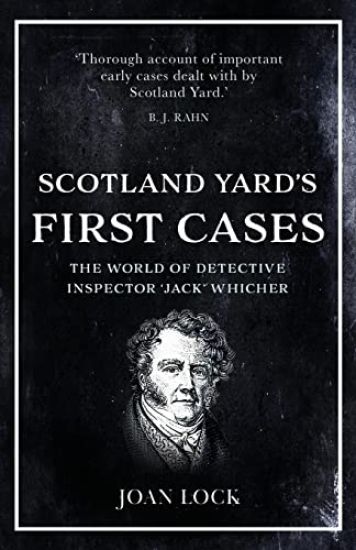
Scotland Yard's First Cases

Scotland Yard's First Cases

Joan Lock

LUME BOOKS
2022
pokkari
When Scotland Yard's first detective branch was set up in 1842 crime was very different from today.The favoured murder weapon was the cut-throat razor; carrying a pocket watch was dangerous; the most significant clue at a murder scene could be the whereabouts of a candlestick or hat; large households (family, servants and lodgers) complicated many a case and servants sometimes murdered their masters.Detectives had few aids and suffered many disadvantages. The bloody handprints found at two early murder scenes were of no help, there being no way of telling whether blood (or hair) was human or animal. Fingerprinting was fifty years away, DNA profiling another hundred and photography was too new to help with identification. All reports had to be handwritten with a dip pen and ink and the only means of keeping contact with colleagues and disseminating information was by post, horseback or foot.In spite of these handicaps and severe press criticism, the detectives achieved some significant successes. Joan Lock includes such classic cases as the First Railway Murder, as well as many fascinating, fresh reports, weaving in new developments like the electric telegraph against a background of authentic Victorian police procedure.Charles Dickens said that Scotland Yard detectives gave the impression of leading lives of strong mental excitement. Readers of this book will understand why.Praise for Joan Lock...'Thorough account of important early cases dealt with by Scotland Yard.' - Professor B. J. Rahn'A better picture of the development of the detectives and the CID in the 19th century Metropolitan Police than any other book I have read.' - Alan Moss'Vivid detail' - Historical Novel SocietyJoan Lock is an ex-nurse and former policewoman. Joan has also written short stories, radio plays, radio documentaries and eight crime novels. She lives in London.
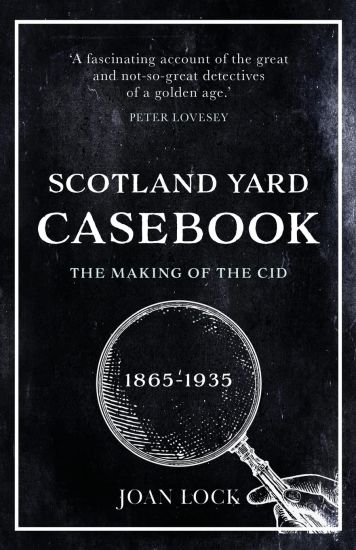
Scotland Yard Casebook

Scotland Yard Casebook

Joan Lock

LUME BOOKS
2022
pokkari
In 1878 the Criminal Investigation Department replaced Scotland Yard's corrupt and discredited Detective Branch.In this classic story of the early days of detection, Joan Lock tells the fascinating story of the creation of the CID, the scandal which preceded it, and the successes and failures of the new organization, including early cases such as the four murders by Ernest Southey, the ferocious outbreak of dockland killings in 1869 and the more familiar Bravo, Neill Cream and Jack the Ripper crimes.First World War spy and Dear John jealousy murders were followed by Roaring Twenties' swindles and the arrival of motor car bandits - which in turn led to the formation of the Flying Squad and the adoption of mobile wireless telegraphy.The introduction of women detectives is also discussed and the difficulties they experienced in establishing their place in a male dominated force.Joan Lock closes the gap between the academic police historian and the writer of popular true crime, making this book a fascinating read for crime experts and the general reader alike.