Kirjojen hintavertailu. Mukana 12 368 964 kirjaa ja 12 kauppaa.

Kirjahaku

Etsi kirjoja tekijän nimen, kirjan nimen tai ISBN:n perusteella.

9 kirjaa tekijältä Joan MacLeod

Amigo's Blue Guitar

Amigo's Blue Guitar

Joan MacLeod

Talonbooks
1997
pokkari
A college student's life is given meaning when he chooses to sponsor Elias, a Salvadoran refugee, as a class project. When Elias arrives, his hosts Sander and his family learn what it means and feels to be a refugee and how to relate to someone who has endured such intense personal grief. The warmth and humour of the characters invite us to embrace the situation--be at once moved and threatened by it--and to consider how we ourselves would react. Cast of 2 women and 3 men.
2000

2000

Joan MacLeod

Talonbooks
1997
pokkari
According to Joan MacLeod, her play 2000 grew out of a story she read about a cougar that had wandered into a sports arena in Vancouver, BC: "I was intrigued by the notion of the wild invading the city and the city invading the wild, by the idea of things being not quite right in nature and the approach of the millennium." In the play, the cougar appears to embody the precarious and increasingly circumscribed state of nature. Each character relates to nature in a different way, whether it be with distrust, cynicism, awe or longing. The figure of the "Mountain Man," who has abandoned all of his civilized ways, even speech, to live among the animals of the forest, provides a meeting ground between humanity and nature. Like the cougar, increasingly crowded by a rapidly encroaching civilization, he scavenges what precious little remains of the beautiful animal in all of us. Cast of 3 women and 2 men.
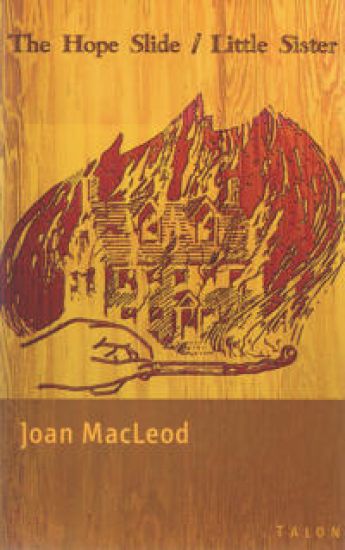
The Hope Slide / Little Sister

The Hope Slide / Little Sister

Joan MacLeod

Talonbooks
1999
pokkari
Two plays by award-winning playwright Joan MacLeod. Little Sister was first performed at Theatre Direct in Toronto in 1994 and won the Chalmers Canadian Play Award, Theatre for Young Audiences in 1995. The Hope Slide was first performed at the Tarragon Theatre in Toronto in 1992 and won the Floyd S. Chalmers Canadian Play Award in 1993.
The Shape of a Girl / Jewel

The Shape of a Girl / Jewel

Joan MacLeod

Talonbooks
2002
pokkari
In an imaginary letter to an absent older brother, Braidie struggles to understand the torture and killing of a teenage girl by a group of her school-mates. MacLeod's young protagonist enters all the bright open avenues of peer-group play and the dark blind alleys of individual and collective terror, as she discovers within herself both the capacity for and the conflict between impulses of good and evil. In thinking back on the history of her own tight-knit group of friends, she begins to see how in the excitement of belonging to a ritualized, secret collective, the self is created by the increasing dehumanization of the other--of both the bully and the victim. The Shape of a Girl goes far beyond a simple dramatization of the seemingly inexplicable code of silence and tacit complicity which surrounded the sensationalized Reena Virk murder in 1997 on which the play is based. It speaks eloquently and compassionately to a world increasingly dominated by all forms of collectivised and ritualized tribalist hatred, and offers the embrace of trust as the only way out of this circle of violence.Jewel is also based on a real-life catastrophe--the sinking of the Ocean Ranger, an oil rig off the coast of Newfoundland, on Valentine's Day, 1982. Three years later, a widow, Marjorie Clifford, at home in her trailer in Fort St. John, British Columbia, begins to take the first step in understanding that the humanity of love, in all of its tentative frailty, uncertainty and promise, can free a life paralyzed and dominated by loss.
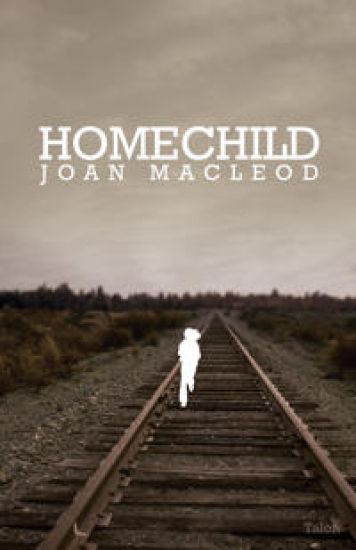
Homechild

Homechild

Joan MacLeod

Talonbooks
2008
pokkari
Between 1860 and 1930 an officially sanctioned child migration from Britain to Canada took place. During that time over 80,000 children, unaccompanied by their parents or siblings and often separated from them forever, were placed at Canadian factories and farms where, more often than not, they were exploited as indentured child labourers. Alistair is a retired farmer who lives with his sister-in-law Flora and son Ewan on their family homestead. No longer a profitable or even a viable enterprise, the fields have long been leased out and the house is in serious disrepair. The scattered remnants of the family are vainly trying to hold it together and not doing a very good job of it. Lorna, Alistair's daughter, comes to visit for the first time since her marriage failed, for a shaky reunion that soon turns acrimonious. Alistair, grumpy and distracted as ever, suffers a stroke and his illness finally releases the memory of a secret that he had buried deep within himself years ago. He longs for Katie, the younger sister he was forced to leave behind in Scotland when he came to Canada in 1922 as a "home child."This is a play about family secrets and about the many forms of love, longing and aspiration they conceal. And it's about loss. It takes a piece of history from a dark corner of our country's past and dramatizes its tragic impact through the generations of one family. Homechild is set in Glengarry County in eastern Ontario where both of Joan MacLeod's parents were raised on farms just a few miles apart. Each had home children working on their family's farms in the 1920s, something she wasn't aware of when she first started her research for this play. Homechild premiered at The Belfry in Victoria on September 18, 2007.
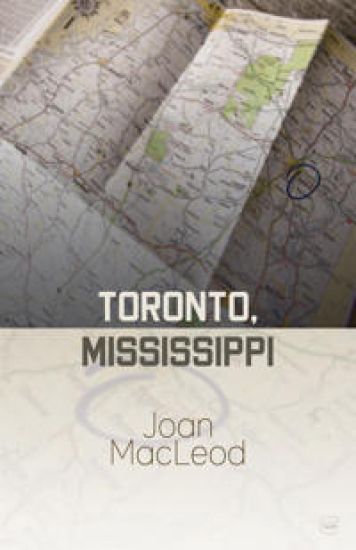
Toronto, Mississippi

Toronto, Mississippi

Joan MacLeod

Talonbooks
2008
pokkari
Jhana, is a beautiful eighteen-year-old who lives with her mother Maddie and their boarder Bill, a sometime poet. Jhana's father, King, shows up partway through the first act and it is his presence for the first time in a long time in this unusual family that really galvanizes all four of the characters into action. King is an Elvis impersonator, getting sick and tired of doing the same old song and dance. Jhana is mentally handicapped and working at her first "job" in a workshop for disabled people where she puts four screws in a bag and then another four screws in another bag and so on. In her mind she is on stage at Maple Leaf Gardens singing and strutting her stuff, just like her father does. Maddie is trying to keep it together while working full time as a teacher and as a mother, too busy to admit to her own loneliness. Bill is harbouring all sorts of feelings for Maddie that he is afraid to act on. While this is a play about the power of family and love, it is finally a play about self-destruction and creation. At its heart is Jhana, whose character begs the question whether the other characters, in their own ways, are any less handicapped.She's good company--funny, driven, passionate and yearning for the same things those around her yearn for--if they can get over their preconceptions about the mentally handicapped and give her the space to achieve her dreams. The play came out of the author's decade-long involvement working with mentally handicapped adults and children as a life skills instructor. Re-released in a revised and updated edition, it is Joan MacLeod's first full-length play, receiving more than twenty international productions over the past two decades.
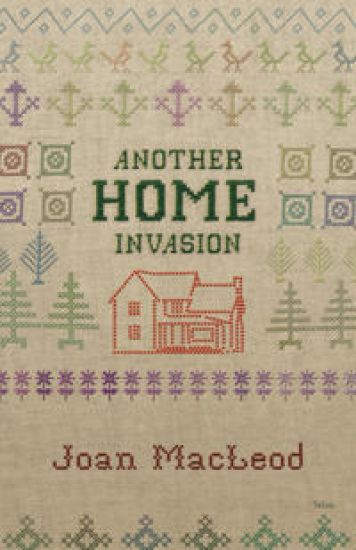
Another Home Invasion

Another Home Invasion

Joan MacLeod

Talonbooks
2009
pokkari
We, each of us in the civilized Western world, live in a space inviolate. "Our home is our castle," as the saying goes: our shelter from the intrusion of the weather and other "outside influences;" our defence against physical and mental threats, real and imagined, to our private space; vault to our accumulated private property; theatre of our desires and aspirations; arena of our private victories and defeats, no matter how large or small; harbour of our secrets and fears; refuge to our children and family. Yet the very protection and security our home provides us with also isolates us from our neighbours, our relatives, and the public affairs of our communities--constructs a garrison of anonymity around us and our loved ones in which we can become unknown, unloved--no one that anyone need be concerned nor care about. We see the recent rise of home invasions in our society as a violation of our most intimate places: the perpetration of heinous crimes upon the aged, the disabled, the helpless, victimizing our citizens precisely where rules of hospitality and generosity should govern our social relations.All this and more is the subject of Joan MacLeod's perceptively poignant play, Another Home Invasion, where "another" carries both its meanings: something commonplace; and something of an entirely different kind and nature. Of course this play involves the hapless, substance-abusing, middle-aged petty criminal we expect to find there, but is he the real threat to the home's occupants? He even shows up for a return visit. Who, then, are the real perpetrators of the heartless betrayal of the elderly couple who lives here: who is it that's robbing them of their possessions, their security, their relationship, their family--their home? The answers to these questions are as surprising as they are unsettling.
The Valley

The Valley

Joan MacLeod

Talonbooks
2014
pokkari
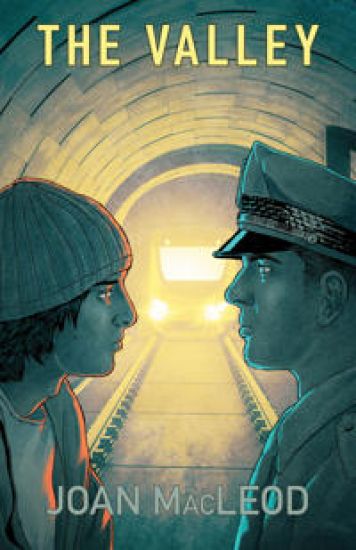
Eighteen-year-old Connor, an aspiring author whose fantastical stories foretell his growing struggle with depression, can't wait to be free of his adverb-wielding, solve-it-all mother, Sharon. But six weeks after leaving for university, he drops out and returns home. Dan Mulano is an infatuated new dad and well-meaning police officer whose selfishness is veiled by the lofty aspirations he holds for his family. His wife, Janie, a former addict and exhausted new mom, struggles to cope with the challenges of recovery in the midst of her battle with postpartum depression, which Dan dismisses as "just hormones." A precipitous incident brings the two families together. When Connor's erratic behaviour at an underground train station requires police intervention, Dan responds to the call and makes the arrest, but the teen's jaw is broken during the incident. Is it police brutality or self-harm? For Sharon, there is no question; she portrays Dan as a reckless cop in the media, while he remains silent, refusing to break protocol and tell his story.Inspired by an event in British Columbia that shattered the public's confidence in the police -- the 2007 Tasering death of Robert Dziekanski during his arrest at the Vancouver airport -- The Valley dramatizes the volatile relationship between law enforcement and people in the grip of mental illness. In addressing this fraught relationship, award-winning playwright Joan MacLeod empathizes with both parties, each of whom is guided by good intentions but equally challenged by their own cultural biases and flawed humanity.
Gracie

Gracie

Joan MacLeod

Talon Books,Canada
2018
pokkari
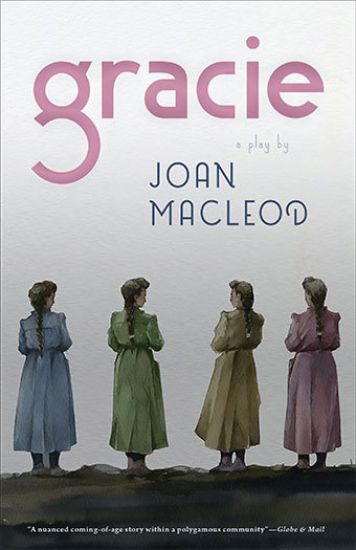
As the play opens, Gracie is eight years old and moving with her mother, brother, and sisters from her community in the southwest United States to a community in south eastern British Columbia, Canada. Her mother has been assigned to a new husband; she becomes his eighteenth wife. Gracie may be eight when the play begins but she is fifteen when the play ends - again with a journey as Gracie leaves the community. In five acts, Gracie plays herself at five ages and also gives voice to thirteen other characters - including her brother Billy who is forced out of the community a couple of years after the family arrives in Canada. The play is a work of fiction but it is inspired by the history of polygamist communities in both Canada and the United States. When the play opened in January 2017, two days later three persons from Canada's largest polygamist community went to trial for transporting child brides. Gracie loves her family and her faith is strong and a source of comfort to her. Although the play examines practices that are abhorrent critics have noted that a strength of the play is that it does so without judgment. Gracie provides a lens to a complex and secret world. And although it takes place in a community shut off from the outside world it also has a particular resonance for issues at the fore right now - fundamentalism and basic human and religious rights. It is also a terrific vehicle for a young actor.