Kirjojen hintavertailu. Mukana 12 414 591 kirjaa ja 12 kauppaa.

Kirjahaku

Etsi kirjoja tekijän nimen, kirjan nimen tai ISBN:n perusteella.

5 kirjaa tekijältä Jocelyn Harris

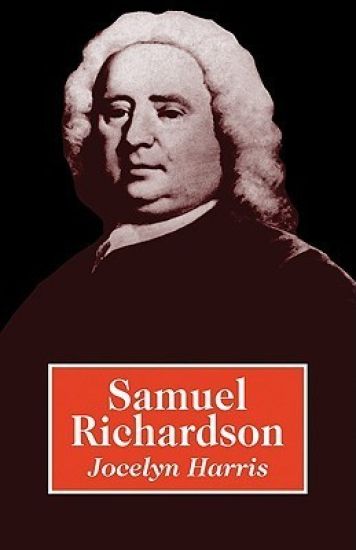
Samuel Richardson

Samuel Richardson

Jocelyn Harris

Cambridge University Press
1987
pokkari
This book provides a concise introduction to Richardson, by combining a close reading of Pamela, Clarissa and Sir Charles Gerandison with a discussion of their central themes. An outsider by birth, education and profession, Richardson found common cause with women in a world that needed change. Employing forms familiar to them, letters and tales of courtship and marriage, he urged his mainly female readers to train their powers of reason and morality by debating the issues of his novels. Dr Harris explores Richardson's vision that the relationship between men and women is as politically charged as that between monarch and subject. In Clarissa this relationship is imaginatively represented by means of the characters' archetypes - Evne, Lucretia and queen Elizabeth on the one hand, Sarah, don Juan, Fault and King on the other. In Grandison, Richardson shows men what they must be if they wish to marry women like Clarissa, and argues that marriage, then the necessary female destiny, can only thus be made to work to women's advantage.
Jane Austen's Art of Memory

Jane Austen's Art of Memory

Jocelyn Harris

Cambridge University Press
2003
pokkari
Jane Austen’s Art of Memory offers a radical new thesis about Jane Austen’s construction of her art. It argues that, with the help of her tenacious memory, she engaged in friendly dialogue with her predecessors, the English writers, a process that the eighteenth century called ‘imitation’. Her allusions, far from being random, thicken and complicate her novels in a manner that is poetic rather than mimetic. Difficult critical cruxes resolve when her books are set within her own great tradition which included Locke, Richardson, Milton, Shakespeare, and (unexpectedly) Chaucer, and she is found to be an educated and supremely conscious writer.
A Revolution Almost Beyond Expression

A Revolution Almost Beyond Expression

Jocelyn Harris

University of Delaware Press
2007
sidottu
To praise Jane Austen's novels only as stylistic masterpieces is to strip them of the historical, cultural, and literary contexts that might otherwise illuminate them. By focusing primarily on the political, historical, satiric, actively intertextual, and deeply sexualized text of Persuasion, Jocelyn Harris seeks to reconcile the so-called insignificance of her content with her high canonical status, for Austen’s interactions with real and imagined worlds prove her to be innovative, even revolutionary. This book answers common assertions that Austen’s content is restricted; that being uneducated and a woman, she could only write unconsciously, realistically, and autobiographically of what she knew; that her national and sexual politics were reactionary; and that her novels serve mainly as havens from reality. Such ideas arose from literal readings of Austen’s letters, the family’s representation of her as a gentle, unlearned genius, and the assumption that she could not write about the Napoleonic Wars. Persuasion is, though, permeated with references to war as well as peace. Harris suggests that Persuasion may respond to Walter Scott’s review of Emma, Austen’s correspondence with Fanny Knight, hostile reviews of Frances Burney’s The Wanderer, contemporary attacks on the novel, and her own defense of fiction in Northanger Abbey. Self-critical in revision, Austen calls on Byron, Shakespeare, Napoleon, and Cook to modify wartime constructions of English masculinity such as Southey’s Nelson. Similarly, her critique of Scott’s first three novels confirms that her attitude toward class and gender is far from reactionary. Persuasion reveals Austen’s patriotism, her pioneering lyricism, and her hopes for sexual equality. Although like Turner she portrays Lyme as sublime and liminally open to change, she attacks Bath, a city shadowed by mortality and corruption, with a savage indignation characteristic of contemporary satire. Persuasion sketches a society founded on merit and distributive justice, its turn from woe to joy derived not so much from her own life as from the seasonal resurrections of Shakespeare’s late tragicomedies, her religious beliefs, and the nation’s mixed grief and jubilee after Waterloo. Harris draws on new information to argue that Austen is an outward looking, intertextually aware, and remarkably self-conscious author.
Satire, Celebrity, and Politics in Jane Austen

Satire, Celebrity, and Politics in Jane Austen

Jocelyn Harris

Bucknell University Press
2017
sidottu
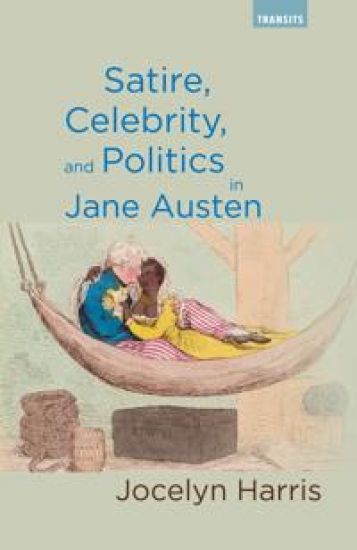
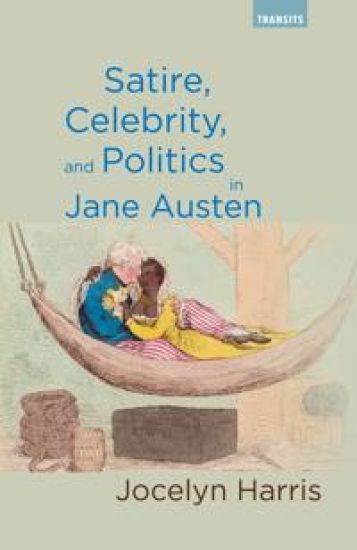
In Satire, Celebrity, and Politics in Jane Austen, Jocelyn Harris argues that Jane Austen was a satirist, a celebrity-watcher, and a keen political observer. In Mansfield Park, she appears to base Fanny Price on Fanny Burney, criticize the royal heir as unfit to rule, and expose Susan Burney’s cruel husband through Mr. Price. In Northanger Abbey, she satirizes the young Prince of Wales as the vulgar John Thorpe; in Persuasion, she attacks both the regent’s failure to retrench, and his dangerous desire to become another Sun King. For Elizabeth Bennet in Pride and Prejudice, Austen may draw on the actress Dorothy Jordan, mistress of the pro-slavery Duke of Clarence, while her West Indian heiress in Sanditon may allude to Sara Baartman, who was exhibited in Paris and London as “The Hottentot Venus,” and adopted as a test case by the abolitionists. Thoroughly researched and elegantly written, this new book by Jocelyn Harris contributes significantly to the growing literature about Austen’s worldiness by presenting a highly particularized web of facts, people, texts, and issues vital to her historical moment.
Satire, Celebrity, and Politics in Jane Austen

Satire, Celebrity, and Politics in Jane Austen

Jocelyn Harris

Bucknell University Press
2018
nidottu
In Satire, Celebrity, and Politics in Jane Austen, Jocelyn Harris argues thatJane Austen was a satirist, a celebrity-watcher,and a keen political observer.In Mansfield Park, she appears to baseFanny Price on Fanny Burney, criticizethe royal heir as unfit to rule, and exposeSusan Burney’s cruel husband throughMr. Price. In Northanger Abbey, she satirizes the young Prince of Wales as the vulgar John Thorpe; in Persuasion, she attacks both the regent’s failure to retrench, and his dangerous desire to become another Sun King. For Elizabeth Bennet in Pride and Prejudice, Austen may draw on the actress Dorothy Jordan, mistress of the pro-slavery Duke of Clarence, while her West Indian heiress in Sanditon may allude to Sara Baartman, who was exhibited in Paris and London as “The Hottentot Venus,” and adopted as a test case by the abolitionists. Thoroughly researched and elegantly written, this new book by Jocelyn Harris contributes significantly to the growing literature about Austen’s worldiness by presenting a highly particularized web of facts, people, texts, and issues vital to her historical moment.