Kirjojen hintavertailu. Mukana 11 468 015 kirjaa ja 12 kauppaa.

Kirjahaku

Etsi kirjoja tekijän nimen, kirjan nimen tai ISBN:n perusteella.

10 kirjaa tekijältä Jodi Magness

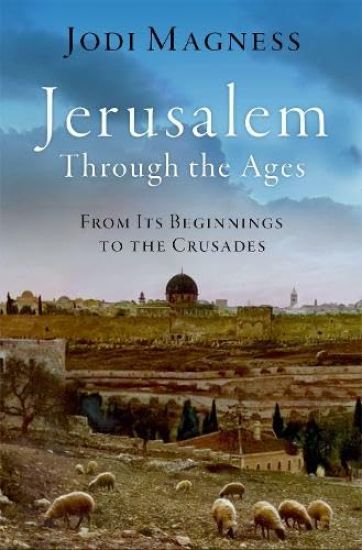
Jerusalem through the Ages

Jerusalem through the Ages

Jodi Magness

OXFORD UNIVERSITY PRESS INC
2024
sidottu
A major new history of one of the world's holiest of cities, based on the most recent archaeological discoveries First settled five thousand years ago by a mountain spring between the Mediterranean and Dead Sea, Jerusalem was named for the god (Shalem) that was worshipped there. When David reportedly conquered the city, ca. 1000 BCE, he transferred the Ark of the Covenant--and with it, the presence of the God of Israel--to this rocky outcrop. Here, David's son Solomon built a permanent house for the God of Israel called the first temple, and since then this spot has been known as the Temple Mount. After Babylonians destroyed Solomon's temple in 586 BCE, it was replaced by the second temple, which is the setting for many of the events described in the Gospel accounts. In 70 CE, the Romans destroyed Jerusalem, leaving the Temple Mount in ruins. Two hundred and fifty years later, the emperor Constantine constructed the Church of the Holy Sepulcher around the spots where Jesus is believed to have been crucified and buried, and the church is now considered Jerusalem's holiest site by many Christians worldwide. In the late seventh century CE the focus shifted back to the Temple Mount, when an early Islamic ruler named `Abd al-Malek enshrined the rocky outcrop in a monument that is still iconic of the city today: the Dome of the Rock. In 1099 Crusaders conquered Jerusalem, and although their rule was brief rule they left a deep impact on the city. Today, much of the old city retains its medieval appearance. For followers of the three Abrahamic faiths, Jerusalem is the place where the presence of the God of Israel dwells--the meeting point of heaven and earth and the locus of divine and human interaction. Jerusalem through the Ages by Jodi Magness explores how these beliefs came to be associated with the city by introducing readers to its complex and layered history, providing a broad yet detailed account, including the most recent archaeological discoveries. Each chapter focuses on a key moment of transition from Jerusalem's beginnings to the Crusades of the medieval period, enabling readers to experience the city's many transformations as it changed hands and populations-Jebusites, Israelites, Judahites, Persians, Greeks, Romans, Jews, Christians, and Muslims. The book also includes a walking guide for visitors who wish to experience the city's many archaeological sites firsthand.
Ancient Synagogues in Palestine

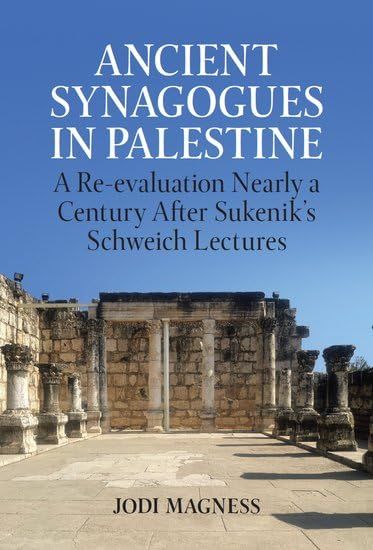
Ancient Synagogues in Palestine

Jodi Magness

Oxford University Press
2024
sidottu
Dozens of ancient synagogues have been discovered around the Mediterranean, most of which date to the fourth-sixth centuries CE and are concentrated in Palestine. In the 1930 Schweich Lectures, Eleazar Lipa Sukenik established a typology and chronology for these buildings. Ancient Synagogues in Palestine evaluates Sukenik's conclusions in light of new discoveries since his time. It opens with an overview of ancient synagogues in the region, followed by a survey of the historiography of the study of these buildings, highlighting its ideological roots in the early Zionist movement. In the final chapters, Magness examines the evidence for the dating of the synagogues at Khirbet Wadi Hamam and Capernaum, arguing that different synagogue types overlapped and were contemporary to the fourth-sixth centuries CE instead of being sequential, as Sukenik thought. This conclusion contradicts a widely accepted view that late antique Jewish communities in Palestine suffered and declined under supposedly oppressive Christian rule.
The Archaeology of the Holy Land

The Archaeology of the Holy Land

Jodi Magness

Cambridge University Press
2012
pokkari
This book provides an introduction to the archaeology and history of ancient Palestine – modern Israel, Jordan and the Palestinian territories – from the destruction of Solomon's temple in 586 BCE to the Muslim conquest in 640 CE. Special attention is paid to the archaeology of Jerusalem and the Second Temple period, in the time of Herod the Great and Jesus. For each period, the book offers a historical background for the Mediterranean world and the ancient Near East, as well as the events in Palestine. Major sites such as Masada, Caesarea Maritima and Petra are examined in archaeological and historical detail, along with the material culture – coins, pottery, glass and stone vessels – of each period. This book provides a thorough overview of the archaeology of this historically vibrant part of the world.
Masada

Masada

Jodi Magness

PRINCETON UNIVERSITY PRESS
2019
sidottu
A new account of the famous site and story of the last stand of a group of Jewish rebels who held out against the Roman EmpireTwo thousand years ago, 967 Jewish men, women, and children—the last holdouts of the revolt against Rome following the fall of Jerusalem and the destruction of the Second Temple—reportedly took their own lives rather than surrender to the Roman army. This dramatic event, which took place on top of Masada, a barren and windswept mountain overlooking the Dead Sea, spawned a powerful story of Jewish resistance that came to symbolize the embattled modern State of Israel. The first extensive archaeological excavations of Masada began in the 1960s, and today the site draws visitors from around the world. And yet, because the mass suicide was recorded by only one ancient author—the Jewish historian Josephus—some scholars question if the event ever took place.Jodi Magness, an archaeologist who has excavated at Masada, explains what happened there, how we know it, and how recent developments might change understandings of the story. Incorporating the latest findings, she integrates literary and historical sources to show what life was like for Jews under Roman rule during an era that witnessed the reign of Herod and Jesus’s ministry and death.Featuring numerous illustrations, this is an engaging exploration of an ancient story that continues to grip the imagination today.
Masada

Masada

Jodi Magness

Princeton University Press
2021
pokkari
The dramatic story of the last stand of a group of Jewish rebels who held out against the Roman Empire, as revealed by the archaeology of its famous siteTwo thousand years ago, 967 Jewish men, women, and children—the last holdouts of the revolt against Rome following the fall of Jerusalem and the destruction of the Second Temple—reportedly took their own lives rather than surrender to the Roman army. This dramatic event, which took place on top of Masada, a barren and windswept mountain overlooking the Dead Sea, spawned a powerful story of Jewish resistance that came to symbolize the embattled modern State of Israel. Incorporating the latest findings, Jodi Magness, an archaeologist who has excavated at Masada, explains what happened there—and what it has come to mean since. Featuring numerous illustrations, this is an engaging exploration of an ancient story that continues to grip the imagination today.
The Archaeology of Qumran and the Dead Sea Scrolls

The Archaeology of Qumran and the Dead Sea Scrolls

Jodi Magness

William B Eerdmans Publishing Co
2003
pokkari
The Dead Sea Scrolls are among the most interesting and important archaeological discoveries ever made, and the excavation of the Qumran community itself has provided invaluable information about Judaism and the Jewish world in the last centuries B.C.E. Like the Dead Sea Scrolls, however, the Qumran site continues to be the object of intense scholarly debate. In a book meant to introduce general readers to this fascinating area of study, veteran archaeologist Jodi Magness here provides an overview of the archaeology of Qumran and presents an exciting new interpretation of this ancient community based on information found in the Dead Sea Scrolls and other contemporary documents. Magness's work offers a number of fresh conclusions concerning life at Qumran. She agrees that Qumran was a sectarian settlement but rejects other unconventional views, including the view that Qumran was a villa rustica or manor house. By carefully analyzing the published information on Qumran, she refines the site's chronology, reinterprets the purpose of some of its rooms, and reexamines the archaeological evidence for the presence of women and children in the settlement. Numerous photos and diagrams give readers a firsthand look at the site. Written with an expert's insight yet with a journalist's spunk, this engaging book is sure to reinvigorate discussion of this monumental archaeological find.
Stone and Dung, Oil and Spit

Stone and Dung, Oil and Spit

Jodi Magness

William B Eerdmans Publishing Co
2011
nidottu
In Stone and Dung, Oil and Spit Jodi Magness unearths -footprints- buried in both archaeological and literary evidence to shed new light on Jewish daily life in Palestine from the mid-first century b.c.e. to 70 c.e. -- the time and place of Jesus' life and ministry. Magness analyzes recent archaeological discoveries from such sites as Qumran and Masada together with a host of period texts, including the New Testament, the works of Josephus, and rabbinic teachings. Layering all these sources together, she reconstructs in detail a fascinating variety of everyday activities -- dining customs, Sabbath observance, fasting, toilet habits, burial customs, and more.
Archaeology of Qumran and the Dead Sea Scrolls, 2nd Ed.

Archaeology of Qumran and the Dead Sea Scrolls, 2nd Ed.

Jodi Magness

William B Eerdmans Publishing Co
2021
nidottu
A Choice Outstanding Academic Title and winner of the Biblical Archaeology Society's Publication Award for Best Popular Book on Archaeology The Dead Sea Scrolls have been described as the most important archaeological discovery of the twentieth century. Deposited in caves surrounding Qumran by members of a Jewish sect who lived at the site in the first century BCE and first century CE, they provide invaluable information about Judaism in the last centuries BCE. Like the Dead Sea Scrolls, the Qumran site continues to be the object of intense scholarly debate. In a book meant to introduce general readers to this fascinating area of study, veteran archaeologist Jodi Magness provides an overview of the archaeology of Qumran that incorporates information from the Dead Sea Scrolls and other contemporary sources. Magness identifies Qumran as a sectarian settlement, rejecting other interpretations including claims that Qumran was a villa rustica or manor house. By carefully analyzing the published information on Qumran, she refines the site's chronology, reinterprets the purpose of some of its rooms, and reexamines archaeological evidence for the presence of women and children in the settlement. Numerous photos and diagrams give readers a firsthand look at the site. Considered a standard text in the field for nearly two decades, The Archaeology of Qumran and the Dead Sea Scrolls is revised and updated throughout in its second edition in light of the publication of all the Dead Sea Scrolls and additional data from Roland de Vaux's excavations, as well as Yitzhak Magen and Yuval Peleg's more recent excavations. Specialists and nonspecialists alike will find here an overview of the Qumran site and the Dead Sea Scrolls that is both authoritative and accessible.
The Archaeology of the Early Islamic Settlement in Palestine
There is a common perception that the Muslim conquest of Palestine in the seventh century caused a decline in the number and prosperity of settlements throughout the country. The role played by archaeology in perpetuating this view, claims Magness, is particularly insidious, because it is perceived, rightly or wrongly, as providing “scientific” (and therefore “objective”) data. Thus, archaeological evidence is frequently cited by scholars as proof or confirmation that Palestine declined after the Muslim conquest, and especially after the rise of the Abbasids in the mid-eighth century. Instead, Magness argues that the archaeological evidence, freed insofar as possible of political and/or religious biases, supports the idea that Palestine and Syria experienced a tremendous growth in population and prosperity between the mid-sixth and mid-seventh centuries. Such a radical shift in the interpretation of the evidence guarantees that this volume will be a benchmark with which future interpretations must reckon.The book includes a CD with map and key, which provides additional information regarding the sites studied and the area examined.