Kirjojen hintavertailu. Mukana 11 627 067 kirjaa ja 12 kauppaa.

Kirjahaku

Etsi kirjoja tekijän nimen, kirjan nimen tai ISBN:n perusteella.

18 kirjaa tekijältä Joe Curtis

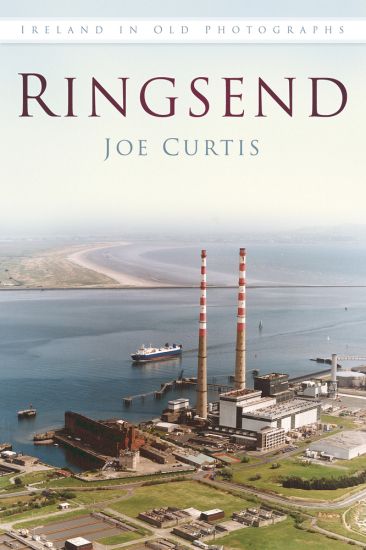
Ringsend

Ringsend

Joe Curtis

The History Press Ltd
2017
nidottu
Mention Ringsend to any Dubliner and they will immediately talk about the iconic twin Poolbeg chimneys. They might even mention the Shelbourne Park Greyhound Stadium or the South Bull Wall. But they may need to be reminded about the former Pigeon House Fort, the Poolbeg Lighthouse, the Isolation Hospital or the Cats and Dogs Home on Grand Canal Quay. It is this and more that you will find out about within the pages of this illustrated history.
Goodbye, Leinster House

Goodbye, Leinster House

Joe Curtis

Independently Published
2019
pokkari
Leinster House in Dublin is the seat of the Irish Parliament (Dail). As we approach the centenary of Irish Independence in 2022, it is time for a completely new Constitution to be drafted, to propel us towards a genuine democratic state. Here is a suggested first draft of a radical new Constitution, which could result in the closure of Leinster House.
Haslam's Gold

Haslam's Gold

Joe Curtis

Createspace Independent Publishing Platform
2012
pokkari
In 1895, at the age of nineteen, Pete Haslam emigrated to America, and never saw Ireland nor his family again. He made a small fortune in the Klondike Gold Rush, and then became one of the Pioneers who founded modern Alaska. He spent a fascinating life as a gold miner, in the last frontier of Wiseman, seventy five miles north of the Arctic Circle. For generations, none of his family knew anything about Pete's life, except that Bob Marshall met him in 1930, while researching for his book "Arctic Village". Now, for the first time ever, his grand-nephew, Joe, presents this factual account of Pete's life.
Ferdie and Toots

Ferdie and Toots

Joe Curtis

Createspace Independent Publishing Platform
2012
pokkari
Maurice Curtis was born in 1908, while Josephine Haslam was born in 1916, and during their courtship, they nicknamed each other Ferdie and Toots respectively. Ferdie narrates his story in 1947, just before he marries his sweetheart, while Toots carries on with the story after that date.Ferdie's story reflects his father's life in the Royal Irish Constabulary, especially in Limerick, and later in Dublin, and follows on with his own life in the hotel industry. Toots life on a Laois farm was more serene, although her father was not present for her birth, because he was in Mesopotamia (Iraq) during the First World War. Her nurse's training in London had just finished, when the outbreak of the Second World War forced her to return to neutral Ireland. Spending the rest of her life in Dublin, she reared six children by herself, after her beloved husband died in 1964.This is a real love story.
Truly Marvellous

Truly Marvellous

Joe Curtis

Createspace Independent Publishing Platform
2013
pokkari
I believe in God, but am non-religious. I do not accept the theory of evolution, as originally proposed by Charles Darwin in 1859, and refined by modern scientists. This book sets out my core values in the first chapter, and then argues against evolution in subsequent chapters.The cover picture shows "The Big Bang".
Courtesy of Jacko

Courtesy of Jacko

Joe Curtis

Createspace Independent Publishing Platform
2018
pokkari
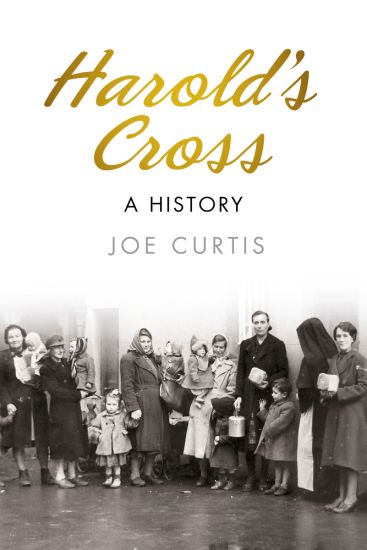
Harold's Cross is a suburb of Dublin, and in the 1960's, the locality was no different from most small towns in Ireland, with farming activities intermingled with factories, and the usual mixture of churches, schools, shops and pubs, with the added bonus of a hospital, an orphanage, a greyhound track, a large cemetery, a monastery, a public park, and much more. Here, the author remembers an idyllic childhood, full of excitement and variety.
Harold's Cross

Harold's Cross

Joe Curtis

Nonsuch Publishing
2016
nidottu
In ancient times, the main road from Dublin to the province of Leinster was Slige Chualann, passing through Harold's Cross. The River Poddle forked at the 'tongue' in the locality, with one-third of the water providing a water supply for the city, and the remaining two-thirds flowed through Harold's Cross towards the Liberties and the River Liffey, while operating a number of waterwheels in the mills along the way. Therefore, it is not surprising that Harold's Cross developed into a thriving village, not unlike many small towns throughout Ireland. Local historian Joe Curtis was born and reared in Harold's Cross, and in this lively book, traces the evolution of the village over the past few hundred years, whilst also providing a first-hand account of changes over the past 60 years.
Harold's Cross

Harold's Cross

Joe Curtis

Nonsuch Publishing
2011
nidottu
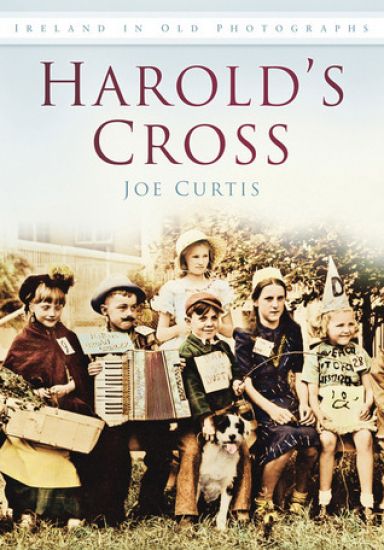
Harold’s Cross got its name from a cross which marked the boundary of the lands owned by the Archbishop of Dublin, and the lands of the Harold clan in the 1500s. Today Harold’s Cross is a bustling thoroughfare, and although it is now a suburb on the south side of Dublin, it was once akin to the best little town in Ireland, being completely self-sufficient, with schools, churches, shops, pubs, hospital, orphanage, convents, monastery, cinema, a major cemetery, mills and factories, park, canal, large and small houses, dog track, barracks, and many farms and orchards. For its residents, it has a rich and varied history, which is beautifully captured in this book of archive photographs.
Mount Merrion

Mount Merrion

Joe Curtis

Nonsuch Publishing
2012
nidottu
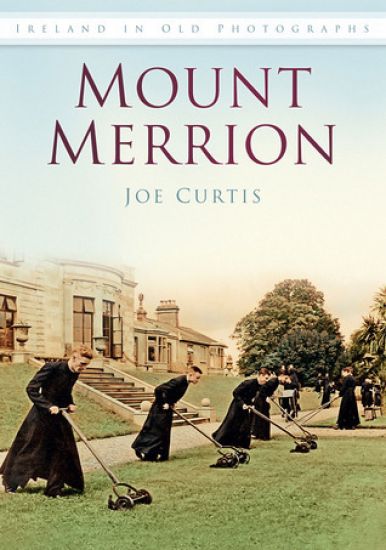
Mount Merrion lies on the South Side of Dublin, ‘between the mountains and the sea’. In 1711, the Fitzwilliam family walled the area to serve as their private country estate, and the 300th anniversary of this has sparked a new and enthusiastic interest in the history of the area. The early days of rustic open fields and tree-lined lanes are still in evidence, and this book by local historian and long-time Mount Merrion resident Joe Curtis continues that celebration.
Castlebar

Castlebar

Joe Curtis

Nonsuch Publishing
2013
nidottu
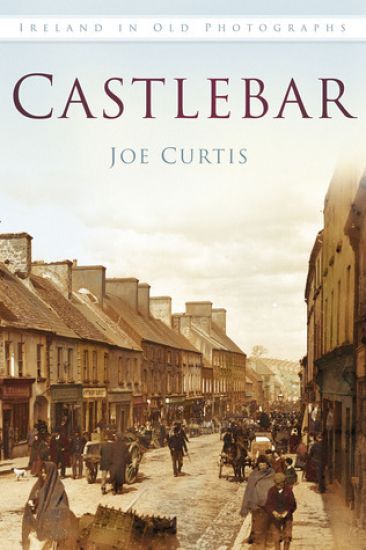
Castlebar derived its name from Barry's Castle (Castle Barry), which was located in the open square of the present Army Barracks, up until the time of "The Races of Castlebar" in 1798. Later on, the Bingham family, also known as Lord Lucan, became the dominant landlord. This bustling town is the capital of County Mayo, and was provided with its own courthouse, prison, famine workhouse, asylum, hospital, four different churches, convent, monastery, schools, airport, hat factory, bacon factory, healthcare factory, hotels, shops, and numerous businesses, and the author captures life in the area with a fascinating collection of images.
Drogheda

Drogheda

Joe Curtis

Nonsuch Publishing
2013
nidottu
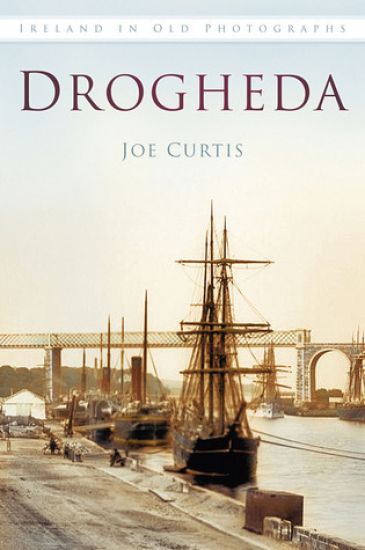
Drogheda nestles on the east coast of Ireland, on the border of Louth and Meath. A lively medieval town, it is home to a host of contemporary music and theatre companies, an international Samba festival, and was the birthplace of many famous Irish people, including Pierce Brosnan, Steve Staunton and Shane Horgan. Drogheda also has a long and colourful history, which includes the Battle of the Boyne, sieges and massacres, earls, rebels and saints. The severed head of Saint Oliver Plunkett remains on display in St Peter’s church. All of this and more is covered in Joe Curtis’ comprehensive illustrated history.
Terenure

Terenure

Joe Curtis

Nonsuch Publishing
2014
nidottu
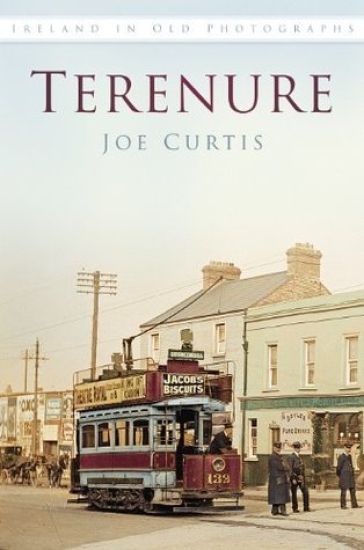
It is generally agreed that the first recorded mention of Terenure came in 1216, when Hugh de Barnewall was granted the lands of Terenure and Kimmage. Over the next 800 years, this townland reshaped itself throughout the Victorian and Edwardian periods, and grew to be the bustling metropolitan suburb it is today. Cafés, bookshops and restaurants nestle beside churches, synagogues and the wonderful amenities of Bushy Park and the River Dodder. In this new book by author and local historian Joe Curtis, the reader can explore the history and development of Terenure from its earliest days.
Blackrock

Blackrock

Joe Curtis

Nonsuch Publishing
2014
nidottu
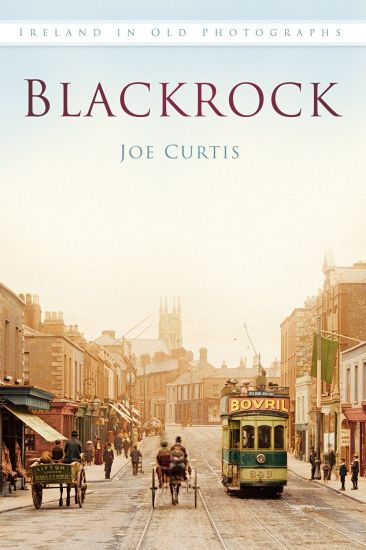
Blackrock is well known as an affluent and well-loved suburb of Dublin, situated on the picturesque east coast of the city. It was once an independent township, complete with Town Hall, and boasted a thriving hosiery industry, teacher training college, in addition to numerous schools, churches of all denominations, convents, hospitals, orphanages, and local shops. The spacious houses and villas catered for the professional classes who commuted to Dublin city centre by train and tram. Blackrock never fully achieved the status of a seaside resort, but still boasted outdoor swimming baths, and the banks of the railway track afforded sunbathing perches for our pale-faced city dwellers. And, of course, there was always rugby. Nowadays, Blackrock is a bustling and vibrant suburb with every modern amenity and, in this book, author Joe Curtis explores the rich history that has shaped it over time.
Dundrum

Dundrum

Joe Curtis

Nonsuch Publishing
2016
nidottu
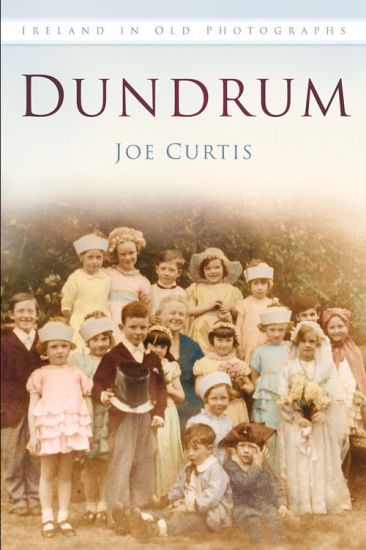
For many years Dundrum was just another stop on the railway between Harcourt Street and Bray; it was a village in the foothills of the Dublin Mountains that, despite its rich history, was often thought of as simply the best place to rest on a journey to Powerscourt or Enniskerry. Today it is a hugely popular hub of commerce and retail, attracting visitors from across the country. In this new book by local historian Joe Curtis, the multi-faceted past of Dundrum is explored through a vibrant collection of illustrations and historical research, much of which has been previously unpublished. What emerges is a picture of the changing face of Ireland itself.
Clontarf

Clontarf

Joe Curtis

WORDWELL
2025
pokkari
In 1014, at the famous Battle of Clontarf, the High King of Ireland, Brian Boru, in conjunction with the provincial chiefs, defeated the colonizing Norsemen in a decisive battle which ended their efforts to conquer Ireland. At this time Clontarf was open countryside bordered by the Irish Sea. In the 1,000 years that followed, Clontarf has grown and thrived into a modern urban centre, yet tranquil and proud of its heritage. In this work, best-selling author Joe Curtis explores that history in an accessible, visual narrative, including archive photographs, postcards and records.