Kirjojen hintavertailu. Mukana 12 390 323 kirjaa ja 12 kauppaa.

Kirjahaku

Etsi kirjoja tekijän nimen, kirjan nimen tai ISBN:n perusteella.

10 kirjaa tekijältä Joe Holland

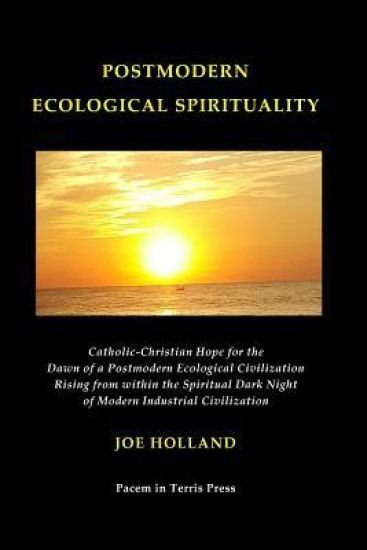
Postmodern Ecological Spirituality: Catholic-Christian Hope for the Dawn of a Postmodern Ecological Civilization Rising from Within the Spiritual Dark
THE CURRENT FAILURE of so many religious institutions, along with the spiritual emptiness pervading late-modern industrial societies, can't be blamed just on "secularization." So many sincere people thirst for spiritual meaning, yet they don't find it in failing religious institutions. At the same time, so many sincere people are spiritually despairing over the refusal by hyper-masculine global elites of Modern Industrial Civilization to turn away from profitable but anti-ecological systems, which are so rapidly devastating the creative communion of life across our loving Creator's beloved planet Earth.In this ground-breaking book, eco-philosopher and Catholic theologian Joe Holland links those two challenges. Principal author of the widely read text Social Analysis: Linking Faith and Justice and ghostwriter for two highly praised Appalachian Pastoral Letters, he insightfully explores the late-modern breakdowns of both civilization and spirituality. He correlates the social and ecological breakdown of Modern Industrial Civilization with the deeper cultural breakdown of Modern Psychological Spirituality, which is found in both Catholic and Protestant forms, as well as in other religious forms. At the same time, he explores the seminal emergence of Postmodern Ecological Spirituality, which is already planting regenerative seeds for a future Postmodern Ecological Civilization.This challenging book provides essential background for: 1) understanding at the deep level the interwoven late-modern global devastation of ecological, societal, and spiritual life; and 2) seeking at the deep level the holistic postmodern global regeneration of ecological, social, and spiritual life, which Pope Francis has called "integral ecology." JOE HOLLAND is Emeritus Professor of Philosophy & Religion at Saint Thomas University in Miami Gardens, Florida, as well as President of Pax Romana / Catholic Movement for Intellectual & Cultural Affairs USA, which is based in Washington DC. He holds a Ph.D. from the University of Chicago.
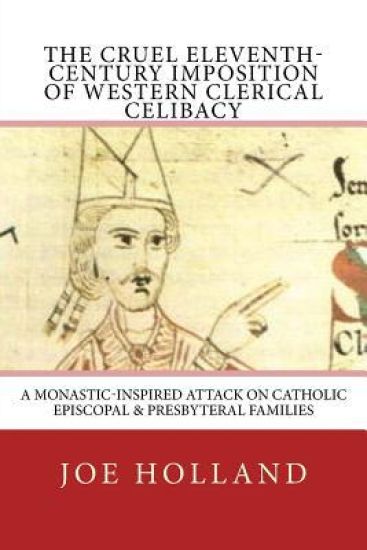
The Cruel Eleventh-Century Imposition of Western Clerical Celibacy: A Monastic-Inspired Attack on Catholic Episcopal & Presbyteral Families
THIS BOOK TELLS THE SAD STORY of how the eleventh-century papal "Gregorian Reform" forcibly imposed "clerical celibacy" on traditionally married Western Catholic bishops and priests (presbyters). The Gregorian popes forced many bishops' and priests' wives into homelessness, prostitution, and suicide. They forced other wives and their children into slavery. Driven in part by a vicious spiritual misogyny infecting some medieval networks of Benedictine monasticism, the popes of the "Gregorian Reform" tried to destroy in the Western Church the thousand-year-old apostolic tradition of married bishops and presbyters - a tradition rooted in the New Testament. They did that in order to construct a papal theocracy supported by a celibate cadre with no allegiance to family. At the time, their attacks precipitated a tragic fraternal battle between heterosexual and homosexual "clerics" - tragic because the two sides were brothers equally beloved by God. The book outlines a three-stage historical construction of non-evangelical clericalism: 1) the fourth-century Imperial Church's fabrication of the "clerical state;" 2) the eleventh-century papal imposition of "clerical celibacy;" and 3) the sixteenth-century Council of Trent's mandate of "clerical seminaries." Finally, the book proposes that, while the modern Western Catholic male "clerical-celibate-seminary" system is breaking down, the Holy Spirit is inspiring a lay-centered "New Evangelization" energized by postmodern feminine spiritual regeneration. JOE HOLLAND is Emeritus Professor of Philosophy & Religion at Saint Thomas University in Miami Gardens, Florida. The author of 17 other books, he is also President of Pax Romana / Catholic Movement for Intellectual & Cultural Affairs USA.
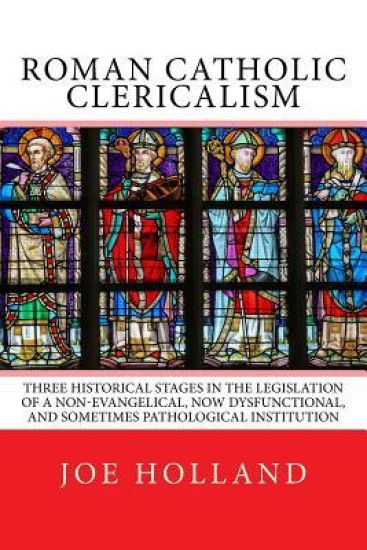
Roman Catholic Clericalism: Three Historical Stages in the Legislation of a Non-Evangelical, Now Dysfunctional, and Sometimes Pathological Institution
THE CLERICAL SCANDAL OF SEXUAL-ABUSE and coverups, caused by a significant minority of the episcopacy and presbyterate of the Roman Catholic Church, has precipitated a strategic intellectual debate. On one side, the so-called 'conservative' intellectual diagnosis blames what some see as a broad presence within the contemporary Western Roman Catholic clergy of persons with homosexual tendencies. On the other side, the so-called 'progressive' intellectual diagnosis blames "Clericalism," which it sees only as a problematic psychological attitude, or an authoritarian, non-transparent, and unaccountable organizational culture, or both. This small book has not been written to defend either side of that debate, but rather to understand how Roman Catholic Clericalism is a systemic institution. Even so, it is important to state that any 'conservative' scapegoating of persons with a homosexual orientation for the clerical sexual-abuse and coverup scandals, as if homosexuality itself were the cause, blasphemes the image of God in those among us with a homosexual orientation. All human persons, regardless of sexual orientation, carry the beauty and dignity of our loving Creator's sacred image. It is also important to state that, while the 'progressive' diagnosis is correct at the surface level, it nonetheless fails to unveil the deep root of Clericalism as an historically legislated and non-evangelical institution, which inevitably regenerates problems and even pathologies for each successive clerical generation. The 'progressive' diagnosis also fails to explore how the non-evangelical institution of Roman Catholic Clericalism was historically constructed by imperial, papal, and conciliar legislation over more than a millennium and a half, and how it is now undermining the Western Catholic evangelization. Deepening the analysis of Clericalism to its foundational and tenacious institutional level is the purpose of this small book ...... JOE HOLLAND is Emeritus Professor of Philosophy & Religion from Saint Thomas University in Miami Gardens, Florida. He is also President of Pax Romana / Catholic Movement for Intellectual & Cultural Affairs USA, based in Washington DC. The author of 17 other books, he holds a PhD, from the University of Chicago. ([email protected] / [email protected])
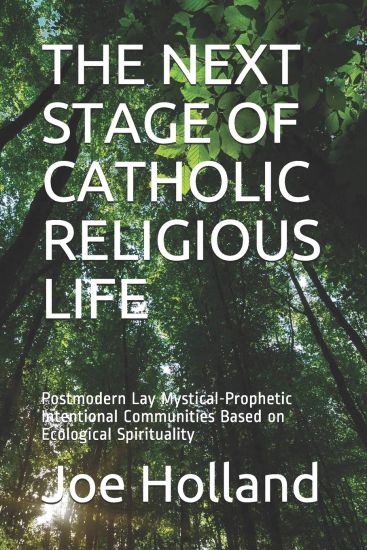
The Next Stage of Catholic Religious Life: Postmodern Lay Mystical-Prophetic Intentional Communities Based on Ecological Spirituality
THIS BOOK TRACES THE HISTORY OF CATHOLIC RELIGIOUS LIFE, but it prefers to describe "Religious Life" as "Catholic mystical-prophetic intentional communities." That history has its roots in the foundational early church, which was entirely lay in character, just as Jesus was a Jewish lay teacher. The book shows how both the "clerical state in life" and the "religious state in life" were later legal-cultural additions to Catholic Christianity. Today, at a time when the modern "apostolic" stage of "religious life" is in decline, at least in the 'advanced' industrialized regions, the book argues that a new and postmodern historical stage of Catholic mystical-prophetic intentional communities is now emerging, and that this new stage is both lay and ecological. The book then offers proposals for how declining modern forms of Catholic "religious life" can find new life and growth by sponsoring or engaging with emerging lay-ecological intentional communities, including ecovillages, and by drinking from the living and renewing waters of ecological spirituality. JOE HOLLAND, an eco-social philosopher and Catholic theologian, holds a Ph.D. from the University of Chicago. He is Emeritus Professor of Philosophy & Religion at St. Thomas University in Miami Gardens, Florida, as well as a member of the International Association for Catholic Social Thought at the Catholic University of Leuven in Belgium. He was the consultant-writer for the 1975 and 1995 pastoral letters of the Catholic bishops of Appalachia, This Land is Home to Me, and At Home in the Web of Life. He is also author of 18 other books, including Modern Catholic Social Teaching and Postmodern Ecological Spirituality.
Varieties of Postmodern Theology

Varieties of Postmodern Theology

David Ray Griffin; William A. Beardslee; Joe Holland

State University of New York Press
1989
pokkari
Sorts out the confusion created by the use of the term "postmodern" in relation to widely divergent theological positions.This book sorts out the confusion created by the use of the term "postmodern" in relation to widely divergent theological positions. Four different types of postmodern theology are distinguished in the preface: constructive, deconstructive, liberationist, and conservative. Two forms of each type are discussed in the book.Writing from a constructive, postmodern perspective, the authors enter into dialogue with the deconstructive postmodernism of Mark C. Taylor and Jean-François Lyotard, with the liberationist postmodernism of Harvey Cox and Cornel West, and with the conservative postmodernism of George William Rutler and John Paul II.