Kirjojen hintavertailu. Mukana 12 390 323 kirjaa ja 12 kauppaa.

Kirjahaku

Etsi kirjoja tekijän nimen, kirjan nimen tai ISBN:n perusteella.

10 kirjaa tekijältä Joe Nick Patoski

Willie Nelson - An Epic Life

Willie Nelson - An Epic Life

Joe Nick Patoski

Little, Brown Company
2009
pokkari
Willie Nelson has spent the last 30 years on that higher plane of celebrity where he signifies many things to many people--American folk hero, national treasure, Outlaw, tax dodger, country traditionalist, actor and friend of the farmer amongst many others. Acclaimed biographer and journalist Joe Nick Patoski offers a frank and thorough portrait, adding some surprising insight on this beloved performer. From his humble beginnings in Waco, TX, cared for by his grandparents, to learning to play guitar at 6 and wrote his first song at 7 to his remarkable rise to legendary status as a genre-bending music maker and a bona fide Hollywood darling, Patoski draws from his own association with Nelson, a relationship that began in the 1970s when Patoski began writing about the man and his music. Why does Nelson keep going down the road, steady as a mountain stream, creating an illusion for the millions that sit in awe of him as he sings the same repertoire night after night? With relish, Willie delves into these questions and more as Patoski reveals the true motivations for the Texanmost Texan.
The Dallas Cowboys

The Dallas Cowboys

Joe Nick Patoski

Back Bay Books
2013
pokkari
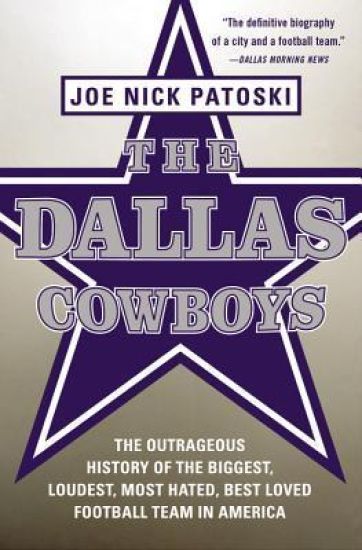
From Dandy Don Meredith and Roger Staubach to the three Super Bowls won by the unbeatable trio of Troy Aikman, Michael Irvin and Emmitt Smith in the mid-nineties, to TO, Tony Romo and the glitzy soap opera team of today, the Cowboys have been the NFL's star franchise for 50 years. Love them or hate them - the Dallas Cowboys are known as "America's Team." But the Cowboys have never been just about football. With their oil baron roots, overbearing, ego-driven owner, players who can't stay out of the tabloids, a palatial new home that sets the standard for modern stadiums, fans as enthusiastic as cheerleaders and cheerleaders who are as famous as the team itself, the Cowboys have become a staple of Americana.Joe Nick Patoski plumbs all these stories in a book that is a rich, sometimes scandalous and always vivid portrait of a time, a place and an irreplaceable team.
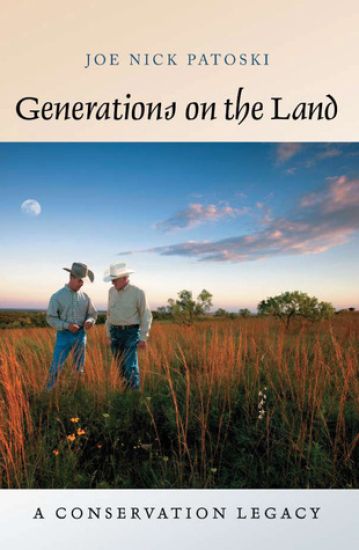
Generations on the Land

Generations on the Land

Joe Nick Patoski

Texas A M University Press
2011
sidottu
To keep the land in the family . . . To operate the land profitably . . . To leave the land better than they found it . . . Each year, Sand County Foundation's prestigious Leopold Conservation Award recognizes families for leadership in voluntary conservation and ethical land management. In Generations on the Land: A Conservation Legacy, veteran author and journalist Joe Nick Patoski visits eight of the award-winning families, presenting warm, heartfelt conversations about the families, their beloved land, and a vision for a healthier world. Generations on the Land celebrates these families' roles as conservation leaders for the nation - far beyond the agricultural communities where they live - and reinforces the value of trans-generational family commitment to good land stewardship. The eight landowners profiled by Patoski include six ranchers, a forester, and a vintner. They reside across the country: in California, Nebraska, Texas, Utah, Wisconsin, and Wyoming. Their conservation accomplishments range from providing a habitat corridor for pronghorn antelope to hammering out an endangered species 'safe harbor' agreement for grape growers. A short introduction by afellow conservation or ranching professional precedes each of the personal portraits by Patoski, which are written in an informal, conversational style. Brent Haglund, president of the Sand County Foundation, provides an introduction to the purpose and work of the foundation, and a conclusion summarizes the substantive conservation contributions of the Leopold award winners. With more and more attention being focused on the tensions between the agricultural and economic potential of land and the preservation of the natural environment, a better understanding of sustainable agriculture is becoming increasingly vital. By showcasing the leadership of these Leopold Conservation Award winners, Generations on the Land will inspire a whole new cadre of landowners to build a lasting heritage of conservation and sustainable land use - benefitting the earth and its inhabitants for decades to come. Paper used in printing this book was provided by Mixed Sources: materials manufactured under certification by the Forest Stewardship Council. "In 1939, Aldo Leopold wrote 'When land does well for its owner, and the owner doeswell for his land, when both end up better by reason of this partnership, we have conservation.' Generations on the Land demonstrates this simple yet powerful concept through a series of inspirational and instructional essays drawn from hardworking landowners from across the nation. Whether you manage a working landscape yourself, or are one of the urban many seeking insights into how humanity can achieve a sustainable future, you need to study this book."--Richard C. Bartlett, Thinking Like a Mountain Foundation
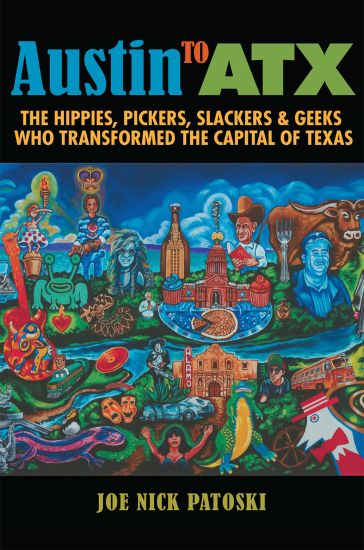
Austin to ATX

Austin to ATX

Joe Nick Patoski

Texas A M University Press
2019
sidottu
In this gonzo history of the “City of the Violet Crown,” author and journalist Joe Nick Patoski chronicles the modern evolution of the quirky, bustling, funky, self-contradictory place known as Austin, Texas. Patoski describes the series of cosmic accidents that tossed together a mashup of outsiders, free spirits, thinkers, educators, writers, musicians, entrepreneurs, artists, and politicians who would foster the atmosphere, the vibe, the slightly off-kilter zeitgeist that allowed Austin to become the home of both Armadillo World Headquarters and Dell Technologies.Patoski's raucous, rollicking romp through Austin's recent past and hipster present connects the dots that lead from places like Scholz Garten—Texas' oldest continuously operating business—to places like the Armadillo, where Willie Nelson and Darrell Royal brought hippies and rednecks together around music. He shows how misfits like William Sydney Porter—the embezzler who became famous under his pen name, O. Henry—served as precursors for iconoclasts like J. Frank Dobie, Bud Shrake, and Molly Ivins. He describes the journey, beginning with the search for an old girlfriend, that eventually brought Louis Black, Nick Barbaro, and Roland Swenson to the founding of the South by Southwest music, film, and technology festival.As one Austinite, who in typical fashion is simultaneously pursuing degrees in medicine and cinematography, says, “Austin is very different from the rest of Texas.” Many readers of Austin to ATX will have already realized that. Now they will know why.
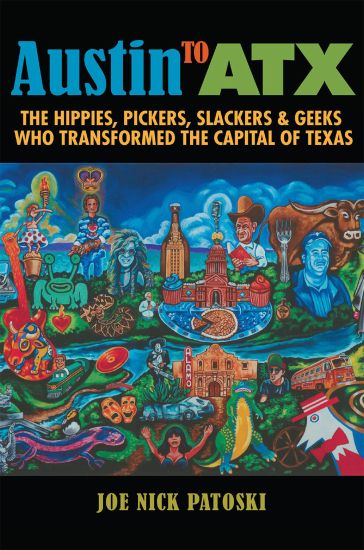
Austin to ATX

Austin to ATX

Joe Nick Patoski

Texas A M University Press
2020
pokkari
"How did this city, one that has such an ineffable but palpable personality and spirit, become what it is--for better and worse? Joe Nick Patoski's recent book, Austin to ATX: The Hippies, Pickers, Slackers and Geeks Who Transformed the Capital of Texas, answers the question both empirically and spiritually, tracing the many people and the many places they built along the way toward establishing this weird, idiosyncratic, flat little planet."--NPR"In Austin to ATX: The Hippies, Pickers, Slackers and Geeks Who Transformed the Capital of Texas, author Joe Nick Patoski digs into what made Austin the city we live in today. With everything included--from Amy's Ice Creams to ZZ Top--Patoski covers its rich history with a candor and keen eye that keeps Austin weird without becoming maudlin."--Austin Monthly
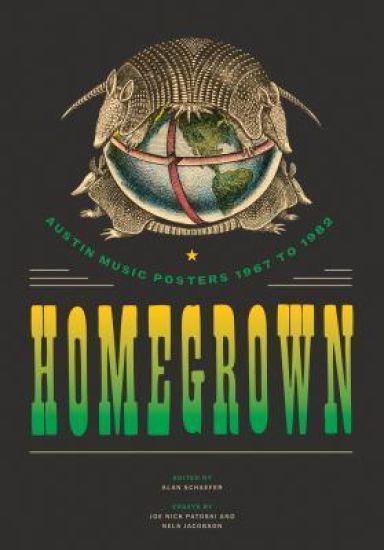
Homegrown

Homegrown

Joe Nick Patoski; Nels Jacobson

University of Texas Press
2015
nidottu
Before Austin became the “live music capital of the world” and attracted tens of thousands of music fans, it had a vibrant local music scene that spanned late sixties psychedelic and avant-garde rock to early eighties punk. Venues such as the Vulcan Gas Company and the Armadillo World Headquarters hosted both innovative local musicians and big-name touring acts. Poster artists not only advertised the performances-they visually defined the music and culture of Austin during this pivotal period. Their posters promoted an alternative lifestyle that permeated the city and reflected Austin’s transformation from a sleepy university town into a veritable oasis of underground artistic and cultural activity in the state of Texas.This book presents a definitive survey of music poster art produced in Austin between 1967 and 1982. It vividly illustrates four distinct generations of posters-psychedelic art of the Vulcan Gas Company, early works from the Armadillo World Headquarters, an emerging variety of styles from the mid-1970s, and the radical visual aesthetic of punk-produced by such renowned artists as Gilbert Shelton, Jim Franklin, Kerry Awn, Micael Priest, Guy Juke, Ken Featherston, NOXX, and Danny Garrett. Setting the posters in context, Texas music and pop-culture authority Joe Nick Patoski details the history of music posters in Austin, and artist and poster art scholar Nels Jacobson explores the lives and techniques of the artists.
Texas Coast

Texas Coast

Laurence Parent; Joe Nick Patoski

University of Texas Press
2005
sidottu
The Texas coast attracts everyone-children playing in the surf and building sand castles; high school and college students partying at spring break; adults easing workaday stresses by beachcombing, birding, fishing, or just watching the waves roll in one after another. In the coast's elemental landscape of low dunes, sandy beaches, salt water, and sea breezes, life itself seems simpler. There's time to watch the seagulls fighting over a fish, bodysurf in the waves, pick up shells on the beach, and reconnect with the healing rhythms of nature. This beautiful book combines Laurence Parent's magnificent photographs with Joe Nick Patoski's entertaining text to create a one-of-a-kind portrait of the Texas coast. Parent's images capture Texas beaches, bays, estuaries, and salt marshes from Sabine Pass near the Louisiana border to Boca Chica, where the Rio Grande (sometimes) enters the Gulf of Mexico. He records all the familiar and distinctive scenes-sunrise over the Gulf of Mexico and sunset over the bays, sand dunes covered in goat-foot morning glories, historic lighthouses, shrimp boats and sailboats in harbor, and our favorite destinations of Galveston, Port Aransas, Corpus Christi, and South Padre Island. He also highlights lovely, lesser-known places you may not have discovered yet, such as Brazos Bend State Park. Joe Nick Patoski takes you on a verbal tour of the Texas coast. He describes the irresistible allure of this undramatic yet somehow unforgettable chain of barrier islands and bays. He also acknowledges the human activity that has always been a part of the coastal story-the arrival of immigrants to settle Texas; Civil War battles at Sabine Pass, Galveston, and Palmetto Ranch; towns, such as Indianola, that flourished and then suddenly folded after devastating hurricanes; the building of a huge petrochemical industry; and the successful effort to create wildlife refuges to sustain migrating birds and endangered species such as whooping cranes and Kemp's ridley sea turtles. Together, Parent and Patoski make it plain why people return to the coast as regularly as waves lap the beach. Looking through Texas Coast may well be where your next visit begins.
Big Bend National Park

Big Bend National Park

Laurence Parent; Joe Nick Patoski

University of Texas Press
2006
sidottu
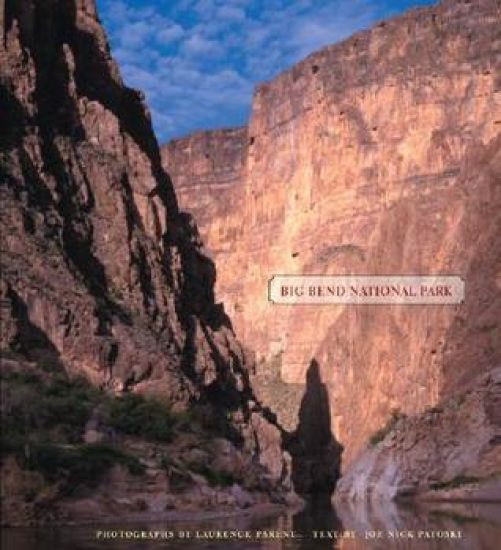
Big Bend National Park is one of the few places left in America where a person can literally get away from it all. Nestled in the great bend of the Rio Grande that forms one of the most distinctive features of the silhouette of Texas, the park is several hundred miles from any large city. Within its 1,250 square miles of mountains, canyons, desert, and river, Big Bend National Park offers visitors respite from the stresses of urban living-a place for taking stock and charting new courses. That's one reason why many people return to the park year after year.This book is the first and only comprehensive photographic and word portrait of Big Bend National Park. Laurence Parent presents a magnificent photo gallery of park scenes. He portrays the mountain ranges-Chisos, Dead Horse, Rosillos, and Sierra del Carmen-from first light to moonrise and in all seasons and weather. He includes dramatic images of Santa Elena, Mariscal, and Boquillas canyons, as well as landmark features such as Mule Ears Peaks, Elephant Tusk, and the Chisos Basin Window. Parent also portrays the ephemeral beauty of Big Bend wildflowers, including giant bluebonnets and blooming prickly pear cactus, as well as the traces of human habitation at ghost towns scattered around the park.Joe Nick Patoski complements Parent's images with a masterfully crafted word portrait of Big Bend National Park. Patoski describes the powerful geologic and volcanic forces that created the awe-inspiring landscape of the Big Bend. He reviews the park's natural history and also its human history, from the prehistoric hunter-gathers who ranged over the region to Cabeza de Vaca, who was probably the first European to see Big Bend, to the creation of the national park in the 1930s and 1940s. Patoski also summarizes recent conservation efforts that have led to the protection of 2.1 million acres on both sides of the Rio Grande.Although no single book could ever hope to contain the vastness of Big Bend National Park between two covers, this one beautifully captures its essence.
Outlaws & Armadillos

Outlaws & Armadillos

Peter Cooper; Joe Nick Patoski; Bobby Bare; Jay Orr; Mike Tolleson; Kyle Young

Country Music Foundation Press,U.S.
2018
nidottu
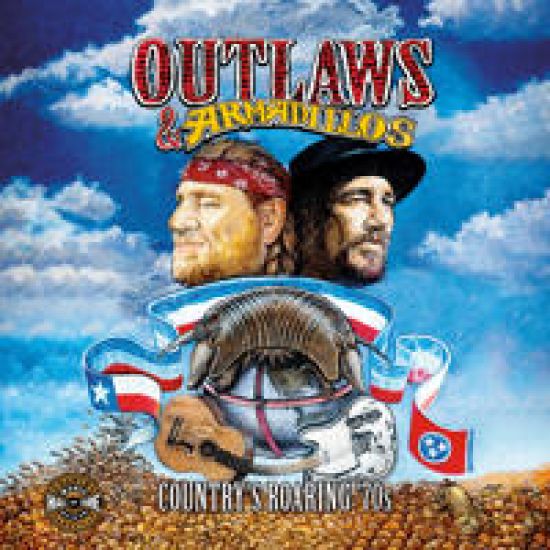
(Book). The Outlaw phenomenon greatly enlarged country music's audience in the 1970s. Led by pacesetters such as Willie Nelson, Waylon Jennings, Kris Kristofferson, and Bobby Bare, artists in Nashville and Austin demanded the creative freedom to make their own country music, different from the pop-oriented sound that prevailed at the time. Complementing the Country Music Hall of Fame and Museum's exhibition Outlaws & Armadillos: Country's Roaring '70s , this 120-page, fully illustrated book examines the 1970s cultures of Nashville and fiercely independent Austin, and the complicated, surprising relationships between the two.
Picnic

Picnic

Dave Dalton Thomas; Joe Nick Patoski

TEXAS A M UNIVERSITY PRESS
2024
sidottu
In 1973, a forty-year-old country musician named Willie Nelson, inspired by a failed music festival the year before, decided he was going to hold his own party. He would stage it in the same remote and rocky field where the previous festival had withered. And he’d do it in July: not the hottest part of the Central Texas summer, but “damn sure close enough,” according to music journalist Dave Dalton Thomas. As unlikely as it seemed in 1973, Willie kept the event going, minus a year off here and there, for half a century. Thomas has attended nearly every Willie Nelson Fourth of July Picnic since 1995, finding joy in an event some music reporters have compared to “death marches and prison labor.” For the last 20 years, Thomas has researched the history of the Picnic, chronicling the brutal heat and the quirky and sometimes illegal antics of fans, musicians, and others. Thomas has watched the Picnic evolve over the decades, as Willie and his audience have evolved. He has interviewed participants, including artists, organizers, promoters, and even a few colorful hangers-on. While reviewing ten of the Picnics in detail—each chosen for its significance in the overarching development of the event—Thomas also includes basic facts about each gathering, from the beginning to the present, with the addition of pertinent information about the “off years,” when the Picnic was on temporary hiatus for one reason or another. In his introduction, Thomas quotes country musician Johnny Bush as he recalls trying to talk Nelson out of the notion of holding the first Picnic. “Willie, there ain’t no way in hell a bunch of cowboys are going to come out in the hundred-degree heat to watch us pick our guitars.” As Thomas records them, Bush’s next words were “he proved me wrong.”