Kirjojen hintavertailu. Mukana 11 699 587 kirjaa ja 12 kauppaa.

Kirjahaku

Etsi kirjoja tekijän nimen, kirjan nimen tai ISBN:n perusteella.

3 kirjaa tekijältä Joel Colón-Ríos

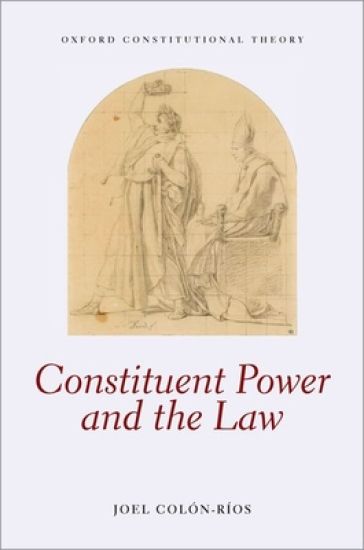
Constituent Power and the Law

Constituent Power and the Law

Joel Colón-Ríos

Oxford University Press
2020
sidottu
Constituent power is the power to create new constitutions. Frequently exercised during political revolutions, it has been historically associated with extra-legality and violations of the established legal order. This book examines the relationship between constituent power and the law. It considers the place of constituent power in constitutional history, focusing on the legal and institutional implications that theorists, politicians, and judges have derived from it. Commentators and citizens have relied on the concept of constituent power to defend the idea that electors have the right to instruct representatives, to negate the doctrine of parliamentary sovereignty, and to argue that the creation of new constitutions must take place through extra-legislative processes, including primary assemblies open to all citizens. More recently, several Latin American constitutions explicitly incorporate the theory of constituent power and allow citizens, acting through popular initiative, to trigger constitution-making episodes that may result in the replacement of the entire constitutional order. Constitutional courts have also at times employed constituent power to justify their jurisdiction to invalidate constitutional amendments that alter the fundamental structure of the constitution and thus amount to a constitution-making exercise. Some governments have used it to defend the legality of attempts to transform the constitutional order through procedures not contemplated in the constitution's amendment rule, but considered participatory enough to be equivalent to 'the people in action', sometimes sanctioned by courts. Building on these findings, Constituent Power and the Law argues that constituent power, unlike sovereignty, should be understood as ultimately based on a legal mandate to produce a particular type of juridical content. In practice, this makes it possible for a constitution-making body to be understood as legally subject to popularly ratified substantive limits.
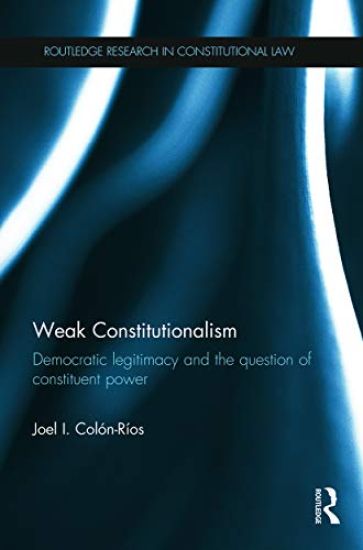
Weak Constitutionalism

Weak Constitutionalism

Joel Colón-Ríos

Routledge
2012
sidottu
It has been frequently argued that democracy is protected and realized under constitutions that protect certain rights and establish the conditions for a functioning representative democracy. However, some democrats still find something profoundly unsettling about contemporary constitutional regimes. The participation of ordinary citizens in constitutional change in the world's most "advanced" democracies (such as the United States, Canada, and the United Kingdom) is weak at best: the power of constitutional reform usually lies in the exclusive hands of legislatures. How can constitutions that can only be altered by those occupying positions of power be considered democratically legitimate? This book argues that only a regime that provides an outlet for constituent power to manifest from time to time can ever come to enjoy democratic legitimacy. In so doing, it advances a democratic constitutional theory, one that combines a strong or participatory conception of democracy with a weak form of constitutionalism. The author engages with Anglo-American constitutional theory as well as examining the theory and practise of constituent power in different constitutional regimes (including Latin American countries) where constituent power has become an important part of the left’s legal and political discourse. Weak Constitutionalism: Democratic Legitimacy and the Question of Constituent Power will be of particular interest to legal/political theorists and comparative constitutional lawyers. It also provides an introduction to the theory of constituent power and its relationship to constitutionalism and democracy.
Weak Constitutionalism

Weak Constitutionalism

Joel Colón-Ríos

Routledge
2013
nidottu
It has been frequently argued that democracy is protected and realized under constitutions that protect certain rights and establish the conditions for a functioning representative democracy. However, some democrats still find something profoundly unsettling about contemporary constitutional regimes. The participation of ordinary citizens in constitutional change in the world's most "advanced" democracies (such as the United States, Canada, and the United Kingdom) is weak at best: the power of constitutional reform usually lies in the exclusive hands of legislatures. How can constitutions that can only be altered by those occupying positions of power be considered democratically legitimate? This book argues that only a regime that provides an outlet for constituent power to manifest from time to time can ever come to enjoy democratic legitimacy. In so doing, it advances a democratic constitutional theory, one that combines a strong or participatory conception of democracy with a weak form of constitutionalism. The author engages with Anglo-American constitutional theory as well as examining the theory and practise of constituent power in different constitutional regimes (including Latin American countries) where constituent power has become an important part of the left’s legal and political discourse. Weak Constitutionalism: Democratic Legitimacy and the Question of Constituent Power will be of particular interest to legal/political theorists and comparative constitutional lawyers. It also provides an introduction to the theory of constituent power and its relationship to constitutionalism and democracy.