Kirjojen hintavertailu. Mukana 12 016 292 kirjaa ja 12 kauppaa.

Kirjahaku

Etsi kirjoja tekijän nimen, kirjan nimen tai ISBN:n perusteella.

5 kirjaa tekijältä Joel Kaye

It Could Be Verse

It Could Be Verse

Joel Kaye

Lulu.com
2018
pokkari
In this collection of humorous verses diverse subjects include an unsuccessful moon shot, a bore who explodes, an unsuccessful marriage proposal in a romantic setting with a surprising outcome, and various kinds of badly played music. The verses range eccentrically across the globe from Peru to Portugal and Scotland, and feature more than one odd monarch and some eccentric aristocrats. Cartoon illustrations add to the fun, all reverence dismissed, but maybe some of these characters are worth your compassion?
Economy and Nature in the Fourteenth Century

Economy and Nature in the Fourteenth Century

Joel Kaye

Cambridge University Press
1998
sidottu
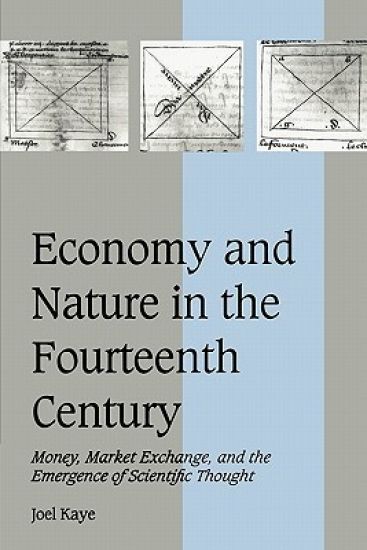
This book provides new perspectives on the ways in which scholastic natural philosophy anticipated and contributed to the emergence of scientific thought. Historians of medieval science have hesitated to step outside the sphere of intellectual culture in their search for factors influencing proto-scientific thought. This book searches for influences both within and beyond university culture, and argues that the transformation of the conceptual model of the natural world c.1260–1380 was strongly influenced by the contemporary rapid monetisation of European society. It analyses the impact of the monetised market place on the most characteristic concern of natural philosophy of the period: its preoccupation with measurement, gradation, and the quantification of qualities.
Economy and Nature in the Fourteenth Century

Economy and Nature in the Fourteenth Century

Joel Kaye

Cambridge University Press
2000
pokkari
This book provides new perspectives on the ways in which scholastic natural philosophy anticipated and contributed to the emergence of scientific thought. Historians of medieval science have hesitated to step outside the sphere of intellectual culture in their search for factors influencing proto-scientific thought. This book searches for influences both within and beyond university culture, and argues that the transformation of the conceptual model of the natural world c.1260–1380 was strongly influenced by the contemporary rapid monetisation of European society. It analyses the impact of the monetised market place on the most characteristic concern of natural philosophy of the period: its preoccupation with measurement, gradation, and the quantification of qualities.
A History of Balance, 1250–1375

A History of Balance, 1250–1375

Joel Kaye

Cambridge University Press
2014
sidottu
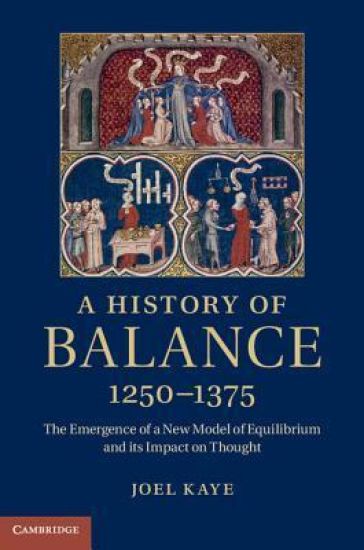
The ideal of balance and its association with what is ordered, just, and healthful remained unchanged throughout the medieval period. The central place allotted to balance in the workings of nature and society also remained unchanged. What changed within the culture of scholasticism, between approximately 1280 and 1360, was the emergence of a greatly expanded sense of what balance is and can be. In this groundbreaking history of balance, Joel Kaye reveals that this new sense of balance and its potentialities became the basis of a new model of equilibrium, shaped and shared by the most acute and innovative thinkers of the period. Through a focus on four disciplines - scholastic economic thought, political thought, medical thought, and natural philosophy - Kaye's book reveals that this new model of equilibrium opened up striking new vistas of imaginative and speculative possibility, making possible a profound re-thinking of the world and its workings.
A History of Balance, 1250–1375

A History of Balance, 1250–1375

Joel Kaye

Cambridge University Press
2016
pokkari
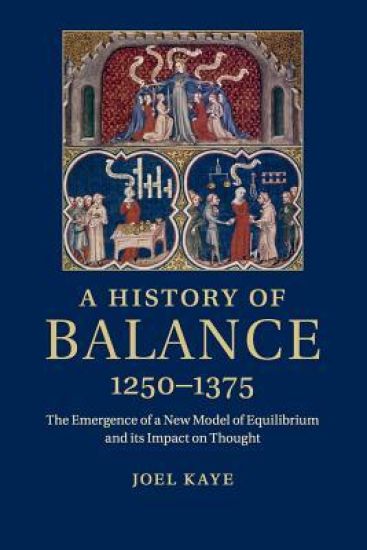
The ideal of balance and its association with what is ordered, just, and healthful remained unchanged throughout the medieval period. The central place allotted to balance in the workings of nature and society also remained unchanged. What changed within the culture of scholasticism, between approximately 1280 and 1360, was the emergence of a greatly expanded sense of what balance is and can be. In this groundbreaking history of balance, Joel Kaye reveals that this new sense of balance and its potentialities became the basis of a new model of equilibrium, shaped and shared by the most acute and innovative thinkers of the period. Through a focus on four disciplines - scholastic economic thought, political thought, medical thought, and natural philosophy - Kaye's book reveals that this new model of equilibrium opened up striking new vistas of imaginative and speculative possibility, making possible a profound re-thinking of the world and its workings.