In his latest book, Joel Spring covers major political, economic and social issues affecting US and global education policy today. Crafted to evoke classroom discussion, this book explores contemporary issues such as the pandemic, institutional racism, religious controversies, nationalism and immigration, increased reliance on online instruction, climate change, economics of education and the deep state in education. Giving students the opportunity to engage in critical thinking and explore the growing sense that US and global education is in distress and in need of fundamental transformation, this book forces readers to examine their own values and how they might apply this thinking to their own education policy and practice.
In his latest book, Joel Spring covers major political, economic and social issues affecting US and global education policy today. Crafted to evoke classroom discussion, this book explores contemporary issues such as the pandemic, institutional racism, religious controversies, nationalism and immigration, increased reliance on online instruction, climate change, economics of education and the deep state in education. Giving students the opportunity to engage in critical thinking and explore the growing sense that US and global education is in distress and in need of fundamental transformation, this book forces readers to examine their own values and how they might apply this thinking to their own education policy and practice.
Starting with the 1972 publication of his seminal work, Education and the Rise of the Corporate State, Joel Spring has been documenting and analyzing the politics of knowledge and education. Throughout his work he has explored the attempts to use education to advance the economic and political interests of dominant groups. The general term he uses for the relationship between schools and power is "ideological management." His scholarly work first looked at the influence on American schooling of business and economic doctrines embodied in human capital theories and consumerism. The next step in his exploration of the politics of knowledge was to examine these issues in the context of globalization, leading to a proposed educational rights amendment to national constitutions and a new paradigm for education, both of which might ensure that schools are protected from ideological management by economic and political elites. Spring’s indigenous background has strongly shaped his interest in the political and economic goals of schooling, particularly the attempts of those in power to use schools to destroy indigenous languages and cultures. In this collection, Spring brings together 10 of his key writings, providing an overview not just of his own career but the larger contexts in which it is situated. In the Introduction he reviews the evolution and scope of his work and his earlier arguments and reflects on its central themes, which are reflected in the writings selected for this volume.In the World Library of Educationalists, international scholars themselves compile career-long collections of what they judge to be their finest pieces – extracts from books, key articles, salient research findings, major theoretical and/practical contributions – so the world can read them in a single manageable volume. Readers will be able to follow the themes and strands of their work and see their contribution to the development of a field, as well as the development of the field itself. Contributors to the series include: Michael Apple, James A. Banks, Stephen J. Ball, Elliot Eisner, Howard Gardner, John Gilbert, Ivor F. Goodson, Peter Jarvis.
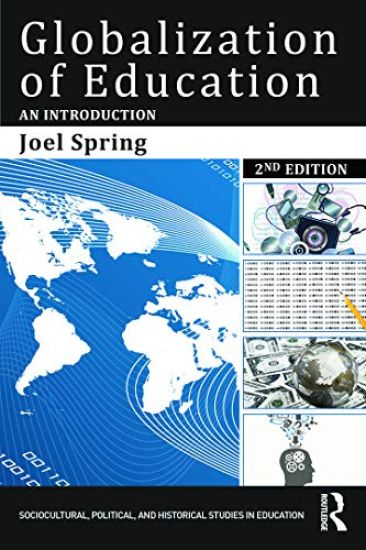
Continuing Joel Spring’s reportage and analysis of the intersection of global forces and education, this text offers a comprehensive overview and synthesis of current research, theories, and models related to the topic. Written in his signature clear, narrative style, Spring introduces the processes, institutions, and forces by which schooling has been globalized and examines the impact of these forces on schooling in local contexts. Significant conceptual frameworks are added to this Second Edition, specifically the “economization of education,” “corporatization of education” and the “audit state.” These concepts are embedded in the global educational plans of major organizations such as the World Bank, the Organization for Economic Development and Cooperation (OECD), World Economic Forum, and multinational corporations. Globalization of Education, Second Edition features new and updated information on • The World Bank• OECD and the United Nations• The World Trade Organization and the Global Culture of Higher Education• Corporatization of Global Education• Religious and Indigenous Education Models• The Global Workforce: Migration and the Talent Auction• Globalization and Complex Thought
Continuing Joel Spring’s reportage and analysis of the intersection of global forces and education, this text offers a comprehensive overview and synthesis of current research, theories, and models related to the topic. Written in his signature clear, narrative style, Spring introduces the processes, institutions, and forces by which schooling has been globalized and examines the impact of these forces on schooling in local contexts. Significant conceptual frameworks are added to this Second Edition, specifically the “economization of education,” “corporatization of education” and the “audit state.” These concepts are embedded in the global educational plans of major organizations such as the World Bank, the Organization for Economic Development and Cooperation (OECD), World Economic Forum, and multinational corporations. Globalization of Education, Second Edition features new and updated information on • The World Bank• OECD and the United Nations• The World Trade Organization and the Global Culture of Higher Education• Corporatization of Global Education• Religious and Indigenous Education Models• The Global Workforce: Migration and the Talent Auction• Globalization and Complex Thought
Turning his distinctive analytical lens to the politics of American education, Joel Spring looks at contemporary educational policy issues from theoretical, practical, and historical perspectives. This comprehensive overview documents and explains who influences educational policy and how, bringing to life the realities of schooling in the 21st century and revealing the ongoing ideological struggles at play. Coverage includes the influence of global organizations on American school policies and the impact of emerging open source and other forms of electronic textbooks.Thought-provoking, lucid, original in its conceptual framework and rich with engaging examples from the real world, this text is timely and useful for understanding the big picture and the micro-level intricacies of the multiple forces at work in controlling U.S. public schools . It is the text of choice for any course that covers or addresses the politics of American education.Companion Website: The interactive Companion Website accompanying this text includes relevant data, public domain documents, YouTube links, and links to websites representing political organizations and interest groups involved in education.
Turning his distinctive analytical lens to the politics of American education, Joel Spring looks at contemporary educational policy issues from theoretical, practical, and historical perspectives. This comprehensive overview documents and explains who influences educational policy and how, bringing to life the realities of schooling in the 21st century and revealing the ongoing ideological struggles at play. Coverage includes the influence of global organizations on American school policies and the impact of emerging open source and other forms of electronic textbooks.Thought-provoking, lucid, original in its conceptual framework and rich with engaging examples from the real world, this text is timely and useful for understanding the big picture and the micro-level intricacies of the multiple forces at work in controlling U.S. public schools . It is the text of choice for any course that covers or addresses the politics of American education.Companion Website: The interactive Companion Website accompanying this text includes relevant data, public domain documents, YouTube links, and links to websites representing political organizations and interest groups involved in education.
Education Networks is a critical analysis of the emerging intersection among the global power elite, information and communication technology, and schools. Joel Spring documents and examines the economic and political interests and forces —including elite networks, the for-profit education industry, data managers, and professional educators — that are pushing the use of ICT for online instruction, test preparation and tutoring, data management, instructional software packages, and more , and looks closely at the impact this is having on schools, students, and learning. Making a distinction between "mind" (as socially constructed) and "brain" (as a physiological entity), Spring draws on recent findings from comparative psychology on the possible effects of ICT on the social construction of the minds of students and school managers, and from neuroscience regarding its effect on students’ brains. Throughout, the influence of elite networks and powerful interest groups is linked to what is happening to children in classrooms. In conclusion Spring offers bold suggestions to change the course of the looming technological triumph of ICT in the "brave new world" of schooling.
Education Networks is a critical analysis of the emerging intersection among the global power elite, information and communication technology, and schools. Joel Spring documents and examines the economic and political interests and forces —including elite networks, the for-profit education industry, data managers, and professional educators — that are pushing the use of ICT for online instruction, test preparation and tutoring, data management, instructional software packages, and more , and looks closely at the impact this is having on schools, students, and learning. Making a distinction between "mind" (as socially constructed) and "brain" (as a physiological entity), Spring draws on recent findings from comparative psychology on the possible effects of ICT on the social construction of the minds of students and school managers, and from neuroscience regarding its effect on students’ brains. Throughout, the influence of elite networks and powerful interest groups is linked to what is happening to children in classrooms. In conclusion Spring offers bold suggestions to change the course of the looming technological triumph of ICT in the "brave new world" of schooling.
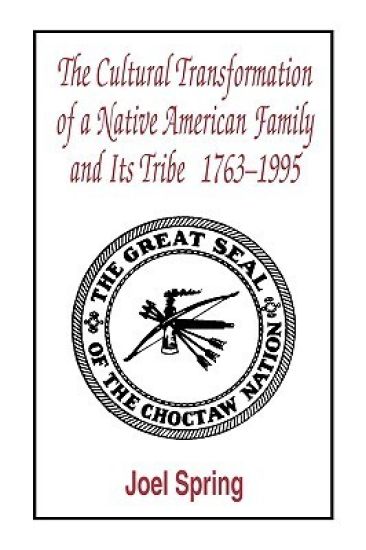
This book describes the impact of U.S. government civilization and education policies on a Native American family and its tribe from 1763 to 1995. While engaged in a personal quest for his family's roots in Choctaw tribal history, the author discovered a direct relationship between educational policies and their impact on his family and tribe. Combining personal narrative with traditional historical methodology, the author details how federal education policies concentrated power in a tribal elite that controlled its own school system in which students were segregated by social class and race. The book begins with the cultural differences that existed between Native Americans and European colonists. The civilization policies discussed begin in the 1790s when both Presidents George Washington and Thomas Jefferson searched for a means of gaining the lands occupied by the southern tribes, including the Choctaws. The story involves a complicated interaction between government policies, the agenda of white educators, and the desires of Native Americans. In a broader context, it is a study of the evolution of an American family from the extended support of the community and clan of the past, to the present world of single parents adrift without community or family safety nets.
This book describes the impact of U.S. government civilization and education policies on a Native American family and its tribe from 1763 to 1995. While engaged in a personal quest for his family's roots in Choctaw tribal history, the author discovered a direct relationship between educational policies and their impact on his family and tribe. Combining personal narrative with traditional historical methodology, the author details how federal education policies concentrated power in a tribal elite that controlled its own school system in which students were segregated by social class and race. The book begins with the cultural differences that existed between Native Americans and European colonists. The civilization policies discussed begin in the 1790s when both Presidents George Washington and Thomas Jefferson searched for a means of gaining the lands occupied by the southern tribes, including the Choctaws. The story involves a complicated interaction between government policies, the agenda of white educators, and the desires of Native Americans. In a broader context, it is a study of the evolution of an American family from the extended support of the community and clan of the past, to the present world of single parents adrift without community or family safety nets.
Joel Spring investigates the role of educational policy in the evolving global economy, and the consequences of school systems around the world adapting to meet the needs of international corporations. The new global model for education addresses problems of technological change, the quick exchange of capital, and free markets; policies to resolve these problems include "lifelong learning," "learning societies," international and national accreditation of work skills; international and national standards and tests; school choice; multiculturalism; and economic nationalism. The distinctive contribution Spring makes is to offer an original interpretive framework for examining and understanding the interconnections among education, imperialism and colonialism, and the rise of the global economy. He offers a unique comparison of the educational policies of the World Bank, the United Nations, the European Union, and the Organization for Economic Development and Cooperation. Additionally, he provides and weaves together important historical and current information on education in the context of the expansion of international capitalism; much of this information, gathered from many diverse sources, is otherwise not easily available to readers of this book. In the concluding chapters of the volume, Spring presents a thoughtful analysis and a powerful argument emphasizing the importance of human rights education in a global economy. This volume is a sequel to Spring's earlier book, Education and the Rise of the Corporate State (1972), continuing the work he has been engaged in since the 1970s to describe and analyze the relationship between political, economic, and historical forces and educational policy.
Joel Spring investigates the role of educational policy in the evolving global economy, and the consequences of school systems around the world adapting to meet the needs of international corporations. The new global model for education addresses problems of technological change, the quick exchange of capital, and free markets; policies to resolve these problems include "lifelong learning," "learning societies," international and national accreditation of work skills; international and national standards and tests; school choice; multiculturalism; and economic nationalism. The distinctive contribution Spring makes is to offer an original interpretive framework for examining and understanding the interconnections among education, imperialism and colonialism, and the rise of the global economy. He offers a unique comparison of the educational policies of the World Bank, the United Nations, the European Union, and the Organization for Economic Development and Cooperation. Additionally, he provides and weaves together important historical and current information on education in the context of the expansion of international capitalism; much of this information, gathered from many diverse sources, is otherwise not easily available to readers of this book. In the concluding chapters of the volume, Spring presents a thoughtful analysis and a powerful argument emphasizing the importance of human rights education in a global economy. This volume is a sequel to Spring's earlier book, Education and the Rise of the Corporate State (1972), continuing the work he has been engaged in since the 1970s to describe and analyze the relationship between political, economic, and historical forces and educational policy.
In this book, Joel Spring offers a powerful and closely reasoned justification and definition for the universal right to education--applicable to all cultures--as provided for in Article 26 of the United Nation's Universal Declaration of Human Rights. One sixth of the world's population, nearly 855 million people, are functionally illiterate, and 130 million children in developing countries are without access to basic education. Spring argues that in our crowded global economy, educational deprivation has dire consequences for human welfare. Such deprivation diminishes political power. Education is essential for providing citizens with the tools for resisting totalitarian and repressive governments and economic exploitation. What is to be done? The historically grounded, highly original analysis and proposals Spring sets forth in this book go a long way toward answering this urgent question. Spring first looks at the debates leading up to the Universal Declaration of Human Rights in 1948, to see how the various writers dealt with the issue of cultural differences. These discussions provide a framework for examining the problem of reconciling cultural differences with universal concepts. He next expands on the issue of education and cultural differences by proposing a justification for education that is applicable to indigenous peoples and minority cultures and languages. This justification is then applied to all people within the current global economy. Acknowledging that the right to an education is inseparable from children's rights, he uses the concept of a universal right to education to justify children's rights, and, in turn, applies his definition of children's liberty rights to the concept of education. His synthesis of cultural, language, and children's rights provides the basis for a universal justification and definition for the right to education -- which, in the concluding chapters, Spring uses to propose universal guidelines for human rights education, and instruction in literacy, numeracy, cultural centeredness, and moral economy.
This is the first book to explore the meaning of equality and freedom of education in a global context and their relationship to the universal right to education. It also proposes evaluating school systems according to their achievement of equality and freedom. Education in the 21st century is widely viewed as a necessary condition for the promotion of human welfare, and thus identified as a basic human right. Educational rights are included in many national constitutions written since the global spread of human rights ideas after World War II. But as a global idea, the meaning of educational rights varies between civilizations. In this book, which builds on the concept of the universal right to education set forth in Spring's The Universal Right to Education: Justification, Definition, and Guidelines, his intercivilizational analysis of educational rights focuses on four of the world's major civilizations: Confucian, Islamic, Western, and Hindu. Spring begins by considering educational rights as part of the global flow of ideas and the global culture of schooling. He also considers the tension this generates within different civilizational traditions. Next, he proceeds to: *examine the meaning of educational rights in the Confucian tradition, in the recent history of China, and in the Chinese Constitution; *look at educational rights in the context of Islamic civilization and as presented in the constitutions of Islamic countries, including an analysis of the sharp contrast between the religious orientation of Islamic educational rights and those of China and the West; *explore the problems created by the Western natural rights tradition and the eventual acceptance of educational rights as represented in European constitutions, with a focus on the development and prominence given in the West to the relationship between schooling and equality of opportunity; and, *investigate the effect of global culture on India and the blend of Western and Hindu ideas in the Indian constitution, highlighting the obstacles to fulfillment of educational rights created by centuries of discrimination against women and lower castes. In his conclusion, Spring presents an educational rights statement based on his intercivilizational analysis and his examination of national constitutions. This statement is intended to serve as a model for the inclusion of educational rights in national constitutions.
This is the first book to explore the meaning of equality and freedom of education in a global context and their relationship to the universal right to education. It also proposes evaluating school systems according to their achievement of equality and freedom. Education in the 21st century is widely viewed as a necessary condition for the promotion of human welfare, and thus identified as a basic human right. Educational rights are included in many national constitutions written since the global spread of human rights ideas after World War II. But as a global idea, the meaning of educational rights varies between civilizations. In this book, which builds on the concept of the universal right to education set forth in Spring's The Universal Right to Education: Justification, Definition, and Guidelines, his intercivilizational analysis of educational rights focuses on four of the world's major civilizations: Confucian, Islamic, Western, and Hindu. Spring begins by considering educational rights as part of the global flow of ideas and the global culture of schooling. He also considers the tension this generates within different civilizational traditions. Next, he proceeds to: *examine the meaning of educational rights in the Confucian tradition, in the recent history of China, and in the Chinese Constitution; *look at educational rights in the context of Islamic civilization and as presented in the constitutions of Islamic countries, including an analysis of the sharp contrast between the religious orientation of Islamic educational rights and those of China and the West; *explore the problems created by the Western natural rights tradition and the eventual acceptance of educational rights as represented in European constitutions, with a focus on the development and prominence given in the West to the relationship between schooling and equality of opportunity; and, *investigate the effect of global culture on India and the blend of Western and Hindu ideas in the Indian constitution, highlighting the obstacles to fulfillment of educational rights created by centuries of discrimination against women and lower castes. In his conclusion, Spring presents an educational rights statement based on his intercivilizational analysis and his examination of national constitutions. This statement is intended to serve as a model for the inclusion of educational rights in national constitutions.
In Educating the Consumer-Citizen: A History of the Marriage of Schools, Advertising, and Media, Joel Spring charts the rise of consumerism as the dominant American ideology of the 21st century. He documents and analyzes how, from the early 19th century through the present, the combined endeavors of schools, advertising, and media have led to the creation of a consumerist ideology and ensured its central place in American life and global culture. Spring first defines consumerist ideology and consumer-citizen and explores their 19th-century origins in schools, children's literature, the commercialization of American cities, advertising, newspapers, and the development of department stores. He then traces the rise of consumerist ideology in the 20th century by looking closely at: the impact of the home economics profession on the education of women as consumers and the development of an American cuisine based on packaged and processed foods; the influence of advertising images of sports heroes, cowboys, and the clean-shaven businessman in shaping male identity; the outcomes of the growth of the high school as a mass institution on the development of teenage consumer markets; the consequences of commercial radio and television joining with the schools to educate a consumer-oriented population so that, by the 1950s, consumerist images were tied to the Cold War and presented as the "American way of life" in both media and schools; the effects of the civil rights movement on integrating previously excluded groups into the consumer society; the changes the women's movement demanded in textbooks, school curricula, media, and advertising that led to a new image of women in the consumer market; and the ascent of fast food education. Spring carries the story into the 21st century by examining the evolving marriage of schools, advertising, and media and its ongoing role in educating the consumer-citizen and creating an integrated consumer market. This book will be of wide interest to scholars, professionals, and students across foundations of education, history and sociology of education, educational policy, mass communications, American history, and cultural studies. It is highly appropriate as a text for courses in these areas.