Kirjojen hintavertailu. Mukana 12 400 647 kirjaa ja 12 kauppaa.

Kirjahaku

Etsi kirjoja tekijän nimen, kirjan nimen tai ISBN:n perusteella.

12 kirjaa tekijältä Johannes Fried

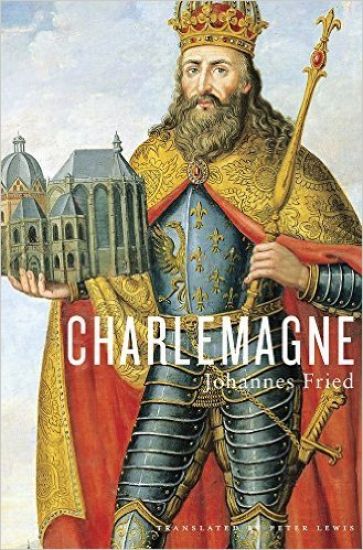
Charlemagne

Charlemagne

Johannes Fried

Harvard University Press
2016
sidottu
When Charlemagne died in 814 CE, he left behind a dominion and a legacy unlike anything seen in Western Europe since the fall of Rome. Distinguished historian and author of The Middle Ages Johannes Fried presents a new biographical study of the legendary Frankish king and emperor, illuminating the life and reign of a ruler who shaped Europe’s destiny in ways few figures, before or since, have equaled.Living in an age of faith, Charlemagne was above all a Christian king, Fried says. He made his court in Aix-la-Chapelle the center of a religious and intellectual renaissance, enlisting the Anglo-Saxon scholar Alcuin of York to be his personal tutor, and insisting that monks be literate and versed in rhetoric and logic. He erected a magnificent cathedral in his capital, decorating it lavishly while also dutifully attending Mass every morning and evening. And to an extent greater than any ruler before him, Charlemagne enhanced the papacy’s influence, becoming the first king to enact the legal principle that the pope was beyond the reach of temporal justice—a decision with fateful consequences for European politics for centuries afterward.Though devout, Charlemagne was not saintly. He was a warrior-king, intimately familiar with violence and bloodshed. And he enjoyed worldly pleasures, including physical love. Though there are aspects of his personality we can never know with certainty, Fried paints a compelling portrait of a ruler, a time, and a kingdom that deepens our understanding of the man often called “the father of Europe.”
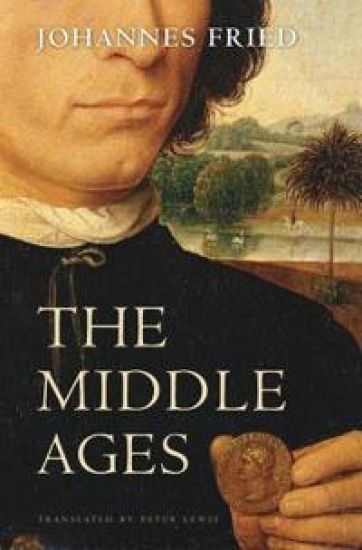
The Middle Ages

The Middle Ages

Johannes Fried

The Belknap Press
2017
nidottu
Since the fifteenth century, when humanist writers began to speak of a “middle” period in history linking their time to the ancient world, the nature of the Middle Ages has been widely debated. Across the millennium from 500 to 1500, distinguished historian Johannes Fried describes a dynamic confluence of political, social, religious, economic, and scientific developments that draws a guiding thread through the era: the growth of a culture of reason.“Fried’s breadth of knowledge is formidable and his passion for the period admirable…Those with a true passion for the Middle Ages will be thrilled by this ambitious defensio.”—Dan Jones, Sunday Times“Reads like a counterblast to the hot air of the liberal-humanist interpreters of European history…[Fried] does justice both to the centrifugal fragmentation of the European region into monarchies, cities, republics, heresies, trade and craft associations, vernacular literatures, and to the persistence of unifying and homogenizing forces: the papacy, the Western Empire, the schools, the friars, the civil lawyers, the bankers, the Crusades…Comprehensive coverage of the whole medieval continent in flux.”—Eric Christiansen, New York Review of Books“[An] absorbing book…Fried covers much in the realm of ideas on monarchy, jurisprudence, arts, chivalry and courtly love, millenarianism and papal power, all of it a rewarding read.”—Sean McGlynn, The Spectator
Canossa

Canossa

Johannes Fried

Walter de Gruyter
2012
sidottu
Canossa war keine Wende. Canossa fuuuml;hrte zu keiner Entzauberung der Welt. Dieses Canossa war ein Mythos, eine Legende. Tatsaauml;chlich schlossen Papst Gregor VII. und Koouml;nig Heinrich IV. in Canossa einen Friedensvertrag. Erinnerungsunkritische Kritik wollte diesen Pakt in Zweifel ziehen, als "neue Legende" voreilig dem Vergessen uberantworten. Die vorliegende Streitschrift setzt sich mit dieser Kritik auseinander und zeigt, wie auch die gegenwartige Geschichtsforschung der Modulationsmacht des Gedachtnisses ausgeliefert ist und damit zu Fehlurteilen fuhrt. Sie verweist auf wesentliche Inhalte und Ziele des Vertrags von Canossa, den wechselseitigen Schutz der Ehre von Papst und Konig, die angestrebte Konsenserneuerung im Reich der Deutschen, zeigt aber auch sein Scheitern durch die Uneinigkeit der Fuhrungseliten dort und in der Lombardei. Nicht Heinrichs Rekonziliation in Canossa, nicht die Kirchenreform, kein nach Weltherrschaft greifender Papst brachten die Wende, den Auftakt zu einem durch annahernd dreihundert Jahre immer wieder erneuerten, konflikttrachtigen Gegenkonigtum im romisch-deutschen Imperium, sondern interne Konflikte, der Hader unter den Deutschen.
"Donation of Constantine" and "Constitutum Constantini"
The Donation of Constantine is the most outrageous and powerful forgery in world history. The question of its precise time of origin alone kept generations of researchers occupied. But, what exactly is the Donation of Constantine? To find the answer, it is necessary to approach the question on two different semantic levels: First, as the Constitutum Constantini, a fictitious privilege, in which, among other things, rights and presents were bestowed on the catholic church by a grateful Emperor Konstantin. Secondly, as a reflection of the Middle Age mindset, becoming part of the culture landscape midway through 11th century A.D. The author not only reinterprets the origin of this forgery (i.e. puts it down to the Franks’ opposition of Emperor Louis the Pious), but retells, as well, the history of its misinterpretation since the High Middle Ages. In an appendix, all relevant texts are printed in the original language, an English translation is provided.
Das Mittelalter

Das Mittelalter

Johannes Fried

C.H. BECK
2009
sidottu
Johannes Fried, einer der großen Mediävisten unserer Zeit, schildert in seinem Buch die faszinierende Geschichte jener Menschen und Mächte, die Europa zu seiner geistigen und kulturellen Einheit formten, die Grundlagen der modernen Nationen schufen, Staat und Kirche in zähem Ringen voneinander lösten, die Freiheit des Bürgers erfanden und auf vielen Feldern, von der Wissenschaft bis zur Entdeckung ferner Länder, in neue Welten aufbrachen. Einzelne Menschen - bald ein Papst, bald ein König, bald ein Gelehrter, Missionar oder Kaufmann - machen sich dem Leser im Laufe des Buches bekannt und geleiten uns durch ihre Zeit. Sie lassen uns teilhaben an ihren Erfahrungen und Konflikten, an ihren Erlebnissen und Ideen. Johannes Frieds souveräne Erzählkunst bringt uns auf diese Weise das angeblich so "finstere" Mittelalter nahe, wie es nur wenigen Historikern gelingt. Die viel gescholtenen aufregenden Jahrhunderte des Mittelalters, so zeigt uns dieses bedeutende Werk, eröffnen in Wahrheit den Weg in unsere moderne Welt.