Kirjojen hintavertailu. Mukana 11 699 587 kirjaa ja 12 kauppaa.

Kirjahaku

Etsi kirjoja tekijän nimen, kirjan nimen tai ISBN:n perusteella.

12 kirjaa tekijältä John Alcock

The Triumph of Sociobiology

The Triumph of Sociobiology

John Alcock

Oxford University Press Inc
2001
sidottu
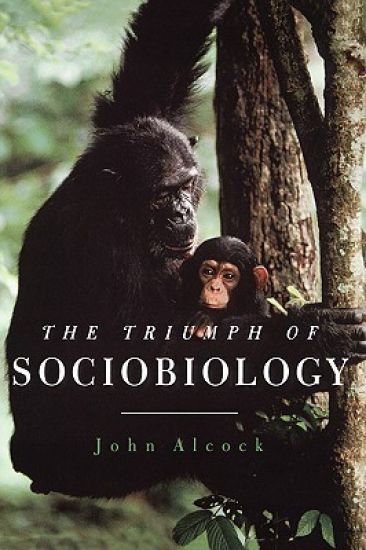
In The Triumph of Sociobiology, John Alcock reviews the controversy that has surrounded evolutionary studies of human social behavior following the 1975 publication of E.O. Wilson's classic, Sociobiology, The New Synthesis. Denounced vehemently as an "ideology" that has justified social evils and inequalities, sociobiology has survived the assault. Twenty-five years after the field was named by Wilson, the approach he championed has successfully demonstrated its value in the study of animal behavior, including the behavior of our own species. Yet, misconceptions remain--to our disadvantage. In this straight-forward, objective approach to the sociobiology debate, noted animal behaviorist John Alcock illuminates how sociobiologists study behavior in all species. He confronts the chief scientific and ideological objections head on, with a compelling analysis of case histories that involve such topics as sexual jealousy, beauty, gender difference, parent-offspring relations, and rape. In so doing, he shows that sociobiology provides the most satisfactory scientific analysis of social behavior available today. Alcock challenges the notion that sociobiology depends on genetic determinism while showing the shortcoming of competing approaches that rely on cultural or environmental determinism. He also presents the practical applications of sociobiology and the progress sociobiological research has made in the search for a more complete understanding of human activities. His reminder that "natural" behavior is not "moral" behavior should quiet opponents fearing misapplication of evolutionary theory to our species. The key misconceptions about this evolutionary field are dissected one by one as the author shows why sociobiologists have had so much success in explaining the puzzling and fascinating social behavior of nonhuman animals and humans alike.
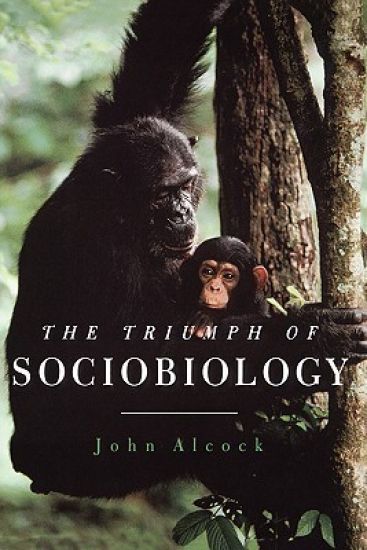
The Triumph of Sociobiology

The Triumph of Sociobiology

John Alcock

Oxford University Press Inc
2003
nidottu
In The Triumph of Sociobiology, John Alcock reviews the controversy that has surrounded evolutionary studies of human social behavior following the 1975 publication of E.O. Wilson's classic, Sociobiology, The New Synthesis. Denounced vehemently as an "ideology" that has justified social evils and inequalities, sociobiology has survived the assault. Twenty-five years after the field was named by Wilson, the approach he championed has successfully demonstrated its value in the study of animal behavior, including the behavior of our own species. Yet, misconceptions remain--to our disadvantage. In this straight-forward, objective approach to the sociobiology debate, noted animal behaviorist John Alcock illuminates how sociobiologists study behavior in all species. He confronts the chief scientific and ideological objections head on, with a compelling analysis of case histories that involve such topics as sexual jealousy, beauty, gender difference, parent-offspring relations, and rape. In so doing, he shows that sociobiology provides the most satisfactory evolutionary analysis of social behavior today. "A clear, evocative, and accurate account of the history and content on the subject, inviting to the student and the general reader alike."--Edward O. Wilson, Harvard University.
An Enthusiasm for Orchids

An Enthusiasm for Orchids

John Alcock

OXFORD UNIVERSITY PRESS INC
2006
sidottu
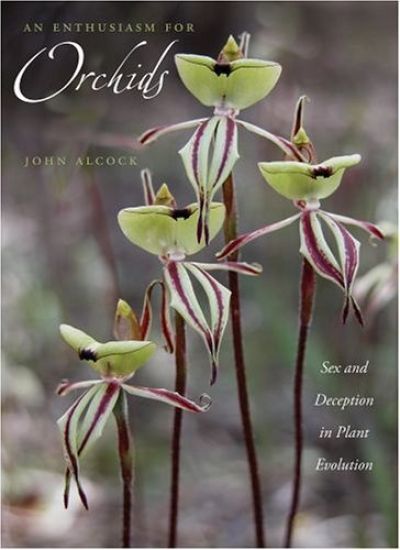
The male thynnine wasp's extreme sexual enthusiasm is crucial to reproduction of hammer orchids in the wild. Hammer orchids have co-evolved to produce odors identical to those manufactured by female thynnine wasps. The male wasp's superb sensitivity to the scent of his female mate is the basis for the hammer orchid's deceit—in effect, orchids exploit the male insect's highly adaptive sense of smell for their own propogation. While pollinating orchids is a waste of time, and thus a maladaptive activity for a wasp, his mistake comes about because he must react quickly whenever he senses a possible mate nearby. Alcock suggests that, "for insects, he who hesitates is lost, although perhaps it would be better to say that he who hesitates often loses a chance to pass on his genes." This book abounds with clever explanations for how these exceptionally complex flowers came to be shaped as they are. The reader can explore many aspects of orchid biology and history ranging from how some species avoid inbreeding, to the origins of orchids from an ancestor that belonged to the asparagus family. Examining each component of an orchid's flower, Alcock explains how the various parts work together to produce the plant's minute offspring. Each element of an orchid, as quirky as it may seem, is biologically significant, bearing the imprint of natural selection. Readers can share in the delight that Darwin and all other orchid enthusiasts have felt in making sense of even the smallest of details of these most wonderful plants.
In a Desert Garden

In a Desert Garden

John Alcock

WW Norton Co
1998
sidottu
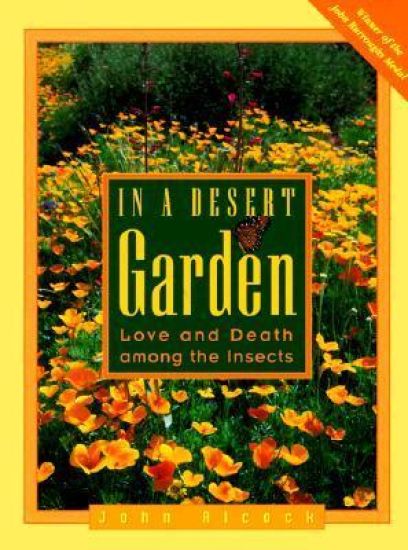
With canny insight and bone-dry wit, John Alcock, a specialist in the ecology of the American Southwest, introduces us to the lives and loves of desert insects as they forage through his backyard oasis. Creating his own desert garden behind his suburban home in Tempe, Arizona, Alcock scrutinizes every square inch of soil detailing the exotic plant life he finds and offering tips on its peccadilloes and preservation. The true heroes of this story, however, are the bugs of Alcock's backyard. We are drawn into complex plots almost biblical in nature of life and love, survival and death. Two male earwigs caught in each other's pincers battle for a prized female. A female mantis finishes copulating, beheads her mate, and cannibalizes his body for its precious protein. With each detail, Alcock pieces together the entire ecosystem of his desert paradise. Always amusing and instructive, and sometimes dramatic, In a Desert Garden provides an eye-opening meditation on the joys of planting, weeding, pruning, and, most of all, bug-hunting.
Sonoran Desert Spring

Sonoran Desert Spring

John Alcock

University of Arizona Press
1994
nidottu
"Spring on the Sonoran Desert can be a four-month-long spectacle of life and color. Within these well-written pages, Alcock exposes us to the plant and animal life of a land many regard as desolate. To Alcock, the desert has a constant evolutionary beauty he never seems to tire of. Alcock's approach to his subject is an elegant combination of science and literature. Only the desert itself, arrayed in its April apparel, can rival the beauty of this book." Arizona Highways "Deserts are not as bereft of life as they seem; their barren landscapes can support a remarkable variety of plant and animal life, though it may require a patient and skilled naturalist to reveal its mysteries. John Alcock is just such a naturalist...Alcock provides delightful insights into how insects provision their developing young, how parasites find their victims and how flowers attract pollinators. A book of this kind allows its author, more accustomed to the rigours and constraints of writing academic papers and books, to relate revealing anecdotes and simply to express their fascinating for natural history...Books such as this serve a vital function in bringing the mysteries of the desert to the attention of a wider public. " Times Literary Supplement
Sonoran Desert Summer

Sonoran Desert Summer

John Alcock

University of Arizona Press
1994
nidottu
What could seem less inviting than summer in the desert? For most people, this prospect conjures up the image of relentless heat and parched earth; for biologist John Alcock, summer in Arizona's Sonoran Desert represents an opportunity to investigate the wide variety of life that flourishes in one of the most extreme environments in North America. "Only very special plants and animals can survive and reproduce in a place that may receive as little as six inches of rain in a year," observes Alcock, "a place where the temperature may rise above one hundred degrees each day for months on end." Yet he and other biologists have discovered here startling signs of life hidden in plain view under the summer sun: - male digger bees compete to reach virgins underground during the early summer mating season; - the round-tailed ground squirrel goes about its business, sounding alarm calls when danger threatens its kin; - the big-jawed beetles Dendrobias mandibularis emerge in time to feast on saguaro fruits and to use their mandibles on rival males as well; - Harris's hawks congregate in groups, showing their affinity for polyandry and communal hunting; - robberflies mimic the appearance of the bees and wasps on which they prey; - and peccaries reveal the adaptation of their reproductive cycle to the desert's seasonal rains. The book's 38 chapters introduce readers to these and other desert animals and plants, tracing the course of the season through activities as vibrant as mating rituals and as subtle as the gradual deterioration of a fallen saguaro cactus. Enhanced by the line drawings of Marilyn Hoff Stewart, Sonoran Desert Summer is both an account of how modern biology operates and a celebration of the beauty and diversity that can be found in even the most unpromising places.
In a Desert Garden

In a Desert Garden

John Alcock

University of Arizona Press
1999
nidottu
When John Alcock replaced the Bermuda grass in his suburban Arizona lawn with gravel, cacti, and fairy dusters, he was doing more than creating desert landscaping. He seeded his property with flowers to entice certain insects and even added a few cowpies to attract termites, creating a personal laboratory for ecological studies. His observations of life in his own front yard provided him with the fieldnotes for this unusual book. In a Desert Garden draws readers into the strange and fascinating world of plants and animals native to Arizona's Sonoran Desert. As Alcock studies the plants in his yard, he shares thoughts on planting, weeding, and pruning that any gardener will appreciate. And when commenting on the mating rituals of spiders and beetles or marveling at the camouflage of grasshoppers and caterpillars, he uses humor and insight to detail the lives of the insects that live in his patch of desert. Celebrating the virtues of even aphids and mosquitoes, Alcock draws the reader into the intricacies of desert life to reveal the complex interactions found in this unique ecosystem. In a Desert Garden combines meticulous science with contemplations of nature and reminds us that a world of wonder lies just outside our own doors.
When the Rains Come

When the Rains Come

John Alcock

University of Arizona Press
2009
nidottu
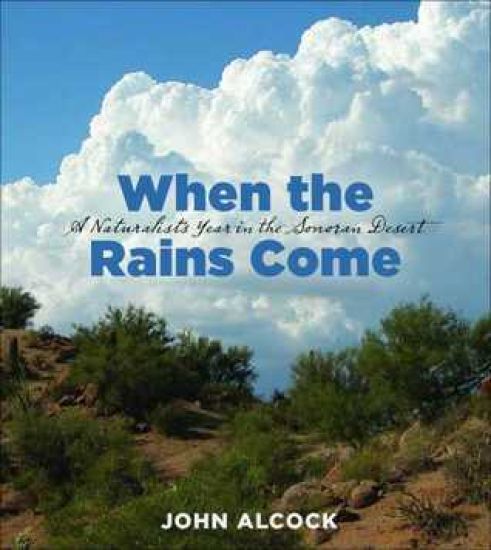
Life in the desert is a waiting game: waiting for rain. And in a year of drought, the stakes are especially high. John Alcock knows the Sonoran Desert better than just about anyone else, and in this book he tracks the changes he observes in plant and animal life over the course of a drought year. Combining scientific knowledge with years of exploring the desert, he describes the variety of ways in which the wait for rain takes place, nd what happens when it finally comes. The desert is a land of five seasons, featuring two summers?hot, dry months followed by monsoon, nd Alcock looks at the changes that take place in an entire desert community over the course of all five. He describes what he finds on hikes in the Usery Mountains near Phoenix, where he has studied desert life over three decades and where frequent visits have enabled him to notice effects of seasonal variation that might escape a casual glance. Blending a personal perspective with field observation, Alcock shows how desert ecology depends entirely on rainfall. He touches on a wide range of topics concerning the desert's natural history, noting the response of saguaro flowers to heat and the habits of predators, whether soaring red-tailed hawk or tiny horned lizard. He also describes unusual aspects of insects that few desert hikers will have noticed, such as the disruptive color pattern of certain grasshoppers that is more effective than most camouflage. When the Rains Come is brimming with new insights into the desert, from the mating behaviors of insects to urban sprawl, and features photographs that document changes in the landscape as drought years come and go. It brings us the desert in the harshest of times, nd shows that it is still teeming with life.
After the Wildfire

After the Wildfire

John Alcock

University of Arizona Press
2017
nidottu
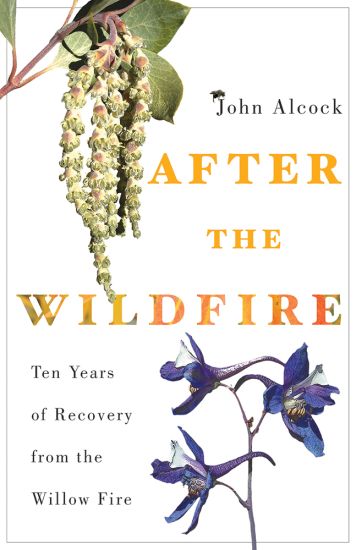
Swallowtail butterflies frolic on the wind. Vireos and rock wrens sing their hearts out by the recovering creek. Spiders and other predators chase their next meal. Through it all, John Alcock observes, records, and delights in what he sees. In a once-burnt area, life resurges. Plants whose seeds and roots withstood an intense fire become habitat for the returning creatures of the wild. After the Wildfire describes the remarkable recovery of wildlife in the Mazatzal Mountains in central Arizona. It is the rare observer who has the dedication to revisit the site of a wildfire, especially over many years and seasons. But naturalist John Alcock returned again and again to the Mazatzals, where the disastrous Willow fire of 2004 burned 187 square miles. Documenting the fire’s aftermath over a decade, Alcock thrills at the renewal of the once-blackened region. Walking the South Fork of Deer Creek in all seasons as the years passed, he was rewarded by the sight of exuberant plant life that in turn fostered an equally satisfying return of animals ranging from small insects to large mammals. Alcock clearly explains the response of chaparral plants to fire and the creatures that reinhabit these plants as they come back from a ferocious blaze: the great spreadwing damselfly, the western meadowlark, the elk, and birds and bugs of rich and colorful varieties. This book is at once a journey of biological discovery and a celebration of the ability of living things to reoccupy a devastated location. Alcock encourages others to engage the natural world—even one that has burnt to the ground.
The Life of Miss Fanny Brown, (a Clergyman's Daughter

The Life of Miss Fanny Brown, (a Clergyman's Daughter

John Alcock

Gale Ecco, Print Editions
2018
sidottu
The 18th century was a wealth of knowledge, exploration and rapidly growing technology and expanding record-keeping made possible by advances in the printing press. In its determination to preserve the century of revolution, Gale initiated a revolution of its own: digitization of epic proportions to preserve these invaluable works in the largest archive of its kind. Now for the first time these high-quality digital copies of original 18th century manuscripts are available in print, making them highly accessible to libraries, undergraduate students, and independent scholars.Western literary study flows out of eighteenth-century works by Alexander Pope, Daniel Defoe, Henry Fielding, Frances Burney, Denis Diderot, Johann Gottfried Herder, Johann Wolfgang von Goethe, and others. Experience the birth of the modern novel, or compare the development of language using dictionaries and grammar discourses. ++++The below data was compiled from various identification fields in the bibliographic record of this title. This data is provided as an additional tool in helping to insure edition identification: ++++British LibraryT060020John Piper = John Alcock.Birmingham: printed for the author, and sold by him at Lichfield; Mr. Ross, London; T. Aris, Birmingham, 1760. lviii, 10],352p.; 12