Kirjojen hintavertailu. Mukana 11 717 486 kirjaa ja 12 kauppaa.

Kirjahaku

Etsi kirjoja tekijän nimen, kirjan nimen tai ISBN:n perusteella.

7 kirjaa tekijältä John B. Taylor

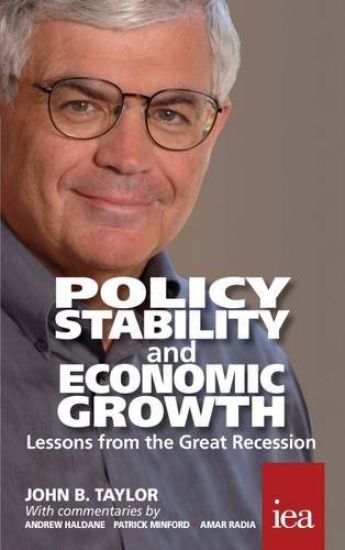
Policy Stability and Economic Growth

Policy Stability and Economic Growth

John B. Taylor

Institute of Economic Affairs
2016
nidottu
John Taylor is one of the foremost economists of our generation. His ideas were implemented in central banks across the world during the period of price stability, economic growth and financial stability that followed the 1980s. This period culminated in the financial crisis of 2008 which was followed by a very slow recovery which, seven years on, can hardly be said to be complete. This book presents Taylor's view of the financial crisis and its aftermath.Taylor argues that deviating from strict policy rules, both before and since the crisis, contributed to the events of 2008-13 and, especially, the very slow recovery in national income after the financial crisis. Furthermore, in other areas of government activity, such as regulation and law-making more generally, instability is being created, which is very bad for the economy.
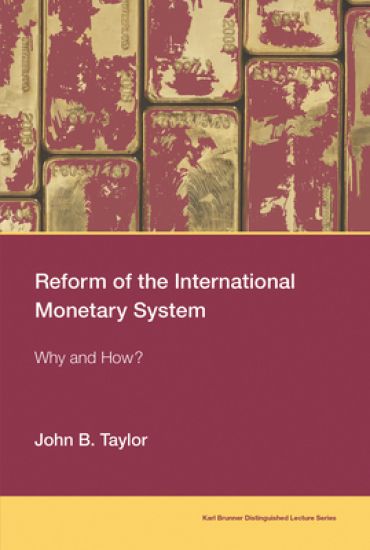
Reform of the International Monetary System
An argument that a rules-based reform of the international monetary system, achieved by applying basic economic theory, would improve economic performance.In this book, the economist John Taylor argues that the apparent correlation of monetary policy decisions among different countries-largely the result of countries' concerns about the exchange rate-causes monetary policy to deviate from effective policies that stabilize inflation and the economy. He argues that a rules-based reform of the international monetary system, achieved by applying basic economic theory, would improve economic performance.Taylor shows that monetary polices in recent years have been deployed either defensively, as central banks counteract forces from abroad that affect the exchange rate, or offensively, as central banks attempt to move the exchange rate to gain a competitive advantage. Focusing on the years from 2005 to 2017, he develops an empirical framework to examine two monetary policy instruments: the policy interest rate (the more conventional of the two) and the size of the balance sheet. He finds that an international contagion in central bank decisions about the policy interest rate has accentuated the deviation from standard interest rate rules that have worked in the past. He finds a similar contagion in decisions about the size of the balance sheet. By considering a counterfactual policy in the estimated model, Taylor is able to estimate by how much the policy of recent years has increased exchange rate volatility. After several rounds of monetary actions and reactions aimed at exchange rates, Taylor finds, the international monetary system is left with roughly the same interest rate configuration, but much larger balance sheets to unwind.
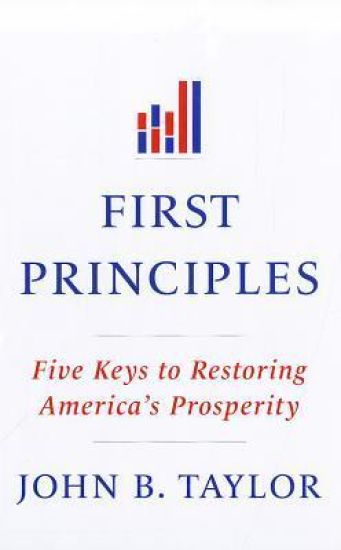
First Principles

First Principles

John B. Taylor

WW Norton Co
2012
sidottu
America’s economic future is uncertain. Mired in a long crippling economic slump and hamstrung by bitter partisan debate over the growing debt and the role of government, the nation faces substantial challenges, exacerbated by a dearth of vision and common sense among its leaders. Prominent Stanford economist John B. Taylor brings his steady voice of reason to the discussion with a natural solution: start with the country’s founding principles of economic and political freedom—limited government, rule of law, strong incentives, reliance on markets, a predictable policy framework—and reconstruct its economic foundation from these proven principles. Channeling his high-level experience as both a policymaker and researcher, Taylor then zeroes in on current policy issues—the budget, monetary policy, government regulation, tax reform—and lays out in simple terms bold strategies designed to place the country on sound footing in each of these areas.
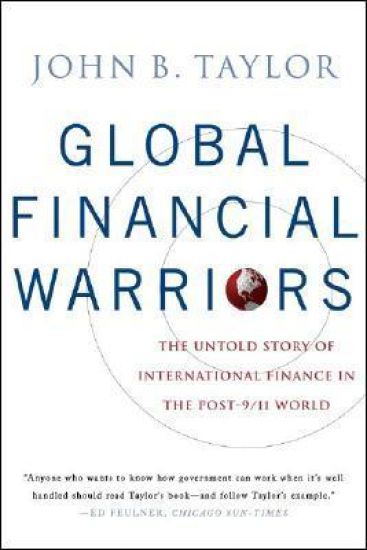
Global Financial Warriors

Global Financial Warriors

John B. Taylor

WW Norton Co
2008
nidottu
Sworn in as head of the U.S. Treasury Department’s international finance division just three months prior to 9/11, John B. Taylor soon found himself at the center of the war on terror. Global Financial Warriors takes you inside the White House Situation Room, to the meetings of the G7 finance ministers, and to cities worldwide as Taylor assembles a coalition to freeze terrorist assets, plans the financial reconstruction in Afghanistan, oversees the development of a new currency in Iraq, and deals with the spread of financial crises. From reforming the IMF and the World Bank to negotiating international agreements to reduce Iraq’s debt by 80 percent and cancel the debt of very poor countries, Taylor’s unparalleled access offers the reader an insider’s account of a pivotal time in international finance.
First Principles

First Principles

John B. Taylor

WW Norton Co
2013
nidottu
Mired in a crippling economic slump and hamstrung by partisan political debates, America faces substantial economic challenges, from widespread unemployment to the government’s ballooning debt. These assaults on our prosperity reflect the unintended consequences of more than a decade of government intervention in virtually all areas of the economy. Stanford University economist John B. Taylor proposes a natural and reasonable solution to our economic challenges: return to the country’s founding principles—limited government, rule of law, strong incentives, reliance on markets, a predictable policy framework—and rekindle its economic dynamism.
Ezekiel

Ezekiel

John B. Taylor

INTERVARSITY PRESS
2009
nidottu
John Taylor writes, "For most Bible readers Ezekiel is almost a closed book...Their knowledge of him extends little further than his mysterious vision of God's chariot-throne, with its wheels within wheels, and the vision of the valley of dry bones." However, the structure of Ezekiel is simple and orderly, and that makes it easy to analyze for modern readers.
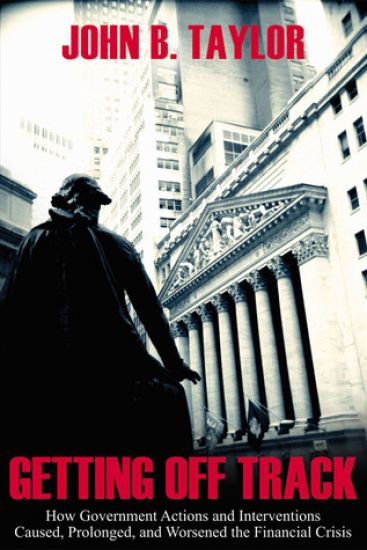
Getting Off Track

Getting Off Track

John B. Taylor

Hoover Institution Press,U.S.
2009
sidottu
Throughout history, financial crises have always been caused by excesses - frequently monetary excesses - which lead to a boom and an inevitable bust. In our current crisis it was a housing boom and bust that in turn led to financial turmoil in the United States and other countries. How did everything deteriorate so suddenly and dramatically? In Getting Off Track: How Government Actions and Interventions Caused, Prolonged, and Worsened the Financial Crisis, Hoover fellow and Stanford economist John B. Taylor offers empirical research to explain what caused the current financial crisis, what prolonged it, and what worsened it dramatically more than a year after it began. The author tells how unusually easy monetary policy helped set the crisis in motion, as interest rates at the Federal Reserve and several other central banks deviated from historical regularities. He explains monetary interaction with the subprime mortgage problem, showing how the use of these mortgages, especially the adjustable-rate variety, led to excessive risk taking. In the United States this was encouraged by government programs designed to promote home ownership, a worthwhile goal but overdone in retrospect. Looking ahead, the author suggests a set of principles to follow to prevent misguided actions and interventions in the future.