Kirjojen hintavertailu. Mukana 11 342 296 kirjaa ja 12 kauppaa.

Kirjahaku

Etsi kirjoja tekijän nimen, kirjan nimen tai ISBN:n perusteella.

4 kirjaa tekijältä John B. Wolf

Louis XIV

Louis XIV

John B. Wolf

WW Norton Co
2008
nidottu
Although Louis XIV was a vitally important figure in European history, he has found no satisfactory biographer until now. The memorists, particularly Saint-Simon, have “fixed” the traditional image of Louis so firmly it is difficult to see him in any other light. John B. Wolf, challenging the myths and biases, has based this important study on Louis’ own documents, his diaries, decrees, and hundreds of the king’s letters from the archives at Vincennes (hereto-fore almost unexploited). He presents the king as he appeared to his ministers, his diplomats, and his soldiers, rather than to the gossips of his court.
Louis XIV

Louis XIV

John B. Wolf

Palgrave Macmillan
1972
nidottu
Professor Wolf focuses on the problems of high politics and war, which intrigued Louis and were his instruments of power. Without ignoring the fact that Louis was also a son, husband, lover, and father as well as king he gives us a striking new image of Louis as soldier administrator and a vivid, accurate picture of the king s impact on the military machine after 1691, his part in the drama of war and in the emergence of a new Europe."
Fear of Fear

Fear of Fear

John B. Wolf

Springer-Verlag New York Inc.
2012
nidottu
Terrorism, continuing unabated in the contemporary world, is having a serious impact on the lives of people and nations. Once, only govern­ ments and ruling classes possessed the power to coerce large segments of the world's peoples. Today, a handful of thugs, covered and concealed by a collection of terrorist organizations, are disturbing people every­ where by perpetrating dramatic criminal acts-bombings, kidnappings, assassinations, etc.-on an almost daily basis, in places specifically cho­ sen for their vulnerability: a railroad train, a pub, a beachfront apartment, a bus, a restaurant. Furthermore, a few of the world's most notorious terrorist groups are associated in a loose coalition, which has left around the earth a trail of violent crimes against humanity of the most heinous type. Among these outrages are random murder, including the killing of innocents, and barricade and hostage situations involving the elderly and young children. Many of the victims of these terrorists are randomly selected for the sole purpose of obtaining maximum shock action calculated to attract widespread exposure via the communications media. A dramatic example is the assassination of Lord Louis Mountbatten, one of the most distinguished soldier-statesmen of the century, by terrorists of the Pro­ visional Wing of the Irish Republican Army (LR.A.).
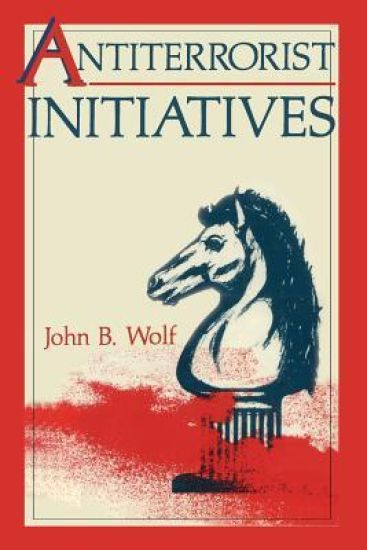
Antiterrorist Initiatives

Antiterrorist Initiatives

John B. Wolf

Springer-Verlag New York Inc.
2012
nidottu
Traditionally, terrorist bands operating in rural or urban areas use vio­ lence to cast themselves as a legitimate political force. Necklacing, plac­ ing an oil-soaked tire around the neck of an informer and then igniting it, and knee-capping, positioning a handgun behind the kneecap of a "tout" (a police informer) and then squeezing the trigger, are among the enforcement methods used by clandestine groups to administer "revo­ lutionary justice." Necklacing is used by the African National Con­ gress (A.N.C.). Knee-capping is a traditional Irish Republican Army (I. R. A.) tactic. Governments frequently lend credibility to the terrorists' claim of legitimacy by not implementing measures intended to extirpate them. Frequently, democratic societies fear that rigid control measures pose a threat to civil liberties. Reluctant to move, a democracy is often ham­ strung by terrorists bent on manipulating its values. A media campaign, intended to mobilize public opinion against the terrorists and garner mass support for the government and its control measures, is the linchpin of any antiterrorist campaign. Centralized intelligence-gathering is another essential component. Terrorism, when it becomes a regular campaign of bombings and other atrocities, is no longer a problem for just the police and the army. The entire society is affected. For example, all groups comprising the multi ethnic popu- vii viii PREFACE tion of Sri Lanka and South Africa are presently exposed to the terror­ ist threat.