Kirjojen hintavertailu. Mukana 11 244 527 kirjaa ja 12 kauppaa.

Kirjahaku

Etsi kirjoja tekijän nimen, kirjan nimen tai ISBN:n perusteella.

41 kirjaa tekijältä John Barton

A History of the Bible: The Book and Its Faiths
A literary history of our most influential book of all time, by an Oxford scholar and Anglican priest In our culture, the Bible is monolithic: It is a collection of books that has been unchanged and unchallenged since the earliest days of the Christian church. The idea of the Bible as "Holy Scripture," a non-negotiable authority straight from God, has prevailed in Western society for some time. And while it provides a firm foundation for centuries of Christian teaching, it denies the depth, variety, and richness of this fascinating text. In A History of the Bible, John Barton argues that the Bible is not a prescription to a complete, fixed religious system, but rather a product of a long and intriguing process, which has inspired Judaism and Christianity, but still does not describe the whole of either religion. Barton shows how the Bible is indeed an important source of religious insight for Jews and Christians alike, yet argues that it must be read in its historical context--from its beginnings in myth and folklore to its many interpretations throughout the centuries. It is a book full of narratives, laws, proverbs, prophecies, poems, and letters, each with their own character and origin stories. Barton explains how and by whom these disparate pieces were written, how they were canonized (and which ones weren't), and how they were assembled, disseminated, and interpreted around the world--and, importantly, to what effect. Ultimately, A History of the Bible argues that a thorough understanding of the history and context of its writing encourages religious communities to move away from the Bible's literal wording--which is impossible to determine--and focus instead on the broader meanings of scripture.
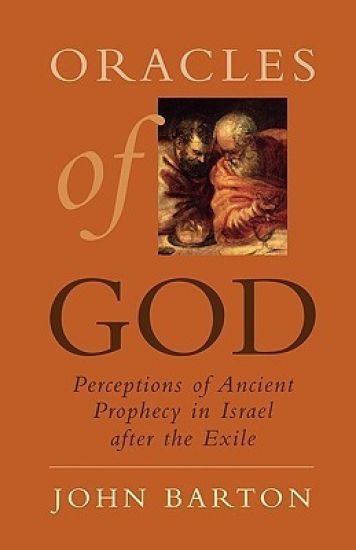
Oracles of God

Oracles of God

John Barton

Oxford University Press Inc
2007
nidottu
Oracles of God is a study of ideas about ancient prophecy current in Judaism and Christianity from the Exile to the end of the New Testament period. It examines the prophetic section of the Old Testament canon in both Hebrew and Greek traditions, the various pictures of prophets, their role and message, and looks at the various ways in which prophetic scripture were read in the period. Source material discussed includes much apocryphal and pseudepigraphical writing, documents from Qumran, the works of Philo and Josephus, the New Testament and some rabbinic literature. The book is essential reading for all students of Old and New Testament ideas about prophecy.
Ethics in Ancient Israel

Ethics in Ancient Israel

John Barton

Oxford University Press
2017
nidottu
Ethics in Ancient Israel is a study of ethical thinking in ancient Israel from around the eighth to the second century BC. The evidence for this consists primarily of the Old Testament/ Hebrew Bible and Apocrypha, but also other ancient Jewish writings such as the Dead Sea Scrolls and various anonymous and pseudonymous texts from shortly before the New Testament period. Professor John Barton argues that there were several models for thinking about ethics, including a 'divine command' theory, something approximating to natural law, a virtue ethic, and a belief in human custom and convention. Moreover, he examines ideas of reward and punishment, purity and impurity, the status of moral agents and patients, imitation of God, and the image of God in humanity. Barton maintains that ethical thinking can be found not only in laws but also in the wisdom literature, in the Psalms, and in narrative texts. There is much interaction with recent scholarship in both English and German. The book features discussion of comparative material from other ancient Near Eastern cultures and a chapter on short summaries of moral teaching, such as the Ten Commandments. This innovative work should be of interest to those concerned with the interpretation of the Old Testament but also to students of ethics.
Ethics in Ancient Israel

Ethics in Ancient Israel

John Barton

Oxford University Press
2014
sidottu
Ethics in Ancient Israel is a study of ethical thinking in ancient Israel from around the eighth to the second century BC. The evidence for this consists primarily of the Old Testament/ Hebrew Bible and Apocrypha, but also other ancient Jewish writings such as the Dead Sea Scrolls and various anonymous and pseudonymous texts from shortly before the New Testament period. Professor John Barton argues that there were several models for thinking about ethics, including a 'divine command' theory, something approximating to natural law, a virtue ethic, and a belief in human custom and convention. Moreover, he examines ideas of reward and punishment, purity and impurity, the status of moral agents and patients, imitation of God, and the image of God in humanity. Barton maintains that ethical thinking can be found not only in laws but also in the wisdom literature, in the Psalms, and in narrative texts. There is much interaction with recent scholarship in both English and German. The book features discussion of comparative material from other ancient Near Eastern cultures and a chapter on short summaries of moral teaching, such as the Ten Commandments. This innovative work should be of interest to those concerned with the interpretation of the Old Testament but also to students of ethics.
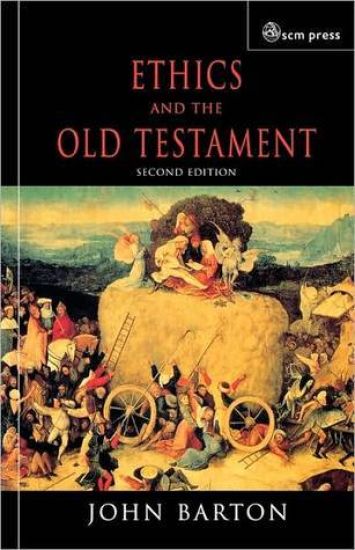
Ethics and the Old Testament

Ethics and the Old Testament

John Barton

SCM Press
2003
nidottu
Establishing the relevance of Old Testament ethics to contemporary life is, as Barton concedes, an uphill task. For many Christians today - let alone those with no religious commitment - to find some way of accommodating them into a coherent moral system by which to live in the 21st century seems at best implausible and at worst ridiculous or even immoral. However, Barton is convinced that in many areas of ethical enquiry the Old Testament has much to teach us, and he argues his case in this new edition of "Ethics and the Old Testament". He looks again at the Ten Commandments; the narrative about David and his children; the ethical issue of ecology; sexual morality and property; human morality as the express command of God; and the motivation for moral conduct. An additional chapter offers fresh views about the value of Old Testament ethics in discussions on human dignity. Barton's aim is to show that although the Old Testament comes from a remote, alien and apparently unsophisticated context, the powerful minds who worked on its books still have things to say which remain evocative and suggestive for our own moral enquiries.
Playing Shakespeare: An Actor's Guide
Playing Shakespeare is the premier guide to understanding and appreciating the mastery of the world's greatest playwright. Together with Royal Shakespeare Company actors-among them Patrick Stewart, Judi Dench, Ian McKellen, Ben Kingsley, and David Suchet-John Barton demonstrates how to adapt Elizabethan theater for the modern stage. The director begins by explicating Shakespeare's verse and prose, speeches and soliloquies, and naturalistic and heightened language to discover the essence of his characters. In the second section, Barton and the actors explore nuance in Shakespearean theater, from evoking irony and ambiguity and striking the delicate balance of passion and profound intellectual thought, to finding new approaches to playing Shakespeare's most controversial creation, Shylock, from The Merchant of Venice. A practical and essential guide, Playing Shakespeare will stand for years as the authoritative favorite among actors, scholars, teachers, and students.
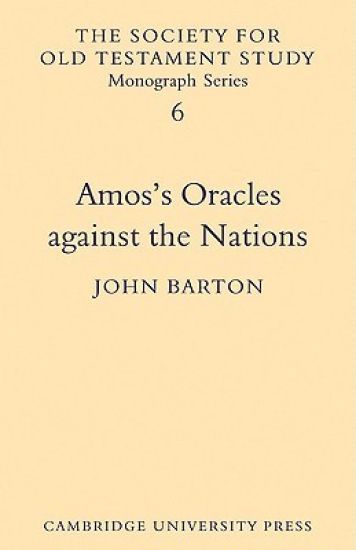
Amos's Oracles Against the Nations

Amos's Oracles Against the Nations

John Barton

Cambridge University Press
2009
pokkari
In the first two chapters of the book of Amos, the prophet denounces a number of neighbouring nations for committing atrocities in war and then declares Israel to be equally blameworthy in view of the social injustices prevailing in his time (the eighth century BC). Amos is widely held to be ahead of his age, not only in recognising the idea of 'war crimes' but also in attributing to the God if Israel any concern with or power over other nations. In this detailed study of Amos 1 and 2, Dr Barton shows that the book in fact presupposes both these notions; there were already accepted conventions of warfare in the ancient Near Eastern cultures and there was already recognition in Israel of the universality of God's power. The essential contribution of Amos to Old Testament theology is to be found in his radical criticism of Israel and in his prediction that it is about to be destroyed by its own God.
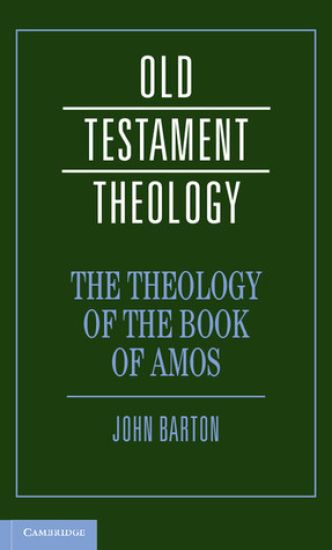
The Theology of the Book of Amos

The Theology of the Book of Amos

John Barton

Cambridge University Press
2012
pokkari
In modern times Amos has come to be considered one of the most important prophets, mainly for his uncompromising message about social justice. This book provides a detailed exploration of this theme and other important elements of the theology underlying the book of Amos. It also includes chapters on the text itself, providing a critical assessment of how the book came to be, the original message of Amos and his circle, which parts of the book may have been added by later scribes, and the finished form of the book. The author also considers the book's reception in ancient and modern times by interpreters as varied as rabbis, the Church Fathers, the Reformers and liberation theologians. Throughout, the focus is on how to read the book of Amos holistically to understand the organic development of the prophet's message through the many stages of the book's development and interpretation.
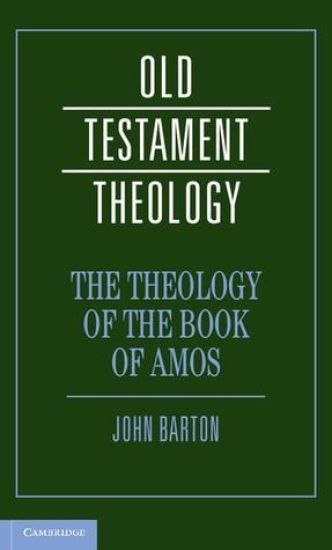
The Theology of the Book of Amos

The Theology of the Book of Amos

John Barton

Cambridge University Press
2012
sidottu
In modern times Amos has come to be considered one of the most important prophets, mainly for his uncompromising message about social justice. This book provides a detailed exploration of this theme and other important elements of the theology underlying the book of Amos. It also includes chapters on the text itself, providing a critical assessment of how the book came to be, the original message of Amos and his circle, which parts of the book may have been added by later scribes, and the finished form of the book. The author also considers the book's reception in ancient and modern times by interpreters as varied as rabbis, the Church Fathers, the Reformers and liberation theologians. Throughout, the focus is on how to read the book of Amos holistically to understand the organic development of the prophet's message through the many stages of the book's development and interpretation.
Isaiah 1-39

Isaiah 1-39

John Barton

Sheffield Academic Press
2003
nidottu
Originally published as part of the acclaimed Sheffield Guides series, this helpful study-guide is designed to meet the needs of students and general readers in a concise, accessible and affordable format. The complete set of books will offer a comprehensive introduction to the Bible and related writings. Each study-guide comprises An Introduction to the content and message of the particular book A survey of the significant critical issues An assesment of recent scholarship Signposts towards major critical works in the area Annotated bibliographies T & T Clark Study Guides are written by some of the world's greatest biblical scholars, each of whom draws on their extensive teaching experience to make their subject come alive for all who are approaching biblical studies for the first time.
The Hollow Crown

The Hollow Crown

John Barton

Samuel French Ltd
1999
sidottu
This entertainment by and about the Kings and Queens of England includes music, poetry, speeches, letters and other writings. The Hollow Crown has been performed in America and England by stars from the Royal Shakespeare Theatre. The four readers enact the writings of royals from William I to Victoria; the three singers intersperse songs from the proper period - some of which are sad tunes on the death of kings while others are uproariously funny.1 woman, 3 men
Joel and Obadiah

Joel and Obadiah

John Barton

Westminster/John Knox Press,U.S.
2001
sidottu
In Joel and Obadiah, John Barton furnishes a fresh translation of the ancient manuscripts and discusses questions of historical background and literary architecture before providing a theologically sensitive and critically informed interpretation of the text.The Old Testament Library provides fresh and authoritative treatments of important aspects of Old Testament study through commentaries and general surveys. The contributors are scholars of international standing.
The Nature of Biblical Criticism

The Nature of Biblical Criticism

John Barton

Westminster/John Knox Press,U.S.
2007
nidottu
Biblical criticism faces increasing hostility on two fronts: from biblical conservatives, who claim it is inherently positivistic and religiously skeptical, and from postmodernists, who see it as driven by the falsities of objectivity and neutrality. In this magisterial overview of the key factors and developments in biblical studies, John Barton demonstrates that these evaluations of biblical criticism fail to do justice to the work that has been done by critical scholars over many generations. Traditional biblical criticism has had as its central concern a semantic interest: a desire to establish the "plain sense" of the biblical text, which in itself requires sensitivity to many literary aspects of texts. Therefore, he argues, biblical criticism already includes many of the methodological approaches now being recommended as alternatives to it and, further, the agenda of biblical studies is far less fragmented than often thought.
Understanding Old Testament Ethics

Understanding Old Testament Ethics

John Barton

Westminster/John Knox Press,U.S.
2003
nidottu
How can we best understand the different ways in which ethical issues are addressed in the Hebrew Bible? And how might that understanding usefully inform ethical decision making in our own day? These are the two key questions explored by John Barton in Part One of this study, in which he looks at how the Bible's narratives, as well as its collections of laws, oracles and wisdom writings, all contribute to our understanding of the whole. In Part Two, he focuses on the moral vision of the Prophets--especially Amos, Isaiah and Daniel--providing the reader with the fruits of his research in this area over the last few decades. The result is a book that enables students of the Bible, Ethics, and other theological disciplines to firmly grasp the main issues at stake in current scholarly debate about the ethical legacy of the Old Testament.
People of the Book?

People of the Book?

John Barton

Westminster/John Knox Press,U.S.
1989
nidottu
In this book, John Barton offers a positive but critical evaluation of biblical authority. Among other topics, he discusses the canon, the value of the Bible as historical evidence, the Bible's witness to the faith, and the place of Scripture in worship. He shows Christians that critical reading of Scripture is a help rather than a hindrance to their faith and affirms that they are not required to chose between fundamentalism and unbelief.
Reading the Old Testament, Revised and Expanded

Reading the Old Testament, Revised and Expanded

John Barton

Westminster/John Knox Press,U.S.
1997
nidottu
One of the most reliable and helpful books on interpretive method is now available in a new and up-to-date edition. Firmly founded in the best scholarship, John Barton's Reading the Old Testament helps students to understand both the established methods of biblical study and the newer emerging trends.
Holy Writings, Sacred Text

Holy Writings, Sacred Text

John Barton

Westminster/John Knox Press,U.S.
1998
nidottu
An internationally respected biblical scholar investigates the origins of the Christian canon. John Barton explores the reasons behind the development of the New Testament and pursues the historical factors involved in combining these books with the Hebrew Scriptures.