Kirjojen hintavertailu. Mukana 12 352 385 kirjaa ja 12 kauppaa.

Kirjahaku

Etsi kirjoja tekijän nimen, kirjan nimen tai ISBN:n perusteella.

26 kirjaa tekijältä John Bayley

Housman's Poems

Housman's Poems

John Bayley

Clarendon Press
1992
sidottu
Although Housman's three collections of poems, the third published posthumously, have remained popular, they have not received much serious critical attention. John Bayley makes good the omission in this thorough and comprehensive reappraisal of the whole oeuvre, placing Housman's achievement in the context of the poetry of his own time and of more recent European and American poetry. Close analysis and comparison with other poets - Hardy, Frost, Edward Thomas, Larkin, and Paul Celan - prove illuminating in relation to a poet who has usually been considered something of an odd man out, and even an anachronism in the modern era. Professor Bayley explores and explains the continuing appeal of the poet to present-day readers, and the nature of the craftsmanship and psychology which lie behind its deceptive simplicities. The book will be a valuable introduction to Housman's achievement for the specialist and the poetry-lover alike.
Elegy for Iris

Elegy for Iris

John Bayley

St Martin's Press
1999
nidottu
With remarkable tenderness, John Bayley recreates his passionate love affair with Iris Murdoch--world-renowned writer and philosopher, and his wife of forty-two years--and poignantly describes the dimming of her brilliance due to Alzheimer's disease." Elegy for Iris" is a story about the ephemeral beauty of youth and the sobering reality of what it means to grow old, but its ultimate power is that Bayley discovers great hope and joy in his celebration of Iris's life and their love. In its grasp of life's frailty and its portrayal of one of the great literary romances of this century, "Elegy for Iris" is a mesmerizing work of art that will be read for generations.
Shakespeare and Tragedy

Shakespeare and Tragedy

John Bayley

Routledge
2021
sidottu
Every generation develops its own approach to tragedy, attitudes successively influenced by such classic works as A. C. Bradley’s Shakespearean Tragedy and the studies in interpretation by G. Wilson Knight. A comprehensive new book on the subject by an author of the same calibre was long overdue.In his book, originally published in 1981, John Bayley discusses the Roman plays, Troilus and Cressida and Timon of Athens as well as the four major tragedies. He shows how Shakespeare’s most successful tragic effects hinge on an opposition between the discourses of character and form, role and context. For example, in Lear the dramatis personae act in the dramatic world of tragedy which demands universality and high rhetoric of them. Yet they are human and have their being in the prosaic world of domesticity and plain speaking. The inevitable intrusion of the human world into the world of tragedy creates the play’s powerful off-key effects. Similarly, the existential crisis in Macbeth can be understood in terms of the tension between accomplished action and the free-ranging domain of consciousness. What is the relation between being and acting? How does an audience become intimate with a protagonist who is alienated from his own play? What did Shakespeare add to the form and traditions of tragedy? Do his masterpieces in the genre disturb and transform it in unexpected ways? These are the issues raised by this lucid and imaginative study. Professor Bayley’s highly original rethinking of the problems will be a challenge to the Shakespearean scholar as well as an illumination to the general reader.
Shakespeare and Tragedy

Shakespeare and Tragedy

John Bayley

TAYLOR FRANCIS LTD
2023
nidottu
Every generation develops its own approach to tragedy, attitudes successively influenced by such classic works as A. C. Bradley’s Shakespearean Tragedy and the studies in interpretation by G. Wilson Knight. A comprehensive new book on the subject by an author of the same calibre was long overdue.In his book, originally published in 1981, John Bayley discusses the Roman plays, Troilus and Cressida and Timon of Athens as well as the four major tragedies. He shows how Shakespeare’s most successful tragic effects hinge on an opposition between the discourses of character and form, role and context. For example, in Lear the dramatis personae act in the dramatic world of tragedy which demands universality and high rhetoric of them. Yet they are human and have their being in the prosaic world of domesticity and plain speaking. The inevitable intrusion of the human world into the world of tragedy creates the play’s powerful off-key effects. Similarly, the existential crisis in Macbeth can be understood in terms of the tension between accomplished action and the free-ranging domain of consciousness. What is the relation between being and acting? How does an audience become intimate with a protagonist who is alienated from his own play? What did Shakespeare add to the form and traditions of tragedy? Do his masterpieces in the genre disturb and transform it in unexpected ways? These are the issues raised by this lucid and imaginative study. Professor Bayley’s highly original rethinking of the problems will be a challenge to the Shakespearean scholar as well as an illumination to the general reader.
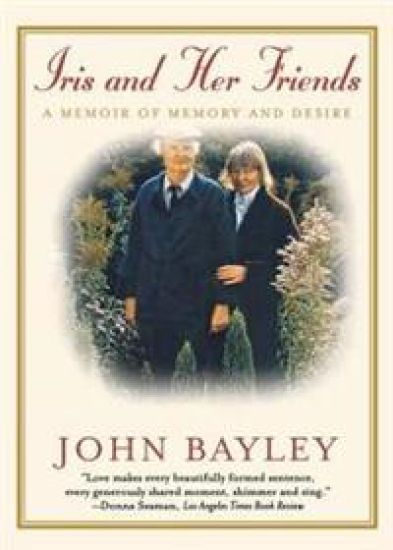
Iris and Her Friends: A Memoir of Memory and Desire
John Bayley began writing Iris and Her Friends, a companion to the New York Times bestseller Elegy for Iris, late at night while his wife, the beloved novelist Iris Murdoch, succumbed to Alzheimer's Disease. As Iris was losing her memory, Bayley was flooded with vivid recollections of his own. In lyrical reverie, Bayley recreates the unforgettable scenes of his youth, from his birth to a civil servant in colonial India to his long romance with Iris and its heartbreaking end. This is the transcendent work of a brilliant man, whose examination of the tragedies and joys of his own life will give readers great healing insight. John Bayley's Iris and Her Friends is nothing less than a classic of true love and sorrow. "Love makes every beautifully formed sentence, every generously shared moment, shimmer and sing."--Donna Seaman, Los Angeles Times Book Review
Widower's House

Widower's House

John Bayley

WW Norton Co
2013
nidottu
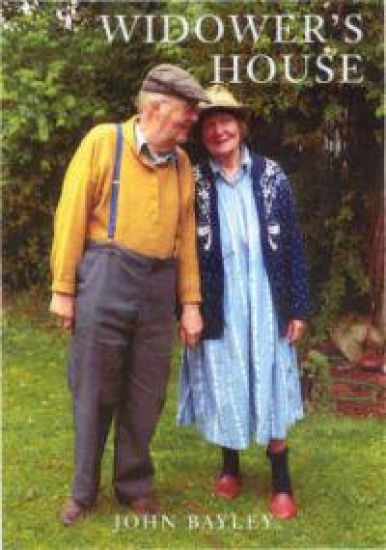
Little did retired professor John Bayley realize when he lost Iris Murdoch, his beloved wife of forty-four years, that life would never be the same again. First came thousands of sympathy notes from lovers of Murdoch's novels and fans of Bayley's own poignant memoir, Elegy for Iris. But more alarming were the hundreds of calls from seemingly well-meaning women, many of whom rang Bayley's doorbell in Oxford, bearing cakes, casserole dishes, and delivering pep talks designed to cheer up the widower of their dreams. Here, in Widower's House: A Study in Bereavement or How Margot and Mella Forced Me to Flee My Home, Bayley tells the painful, inspirational, and ultimately uplifting story of how he had to grapple with his fate as a man by beginning life anew in his mid-seventies. Like millions of other widows and widowers, Bayley, as he relates it, found himself emotionally unprepared for the responsibilities and burdens that confront people who suddenly find themselves alone. He hadn't realized how differently you are treated when you are not part of a couple, and how you must learn to respond to friends, family members, and total strangers in completely different ways. With the reassuring, compassionate voice of Iris still a mournful obbligato in the background, Bayley describes the pitfalls a widower must face as he ventures out into the newly virgin world beyond his front door. Finding comfort in recording the day-to-day calamities that marked his reentry into the real world, Bayley uses surprising humor reflected here in the vivid depictions of his new suitors, Margot and Mella to get him through his darkest days. Melodic, irrepressible, and comically comforting, Widower's House, with its heartwarming and surprisingly romantic ending, will reveal yet a new side of the man who has become England's most unlikely symbol of masculine virility."
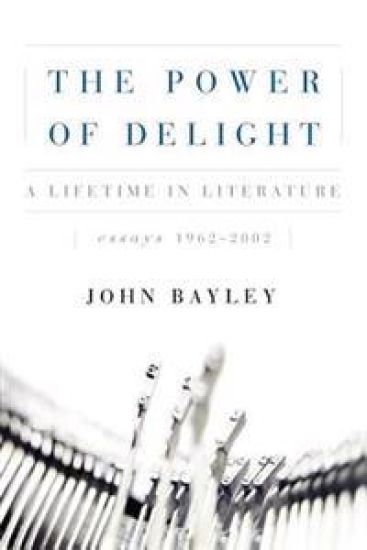
The Power of Delight

The Power of Delight

John Bayley

W. W. Norton Company
2005
pokkari
Beginning his career at Oxford in the 1950s, the ever-incisive John Bayley has been one of the great bulwarks--in the tradition of William Hazlitt and Edmund Wilson--of twentieth-century world literature. His distinctive sensibility has transformed tastes and theories. Here, in The Power of Delight, a volume that has been assembled with the assistance of New Yorker editor Leo Carey, we see at last the full range of Bayley's life and work, divided into eight sections that include 'English Literature, ' 'Russian Novels, ' and 'American Poetry.' A wide-ranging guide to essential reading, The Power of Delight examines classics, neglected gems and masterpieces of our time--from Jane Austen to Milan Kundera, Leo Tolstoy to John Ashbery, and from Robert Lowell's messy persona to George Orwell's self-canonization.
An Essay on Hardy

An Essay on Hardy

John Bayley

Cambridge University Press
1981
pokkari
This 1981 book suggests an insightful approach to Hardy as a poet and novelist. With the novels in particular it concentrates not so much on ideas and attitudes as on the texture of the writing, and on the crucial importance in it between one kind of exposition and another. John Bayley starts by establishing a difference between Hardy the private 'noticer' of things and people, and Hardy the professional author committed to interpreting these observations to his readers. The vital ingredients of eroticism and humour are analysed in detail, as are the unusual ways in which passiveness, 'pessimism', and anthropomorphism function in the poems and novels, and an insightful reading of Tess is put forward. Professor Bayley shows that the rewards of reading Hardy are greater than ever, although they are not necessarily those which the reader expects, or has been taught to look for.
Pushkin: A Comparative Commentary

Pushkin: A Comparative Commentary

John Bayley

Cambridge University Press
1975
pokkari
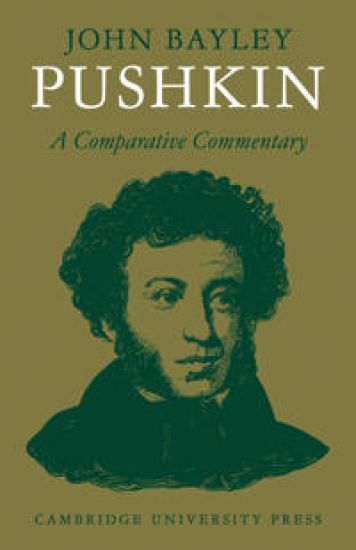
This digitally reprinted edition of Pushkin: A Comparative Commentary has the same content as the original 1971 edition. Professor Bayley, in this first critical assessment in English of the whole range of Pushkin's writing, examines his achievement in relation to Russian literature and the European tradition, analysing Pushkin's language in detail to illustrate how he obtains his literary effects.
Iris and the Friends

Iris and the Friends

John Bayley

Duckworth
1999
sidottu
The last month or so of the life of Iris Bayley, the wife of the author, provides the framework for this biography. But within this structure the author enters into extensive memories of the past. The book could almost be called "The Use of Memory" - in a Proustian sense. It continually harks back to the author's own childhood and to Iris's early years to explain how they came together and how they were 'right' for each other. So in this book the author explains much more about himself and describes in much more details how he managed to cope with the ordeal of seeing his wife become terminally ill and lose her faculties. In this he quotes a considerable amount from literature, which is his own field of study.
Widower's House

Widower's House

John Bayley

Duckworth
2001
sidottu
Since the death in 1998 of his wife, the novelist and philosopher Iris Murdoch, John Bayley has given much thought to adjusting to his new, single status. As the carer of a victim of Alzheiner's, his was in many ways a double-bereavement as Iris, in the sense of the person who John Bayley met and married, very slowly departed this world some years before her physical death. This book provides a meditation on his bereavement and loss written in John Bayley's sensitive and amusing style of reminiscence.
The Iris Trilogy

The Iris Trilogy

John Bayley

Duckworth
2020
sidottu
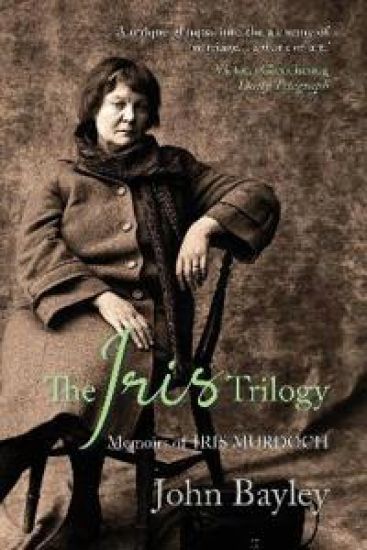
Dame Iris Murdoch (1919-1999) was one of the greatest British novelists and philosophers of the twentieth century. She read philosophy at Oxford where she met and later married John Bayley, a literary critic and fellow novelist. So began a forty-year, intense and unconventional but happy marriage, detailed in the classic bestselling memoir Iris. Despite Iris’ extramarital affairs with men and women throughout their long marriage - which John always suspected - their bond was unbreakable, and his memoir beautifully captures their child-like moments of bliss: walking in forests, swimming together in streams, and sharing hot cups of coffee on crisp mornings. These are touching but poignant stories with the knowledge that Iris and her grand intellect would eventually succumb to Alzheimer’s disease. John would care for her singlehandedly for five years, the last of which he writes about in Iris and the Friends that also describes her peaceful passing. Finally, he reflects on his bereavement and the void that is left when a soulmate departs in A Widower’s House. All three books are told by the person who knew Iris best, with gentle humour - at times unbearably moving - in his portrayal of a remarkable woman.
Leo Tolstoy

Leo Tolstoy

John Bayley

Liverpool University Press
1996
nidottu
Tolstoy’s art as represented in his greatest novels: War and Peace and Anna Karenina continues to absorb, fascinate and delight modern readers despite the lack of appeal of much of his later convictions. His great works continue to exercise a profound influence on the best imaginative writing. In our own time Vikram Seth’s A Suitable Boy, clearly inspired by War and Peace, has deservedly become a world best seller. John Bayley concentrates in this short introductory study on Tolstoy’s two great works and the ancillary texts and tales that relate to them. In elucidating the power and originality which are alive in those masterpieces Professor Bayley makes a compelling case for a return to the originals which will continue to captivate readers and draw them irresistibly into a uniquely spacious and complex world.