Kirjojen hintavertailu. Mukana 11 717 486 kirjaa ja 12 kauppaa.

Kirjahaku

Etsi kirjoja tekijän nimen, kirjan nimen tai ISBN:n perusteella.

12 kirjaa tekijältä John Boardman

John Boardman on the Parthenon

John Boardman on the Parthenon

John Boardman

THAMES HUDSON LTD
2024
sidottu
Britain’s most distinguished historian of ancient Greek art recounts what the Parthenon and its sculptures meant to the citizens of 5th-century BCE Athens. Surprising, questioning, challenging, enriching: the Pocket Perspectives series celebrates writers and thinkers who have helped shape the conversation across the arts. Mixing classic and contemporary texts, reissues and abridgements, these are bite-sized, fully illustrated reads in an attractive, affordable and highly collectable package.
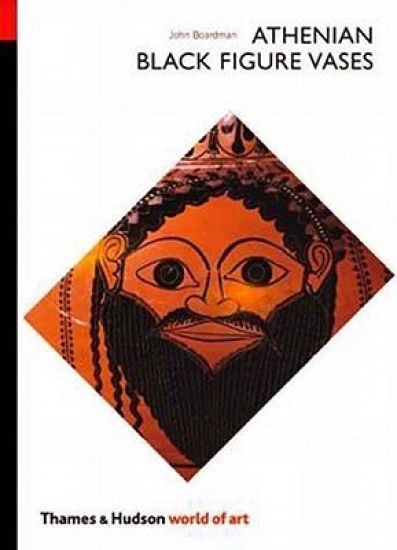
Athenian Black Figure Vases

Athenian Black Figure Vases

John Boardman

Thames Hudson Ltd
1974
nidottu
Athenian black figure vases bear the work of consummate artists, like Exekias, who depicted on them scenes of myth and everday life which deepen our knowledge and understanding of Greek antiquity. John Boardman enables the reader to study the many aspects of the vases, and to grasp the essential style of a painter or group of painters, without having to consult a number of expensive, and not always easily available, publications. A final section is devoted to the mythological scenes and other decorative features of the vases.
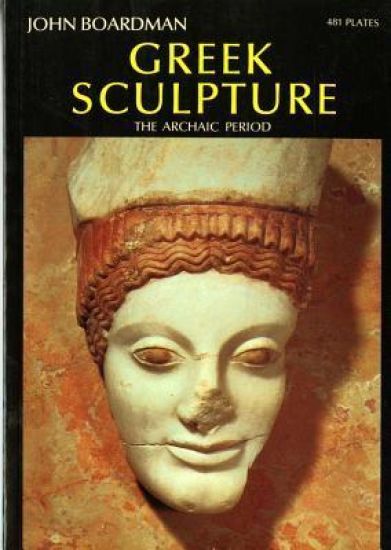
Greek Sculpture

Greek Sculpture

John Boardman

Thames Hudson Ltd
1978
nidottu
For many people there is no more satisfying expression of Greek art than its sculpture. It was the first, the only ancient art to break free from 'conceptual' conventions for representing men and animals, and to explore consciously how art might imitate nature or even improve upon it.The first stages of this discovery, from the semi-abstract beginnings in the eighth century BC to the more representational art of the early fifth century, are explored and copiously illustrated in this handbook.
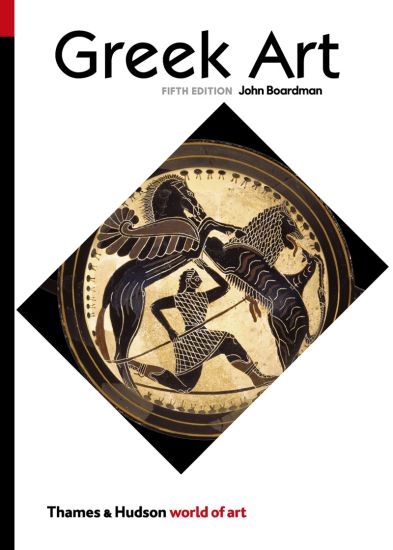
Greek Art

Greek Art

John Boardman

Thames Hudson Ltd
2016
nidottu
John Boardman has updated his classic account of one of the most popular historic artistic traditions among Western audiences. In the twenty years since the last edition was released, valuable evidence has come to light which has dramatically enhanced our understanding of the art of this ancient civilization. We now know conclusively that Greeks in fact lavished their sculptures with realistic colour paint, and also worked with a wealth of other materials on a major scale, including wood and precious metals, proving that our view of ‘classic’ pure white marble of the age is a Renaissance construction. We can identify the work of individual artists, and schools of artists, and have a clearer picture than ever of how art and artistic ideas travelled throughout the Greek world. Boardman encourages the reader to consider the beautiful pieces that have been preserved in their original context, rather than as the isolated installations of our modern galleries, weaving into the discussion of the art objects insights into the society that produced them. Illustrated in full colour throughout for the first time, this fifth edition showcases more vividly than ever the artistic endeavours of the ancient Greeks.
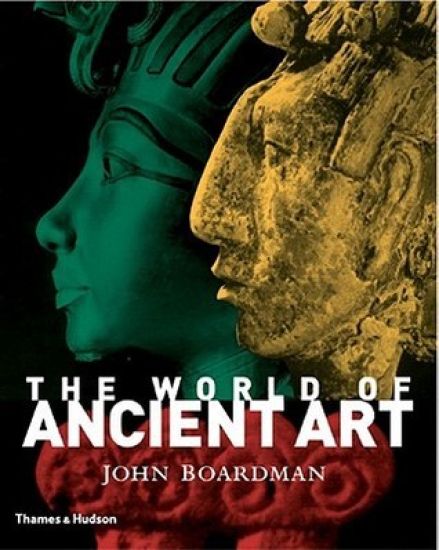
The World of Ancient Art

The World of Ancient Art

John Boardman

Thames Hudson Ltd
2006
sidottu
The World of Ancient Art is an innovative exploration of the arts of antiquity, beginning with the earliest European cave paintings and continuing right up to the coming of Christianity and Buddhism in the Old World, and to the arrival of the Spaniards in the New World. Dividing the ancient world into three broad climatic categories – the northern nomadic, the temperate farmers and city-dwellers, and the tropical – Boardman focuses on common solutions that Man the artist has devised for the problems posed by his environment, a factor that also determined the nature of his society and its arts.
Alexander the Great

Alexander the Great

John Boardman

Princeton University Press
2019
sidottu
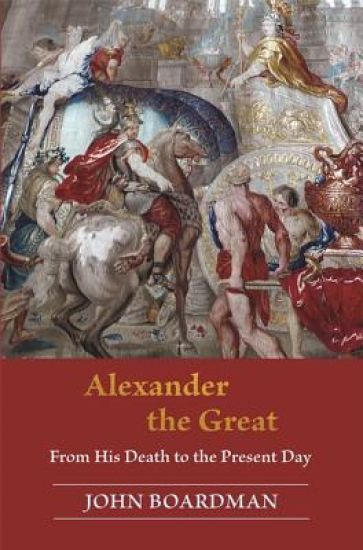
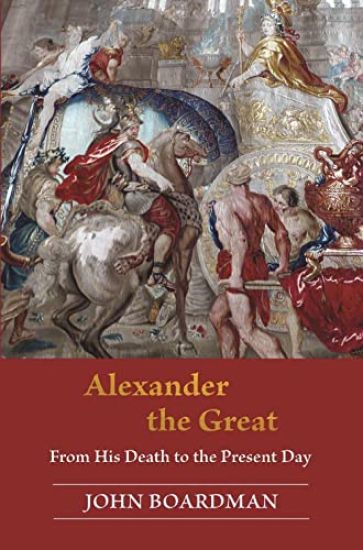
An illustrious scholar presents an elegant, concise, and generously illustrated exploration of Alexander the Great’s representations in art and literature through the agesJohn Boardman is one of the world’s leading authorities on ancient Greece, and his acclaimed books command a broad readership. In this book, he looks beyond the life of Alexander the Great in order to examine the astonishing range of Alexanders created by generations of authors, historians, and artists throughout the world—from Scotland to China.Alexander’s defeat of the Persian Empire in 331 BC captured the popular imagination, inspiring an endless series of stories and representations that emerged shortly after his death and continues today. An art historian and archaeologist, Boardman draws on his deep knowledge of Alexander and the ancient world to reflect on the most interesting and emblematic depictions of this towering historical figure.Some of the stories in this book relate to historical events associated with Alexander’s military career and some to the fantasy that has been woven around him, and Boardman relates each with his customary verve and erudition. From Alexander’s biographers in ancient Greece to the illustrated Alexander “Romances” of the Middle Ages to operas, films, and even modern cartoons, this generously illustrated volume takes readers on a fascinating cultural journey as it delivers a perfect pairing of subject and author.
Alexander the Great

Alexander the Great

John Boardman

Princeton University Press
2021
pokkari
An elegant, concise, and generously illustrated exploration of Alexander the Great’s representations in art and literature through the agesIn this book, John Boardman, one of the world’s leading authorities on ancient Greece, looks beyond the life of Alexander the Great in order to examine the astonishing range of Alexanders created by generations of authors, historians, and artists throughout the world—from Scotland to China. John Boardman draws on his deep knowledge of Alexander and the ancient world to reflect on the most interesting and emblematic depictions of this towering historical figure. From Alexander’s biographers in ancient Greece to the illustrated Alexander “Romances” of the Middle Ages to operas, films, and even modern cartoons, this generously illustrated volume takes readers on a fascinating journey.
The Diffusion of Classical Art in Antiquity

The Diffusion of Classical Art in Antiquity

John Boardman

PRINCETON UNIVERSITY PRESS
2023
pokkari
From one of the world’s leading authorities on ancient Greek art, a groundbreaking account of how Greek images were understood and used by other ancient peoples, from Britain to ChinaIn this book, acclaimed archaeologist and art historian John Boardman explores Greek art as a foreign art transmitted to the non-Greeks of antiquity—peoples who weren’t necessarily able to judge the meaning of Greek art and who may have regarded the Greeks themselves with great hostility. Boardman examines how and why the arts of the classical world traveled and to what effect, from Britain to China, from roughly the eighth century BCE to the early centuries CE. In some places, such as Italy, Greek images were overwhelmingly successful. In Egypt, the Celtic world, the eastern steppes, and other regions with strong local traditions, they were never effectively assimilated. And in cultures where there was a subtler blend of influences, notably in the Buddhist east, classical images served as a catalyst to the generation of new styles. Along the way, Boardman demonstrates that looking at Greek art from the outside provides a wealth of new insights into Greek art itself, and he raises important questions about how images in general are copied and reinterpreted.
The Relief Plaques of Eastern Eurasia and China
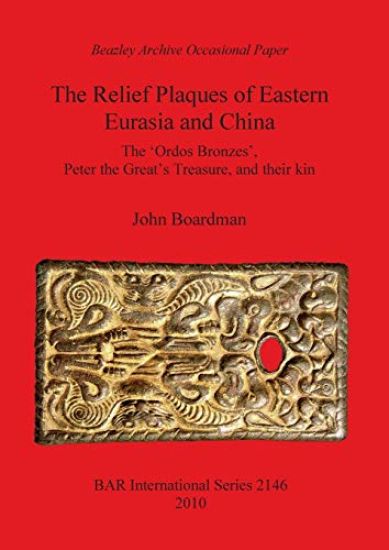
Renowned Classical archaeologist John Boardman here turns his attention to a rather different class of artefact - the Ordos Bronzes, a group of objects found in the borderlands of north China. Boardman deals in particular with what have traditionally been identified as belt-plaques, analysing them stylistically and iconographically to create groups with a possible historical association in terms of studios, place and date of manufacture.
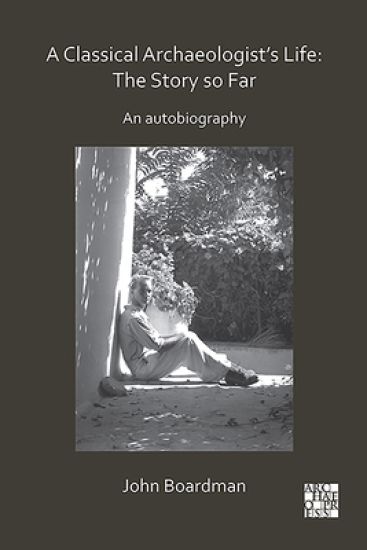
A Classical Archaeologist’s Life: The Story so Far
A Classical Archaeologists’s Life: The Story so Far shows that a scholar’s life is not all scholarship, though much of this book is devoted to the writing of books and, especially, travel to classical and other lands. Boardman is a Londoner, born in Ilford and attending school in Essex (Chigwell). His teenage years were spent often in air raid shelters rather than with ‘mates‘ (all evacuated). There are distinctive ‘aunties’, the rituals of daily life in a London suburb. The non-scholarly figures live large in this account of his life, marriage, children, new houses. At Cambridge he learned about classical archaeology as a necessary addition to reading Homer and Demosthenes, even being obliged to recite the latter. And those were the days of Bertrand Russell’s lectures in a university reawakening after the war. Thence to the British School at Athens to learn about excavation (Smyrna, Knossos, later Libya). His return from Greece was to Oxford, not Cambridge, at first in the Ashmolean Museum, then as Reader and Professor. A spell in New York gives an account of the city before the troubles, when Petula Clark’s Down Town was dominant. There is much here to reflect on university life and teaching, and on the reasons for and problems with the writing of his many books (some 40), with reflection on the university, colleges and their ways. Travels are well documented – a notable trip through Pakistan and China, in Persia, Egypt, Turkey – with comment on what he saw and experienced beyond archaeology. A lecture tour in Australia provides comment beyond the academic. He visited Israel often, lecturing and publishing for the Bible Lands Museum. Several tours in the USA took him to most of their museums and universities as well as many other sights, from glaciers to alligators. This book is a mixture of scholarly reminiscence, reflection on family life, travelogue, and critique of classical scholarship (not all archaeological) worldwide, illustrated with pictures of travels, friends, home life, and, for a historian, a reflection on experiences of over 90 years.
Classical Phoenician Scarabs

Classical Phoenician Scarabs

John Boardman

BAR Publishing
2003
nidottu
Between the 6th and 4th centuries BC, Phoenician workshops produced green jasper scarabs which demonstrated both Greek and Persian influences. This volume presents a fully illustrated catalogue of examples drawn from across the area of Phoenician influence, including Spain, Sardinia, North Africa and theEastern Mediterranean. The scarabs, which are held in collections worldwide, are catalogued according to their cultural influences: Egyptian, Levantine, Hellenistic and miscellaneous. Within each of these four groups the scarabs are organised iconographically, with scenes including beetles, boats, birds, gods, fantastic creatures, warriors and kings, chariots, trees and animal attacks. John Boardman's introduction discusses the style, function and source material of the scarabs and the location of the workshops.
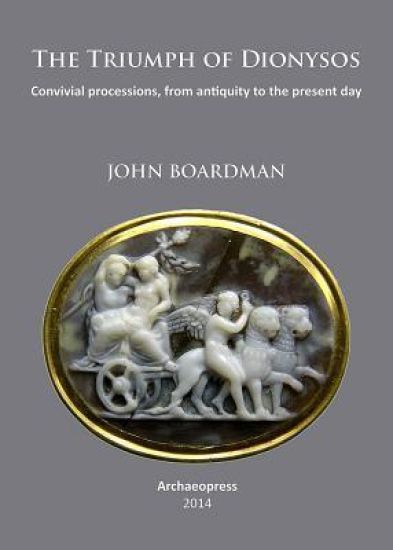
The Triumph of Dionysos

The Triumph of Dionysos

John Boardman

Archaeopress
2014
nidottu
Dionysos carried the blessing of wine to the whole world, and his triumphant return from India became a popular subject for the arts of Greece and Rome in many media. It became associated with Alexander the Great’s comparable victories and later served as a message of immortality for any mortal prince. The iconography survived the ancient world into Renaissance and neo-Classical arts, and may even have contributed to the practices of modern circus parades with their wild animals, maenad-snake-charmers and clown-satyrs: an unusual, indeed unique, survival.