Kirjojen hintavertailu. Mukana 11 699 587 kirjaa ja 12 kauppaa.

Kirjahaku

Etsi kirjoja tekijän nimen, kirjan nimen tai ISBN:n perusteella.

16 kirjaa tekijältä John Boessenecker

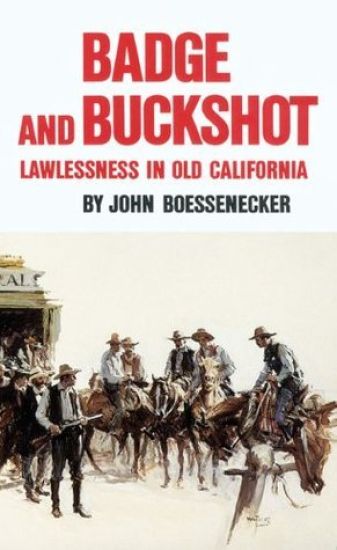
Badge and Buckshot

Badge and Buckshot

John Boessenecker

University of Oklahoma Press
1993
nidottu
Badge and Buckshot is a comprehensive book at many of the once-famous peace officers and outlaws of Old California. Told here for the first time are the true stories of Ben Thorn, the iron-willed but scandal-plagued sheriff of Calaveras County; John C. Boggs, the fast-shooting nemesis of the Tom Bell and Rattlesnake Dick gangs; Ben and Dudley Johnson, the notorious ""Tulare Twins""; Kid Thompson, whose train-robbing exploits took place just blocks from present-day Los Angeles film and television studios; and Coates-Frost feud, California's bloodiest vendetta, which endured more than twenty years and left fourteen men dead. Here, too, are the first complete accounts of Captain Ingram's Rangers, the band of Confederate guerrillas who raided stagecoaches in California during the Civil War; Steve Venard, the soft-spoken lawman who killed three outlaws in a single gunfight; and the legendary Bill Miner, whose career of banditry spanned almost half a century. The product of more than ten years of painstaking research, Badge and Buckshot recounts one of the forgotten sagas of the Old West, an action-packed tale of shoot-outs, stage holdups, manhunts, and lynchings. At the same time, through extensive use of pioneer newspaper files, court records, and previously unpublished illustrations, it shatters old myths and demonstrates the overall effectiveness of the criminal justice system in Old California. For authentic Americana, Badge and Buckshot is not to be missed.
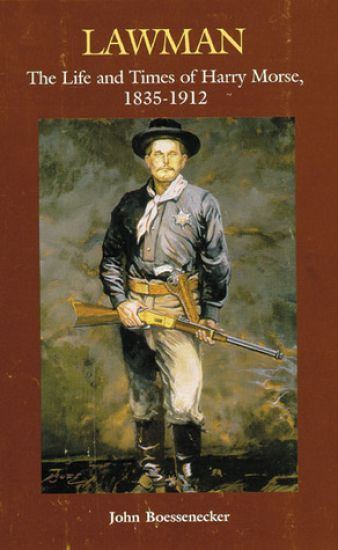
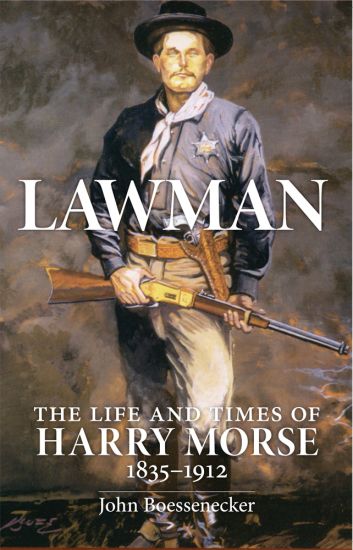
Lawman

Lawman

John Boessenecker

University of Oklahoma Press
1998
sidottu
Harry Morse - gunfighter, manhunter, and sleuth - was among the West's most famous lawmen. Elected sheriff of Alameda County, California, in 1864, he went on to become San Francisco's foremost private detective. His career spanned five decades. In this gripping biography, John Boessenecker brings Morse's now-forgotten story to light, chronicling not only the lawman's remarkable adventures but also the turbulent times in which he lived.Armed only with raw courage and a Colt revolver, Morse squared off against a small army of desperadoes and beat them at their own game. He shot to death the notorious bandidos Narato Ponce and Juan Soto, outgunned the vicious Narciso Bojorques, and pursued the Tiburcio Vasquez gang for two months in one of the West's longest and most tenacious manhunts. Later, Morse captured Black Bart, America's greatest stagecoach robber. His exploits were legendary.Drawing on Morse's diaries, memoirs, and correspondence, Boessenecker weaves the lawman's colorful accounts into his narrative. Rare photographs of outlaws and lawmen and of the sites of Morse's exploits further enliven the story.
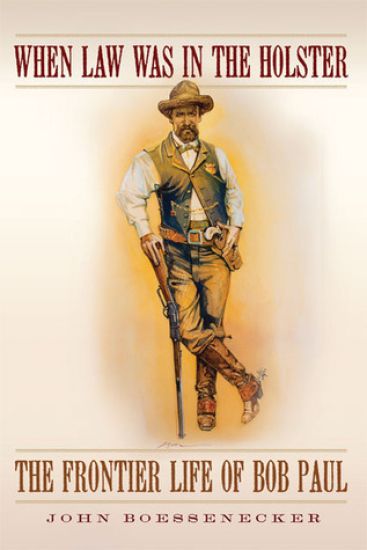
When Law Was in the Holster

When Law Was in the Holster

John Boessenecker

University of Oklahoma Press
2012
sidottu
One of the great lawmen of the Old West, Bob Paul (1830-1901) cast a giant shadow across the frontiers of California and Arizona Territory for nearly fifty years. Today he is remembered mainly for his friendship with Wyatt Earp and his involvement in the stirring events surrounding the famous 1881 gunfight near the OK Corral in Tombstone, Arizona. This long-overdue biography fills crucial gaps in Paul's story and recounts a life of almost constant adventure.As told by veteran western historian John Boessenecker, this story is more than just a western shoot-'em-up, and it reveals Paul to be far more than a blood-and-thunder gunfighter. Beginning with Paul's boyhood adventures as a whaler in the South Pacific, the author traces his journey to Gold Rush California, where he served respectively as constable, deputy sheriff, and sheriff in Calaveras County, and as Wells Fargo shotgun messenger and detective. Then, in the turbulent 1880s, Paul became sheriff of Pima County, Arizona, and a railroad detective for the Southern Pacific. In 1890 President Benjamin Harrison appointed him U.S. marshal of Arizona Territory.Transcending local history, Paul's story provides an inside look into the rough-and-tumble world of frontier politics, electoral corruption, Mexican-U.S. relations, border security, vigilantism, and western justice. Moreover, issues that were important in Paul's career - illegal immigration, smuggling on the Mexican border, youth gangs, racial discrimination, ethnic violence, and police-minority relations - are as relevant today as they were during his lifetime.
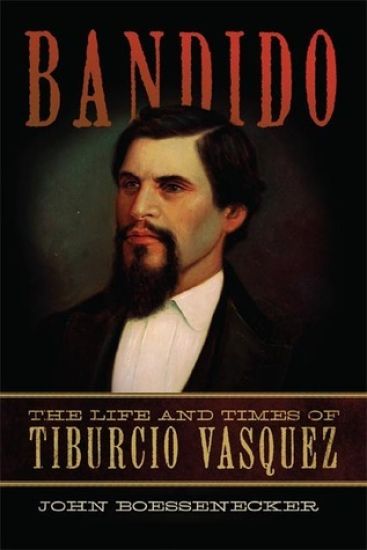
Bandido

Bandido

John Boessenecker

University of Oklahoma Press
2014
nidottu
Tiburcio Vasquez is, next to Joaquin Murrieta, America's most infamous Hispanic bandit. After he was hanged as a murderer in 1875, the Chicago Tribune called him ""the most noted desperado of modern times."" Yet questions about him still linger. Why did he become a bandido? Why did so many Hispanics protect him and his band? Was he a common thief and heartless killer who got what he deserved, or was he a Mexican American Robin Hood who suffered at the hands of a racist government? In this engrossing biography, John Boessenecker provides definitive answers.Bandido pulls back the curtain on a life story shrouded in myth - a myth created by Vasquez himself and abetted by writers who saw a tale ripe for embellishment. Boessenecker traces his subject's life from his childhood in the seaside adobe village of Monterey, to his years as a young outlaw engaged in horse rustling and robbery. Two terms in San Quentin failed to tame Vasquez, and he instigated four bloody prison breaks that left twenty convicts dead. After his final release from prison, he led bandit raids throughout Central and Southern California. His dalliances with women were legion, and the last one led to his capture in the Hollywood Hills and his death on the gallows at the age of thirty-nine.From dusty court records, forgotten memoirs, and moldering newspaper archives, Boessenecker draws a story of violence, banditry, and retribution on the early California frontier that is as accurate as it is colorful. Enhanced by numerous photographs - many published here for the first time - Bandido also addresses important issues of racism and social justice that remain relevant to this day.
When Law Was in the Holster

When Law Was in the Holster

John Boessenecker

University of Oklahoma Press
2018
nidottu
One of the great lawmen of the Old West, Bob Paul (1830-1901) cast a giant shadow across the frontiers of California and Arizona Territory for nearly fifty years. Today he is remembered mainly for his friendship with Wyatt Earp and his involvement in the stirring events surrounding the famous 1881 gunfight near the OK Corral in Tombstone, Arizona. This long-overdue biography fills crucial gaps in Paul's story and recounts a life of almost constant adventure.As told by veteran western historian John Boessenecker, this story is more than just a western shoot-'em-up, and it reveals Paul to be far more than a blood-and-thunder gunfighter. Beginning with Paul's boyhood adventures as a whaler in the South Pacific, the author traces his journey to Gold Rush California, where he served respectively as constable, deputy sheriff, and sheriff in Calaveras County, and as Wells Fargo shotgun messenger and detective. Then, in the turbulent 1880s, Paul became sheriff of Pima County, Arizona, and a railroad detective for the Southern Pacific. In 1890 President Benjamin Harrison appointed him U.S. marshal of Arizona Territory.Transcending local history, Paul's story provides an inside look into the rough-and-tumble world of frontier politics, electoral corruption, Mexican-U.S. relations, border security, vigilantism, and western justice. Moreover, issues that were important in Paul's career - illegal immigration, smuggling on the Mexican border, youth gangs, racial discrimination, ethnic violence, and police-minority relations - are as relevant today as they were during his lifetime.
Lawman

Lawman

John Boessenecker

UNIVERSITY OF OKLAHOMA PRESS
2022
nidottu
Harry Morse - gunfighter, manhunter, and sleuth - was among the West's most famous lawmen. Elected sheriff of Alameda County, California, in 1864, he went on to become San Francisco's foremost private detective. His career spanned five decades. In this gripping biography, John Boessenecker brings Morse's now-forgotten story to light, chronicling not only the lawman's remarkable adventures but also the turbulent times in which he lived.Armed only with raw courage and a Colt revolver, Morse squared off against a small army of desperadoes and beat them at their own game. He shot to death the notorious bandidos Narato Ponce and Juan Soto, outgunned the vicious Narciso Bojorques, and pursued the Tiburcio Vasquez gang for two months in one of the West's longest and most tenacious manhunts. Later, Morse captured Black Bart, America's greatest stagecoach robber. His exploits were legendary.Drawing on Morse's diaries, memoirs, and correspondence, Boessenecker weaves the lawman's colorful accounts into his narrative. Rare photographs of outlaws and lawmen and of the sites of Morse's exploits further enliven the story.
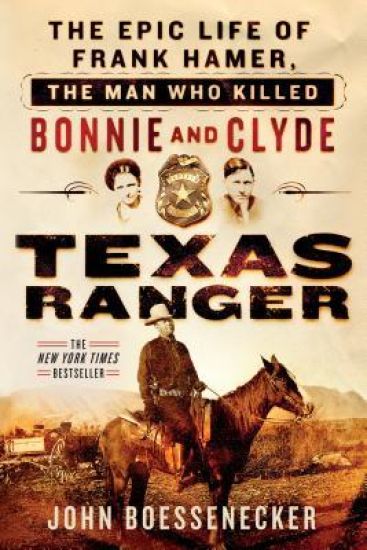
Texas Ranger: The Epic Life of Frank Hamer, the Man Who Killed Bonnie and Clyde

Texas Ranger: The Epic Life of Frank Hamer, the Man Who Killed Bonnie and Clyde

John Boessenecker

Thomas Dunne Book for St. Martin's Griffin
2017
nidottu
The New York Times Best Seller "Frank Hamer, last of the old breed of Texas Rangers, has not fared well in history or popular culture. John Boessenecker now restores this incredible Ranger to his proper place alongside such fabled lawmen as Wyatt Earp and Eliot Ness. Here is a grand adventure story, told with grace and authority by a master historian of American law enforcement. Frank Hamer can rest easy as readers will finally learn the truth behind his amazing career, spanning the end of the Wild West through the bloody days of the gangsters." --Paul Andrew Hutton, author of The Apache Wars To most Americans, Frank Hamer is known only as the "villain" of the 1967 film Bonnie and Clyde. Now, in Texas Ranger, historian John Boessenecker sets out to restore Hamer's good name and prove that he was, in fact, a classic American hero. From the horseback days of the Old West through the gangster days of the 1930s, Hamer stood on the frontlines of some of the most important and exciting periods in American history. He participated in the Bandit War of 1915, survived the climactic gunfight in the last blood feud of the Old West, battled the Mexican Revolution's spillover across the border, protected African Americans from lynch mobs and the Ku Klux Klan, and ran down gangsters, bootleggers, and Communists. When at last his career came to an end, it was only when he ran up against another legendary Texan: Lyndon B. Johnson. Written by one of the most acclaimed historians of the Old West, Texas Ranger is the first biography to tell the full story of this near-mythic lawman.
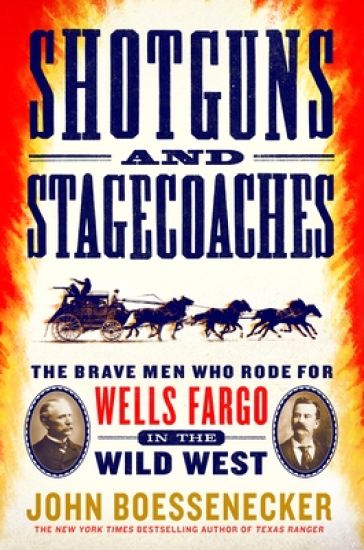
Shotguns and Stagecoaches: The Brave Men Who Rode for Wells Fargo in the Wild West

Shotguns and Stagecoaches: The Brave Men Who Rode for Wells Fargo in the Wild West

John Boessenecker

Thomas Dunne Book for St. Martin's Griffin
2020
nidottu
John Boessenecker presents the true stories of the Wild West heroes who guarded the iconic Wells Fargo stagecoaches and trains, battling colorful thieves, vicious highwaymen, and robbers armed with explosives. The phrase "riding shotgun" was no teenage game to the men who guarded stagecoaches and trains of the Western frontier. Armed with sawed-off, double-barreled shotguns and an occasional revolver, these express messengers guarded valuable cargo through lawless terrain. They were tough, fighting men who risked their lives every time they climbed into the front boot of a Concord coach. Boessenecker introduces soon-to-be iconic personalities like "Chips" Hodgkins, an express rider known for his white mule and his ability to outrace his competitors, and Henry Johnson, the first Wells Fargo detective. Their lives weren't just one shootout after another--their encounters with desperadoes were won just as often with quick wits and memorized-by-heart knowledge of the land. The highway robbers also get their due. It wouldn't be a book about the Wild West without Black Bart, the most infamous stagecoach robber of all time, and Butch Cassidy's gang, America's most legendary train robbers. Through the Gold Rush and the early days of delivery with horses and saddlebags, to the heyday of stagecoaches and huge shipments of gold, and finally the rise of the railroad and the robbers who concocted unheard-of schemes to loot trains, Wells Fargo always had courageous men to protect its treasure. Their unforgettable bravery and ingenuity make Shotguns and Stagecoaches a thrilling read.
Texas Ranger: The Epic Life of Frank Hamer, the Man Who Killed Bonnie and Clyde
To most Americans, Frank Hamer is known only as the "villain" of the 1967 film Bonnie and Clyde. Now, in The New York Times bestselling Texas Ranger, historian John Boessenecker sets out to restore Hamer's good name and prove that he was, in fact, a classic American hero. From the horseback days of the Old West through the gangster days of the 1930s, Hamer stood on the frontlines of some of the most important and exciting periods in American history. He participated in the Bandit War of 1915, survived the climactic gunfight in the last blood feud of the Old West, battled the Mexican Revolution's spillover across the border, protected African Americans from lynch mobs and the Ku Klux Klan, and ran down gangsters, bootleggers, and Communists. When at last his career came to an end, it was only when he ran up against another legendary Texan: Lyndon B. Johnson. Written by one of the most acclaimed historians of the Old West, Texas Ranger is the first biography to tell the full story of this near-mythic lawman. "Frank Hamer, last of the old breed of Texas Rangers, has not fared well in history or popular culture. John Boessenecker now restores this incredible Ranger to his proper place alongside such fabled lawmen as Wyatt Earp and Eliot Ness. Here is a grand adventure story, told with grace and authority by a master historian of American law enforcement. Frank Hamer can rest easy as readers will finally learn the truth behind his amazing career, spanning the end of the Wild West through the bloody days of the gangsters."--Paul Andrew Hutton, author of The Apache Wars
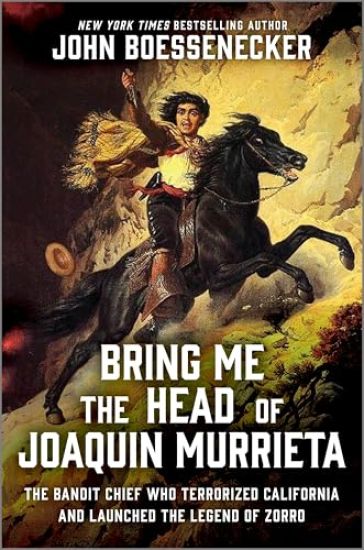
Bring Me the Head of Joaquin Murrieta: The Bandit Chief Who Terrorized California and Launched the Legend of Zorro
New York Times bestselling author and award-winning historian John Boessenecker--as seen on Netflix's Wyatt Earp and the Cowboy War--debunks over 150 years of myth surrounding the Wild West's most notorious Latino bandit, Joaquin Murrieta The story of Joaquin Murietta is the stuff of legends--in the face of adversity, the Latino outlaw embarked on a noble career as a rebel, fighting against injustice. He later became popularly known as "El Patrio" (the Patriot) and the "Robin Hood of El Dorado." However, though Joaquin Murietta remains a folk hero to many, his checkered past has been hidden behind layers upon layers of myth--until now. Joaquin arrived in the gold mines in 1849, and his brother-in-law, Claudio Feliz, turned to crime, driven by far more sinister ambitions than righteousness. By the following year, Claudio Feliz and Joaquin Murrieta ruled over one of the biggest and bloodiest outlaw gangs of the Old West. Despite Murrieta's grisly death, members of his gang continued to raid and kill for more than twenty years thereafter. Bring Me the Head of Joaquin Murrieta tells the infamous story of Joaquin's life, his bloody career and his gruesome fate. With careful research and never-before-told stories of the violent trail Murrieta and his gang left in their wake, award-winning author and definitive Wild West historian John Boessenecker separates fact from fiction in this gripping portrait of the California Gold Rush era, for readers of Tom Clavin and H. W. Brands.
Ride the Devil's Herd: Wyatt Earp's Epic Battle Against the West's Biggest Outlaw Gang
As seen on Netflix's Wyatt Earp and the Cowboy WarWinner of the Best Book Award by the Wild West History AssociationA ripsnortin' ramble across the bloodstained Arizona desert with Wyatt Earp and company... A pleasure for thoughtful fans of Old West history, revisionist without being iconoclastic. --Kirkus ReviewsWyatt Earp is regarded as the most famous lawman of the Old West, best known for his role in the Gunfight at the O.K. Corral in Tombstone, Arizona. But the story of his two-year war with a band of outlaws known as the Cowboys has never been told in full.Drawing on groundbreaking research into territorial and federal government records, John Boessenecker's Ride the Devil''s Herd reveals this long-forgotten chapter of Wild West history."Readers who want to learn the true details about what happened before, during and after the gunfight will be rewarded... Boessenecker] provides rich detail on the Earp family and its questionable ethics." --Roanoke TimesReaders interested in Wyatt Earp and 'Wild West' history will enjoy this new chronicle of the lawman's life and times. --Library Journal
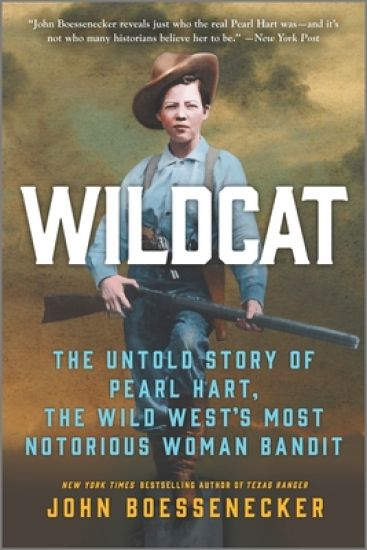
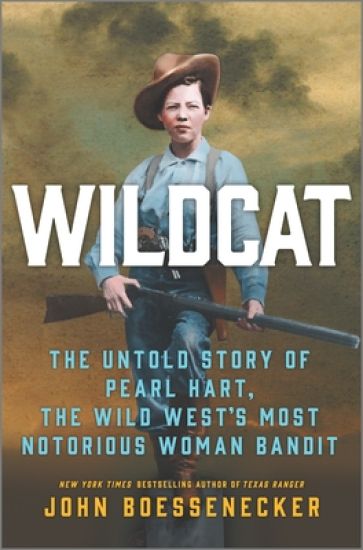
Wildcat: The Untold Story of Pearl Hart, the Wild West's Most Notorious Woman Bandit
As seen on Netflix's Wyatt Earp and the Cowboy WarWinner of the 2022 New Mexico-Arizona Book Awards" A] true-life adventure saga about the female outlaw who robbed a stagecoach at gunpoint in Arizona in 1899." --New York Times Book ReviewHistory was made when Pearl Hart, disguised as a man, held up a stagecoach and robbed the passengers at gunpoint. A manhunt ensued, and she became a media sensation, hailed by many as "The Bandit Queen." Her early life, family and fate have long remained a mystery--until now.Drawing on groundbreaking research, John Boessenecker's Wildcat is the first book to uncover the true story of Pearl Hart. Her legacy as a female trailblazer provides a look into the lives of women who made their mark on the American West."Mr. Boessenecker proves a tenacious researcher, with a particular knack for coaxing telling details from newspaper archives." --Wall Street Journal"Boessenecker continues to surprise us by pulling back the curtain on assumptions and legends about Western events and characters... The questions he asks are fresh and reveal new perspectives, and his prose is literary and highly readable." --True West Magazine
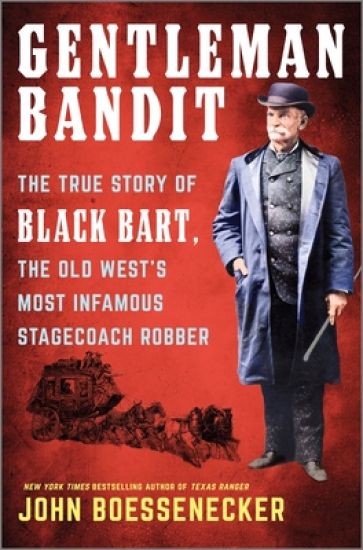
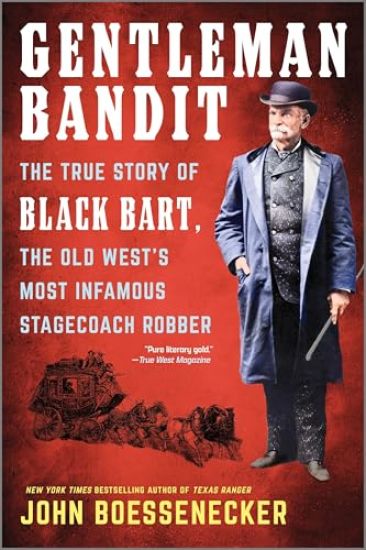
Gentleman Bandit: The True Story of Black Bart, the Old West's Most Infamous Stagecoach Robber
As seen on Netflix's Wyatt Earp and the Cowboy WarNew York Times bestselling author and award-winning historian John Boessenecker separates fact from fiction in the first new biography in decades of Black Bart, the Wild West's most mysterious gentleman bandit.Black Bart is widely regarded today as not only the most notorious stage robber of the Old West but also the best behaved. Over his lifetime, Black Bart held up at least twenty-nine stagecoaches in California and Oregon with mild, polite commands, stealing from Wells Fargo and the US mail but never robbing a passenger. Such behavior earned him the title of a true "gentleman bandit."His real name was Charles E. Boles, and in the public eye, Charles lived quietly as a boulevardier in San Francisco, the wealthiest and most exciting city in the American West. Boles was an educated man who traveled among respectable crowds. Because he did not drink, fight or consort with prostitutes, his true calling as America's greatest stage robber was never suspected until his final capture in 1883. Sheriffs searched and struggled for years to find him, and newspaper editors had a field day reporting his exploits. Legends and rumors trailed his name until his mysterious death, and his ultimate fate remains one of the greatest mysteries of the Old West.Now historian John Boessenecker sheds new light on Black Bart's beginnings, reputation and exploits, bringing to life the glittering story of the mysterious stage robber who doubled as a rich, genteel socialite in the golden era of the Wild West.
Gentleman Bandit: The True Story of Black Bart, the Old West's Most Infamous Stagecoach Robber
From New York Times bestselling author and award-winning historian John Boessenecker, an "entertaining, well-researched foray" (Kirkus Reviews) into the decades of Black Bart, the Wild West's mysterious gentleman bandit. Black Bart, widely regarded today as the best-behaved stage robber of the Old West, held up at least twenty-nine stagecoaches in California and Oregon with mild, polite commands, never robbing a passenger. His real name was Charles E. Boles, and his true calling as America's greatest stage robber was never suspected. Legends and rumors trailed his name until his death, and his ultimate fate remains one of the greatest mysteries of the Old West. Now historian John Boessenecker sheds new light on Black Bart's beginnings, reputation and exploits, bringing to life the glittering story of the stage robber who doubled as a rich, genteel socialite in the golden era of the Wild West. "A fascinating account of an enigmatic criminal." --Booklist "Gentleman Bandit sets the bar very high for Old West Law and Order biographies. It deserves a place of honor on every Westerner's bookshelf." --Branding Iron
Wildcat: The Untold Story of Pearl Hart, the Wild West's Most Notorious Woman Bandit
As seen on Netflix's Wyatt Earp and the Cowboy WarA True West magazine Best Book of 2021, a nominee for the MPIBA Annual Reading the West Book AwardA Top Pick in the Annual Southwest Books of the Year by Pima County Public LibraryWinner of the 2022 New Mexico-Arizona Book Awards" A] true-life adventure saga about the female outlaw who robbed a stagecoach at gunpoint in Arizona in 1899." -New York Times Book ReviewThe little-known story of Pearl Hart, the most famous female bandit in the American West. On May 30, 1899, history was made when Pearl Hart, disguised as a man, held up a stagecoach in Arizona and robbed the passengers at gunpoint. A manhunt ensued as word of her heist spread, and Pearl Hart went on to become a media sensation and the most notorious female outlaw on the Western frontier. Her early life, family and fate after her later release from prison have long remained a mystery to scholars and historians--until now.Drawing on groundbreaking research into territorial records and genealogical data, 's is the first book to uncover the enigma of Pearl Hart. Hailed by many as "The Bandit Queen," her epic life of crime and legacy as a female trailblazer provide a crucial lens into the lives of the rare women who made their mark in the American West.
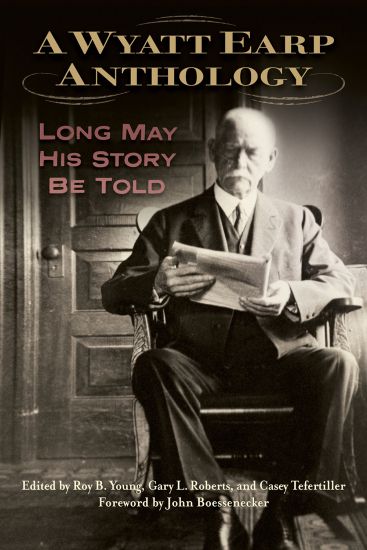
A Wyatt Earp Anthology

A Wyatt Earp Anthology

John Boessenecker

University of North Texas Press,U.S.
2019
sidottu
Wyatt Earp is one of the most legendary figures of the nineteenth-century American West, notable for his role in the gunfight at the O.K. Corral in Tombstone, Arizona. He was a product of his time, often walking both sides of the street, sometimes on the side of law and order and sometimes as the law-breaker. Some see him as the "Lion of Tombstone," a hero lawman of the Wild West, whereas others see him as yet another outlaw, a pimp, and failed lawman. Roy B. Young, Gary L. Roberts, and Casey Tefertiller, all notable experts on Earp and the Wild West, present in A Wyatt Earp Anthology an authoritative account of his life, successes, and failures. The editors have curated an anthology of the very best work on Earp-more than sixty articles and excerpts from books-from a wide array of authors, selecting only the best written and factually documented pieces and omitting those full of suppositions or false material. Nearly all of the selections come from the last twenty years, when a more critical eye was turned to sources of Earp history. Many articles derive from the five stellar western publications dedicated to preserving the history of the American West: True West, Wild West, WOLA Journal, NOLA Quarterly, and the Journal of the Wild West History Association. Earp's life is presented in chronological fashion, from his early years to Dodge City, Kansas; triumph and tragedy in Tombstone; and his later years throughout the West. Important figures in Earp's life, such as Bat Masterson, the Clantons, the McLaurys, Doc Holliday, and John Ringo, are also covered. Wyatt Earp's image in film and the myths surrounding his life, as well as controversies over interpretations and presentations of his life by various writers, also receive their due. Finally, an extensive epilogue by Gary L. Roberts explores Earp and frontier violence. Readers of the Old West will appreciate this well-balanced, comprehensive account of the life, legend, and legacy of the incomparable Wyatt Earp.