Kirjojen hintavertailu. Mukana 12 016 292 kirjaa ja 12 kauppaa.

Kirjahaku

Etsi kirjoja tekijän nimen, kirjan nimen tai ISBN:n perusteella.

9 kirjaa tekijältä John C. Olin

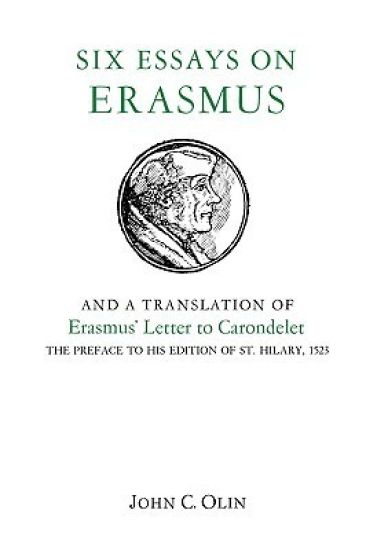
Six Essays on Erasmus

Six Essays on Erasmus

John C. Olin

Fordham University Press
1979
pokkari
This volume comprises four previously published Erasmian studies and two new works. All are attempts at understanding Erasmus' aims, his influence, and his historical image. Professor Olin's earlier essays have generated enthusiastic responses form the community of Erasmian scholars, and this convenient gathering is bound to be a welcome collection. It also provides the first translation into English of the preface to Erasmus' edition of Hilary. A major statement of his position as a humanist and reformer, it is one of Erasmus' most important contributions. This translation in particular makes this volume a useful complement to Professor Olin's other Erasmian collection listed below.
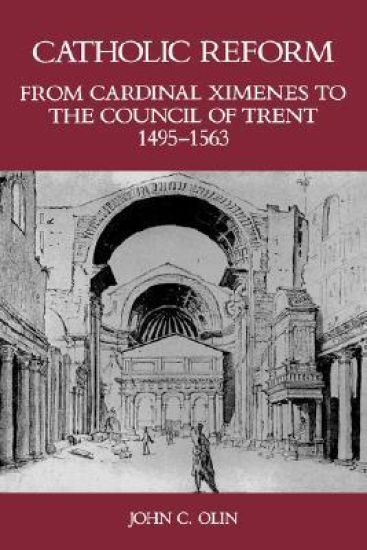
Catholic Reform from Cardinal Ximenes to the Council of Trent, 1495-1563:
Available in a new digital edition with reflowable text suitable for e-readers The sixteenth century in Europe is characterized historically by the religious upheaval known as the Reformation, with attention generally focusing on Luther and the other Protestant reformers who broke from the established church. This development however, major as it was, is not the whole story of reform in the sixteenth century. Underlying and encompassing the Protestant Reformation was a broader search for religious renewal and reform that remained within the Catholic Church and is sometimes referred to was the Catholic Reformation. This volume focuses on this surprisingly neglected aspect of sixteenth-century religious reform, filling an important need in Reformation studies. John C. Olin, well known for his writings on Erasmus and the Reformation, shows how Catholic reform did not begin in opposition to Protestantism but as a parallel movement, springing out of the same context and responding to very similar needs for religious change and revival. The book opens with an introductory essay that views the course of Catholic reform from the initiatives of Cardinal Ximenes, who became archbishop of Toledo and primate of Spain in 1495, to the work of the Council of Trent in 1563 – years of crucial importance for the survival and revival of the Catholic faith. Following the essay are several key documents, including the preface to the Complutensian polyglot bible and decrees of the Council of Trent, that illustrate from contemporary sources the character of the movement of Catholic reform. There is also a brief study of St. Ignatius Loyola, as well as numerous illustrations and an extensive bibliography.
Catholic Reform From Cardinal Ximenes to the Council of Trent, 1495-1563:
Available in a new digital edition with reflowable text suitable for e-readers The sixteenth century in Europe is characterized historically by the religious upheaval known as the Reformation, with attention generally focusing on Luther and the other Protestant reformers who broke from the established church. This development however, major as it was, is not the whole story of reform in the sixteenth century. Underlying and encompassing the Protestant Reformation was a broader search for religious renewal and reform that remained within the Catholic Church and is sometimes referred to was the Catholic Reformation. This volume focuses on this surprisingly neglected aspect of sixteenth-century religious reform, filling an important need in Reformation studies. John C. Olin, well known for his writings on Erasmus and the Reformation, shows how Catholic reform did not begin in opposition to Protestantism but as a parallel movement, springing out of the same context and responding to very similar needs for religious change and revival. The book opens with an introductory essay that views the course of Catholic reform from the initiatives of Cardinal Ximenes, who became archbishop of Toledo and primate of Spain in 1495, to the work of the Council of Trent in 1563 – years of crucial importance for the survival and revival of the Catholic faith. Following the essay are several key documents, including the preface to the Complutensian polyglot bible and decrees of the Council of Trent, that illustrate from contemporary sources the character of the movement of Catholic reform. There is also a brief study of St. Ignatius Loyola, as well as numerous illustrations and an extensive bibliography.
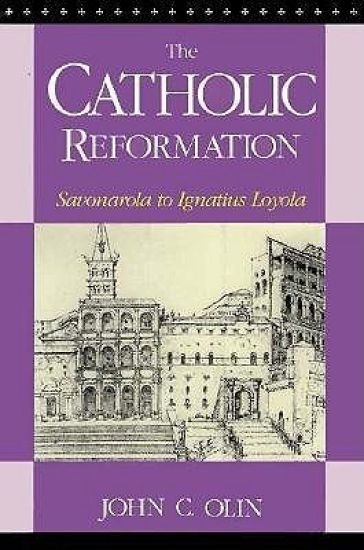
The Catholic Reformation

The Catholic Reformation

John C. Olin

Fordham University Press
1993
pokkari
Available in a new digital edition with reflowable text suitable for e-readers This work contains fifteen key documents illustrative of reform in the Church in the period from 1495 to 1540, an age of great religious ferment and upheaval, which is marked historically by the crisis known as the Protestant Reformation. The documents collected in this work focus on the simultaneous struggle for renewal and reform within the Catholic Church. There was much amiss within the Church at the close of the Middle Ages. The Protestant Reformation threw into high relief the urgent need for religious reform. Involving basic questions of doctrine, practice, and authority, this severe trial put in jeopardy the very life of the existing Catholic Church. The balanced selection of notable and representative source materials tells their story in a lively and dramatic way. This important work on a little-known aspect of a turbulent era is a valuable contribution to Reformation studies.
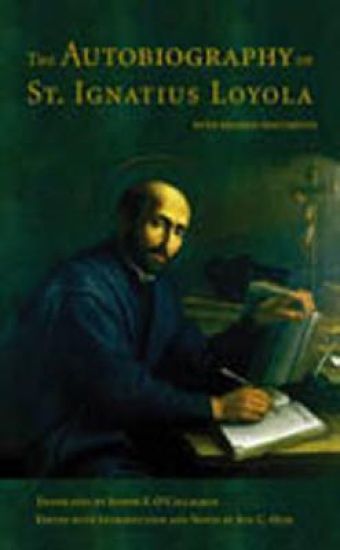
The Autobiography of St. Ignatius Loyola

The Autobiography of St. Ignatius Loyola

John C. Olin

Fordham University Press
1993
pokkari
Available in a new digital edition with reflowable text suitable for e-readers From the Introduction: "The autobiography...does not cover the complete life of Ignatius. It begins abruptly in 1521 at the great turning point in the saint's life – his injury in the battle of Pamplona when the French occupied that town and attacked its citadel. It then spans the next seventeen years up to the arrival of Ignatius and his early companions in Rome…These years are the central years of Ignatius's life. They are the years…that open with his religious conversion and that witness his spiritual growth. They are the years of pilgrimage, to use his own designation, of active travel and searching, and of interior progress in the Christian life. They are the years of preparation for the establishment of the great religious order he will found and for its dynamic thrust in the turbulent Europe and the expanding world of his day."
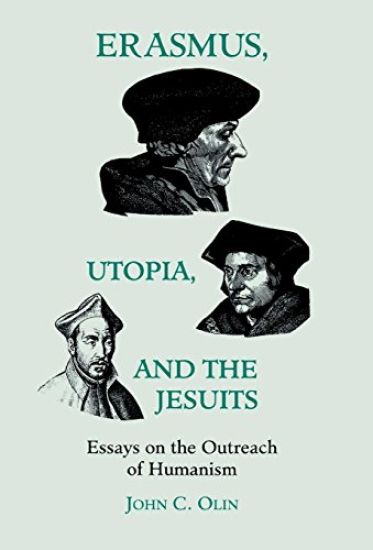
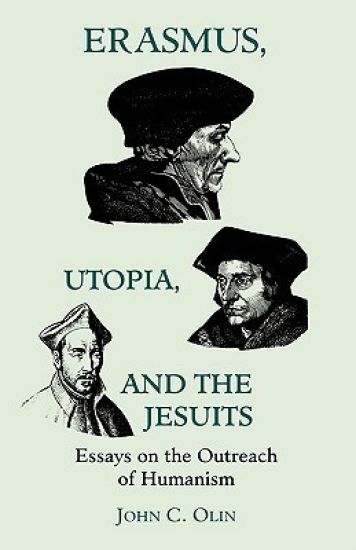
Erasmus, Utopia, and the Jesuits

Erasmus, Utopia, and the Jesuits

John C. Olin

Fordham University Press
1994
sidottu
Olin's focus in this collection of essays is the historical period of the early sixteenth century, the juncture of the Renaissance and the Reformation. Providing an in-depth alternative to the standard treatment – so often limited to the classical revival – this work concerns itself with the unique link between humanism and the great literary works of the period, and, in particular, the patristic scholarship inherent in Erasmus' ideals of reform. Olin specifically take into account the movements of New Learning and Humanism defining the cultural break between Medieval scholasticism and the renaissance of interest in the literature of antiquity.
Erasmus, Utopia, and the Jesuits

Erasmus, Utopia, and the Jesuits

John C. Olin

Fordham University Press
1994
pokkari
Olin's focus in this collection of essays is the historical period of the early sixteenth century, the juncture of the Renaissance and the Reformation. Providing an in-depth alternative to the standard treatment – so often limited to the classical revival – this work concerns itself with the unique link between humanism and the great literary works of the period, and, in particular, the patristic scholarship inherent in Erasmus' ideals of reform. Olin specifically take into account the movements of New Learning and Humanism defining the cultural break between Medieval scholasticism and the renaissance of interest in the literature of antiquity.
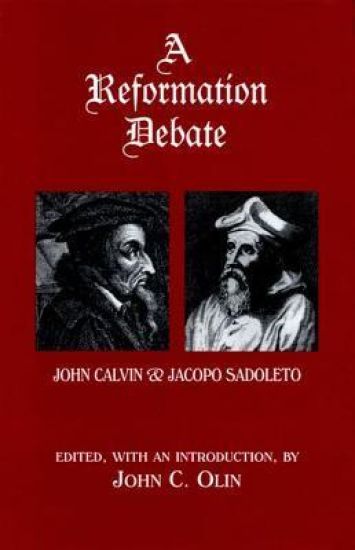
A Reformation Debate

A Reformation Debate

John C. Olin

Fordham University Press
2000
sidottu
In 1539, Cardinal Jacopo Sadoleto, Bishop of Carpentras, addressed a letter to the magistrates and citizens of Geneva, asking them to return to the Roman Catholic faith. John Calvin replied to Sadoleto, defending the adoption of the Protestant reforms. Sadoleto's letter and Calvin's reply constitute one of the most interesting exchanges of Roman Catholic/Protestant views during the Reformationand an excellent introduction to the great religious controversy of the sixteenth century. These statements are not in vacuo of a Roman Catholic and Protestant position. They were drafted in the midst of the religious conflict that was then dividing Europe. And they reflect too the temperaments and personal histories of the men who wrote them. Sadoleto's letter has an irenic approach, an emphasis on the unity and peace of the Church, highly characteristic of the Christian Humanism he represented. Calvin's reply is in part a personal defense, an apologia pro vita sua, that records his own religious experience. And its taut, comprehensive argument is characteristic of the disciplined and logical mind of the author of The Institutes of the Christian Religion.
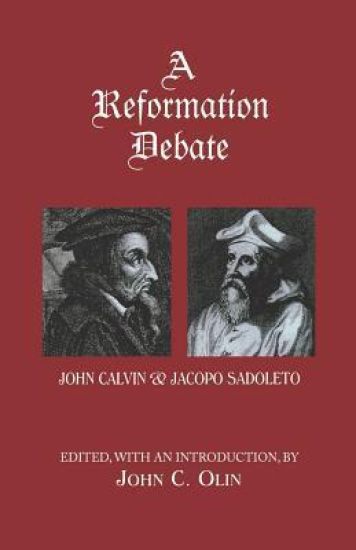
A Reformation Debate

A Reformation Debate

John C. Olin

Fordham University Press
2000
pokkari
In 1539, Cardinal Jacopo Sadoleto, Bishop of Carpentras, addressed a letter to the magistrates and citizens of Geneva, asking them to return to the Roman Catholic faith. John Calvin replied to Sadoleto, defending the adoption of the Protestant reforms. Sadoleto's letter and Calvin's reply constitute one of the most interesting exchanges of Roman Catholic/Protestant views during the Reformationand an excellent introduction to the great religious controversy of the sixteenth century. These statements are not in vacuo of a Roman Catholic and Protestant position. They were drafted in the midst of the religious conflict that was then dividing Europe. And they reflect too the temperaments and personal histories of the men who wrote them. Sadoleto's letter has an irenic approach, an emphasis on the unity and peace of the Church, highly characteristic of the Christian Humanism he represented. Calvin's reply is in part a personal defense, an apologia pro vita sua, that records his own religious experience. And its taut, comprehensive argument is characteristic of the disciplined and logical mind of the author of The Institutes of the Christian Religion.