Kirjojen hintavertailu. Mukana 11 419 935 kirjaa ja 12 kauppaa.

Kirjahaku

Etsi kirjoja tekijän nimen, kirjan nimen tai ISBN:n perusteella.

13 kirjaa tekijältä John Carlos Rowe

Literary Culture and US Imperialism

Literary Culture and US Imperialism

John Carlos Rowe

Oxford University Press Inc
2000
sidottu
John Carlos Rowe, considered one of the most eminent and progressive critics of American literature, has in recent years become instrumental in shaping the path of American studies. His latest book examines literary responses to U.S. imperialism from the late eighteenth century to the 1940s. Interpreting texts by Charles Brockden Brown, Poe, Melville, John Rollin Ridge, Twain, Henry Adams, Stephen Crane, W. E. B Du Bois, John Neihardt, Nick Black Elk, and Zora Neale Hurston, Rowe argues that U.S. literature has a long tradition of responding critically or contributing to our imperialist ventures. Following in the critical footsteps of Richard Slotkin and Edward Said, Literary Culture and U.S. Imperialism is particularly innovative in taking account of the public and cultural response to imperialism. In this sense it could not be more relevant to what is happening in the scholarship, and should be vital reading for scholars and students of American literature and culture.
Literary Culture and US Imperialism

Literary Culture and US Imperialism

John Carlos Rowe

Oxford University Press Inc
2000
nidottu
John Carlos Rowe, considered one of the most eminent and progressive critics of American literature, has in recent years become instrumental in shaping the path of American studies. His latest book examines literary responses to U.S. imperialism from the late eighteenth century to the 1940s. Interpreting texts by Charles Brockden Brown, Poe, Melville, John Rollin Ridge, Twain, Henry Adams, Stephen Crane, W. E. B Du Bois, John Neihardt, Nick Black Elk, and Zora Neale Hurston, Rowe argues that U.S. literature has a long tradition of responding critically or contributing to our imperialist ventures. Following in the critical footsteps of Richard Slotkin and Edward Said, Literary Culture and U.S. Imperialism is particularly innovative in taking account of the public and cultural response to imperialism. In this sense it could not be more relevant to what is happening in the scholarship, and should be vital reading for scholars and students of American literature and culture.
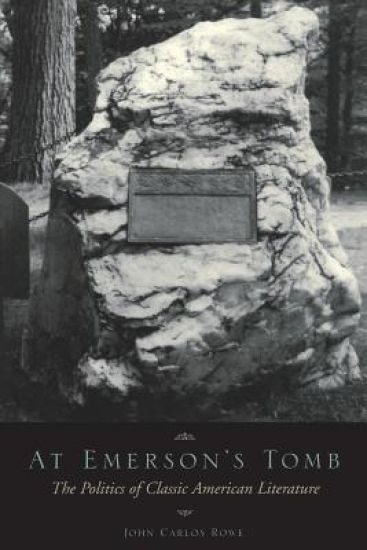
At Emerson's Tomb

At Emerson's Tomb

John Carlos Rowe

Columbia University Press
1997
sidottu
Representative works are interpreted in light of the two great political movements of the nineteenth century: the abolition of slavery and the women's rights movement. By reexamining Emerson, Poe, Melville, Douglass, Walt Whitman, Chopin, and Faulkner and others, Rowe assesses the degree to which major writers' attitudes toward race, class, and gender contribute to specific political reforms in nineteenth and twentieth-century American culture.
At Emerson's Tomb

At Emerson's Tomb

John Carlos Rowe

Columbia University Press
1997
pokkari
Representative works are interpreted in light of the two great political movements of the nineteenth century: the abolition of slavery and the women's rights movement. By reexamining Emerson, Poe, Melville, Douglass, Walt Whitman, Chopin, and Faulkner and others, Rowe assesses the degree to which major writers' attitudes toward race, class, and gender contribute to specific political reforms in nineteenth and twentieth-century American culture.
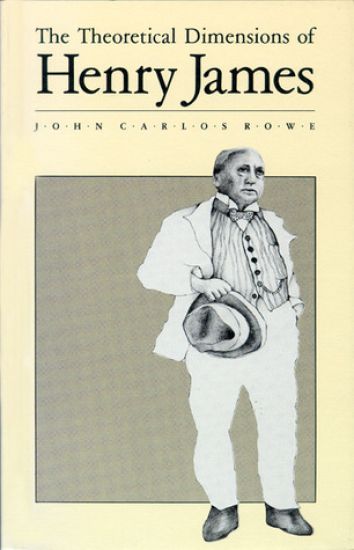
The Theoretical Dimensions of Henry James

The Theoretical Dimensions of Henry James

John Carlos Rowe

University of Wisconsin Press
1985
nidottu
Rowe examines James from the perspectives of the psychology of literary influence, feminism, Marxism, psychoanalysis, literary phenomenology and impressionism, and reader-response criticism, transforming a literary monument into the telling point of intersection for modern critical theories.
New Essays on The Education of Henry Adams

New Essays on The Education of Henry Adams

John Carlos Rowe

Cambridge University Press
1996
sidottu
This volume in The American Novel series addresses the established reputation of The Education of Henry Adams as a classic work of American autobiography and canonical work of American literature. Examining The Education in terms of early twentieth-century American attitudes to education, gender, US foreign policy, and historiography, these essays add considerably to our understanding of the Education as an expression of its time. The approaches of the four contributors - John Carlos Rowe, Brook Thomas, Martha Banta, and Howard Horwitz - complement each other, even though the specific topic explored by each scholar is distinctly different from the others. The result is a remarkably coherent volume that explains in original ways the continuing importance of The Education of Henry Adams as literature and history.
New Essays on The Education of Henry Adams

New Essays on The Education of Henry Adams

John Carlos Rowe

Cambridge University Press
1996
pokkari
This volume in The American Novel series addresses the established reputation of The Education of Henry Adams as a classic work of American autobiography and canonical work of American literature. Examining The Education in terms of early twentieth-century American attitudes to education, gender, US foreign policy, and historiography, these essays add considerably to our understanding of the Education as an expression of its time. The approaches of the four contributors - John Carlos Rowe, Brook Thomas, Martha Banta, and Howard Horwitz - complement each other, even though the specific topic explored by each scholar is distinctly different from the others. The result is a remarkably coherent volume that explains in original ways the continuing importance of The Education of Henry Adams as literature and history.
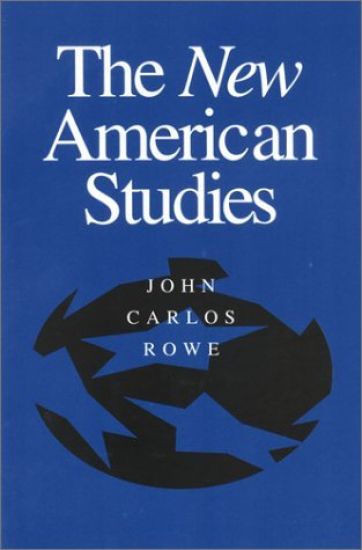
New American Studies

New American Studies

John Carlos Rowe

University of Minnesota Press
2002
nidottu
A clarion call for a more theoretically and politically informed approach to American StudiesJohn Carlos Rowe, a leading American Studies scholar, has examined his field of study and declared it not ready for the twenty-first century. In The New American Studies, Rowe demands a reinvention of the discipline that includes a commitment to making it more theoretically informed, and he draws on the work of cultural critics, postmodernist theorists, and scholars in ethnic, gender, gay, and media studies. Rowe asserts that with American Studies’s strong history of social criticism and practical pedagogy it is an easy leap to the type of progressive commitments characteristic of these areas of scholarship.The New American Studies is a compelling combination of theory and application, synthesis and polemic. Rowe traces the evolution of American Studies over the last quarter century and looks to the future, placing the field in a postnationalist context that encompasses all of the Americas and the disparate cultural zones within. He then demonstrates the kind of literary and cultural interpretation he calls for, examining subjects ranging from Hawthorne’s and James’s responses to nineteenth-century sexual mores, to the ways television legitimated itself in its first few decades, to the Elián González custody case.
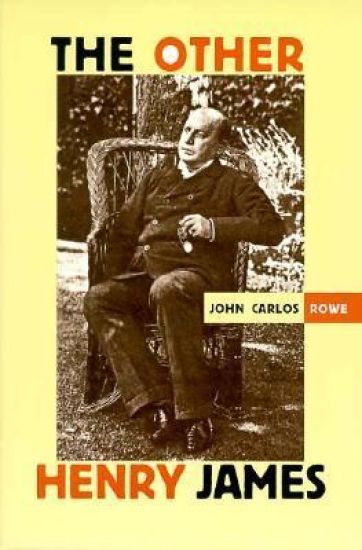
The Other Henry James

The Other Henry James

John Carlos Rowe

Duke University Press
1998
sidottu
In The Other Henry James, John Carlos Rowe offers a new vision of Henry James as a social critic whose later works can now be read as rich with homoerotic suggestiveness. Drawing from recent work in queer and feminist theory, Rowe argues that the most fruitful approach to James today is one that ignores the elitist portrait of the formalist master in favor of the writer as a vulnerable critic of his own confused and repressive historical moment.Rowe traces a particular development in James’s work, showing how in his early writings James criticized women’s rights, same-sex relations, and other social and political trends now identified with modern culture; how he ambivalently explored these aspects of modernity in his writings of the 1880s; and, later, how he increasingly identified with such modernity in his heretofore largely ignored or marginally treated fiction of the 1890s. Building on recent scholarship that has shown James to be more anxious about gender roles, more conflicted, and more marginal a figure than previously thought, Rowe argues that James-through his treatment of women, children, and gays-indicts the values and conventions of the bourgeoisie. He shows how James confronts social changes in gender roles, sexual preferences, national affiliations, and racial and ethnic identifications in such important novels as The American, The Tragic Muse, What Maisie Knew, and In the Cage, and in such neglected short fiction as “The Last of the Valerii,” “The Death of the Lion,” and “The Middle Years.”Positioning James’s work within an interpretive context that pits the social and political anxieties of his day against the imperatives of an aesthetic ideology, The Other Henry James will engage scholars, students, and teachers of American literature and culture, gay literature, and queer theory.
The Other Henry James

The Other Henry James

John Carlos Rowe

Duke University Press
1998
pokkari
In The Other Henry James, John Carlos Rowe offers a new vision of Henry James as a social critic whose later works can now be read as rich with homoerotic suggestiveness. Drawing from recent work in queer and feminist theory, Rowe argues that the most fruitful approach to James today is one that ignores the elitist portrait of the formalist master in favor of the writer as a vulnerable critic of his own confused and repressive historical moment.Rowe traces a particular development in James’s work, showing how in his early writings James criticized women’s rights, same-sex relations, and other social and political trends now identified with modern culture; how he ambivalently explored these aspects of modernity in his writings of the 1880s; and, later, how he increasingly identified with such modernity in his heretofore largely ignored or marginally treated fiction of the 1890s. Building on recent scholarship that has shown James to be more anxious about gender roles, more conflicted, and more marginal a figure than previously thought, Rowe argues that James-through his treatment of women, children, and gays-indicts the values and conventions of the bourgeoisie. He shows how James confronts social changes in gender roles, sexual preferences, national affiliations, and racial and ethnic identifications in such important novels as The American, The Tragic Muse, What Maisie Knew, and In the Cage, and in such neglected short fiction as “The Last of the Valerii,” “The Death of the Lion,” and “The Middle Years.”Positioning James’s work within an interpretive context that pits the social and political anxieties of his day against the imperatives of an aesthetic ideology, The Other Henry James will engage scholars, students, and teachers of American literature and culture, gay literature, and queer theory.
Our Henry James in Fiction, Film, and Popular Culture
Our Henry James in Fiction, Film, and Popular Culture addresses the interesting revival of Henry James’s works in Anglo-American film adaptations and contemporary fiction from the 1960s to the present. James’s fiction is generally considered difficult and part of high culture, more appropriate for classroom study than popular appreciation. However, this volume focuses on the adaptation of his novels into films, challenging us to understand James’s popular reputation today on both sides of the Atlantic.The book offers two explanations for his persistent influence: James’s literary ambiguity and his reliance on popular culture. “Part I: His Times” considers James’s reliance on sentimental literature and theatrical melodrama in Daisy Miller, Guy Domville, The Awkward Age, and several of his lesser known short stories. “Part II: Our Times” focuses on how James’s considerations of changing gender roles and sexual identities have influenced Hollywood representations of emancipated women in Hitchcock’s Rear Window and Peter Bogdanovich’s The Last Picture Show, among others. Recent fiction by authors including James Baldwin and Leslie Marmon Silko also treat Jamesian notions of gender and sexuality while considering his part in contemporary debates about globalization and cosmopolitanism.Both a study of James’s works and a broad range of contemporary film and fiction, Our Henry James in Fiction, Film, and Popular Culture demonstrates the continuing relevance of Henry James to our multimedia, interdisciplinary, globalized culture.
Our Henry James in Fiction, Film, and Popular Culture
Our Henry James in Fiction, Film, and Popular Culture addresses the interesting revival of Henry James’s works in Anglo-American film adaptations and contemporary fiction from the 1960s to the present. James’s fiction is generally considered difficult and part of high culture, more appropriate for classroom study than popular appreciation. However, this volume focuses on the adaptation of his novels into films, challenging us to understand James’s popular reputation today on both sides of the Atlantic.The book offers two explanations for his persistent influence: James’s literary ambiguity and his reliance on popular culture. “Part I: His Times” considers James’s reliance on sentimental literature and theatrical melodrama in Daisy Miller, Guy Domville, The Awkward Age, and several of his lesser known short stories. “Part II: Our Times” focuses on how James’s considerations of changing gender roles and sexual identities have influenced Hollywood representations of emancipated women in Hitchcock’s Rear Window and Peter Bogdanovich’s The Last Picture Show, among others. Recent fiction by authors including James Baldwin and Leslie Marmon Silko also treat Jamesian notions of gender and sexuality while considering his part in contemporary debates about globalization and cosmopolitanism.Both a study of James’s works and a broad range of contemporary film and fiction, Our Henry James in Fiction, Film, and Popular Culture demonstrates the continuing relevance of Henry James to our multimedia, interdisciplinary, globalized culture.
The Cultural Politics of the New American Studies

The Cultural Politics of the New American Studies

John Carlos Rowe

Michigan Publishing Services
2012
nidottu
In The Cultural Politics of the New American Studies, leading American Studies scholar John Carlos Rowe responds to two urgent questions for intellectuals. First, how did neoliberal ideology use the issues of feminism, gay rights, multiculturalism, transnationalism and globalization, class mobility, religious freedom, and freedom of speech and cultural expression to justify a new “American Exceptionalism,” designed to support U.S. economic, political, military, and cultural expansion around the world in the past two decades? Second, if neoliberalism has successfully employed various cultural media, then what are the best means of criticizing its main claims and fundamental purposes? Is it possible under these circumstances to imagine a “counter-culture” which might effectively challenge neoliberalism or is such an alternative already controlled and contained by such labels as “political correctness,” “the far left,” “radicalism,” “extremism,” even “terrorism,” which in the popular imagination refer to political and social minorities, doomed thereby to marginalization? Rowe argues that the tradition of “cultural criticism” advocated by influential public intellectuals like Edward Said can be adapted to the new circumstances demanded by the hegemony of neoliberalism and its successful command of new media. Yet rather than simply honoring important predecessors such as Said, we need to reconceive the role of the public intellectual as more than just an “interdisciplinary scholar” but also as a social critic able to negotiate the different media.