
Kirjahaku
Etsi kirjoja tekijän nimen, kirjan nimen tai ISBN:n perusteella.
10 kirjaa tekijältä John Christgau
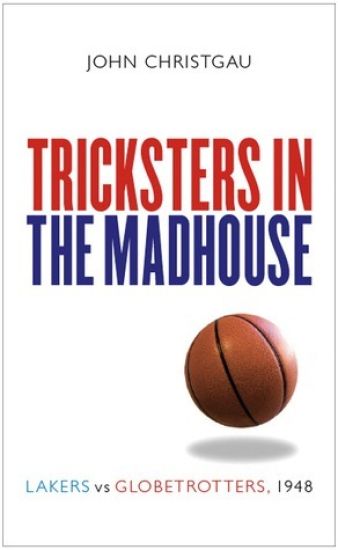
In February 1948 the brand-new, all-white Minneapolis Lakers were arguably the greatest basketball team in America, favored to win the World Professional Basketball Tournament later that year. Meanwhile the Harlem Globetrotters, at the center of black basketball, were riding their own incredible 103-game winning streak. Best known to white audiences for their clowning and comedy, the Globetrotters were not even thought to be in the same league with the mighty Lakers. So when these two powerhouses met for the first time—on February 19, 1948, before an audience of eighteen thousand in Chicago Stadium—basketball fans everywhere were in for an eye-opening performance. Tricksters in the Madhouse is the story of this pivotal meeting, a game that would encapsulate the growing racial tensions of the era, particularly the struggle of black Americans to gain legitimacy in the segregated world of sports. Play-by-play, John Christgau recreates the heart-stopping game that would shock white basketball fans raised to view black athletes in separate and unequal terms. Through in-depth interviews and extensive research, Christgau brings this critical match-up to life. By looking beyond the drama in the arena to the broader events of the day, he also puts the game in its sociological context, revealing how, even as it enacted the racial inequities of the time, this crucial game represented an important step toward equality.

The first Japanese American jockey, Kokomo Joe burst like a comet on the American horse-racing scene in the summer of 1941. As war with Japan loomed, Yoshio "Kokomo Joe" Kobuki won race after race, stirring passions far beyond merely the envy and antagonism of other jockeys. His is a story of the American dream catapulting headlong into the nightmare of a nation gripped by wartime hysteria and xenophobia. The story that unfolds in Kokomo Joe is at once inspiring, deeply sad, and richly ironic—and remarkably relevant in our own climate of nationalist fervor and racial profiling. Sent to Japan from Washington State after his mother and three siblings died of the Spanish flu, Kobuki continued to nurse his dream of the American good life. Because of his small stature, his ambition steered him to a future as a star jockey. John Christgau narrates Kobuki's rise from lowly stable boy to reigning star at California fairs and in the bush leagues. He describes how, at the height of the jockey's fame, even his flight into the Sonora Desert could not protect him from the government's espionage and sabotage dragnet. And finally he recounts how, after three years of internment, Kokomo Joe tried to reclaim his racing success, only to fall victim to still-rampant racism, a career-ending injury, and cancer.
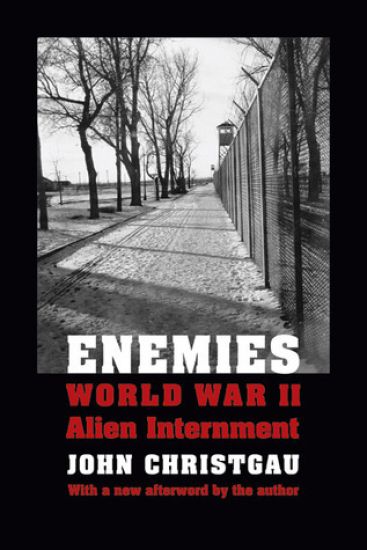
They were called aliens and enemies. But the World War II internees John Christgau writes about were in fact ordinary people victimized by the politics of a global war. The Alien Enemy Control Program in America was born with the United States’s declaration of war on Japan, Germany, and Italy and lasted until 1948. In all, 31,275 “enemy aliens” were imprisoned in camps like the one described in this book-Fort Lincoln, just south of Bismarck, North Dakota. In animated and suspenseful prose, Christgau tells the stories of several individuals whose experiences are representative of those at Fort Lincoln. The subjects’ lives before and after capture-presented in five case studies-tell of encroaching bitterness and sorrow. Christgau based his accounts on voluminous and previously untouched National Archives and FBI documents in addition to letters, diaries, and interviews with his subjects. Christgau’s afterword for this Bison Books edition relates additional stories of World War II alien restriction, detention, and internment that surfaced after this book was originally published, and he draws parallels between the alien internment of World War II and events in this country since September 11, 2001.
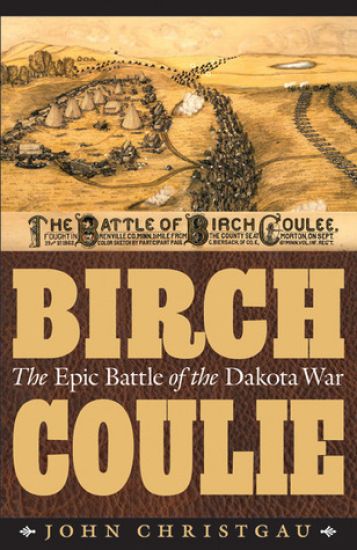
In the days following the Battle of Birch Coulie, the decisive battle in the deadly Dakota War of 1862, one of President Lincoln's private secretaries wrote: "There has hardly been an outbreak so treacherous, so sudden, so bitter, and so bloody, as that which filled the State of Minnesota with sorrow and lamentation." Even today, at the 150th anniversary of the Dakota War, the battle still raises questions and stirs controversy. In Birch Coulie John Christgau recounts the dramatic events surrounding the battle. American history at its narrative best, his book is also a uniquely balanced and accurate chronicle of this little-understood conflict, one of the most important to roil the American West. Christgau's account of the war between white settlers and the Dakota Indians in Minnesota examines two communities torn by internal dissent and external threat, whites and Native Americans equally traumatized by the short and violent war. The book also delves into the aftermath, during which thirty-eight Dakota men were hanged without legal representation or the appearance of defense witnesses, the largest mass execution in American history. With its unusually nuanced perspective, Birch Coulie brings a welcome measure of clarity and insight to a critical moment in the troubled history of the American West.
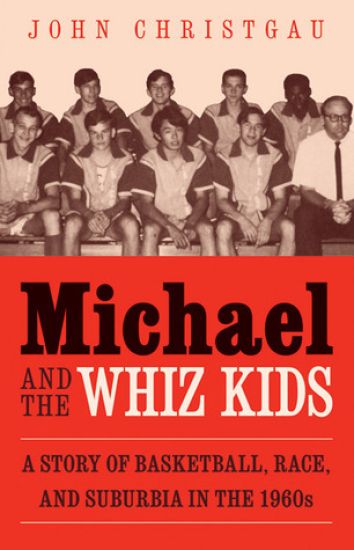
Imagine a boy, five feet tall and one hundred pounds, who wants to play high school basketball. Now imagine that he was blind until the age of six and that he's the first black student to attend his suburban school. And there you have Michael Thompson in 1965 in San Bruno, California. He played at the school where a young English teacher was coaching "lightweight basketball," a competition for smaller players that has since disappeared. The team that Coach John Christgau put together came to be called the Whiz Kids for the way they rocketed up and down the court, led by Michael and invariably winning.Michael and the Whiz Kids tells the story of the team's 1968 championship season. It is a tale of cliffhanger games and players as outsized in character as they are short in stature, from the wild-haired, bespectacled "Professor" to the well-traveled Latvian dubbed "Suitcase" to the quiet and tenacious "Salt," as in "of the earth." But it is also a tale of the time—of counterculture, suburbia, integration, and racial brawls erupting on the court. In Christgau's deft telling, it is an absorbing, often comic story of coming of age, for coach and Whiz Kids alike.
While elated Northerners were celebrating victory at Gettysburg and toasting Abraham Lincoln as the Great Emancipator, Missourian Charles W. Walker was rousing his thirteen slaves in the dark of night. In defiance of a standing Union order prohibiting the transfer of slaves among states, he intended to ship his slaves by train to Kentucky, where they would be sold at auction. What ensued was one of the most gripping—and until now, mostly forgotten—events of the Civil War.In Incident at the Otterville Station, John Christgau relates the true story of the rescue of Walker's thirteen slaves by soldiers of the Ninth Minnesota Regiment and the soldiers' subsequent arrest for mutiny. The controversial incident became national news, with President Lincoln ultimately sending Secretary of War Edward Stanton to investigate. Christgau's compelling narrative of the Otterville Station rescue and its aftermath illustrates the complex process of emancipation during the American Civil War, particularly in border states such as Missouri. The end of slavery was the product of many actors, from Union soldiers to the president and Congress to abolitionists and the enslaved themselves. This detailed account examines the critical role that individuals played in determining the outcome of emancipation and the war.
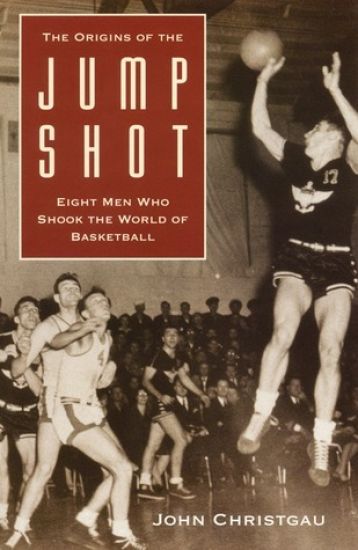
Before the jump shot, basketball was an earth-bound game. In fact, inventor James Naismith did not originally intend for players to move with the ball. The inspired invention of the dribble first put the ball handler in motion. The jump shot then took the action upward. But where, when, and how did the jump shot originate? Everybody interested in basketball knows the answer to that question. Unfortunately, everybody knows a different answer. John Christgau delves into basketball's evolution, following the supposed inventors of the jump shot to the games in which they first took to the air. He discovers that a number of pioneer players, independently but from the same inspired possibility, can each claim credit for inventing the jump shot.
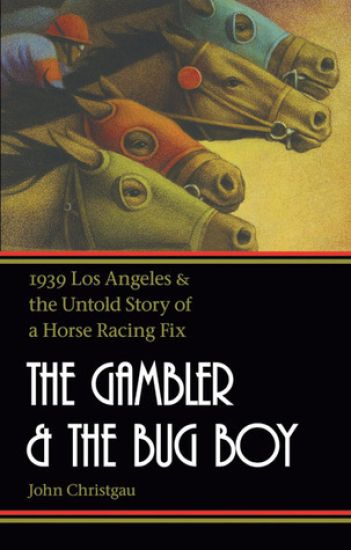
"Scandal on the Turf!" the Los Angeles Times proclaimed. It was October 1940, a mere few months after Seabiscuit had won the Santa Anita Derby, and now this bombshell: "Six Jockeys Admit Horse Races Fixed." The Gambler and the Bug Boy recounts this dark chapter in horse racing history. At its center is Bernard "Big" Mooney, a flashy L.A. bookmaker who began his seedy career by threatening young jockeys with death if they didn't "pull" their horses. His unwilling partner is Albert Siler, a callow, eighteen-year-old apprentice rider (a so-called bug boy) from eastern Oregon. John Christgau tells how Big Mooney manipulated this promising rider and how Siler tried to escape the gambler's criminal grip without ruining his career. Christgau's book gives all the harrowing details of the unraveling plot and the botched court case that followed which riveted the attention of the nation. Told in full for the first time, this story brings to light a little-known but important horse racing scandal.