
Kirjahaku
Etsi kirjoja tekijän nimen, kirjan nimen tai ISBN:n perusteella.
298 kirjaa tekijältä John Collins
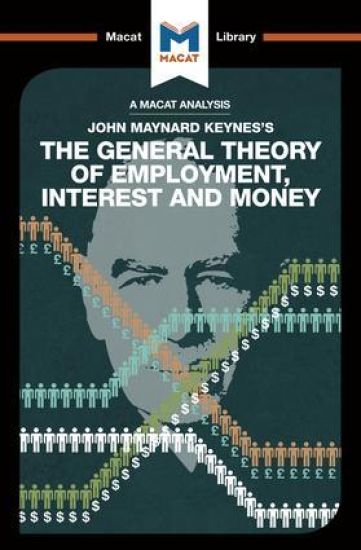
An Analysis of John Maynard Keyne's The General Theory of Employment, Interest and Money
John Collins
Macat International Limited
2017
nidottu
John Maynard Keynes’s 1936 General Theory of Employment, Interest and Money is a perfect example of the global power of critical thinking. A radical reconsideration of some of the founding principles and accepted axioms of classical economics at the time, it provoked a revolution in economic thought and government economic policies across the world. Unsurprisingly, Keynes’s closely argued refutation of the then accepted grounds of economics employs all the key critical thinking skills: analysing and evaluating the old theories and their weaknesses; interpreting and clarifying his own fundamental terms and ideas; problem solving; and using creative thinking to go beyond the old economic theories. Perhaps above all, however, the General Theory is a masterclass in problem solving. Good problem solvers identify their problem, offer a methodology for solving it, and suggest solutions. For Keynes the problem was both real and theoretical: unemployment. A major issue for governments during the Great Depression, unemployment was also a problem for classical economics. In classical economics, theoretically, unemployment would always disappear. Keynes offered both an explanation of why this was not the case in practice, and a range of solutions that could be implemented through government monetary policy.
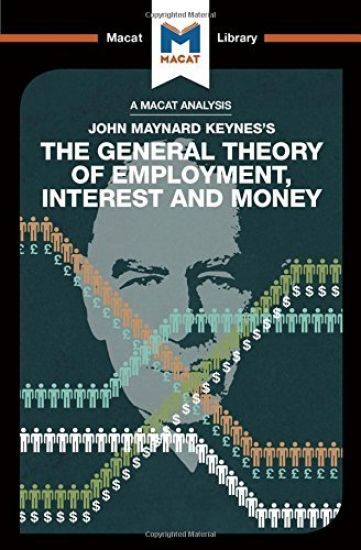
An Analysis of John Maynard Keyne's The General Theory of Employment, Interest and Money
John Collins
Macat International Limited
2017
sidottu
John Maynard Keynes’s 1936 General Theory of Employment, Interest and Money is a perfect example of the global power of critical thinking. A radical reconsideration of some of the founding principles and accepted axioms of classical economics at the time, it provoked a revolution in economic thought and government economic policies across the world. Unsurprisingly, Keynes’s closely argued refutation of the then accepted grounds of economics employs all the key critical thinking skills: analysing and evaluating the old theories and their weaknesses; interpreting and clarifying his own fundamental terms and ideas; problem solving; and using creative thinking to go beyond the old economic theories. Perhaps above all, however, the General Theory is a masterclass in problem solving. Good problem solvers identify their problem, offer a methodology for solving it, and suggest solutions. For Keynes the problem was both real and theoretical: unemployment. A major issue for governments during the Great Depression, unemployment was also a problem for classical economics. In classical economics, theoretically, unemployment would always disappear. Keynes offered both an explanation of why this was not the case in practice, and a range of solutions that could be implemented through government monetary policy.

Reminiscences of Isaac and Rachel Budd Collins - with an account of some of their descendants, together with a genealogy of the Collins family, and also a history of a reunion held at Philadelphia, May 9, 1892 is an unchanged, high-quality reprint of the original edition of 1892. Hansebooks is editor of the literature on different topic areas such as research and science, travel and expeditions, cooking and nutrition, medicine, and other genres. As a publisher we focus on the preservation of historical literature. Many works of historical writers and scientists are available today as antiques only. Hansebooks newly publishes these books and contributes to the preservation of literature which has become rare and historical knowledge for the future.

Crime Lab Report compiles the most relevant and popular articles that appeared in this ongoing periodical between 2007 and 2017. Articles have been categorized by theme to serve as chapters, with an introduction at the beginning of each chapter and a description of the events that inspired each article. The author concludes the compilation with a reflection on Crime Lab Report, the retired periodical, and the future of forensic science as the 21st Century unfolds. Intended for forensic scientists, prosecutors, defense attorneys and even students studying forensic science or law, this compilation provides much needed information on the topics at hand.

The problem of the unity of the proposition is almost as old as philosophy itself, and was one of the central themes of early analytical philosophy, greatly exercising the minds of Frege, Russell, Wittgenstein, and Ramsey. The problem is how propositions or meanings can be simultaneously unities (single things) and complexes, made up of parts that are autonomous of the positions they happen to fill in any given proposition. The problem has been associated with numerous paradoxes and has motivated general theories of thought and meaning, but has eluded any consensual resolution; indeed, the problem is sometimes thought to be wholly erroneous, a result of atomistic assumptions we should reject. In short, the problem has been thought to be of merely historical interest. Collins argues that the problem is very real and poses a challenge to any theory of linguistic meaning. He seeks to resolve the problem by laying down some minimal desiderata on a solution and presenting a uniquely satisfying account. The first part of the book surveys and rejects extant 'solutions' and dismissals of the problem from (especially) Frege and Russell, and a host of more contemporary thinkers, including Davidson and Dummett. The book's second part offers a novel solution based upon the properties of a basic syntactic principle called 'Merge', which may be said to create objects inside objects, thus showing how unities can be both single things but also made up of proper parts. The solution is defended from both philosophical and linguistic perspectives. The overarching ambition of the book, therefore, is to strengthen the ties between current linguistics and contemporary philosophy of language in a way that is genuinely sensitive to the history of both fields.
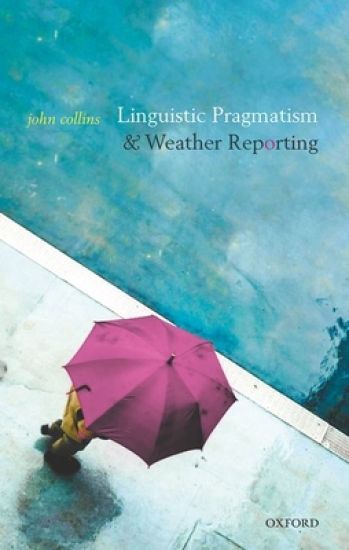
Linguistic pragmatism claims that what we literally say goes characteristically beyond what the linguistic properties themselves mandate. In this book, John Collins provides a novel defence of this doctrine, arguing that linguistic meaning alone fails to fix truth conditions. While this position is supported by a range of theorists, Collins shows that it naturally follows from a syntactic thesis concerning the relative sparseness of what language alone can provide to semantic interpretation. Language-and by extension meaning-provides constraints upon what a speaker can literally say, but does not characteristically encode any definite thing to say. Collins then defends this doctrine against a range of alternatives and objections, focusing in particular on an analysis of weather reports: 'it is raining/snowing/sunny'. Such reporting is mostly location-sensitive in the sense that the utterance is true or not depending upon whether it is raining/snowing/sunny at the location of the utterance, rather than some other location. Collins offers a full analysis of the syntax, semantics, and pragmatics of weather reports, including many novel data. He shows that the constructions lack the linguistic resources to support the common literal locative readings. Other related phenomena are discussed such as the Saxon genitive, colour predication, quantifier domain restriction, and object deletion.
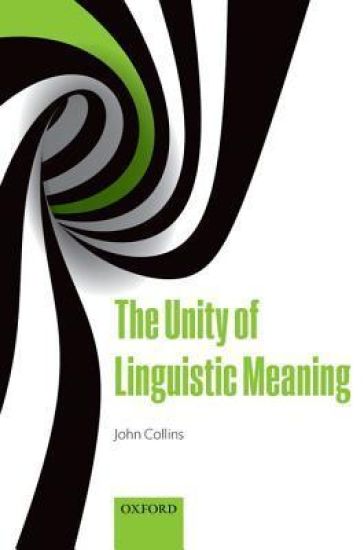
The problem of the unity of the proposition is almost as old as philosophy itself, and was one of the central themes of early analytical philosophy, greatly exercising the minds of Frege, Russell, Wittgenstein, and Ramsey. The problem is how propositions or meanings can be simultaneously unities (single things) and complexes, made up of parts that are autonomous of the positions they happen to fill in any given proposition. The problem has been associated with numerous paradoxes and has motivated general theories of thought and meaning, but has eluded any consensual resolution; indeed, the problem is sometimes thought to be wholly erroneous, a result of atomistic assumptions we should reject. In short, the problem has been thought to be of merely historical interest. Collins argues that the problem is very real and poses a challenge to any theory of linguistic meaning. He seeks to resolve the problem by laying down some minimal desiderata on a solution and presenting a uniquely satisfying account. The first part of the book surveys and rejects extant 'solutions' and dismissals of the problem from (especially) Frege and Russell, and a host of more contemporary thinkers, including Davidson and Dummett. The book's second part offers a novel solution based upon the properties of a basic syntactic principle called 'Merge', which may be said to create objects inside objects, thus showing how unities can be both single things but also made up of proper parts. The solution is defended from both philosophical and linguistic perspectives. The overarching ambition of the book, therefore, is to strengthen the ties between current linguistics and contemporary philosophy of language in a way that is genuinely sensitive to the history of both fields.

What does the Bible actually say about many of today's most contentious moral issues?“For drawing attention to the relevant scriptures and for guidance in recognizing what are and aren’t valid interpretations of them, Collins’ pertinent brief is beyond praiseworthy.”—Booklist (starred review)“Collins pours a lifetime of scholarship into this study of what the Bible says about controversial ethical topics. It’s highly readable, and it’s honest.”—Jane McBride, Christian Century Many people today claim that their positions on various issues are grounded in biblical values, and they use scriptural passages to support their claims. But the Bible was written over the course of several hundred years and contains contradictory positions on many issues. The Bible seldom provides simple answers; it more often shows the complexity of moral problems. Can we really speak of “biblical values”? In this eye-opening book, one of the world’s leading biblical scholars argues that when we read the Bible with care, we are often surprised by what we find. Examining what the Bible actually says on a number of key themes, John Collins covers a vast array of topics, including the right to life, gender, the role of women, the environment, slavery and liberation, violence and zeal, and social justice. With clarity and authority, he invites us to dramatically reimagine the basis for biblical ethics in the world today.
The most non-trivial of the established microscopic theories of physics is QCD: the theory of the strong interaction. A critical link between theory and experiment is provided by the methods of perturbative QCD, notably the well-known factorization theorems. Giving an accurate account of the concepts, theorems and their justification, this book is a systematic treatment of perturbative QCD. As well as giving a mathematical treatment, the book relates the concepts to experimental data, giving strong motivations for the methods. It also examines in detail transverse-momentum-dependent parton densities, an increasingly important subject not normally treated in other books. Ideal for graduate students starting their work in high-energy physics, it will also interest experienced researchers wanting a clear account of the subject.

Love triangles have consequences. The one Jason unwittingly created is no exception. Just when it looks like he and Gary are going to reconcile, details of Jason's ambiguous relationship with Darius are discovered in black and white, which results in Darius dealing with the harsh realities of his life he can no longer avoid. Friendships are tried, love is questioned, emotions are high, and life for Jason becomes uncertain which sends him on a journey to redefine the man he is, and where he and his heart belong...all because of letters.

Virgin to the Life I've built up walls for protection with only one entrance -an impractical, artificial, invisible force field per say. I'm wondering why we as black gay men feel lonely seventy percent of the time, why we go through our "coming out" alone, worried about how we'll be perceived and received. Many of us, me included, keep our friendships and relationships to ourselves unable to share ourselves with our family, recreating new family members we label friends, whom at times we treat as strangers because of our own demons. So once again you grapple with the spirit of loneliness... Then you meet "him" and your world changes for a moment. Nothing else matters as you lose yourself in this one person. You lose yourself - never thinking that one day tragedy will strike and you will lose whom you thought was the love of your life. That dude, your rib, that one guy that has you so open, you disregard the use of latex... But who can you turn to like the straight folk when things go sour, when you have talked your best friend's ear off about it pretending to be so over it, when you are all prayed out, when you've listened to every single sad song in your music collection, where do you turn when you really want to reach out to your mother - the one who held you, kissed your "boo-boos" and made you feel better but now can't because she doesn't agree with who you are? Why has that unconditional love become conditional? Once again, you find yourself in this too familiar place of loneliness and despair. What the hell happened? Then you remember. It all comes flooding back to you... how you met your boys, and how you met his black ass...


Occupied by Memory explores the memories of the first Palestinian intifada. Based on extensive interviews with members of the "intifada generation," those who were between 10 and 18 years old when the intifada began in 1987, the book provides a detailed look at the intifada memories of ordinary Palestinians. These personal stories are presented as part of a complex and politically charged discursive field through which young Palestinians are invested with meaning by scholars, politicians, journalists, and other observers. What emerges from their memories is a sense of a generation caught between a past that is simultaneously traumatic, empowering, and exciting—and a future that is perpetually uncertain. In this sense, Collins argues that understanding the stories and the struggles of the intifada generation is a key to understanding the ongoing state of emergency for the Palestinian people. The book will be of interest not only to scholars of the Middle East but also to those interested in nationalism, discourse analysis, social movements, and oral history.

Occupied by Memory explores the memories of the first Palestinian intifada. Based on extensive interviews with members of the "intifada generation," those who were between 10 and 18 years old when the intifada began in 1987, the book provides a detailed look at the intifada memories of ordinary Palestinians. These personal stories are presented as part of a complex and politically charged discursive field through which young Palestinians are invested with meaning by scholars, politicians, journalists, and other observers. What emerges from their memories is a sense of a generation caught between a past that is simultaneously traumatic, empowering, and exciting—and a future that is perpetually uncertain. In this sense, Collins argues that understanding the stories and the struggles of the intifada generation is a key to understanding the ongoing state of emergency for the Palestinian people. The book will be of interest not only to scholars of the Middle East but also to those interested in nationalism, discourse analysis, social movements, and oral history.
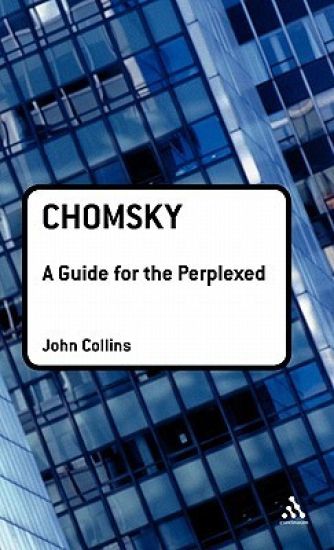
Continuum's Guides for the Perplexed are clear, concise and accessible introductions to thinkers, writers and subjects that students and readers can find especially challenging. Concentrating specifically on what it is that makes the subject difficult to fathom, these books explain and explore key themes and ideas, guiding the reader towards a thorough understanding of demanding material. Noam Chomsky is one of the most influential thinkers of the twentieth-century. His work in linguistics, philosophy and political theory has spanned six decades, and has been met with critical acclaim and controversy in equal measure. This book is an introduction to Chomsky's theoretical writings, but also a critical engagement with his work. Chomsky: A Guide for the Perplexed covers every aspect of Chomsky's thought, from transformational grammar to political dissent.
Chomsky: A Guide for the Perplexed
John Collins
Continuum International Publishing Group Ltd.
2008
nidottu
" Continuum's Guides for the Perplexed are clear, concise and accessible introductions to thinkers, writers and subjects that students and readers can find especially challenging. Concentrating specifically on what it is that makes the subject difficult to fathom, these books explain and explore key themes and ideas, guiding the reader towards a thorough understanding of demanding material. Noam Chomsky is one of the most influential thinkers of the twentieth-century. His work in linguistics, philosophy and political theory has spanned six decades, and has been met with critical acclaim and controversy in equal measure. This book is an introduction to Chomsky's theoretical writings, but also a critical engagement with his work. Chomsky: A Guide for the Perplexed covers every aspect of Chomsky's thought, from transformational grammar to political dissent. John Collins shows how Chomsky's linguistic theory, philosophy and politics are all connected, and by so doing helps the reader to understand this key thinker's massive contribution to twentieth-century thought. The book examines: * The different faces of Noam Chomsky * Transformational grammar * Chomsky's opposition to behaviourism * Government and binding theory * The minimalist program * Libertarian socialism. Accessibly written to help the reader decipher the complexities of Chomsky's work, this Guide for the Perplexed is an invaluable resource which will be useful to students, professionals and lay readers alike."
Having spent more than twenty years as a performer, manager, and producer of African music, John Collins brings an insider's perspective and a personal passion to this account of popular music in West Africa. He explores the roots of the various styles and genres and the 'feedback' of black music adapted to the New World and returning to Africa to reinfluence its origins. Collins celebrates the personalities and sounds of today's music, its influence on an international audience, the African music business, and the cross-fertilization between African music and that of other cultures. Interspersed with his rich descriptions and historical narratives are colorful biographical sketches of important African musicians along with a wealth of rare photographs of individuals and bands.With the intention of exposing 'the inner driving forces of popular music in Africa', Collins delves into the history of African music, traces its evolution throughout the twentieth century, and explores the current 'world beat' explosion. He demonstrates that the enormous energy generated by African music is in part a result of its polyrhytmic nature and rhythmic spacing, 'the hot sounds and the cool space'. He describes the complexities of African rhythms: the cross-beats, the inside rhythm, the varying tempo, the positive and negative sound, and the rhythmic dialogue. 'African music', Collins observes, 'is a gestalt of opposites that unifies the up and down-beat, head and feet, the audience and performer, into the communion of the beat...There is no separation, only universal 'togetherness"."West African Pop Roots" treats the significant personalities and inside stories of many of its greatest stars, including Manu Dibango with Soul Makossa, E.T. Mensah, Victor Uwaifo, Fela, Youssou N'Dour, and Sonny Okosun, among others. Collins describes the global research for the African roots of pop, which has attracted such Western performers as Ginger Baker, Paul McCartney, Mick Fleetwood, Peter Gabriel, Paul Simon, David Byrne, and many others. The author describes Africa's world-wide influence on music and dance as 'the nearest thing we have in the twentieth century to a global folk music'. Author note: John Collins is manager of the Bokoor Recording Studio (Ghana), acting Chairman of the Bokoor African Popular Music Archives Foundation, and is on the Ghanaian National Folklore-Copyright Administration Board. The author of several books and numerous articles about African music, he is a doctoral candidate at State University of New York at Buffalo.
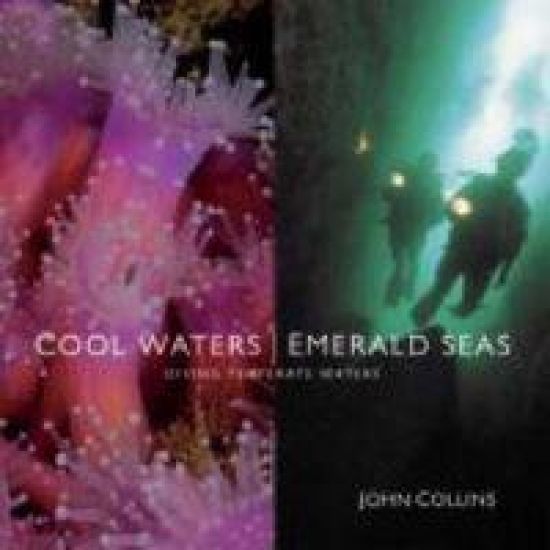
John Collins takes us on a marine adventure within the oceans that lap many of our most populated shores, from the north Atlantic around western Europe, to the chilly Pacific of North America and south to the Great White sharks of Africa. His photographic portrait of a little explored part of our ocean world is the culmination of twenty years of diving the seas around Ireland, Scotland, Canada, South Africa and Tasmania. From his voyages, he brings us 120 photographs illustrating the colourful and bizarre life below while also conveying the mood of exploration - his photographs are interpretative rather than purely documentary. Of the seven tenths of our blue planet, we have explored but a fraction. Away from coral reefs, the ocean world between the tropics and the poles is the most vibrant and productive of all our seas. Beneath its grey roof lies a bounty of neon-coloured life as well as offering us a time-capsule of our losses at sea - evoked by the sombre mood of a lost ship. The bizarre underwater world holds a fascination for many: for some it is the natural history of beautiful flower-like anemones and brightly coloured fish. For others, it is the predators we fear most - sharks. And for some, the history of our sea-going losses resonates above ground. While most people are aware of the beauties of our coral reefs, this book differs from most collections of underwater photographs in looking only at our cold seas. The seas on our doorstep are slow to give up their secrets, making this collection of images from our emerald seas something truly out of the ordinary and introducing us to previously unseen marvels.