Kirjojen hintavertailu. Mukana 12 083 983 kirjaa ja 12 kauppaa.

Kirjahaku

Etsi kirjoja tekijän nimen, kirjan nimen tai ISBN:n perusteella.

32 kirjaa tekijältä John Dillon

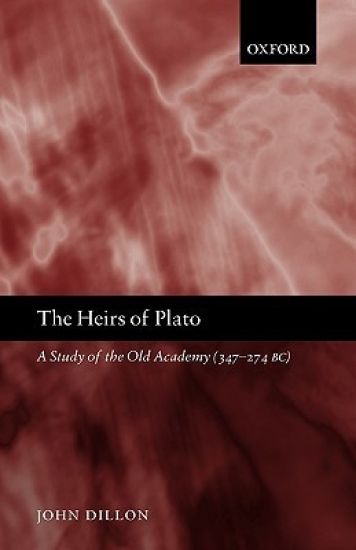
The Heirs of Plato

The Heirs of Plato

John Dillon

Clarendon Press
2003
sidottu
The Heirs of Plato is the first book exclusively devoted to an in-depth study of the various directions in philosophy taken by Plato's followers in the first seventy years or so following his death in 347 BC - the period generally known as 'The Old Academy'. Speusippus, Xenocrates, and Polemon, the three successive heads of the Academy in this period, though personally devoted to the memory of Plato, were independent philosophers in their own right, and felt free to develop his heritage in individual directions. This is also true of other personalities attached to the school, such as Philippus of Opus, Heraclides of Pontus, and Crantor of Soli. After an introductory chapter on the school itself, and a summary of Plato's philosophical heritage, John Dillon devotes a chapter to each of the school heads, and another to the other chief characters, exploring both what holds them together and what sets them apart. There is a final short chapter devoted to the turn away from dogmatism to scepticism under Arcesilaus in the 270s, and some reflections on the intellectual debt of Stoicism to the thought of Polemon, in particular. Dillon's clear and accessible book fills a significant gap in our understanding of Plato's immediate philosophical influence, and will be of great value to scholars and historians of ancient philosophy.
The Heirs of Plato

The Heirs of Plato

John Dillon

Clarendon Press
2005
nidottu
The Heirs of Plato is the first book exclusively devoted to an in-depth study of the various directions in philosophy taken by Plato's followers in the first seventy years or so following his death in 347 BC. - the period generally known as 'The Old Academy'. Speusippus, Xenocrates, and Polemon, the three successive heads of the Academy in this period, though personally devoted to the memory of Plato, were independent philosophers in their own right, and felt free to develop his heritage in individual directions. This is also true of other personalities attached to the school, such as Philippus of Opus, Heraclides of Pontus, and Crantor of Soli. After an introductory chapter on the school itself, and a summary of Plato's philosophical heritage, John Dillon devotes a chapter to each of the school heads, and another to the other chief characters, exploring both what holds them together and what sets them apart. There is a final short chapter devoted to the turn away from dogmatism to scepticism under Arcesilaus in the 270s, and some reflections on the intellectual debt of Stoicism to the thought of Polemon, in particular. Dillon's clear and accessible book fills a significant gap in our understanding of Plato's immediate philosophical influence, and will be of great value to scholars and historians of ancient philosophy.
The Justice of Constantine

The Justice of Constantine

John Dillon

The University of Michigan Press
2012
sidottu
As the first Christian emperor of Rome, Constantine the Great has long interested those studying the establishment of Christianity. But Constantine is also notable for his ability to control a sprawling empire and effect major changes. The Justice of Constantine examines Constantine's judicial and administrative legislation and his efforts to maintain control over the imperial bureaucracy, to guarantee the working of Roman justice, and to keep the will of his subjects throughout the Roman Empire. John Dillon first analyzes the record of Constantine's legislation and its relationship to prior legislation. His initial chapters also serve as an introduction to Roman law and administration in later antiquity. Dillon then considers Constantine's public edicts and internal communications about access to law, trials and procedure, corruption, and punishment for administrative abuses. How imperial officials relied on correspondence with Constantine to resolve legal questions is also considered. A study of Constantine's expedited appellate system, to ensure provincial justice, concludes the book.Constantine's constitutions reveal much about the Theodosian Code and the laws included in it. Constantine consistently seeks direct sources of reliable information in order to enforce his will. In official correspondence, meanwhile, Constantine strives to maintain control over his officials through punishment; trusted agents; and the cultivation of accountability, rivalry, and suspicion among them.
The Golden Chain

The Golden Chain

John Dillon

Variorum
1991
sidottu
This volume gathers together a series of widely -scattered articles concerned with the great tradition of Platonic scholarship ” The Golden Chain” from the time of Plato himself up into the period of Middle Platonism. The main emphasis, however, is on the first three centuries AD. The first articles address the question of what exactly was the nature of the Platonic school at various stages of its development and what kind of organization the Academy may have had. The following ones present studies on figures from Speusippus in the Old Academy, through Philo of Alexandria and Origen (more honorary members of the Golden Chain), to Plotinus, Iamblichus and Proclus, and on some more general issues, such as the fall of the soul, which span much of the period. Dans ce volume sont rassembles des articles jusque”la très dispersés et qui traitent de la grande tradition du savoir platonicien ” la "Chaîne d'Or"” Sur une période allant de Platon au Moyen”Platonisme et à l'avènement de la pensée chrétienne. Cependant, l'accent est surtout mis sur les trois premières siècles ap. J.C. Les premières articles s'attachent à la nature exacte de l'Ecole platonicienne à différents stades de son évolution et aussi a l'organisation adoptée par "l'Académie". Les études suivantes examinent différents personnages, de Speusippe, qui appartenait à l'Ancienne Académie, en passant par Philon d'Aleandrie et Origiène (membres semi”honoraires de la Chaîne d'Or), jusqu'à Plotin, Iamblique et Procle; y sont aussi traitées des questions d'ordre plus général, telles la chute de l'âme, qui furent embrassées durant la majeure partie de cette période.
The Roots of Platonism

The Roots of Platonism

John Dillon

Cambridge University Press
2019
sidottu
How does a school of thought, in the area of philosophy, or indeed of religion, from roots that may be initially open-ended and largely informal, come to take on the features that later mark it out as distinctive, and even exclusive? That is the theme which is explored in this book in respect of the philosophical movement known as Platonism, stemming as it does from the essentially open-ended and informal atmosphere of Plato's Academy. John Dillon focuses on a number of key issues, such as monism versus dualism, the metaphysical underpinnings of ethical theory, the theory of Forms, and the reaction to the Sceptical 'deviation' represented by the so-called 'New Academy'. The book is written in the lively and accessible style of the lecture series in Beijing from which it originates.
The Roots of Platonism

The Roots of Platonism

John Dillon

Cambridge University Press
2024
pokkari
How does a school of thought, in the area of philosophy, or indeed of religion, from roots that may be initially open-ended and largely informal, come to take on the features that later mark it out as distinctive, and even exclusive? That is the theme which is explored in this book in respect of the philosophical movement known as Platonism, stemming as it does from the essentially open-ended and informal atmosphere of Plato's Academy. John Dillon focuses on a number of key issues, such as monism versus dualism, the metaphysical underpinnings of ethical theory, the theory of Forms, and the reaction to the Sceptical 'deviation' represented by the so-called 'New Academy'. The book is written in the lively and accessible style of the lecture series in Beijing from which it originates.
The Platonic Heritage

The Platonic Heritage

John Dillon

Routledge
2017
nidottu
This third collection of articles by John Dillon covers the period 1996-2006, the decade since the appearance of The Great Tradition. Once again, the subjects covered range from Plato himself and the Old Academy, through Philo and Middle Platonism, to the Neoplatonists and beyond. Particular concerns evidenced in the papers are the continuities in the Platonic tradition, and the setting of philosophers in their social and cultural contexts, while at the same time teasing out the philosophical implications of particular texts. Such topics are addressed as atomism in the Old Academy, Philo's concept of immateriality, Plutarch's and Julian's views on theology, and peculiar features of Iamblichus' exegeses of Plato and Aristotle, but also the broader questions of the social position of the philosopher in second century A.D. society, and the nature of ancient biography.
The Platonic Heritage

The Platonic Heritage

John Dillon

Ashgate Publishing Limited
2012
sidottu
This third collection of articles by John Dillon covers the period 1996-2006, the decade since the appearance of The Great Tradition. Once again, the subjects covered range from Plato himself and the Old Academy, through Philo and Middle Platonism, to the Neoplatonists and beyond. Particular concerns evidenced in the papers are the continuities in the Platonic tradition, and the setting of philosophers in their social and cultural contexts, while at the same time teasing out the philosophical implications of particular texts. Such topics are addressed as atomism in the Old Academy, Philo's concept of immateriality, Plutarch's and Julian's views on theology, and peculiar features of Iamblichus' exegeses of Plato and Aristotle, but also the broader questions of the social position of the philosopher in second century A.D. society, and the nature of ancient biography.
How It Was

How It Was

John Dillon

Createspace Independent Publishing Platform
2012
nidottu
In "How It Was", author and movie actor John Dillon skillfully moves the reader from West Wales, England and Ireland to France, Spain and Algeria. He speaks of local heroes and famous authors; some stories recall tragedies bringing tears to the reader, stories about shipwrecks, accidents resulting in death, and environmental disasters. John also pays tribute to his good friends, his dear mother, and St. Francis of Assisi. Other stories bring back humorous times, a cow in the street, a goose on the run or, for children, a sweet story about toys who can talk. John Dillon was the leading actor in Mind on the Run and BBC TV Sadwrn. He also had bit parts in El Cid, Custer of the West, King of Kings, and Solomon and Sheba where he partied with Gina Lollobrigida. This book is sure to entertain, educate and delight the reader
The Lockdown Papers

The Lockdown Papers

John Dillon

Katounia Press
2021
nidottu
The Lockdown Papers is a miscellany of satire, reflection and analysis of Irish life over five decades from academic and columnist John Dillon. When Ireland went into lockdown in March 2020, the author availed of the down time provided to compile a selection of his social and political essays, ranging from his first interview with Kenya's Jomo Kenyatta in 1963 to his take on the Greek financial crisis in 2012.Mainly taken from the pages of national newspapers for which he wrote over five decades, it also contains more philosophical reflections and personal essays that deliver a singular and often mischievous view of life that makes this compendium both thought provoking and amusing.A plum read for anybody stuck in 2021's extended Covid lockdown, the author looks back at former dark times in Ireland and gives the reader a fair few laughs along the way. In it, you'll read his irreverent thoughts on GUBU, the various Tribunals, the Right to Life, fatherly bishops and many more issues that fired Irish passions in the eighties and nineties. John Dillon is Regius Professor of Greek (Emeritus) in Trinity College Dublin. Prior to that, after graduating from Oxford, he spent some years in Ethiopia, and was a member of the Classics Department of the University of California, Berkeley until 1980. His chief area of interest is the philosophy of Plato and the tradition deriving from him, but he has always had an interest in more popular forms of writing as well, together with a weakness for practical politics. He has penned and edited many academic books, more about which can be found on his website. His most recent book is a second edition of his literary novel, The Scent of Eucalyptus, published in 2019 by 451 Editions. This is his first book of essays.