Kirjojen hintavertailu. Mukana 12 016 292 kirjaa ja 12 kauppaa.

Kirjahaku

Etsi kirjoja tekijän nimen, kirjan nimen tai ISBN:n perusteella.

29 kirjaa tekijältä John Dunn

John Dunn, Cetywayo and the Three Generals

John Dunn, Cetywayo and the Three Generals

John Dunn

Cambridge University Press
2011
pokkari
John Dunn (1834–95) became an infamous figure ('a perfect gorilla') in Britain after his involvement in the Anglo-Zulu war of 1879. A British subject who had lived all his life in South Africa, he spent his early years learning to be an expert hunter of large game before becoming a confidant of the Zulu king Cetshwayo, quickly accumulating wealth and power; although already married, he took forty-nine wives and fathered one hundred and seventeen children. However, when war broke out he sided with the British against his former friend and patron, and was rewarded with a huge tract of territory in the former Zulu kingdom. This book, published in 1886 and edited by his friend D. C. F. Moodie (1838–91), presents his side of the story, and contains fascinating insights into an extraordinary life lived among the Zulus in the nineteenth century.
The Political Thought of John Locke

The Political Thought of John Locke

John Dunn

Cambridge University Press
1982
pokkari
This is a reinterpretation of Locke's political thought. The author restores Locke's ideas to their exact context, and so stresses the historical question of what Locke in the "Two Treatises of Government" was intending to claim, and its predominantly theological character.
Locke

Locke

John Dunn

Oxford University Press
2003
nidottu
Briefly describes the life of the English philosopher, discusses the major themes of his work, and assesses Locke's influence on modern thought.
Breaking Democracy's Spell

Breaking Democracy's Spell

John Dunn

Yale University Press
2014
sidottu
In this timely and important work, eminent political theorist John Dunn argues that democracy is not synonymous with good government. The author explores the labyrinthine reality behind the basic concept of democracy, demonstrating how the political system that people in the West generally view as straightforward and obvious is, in fact, deeply unclear and, in many cases, dysfunctional. Consisting of four thought-provoking lectures, Dunn’s book sketches the path by which democracy became the only form of government with moral legitimacy, analyzes the contradictions and pitfalls of modern American democracy, and challenges the academic world to take responsibility for giving the world a more coherent understanding of this widely misrepresented political institution. Suggesting that the supposedly ideal marriage of liberal economics with liberal democracy can neither ensure its continuance nor even address the problems of contemporary life, this courageous analysis attempts to show how we came to be so gripped by democracy’s spell and why we must now learn to break it.
Rethinking Modern Political Theory

Rethinking Modern Political Theory

John Dunn

Cambridge University Press
1985
pokkari
Why is modern political theory philosophically so feeble and politically so unconvincing? This volume of essays discusses the historical sources of these weaknesses and suggests how they might begin to be remedied. The essays treat in relation to one another the history of modern philosophy and the practical relations between states, societies and economies in the modern world. The different approaches required to understand each of these are displayed, and the formidable difficulties of combining them satisfactorily are examined. Only if that is achieved however, do we stand a chance in John Dunn's view of overcoming the limitation of existing understandings of politics. And only then will we be able to arrive at a theory of collective prudence which unites moral awareness and a realistic appreciation of the nature, and the dangers, of modern politics.
The Politics of Socialism

The Politics of Socialism

John Dunn

Cambridge University Press
1984
pokkari
’Why do any human beings choose to be socialists? Why has socialist politics proved in practice so frequently disappointing? How far can socialist ideas still serve to inform and guide political judgement in modern states for the better? Are the evident weaknesses of socialist politics in all its varieties likely to lead to its disappearance from modern political activity in the readily imaginable future?’ These are the questions John Dunn faces in this book, offering an appraisal of the strengths and weaknesses of socialism as a political theory. Its strengths, he argues, will always lie in its hostility to the manifest injustices of capitalist property relations. But its weaknesses stem from an inadequate and disingenuous conception of political power and political action, and from the widespread failures of socialist economic planning. Dunn goes on to examine how these failings might be remedied or minimized, given the options available from present conditions and the history of socialist politics. The conclusions of his analysis are not optimistic: the future for socialism will not be a comfortable one. But, he says, an honest recognition of the real problems that exist and an understanding of their causes is the only way of renewing confidence in socialism’s promises of democracy and material security. This book is an attempt to confront problems which have arisen largely from the practice of socialist politics itself and to locate their sources within the confusions and equivocations of existing understandings of socialism.
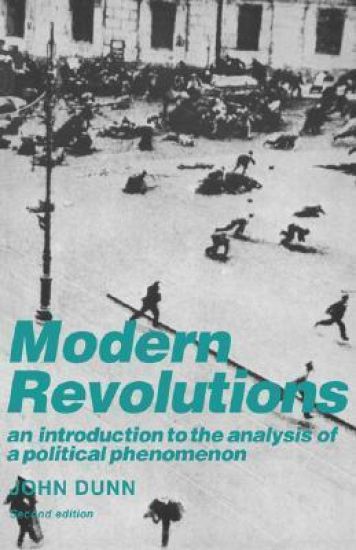
Modern Revolutions

Modern Revolutions

John Dunn

Cambridge University Press
1989
pokkari
Many political regimes today draw such legitimacy as they have from a revolution: the destruction of an existing political elite and its replacement by a different group or groups drawn from inside the same society. A large part of the ideological dispute in world politics has come in consequence to turn on an interpretation of the character of revolutions as political and social events. It is extremely difficult to separate ideological assessments of the desirability or otherwise of what has occured in revolutions from causal explanations of why these revolutions occurred, and both major traditions in the analysis of revolutionary phenomena have been damaged by their failure to distinguish clearly between explanation and assessment. In examining eight major revolutions of the twentieth century, John Dunn helps readers to remedy this state of affairs by thinking for themselves.
Western Political Theory in the Face of the Future

Western Political Theory in the Face of the Future

John Dunn

Cambridge University Press
1993
pokkari
John Dunn’s Western Political Theory in the Face of the Future demonstrates that the major traditions of thought from which the political values of the modern West have emerged are all, in the light of recent world history, in crucial respects incoherent or flawed. This second edition underlines the drastic changes in the challenges which face the world, in the wake of the Soviet Union’s collapse and the end of the Cold War, stressing the ever tighter linking of the global economy with the ecology in which we live, and the problems which this poses for the survival of civilisation.
The History of Political Theory and Other Essays

The History of Political Theory and Other Essays

John Dunn

Cambridge University Press
1995
sidottu
In this collection of recent essays (several appearing in English for the first time), John Dunn brings his characteristically acute and penetrative insight to a wide range of political issues. In the first essay, ‘The history of political theory’, Professor Dunn argues for the importance of a historical perspective in the study of political thought. Other pieces engage with central concepts of political philosophy such as obligation, trust, freedom of conscience and property. A group of studies tackle specific contemporary problems and future dangers, for example racism and the dilemma of humanitarian intervention. The volume as a whole articulates the many dangers, but also the huge importance of, contemporary politics, and provides a representative collection of work by one of the most astute political commentators writing today.
The History of Political Theory and Other Essays

The History of Political Theory and Other Essays

John Dunn

Cambridge University Press
1995
pokkari
In this collection of recent essays (several appearing in English for the first time), John Dunn brings his characteristically acute and penetrative insight to a wide range of political issues. In the first essay, ‘The history of political theory’, Professor Dunn argues for the importance of a historical perspective in the study of political thought. Other pieces engage with central concepts of political philosophy such as obligation, trust, freedom of conscience and property. A group of studies tackle specific contemporary problems and future dangers, for example racism and the dilemma of humanitarian intervention. The volume as a whole articulates the many dangers, but also the huge importance of, contemporary politics, and provides a representative collection of work by one of the most astute political commentators writing today.
Political Obligation in its Historical Context

Political Obligation in its Historical Context

John Dunn

Cambridge University Press
2002
pokkari
What sort of commitments do human beings have good reason to acknowledge to one another and to the social units (family, tribe, state) to which they belong? Is the sovereign authority of the state anywhere or everywhere a true moral authority, or is it simply a coercive capacity of varying force, reposing on a range of effectively touted false beliefs? What political obligations, if any, do men truly have? The central questions of political philosophy have not lessened in practical urgency or in theoretical difficulty in recent decades. But they have become increasingly hard to address in an intellectually serious fashion and modern thinkers have become increasingly reluctant even to try to address them in such a fashion. Mr Dunn’s collection of essays records an attempt to recapture the sense and character of these questions by approaching them from an unusually broad variety of perspectives.
Setting the People Free

Setting the People Free

John Dunn

Princeton University Press
2018
pokkari
Why does democracy—as a word and as an idea—loom so large in the political imagination, though it has so often been misused and misunderstood? Setting the People Free starts by tracing the roots of democracy from an improvised remedy for a local Greek difficulty 2,500 years ago, through its near extinction, to its rebirth amid the struggles of the French Revolution. Celebrated political theorist John Dunn then charts the slow but insistent metamorphosis of democracy over the next 150 years and its apparently overwhelming triumph since 1945. He examines the differences and the extraordinary continuities that modern democratic states share with their Greek antecedents and explains why democracy evokes intellectual and moral scorn for some, and vital allegiance from others. Now with a new preface and conclusion that ground this landmark work firmly in the present, Setting the People Free is a unique and brilliant account of an extraordinary idea.
Interpreting Political Responsibility

Interpreting Political Responsibility

John Dunn

Princeton University Press
2014
pokkari
In this volume one of the leading political theorists of our time addresses what he believes is the major task of political theory: showing human beings how they have good reason to act in the historical situation in which they find themselves. Dunn argues that humans today depend more abjectly and extensively than ever before on the capacity of some of our number for skillful political action. There are many reasons for this dependence: closely linked nuclear-threat and financial systems, massive trade flows that sustain or imperil the well-being of all modern populations, and the awesome scale of the unintended ecological effects of human production. Why has modern political theory failed to relate these factors systematically to one another and to provide people with adequate reasons for action? To answer this twin query, Dunn brilliantly deploys the resources of the historical development of Western political thinking, in counterpoint with some of the main lessons of international political economy.The concluding essay reasserts that the classical virtue of prudence has a central place in contemporary politics. The conditions of modern politics, it maintains, require the exercise of prudence not merely by political, military, and economic leaders, but also by the populace at large. Overall, this selection of Dunn's most influential work of the past decade reflects his remarkable range of interestsincluding Locke's ideological importance, the nature of trust in politics, rights, liberty, responsibility at a national level, postcolonial African politics, and political community. The book will be required reading for students from a variety of disciplines.Originally published in 1990.The Princeton Legacy Library uses the latest print-on-demand technology to again make available previously out-of-print books from the distinguished backlist of Princeton University Press. These editions preserve the original texts of these important books while presenting them in durable paperback and hardcover editions. The goal of the Princeton Legacy Library is to vastly increase access to the rich scholarly heritage found in the thousands of books published by Princeton University Press since its founding in 1905.
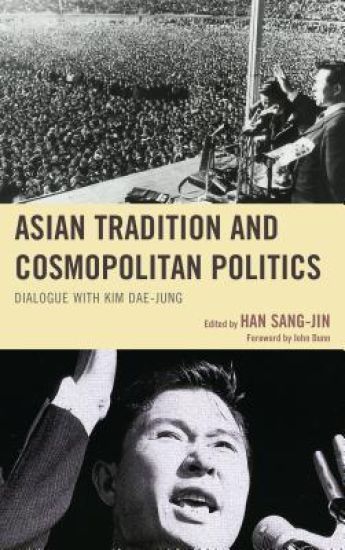
Asian Tradition and Cosmopolitan Politics
The book is a collection of texts by the late former President of the Republic of Korea and Nobel Peace Prize laureate, Kim Dae-jung, along with contributions by other authors including the late former President of the Federal Republic of Germany, Richard von Weizsäcker. The manuscript aims to explore the significance of the combination of a cosmopolitan vision and an Asian identity found in the political thoughts of Kim. This book holds special significance as it is edited by Professor Sang-Jin Han, one of Kim's most trusted political advisors, as well as longtime friend - with their relationship stretching back to way before Kim was elected president. As one of Korea's leading intellectuals, Professor Han is best positioned to make the most out of the material since he simultaneously holds the privilege of a close personal relationship with Kim as well as expert scholarly understanding of its academic and philosophical value.
Loopers

Loopers

John Dunn

Broadway Books (A Division of Bantam Doubleday Dell Publishing Group Inc)
2014
pokkari
"Loopers" is a treasure of a memoir about the uncommon world of the club caddy and the improbable journey it resulted in for one man. It is a perennial account that touches on the animating force of the game itself, reminding us of the reason we continue to tee the ball up, year in and year out. John Dunn never expected that his summer job as a caddy at the local course in Connecticut might turn into something more. The lifers - as in "caddies for life" - that plied the loops were an ensemble of misfits and degenerates that made the caddy yard look more like an OTB parlor than anything near a country club. But Dunn came of age in those yards and on those courses, and after an eye-opening experience caddying in Aspen during college the magnetism of the game and the lifestyle proved irresistible. One adventure after another kept him coming back summer after summer, until - out of college - he found himself migrating with the seasons, looping at some of the most exquisite and exclusive golf locations in the world; Sherwood, Augusta, Bandon Dunes, Shinnecock, and St. Andrews to name a few. Dunn criss-crossed the country on his own big loop; working inside the privet hedges while camping on the mountains; following the back roads and stumbling across unexpected moments of profound natural beauty; embracing the freedom of what he calls the last vagabond existence in America, all while trying to decide whether to quit the loop and get a real job. Maybe next season... "From the Hardcover edition."