Kirjojen hintavertailu. Mukana 11 699 587 kirjaa ja 12 kauppaa.

Kirjahaku

Etsi kirjoja tekijän nimen, kirjan nimen tai ISBN:n perusteella.

11 kirjaa tekijältä John Elder

Learn Ruby on Rails for Web Development: Learn Rails the Fast and Easy Way!
Learning Ruby on Rails has never been this fast and easy, or fun Veteran Codemy.com programmer John Elder walks you step by step through the ins and outs of Rails for Web Development. Written for the absolute beginner, you don't need any programming experience to dive in and get started with this book. Follow along as John builds a Pinterest-style website from start to finish that allows people to sign up, log in and out, edit their profile, upload images to the database and style those images on the screen. By the end, you'll be well on your way to becoming a professional Ruby on Rails coder *AUTHOR UPDTE: C9, the development environment we used in the book, was purchased by Amazon and is no longer accepting new users unless you sign up through my education account at Codemy.com/c9
Intro to Ruby Programming: Beginners Guide Series
Learning Ruby has never been this fast and easy, or fun Veteran Codemy.com programmer John Elder walks you step by step through the ins and outs of Ruby Programming. Written for the absolute beginner, you don't need any programming experience to dive in and get started with this book. Follow along as John teaches you to set up a development environment and write your first program. You'll learn about Variables, Math, IF/THEN Statements, Array, Hashes, Loops, Methods and much more.By the end, you'll be well on your way to becoming a professional Ruby coder Build on your skills with practice exercises at the end of each chapter and build a math flashcard game using all the skills you've learned throughout the book. It really is this easy to learn Ruby *AUTHOR UPDATE: C9, the development environment we used in the book, was purchased by Amazon and is no longer accepting new users unless you sign up through my education account at Codemy.com/c9
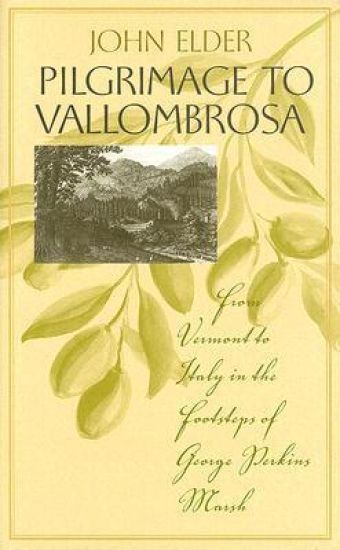
Pilgrimage to Vallombrosa

Pilgrimage to Vallombrosa

John Elder

University of Virginia Press
2006
sidottu
The pivotal figure in John Elder's latest book - itself a combination of environmental history, travel writing, literary criticism, and memoir - is the nineteenth-century diplomat and writer George Perkins Marsh, generally regarded now as Americais first environmentalist. Like Elder, Marsh was a Vermonter, and his diplomatic career took him for some years to Italy, where, witnessing the ecological devastation wrought upon the landscape by runaway deforestation and the plundering of other natural resources, he was moved to produce his famous manifesto, Man and Nature. Marsh drew parallels between the despoiled Italian environment and his home landscape of Vermont, warning that it was vulnerable to ecological woes of a similar magnitude if not carefully maintained and protected. In short, his was a prescient voice for stewardship. On a Fulbright year, Elder chooses to follow in Marsh's footsteps along a trajectory running from Vermont to Italy, and at length fetches up at the managed forest of Vallombrosa - which, as it happens, boasts a stand of sugar maples planted by Marsh. Punctuated throughout with learned and genial considerations of the poetry of Wordsworth, Basho, Dante, and Frost, Elderis narrative takes up issues of sustainability as practiced locally, reports on family doings (including his wife's reconnecting with Italian relatives), and returns finally - as did Marsh's - to Vermont, where he measures traditional stewardship values against more aggressive conservation-oriented measures such as the expansion of wilderness areas. Elder also extends the idea of sustainability from maintaining a healthy human-environmental balance to maintaining a strong web of social relationships within both the family and the larger community. Here is an exceptional reading experience, the chance to follow two of the finest chroniclers of our place in nature - separated by years, but by surprisingly little else.
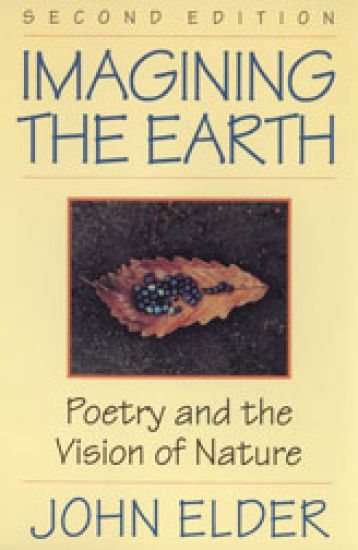
Imagining the Earth

Imagining the Earth

John Elder

University of Georgia Press
1996
pokkari
A landmark work in the burgeoning field of literary ecology, Imagining the Earth explores the ways in which our attitudes toward nature are mirrored in and influenced by poetry. In the work of some of our most widely read poets, says John Elder, one can discern a resurgent vision of humanity in harmony with the rest of the natural order.To show us the power of poetry to identify, interpret, and celebrate a wide range of issues related to nature and our place in it, Elder uses numerous examples of works by Gary Snyder, Wendell Berry, A. R. Ammons, Denise Levertov, and William Everson. Elder places these poets within a cultural tradition flowing from William Wordsworth through Alfred North Whitehead, T. S. Eliot, and Robinson Jeffers, and uses their poems to illuminate the relationships between culture and wilderness, imagination and landscape, and science and poetry. Elder's commentaries are interlinked with two remarkable essays in which he describes his ow
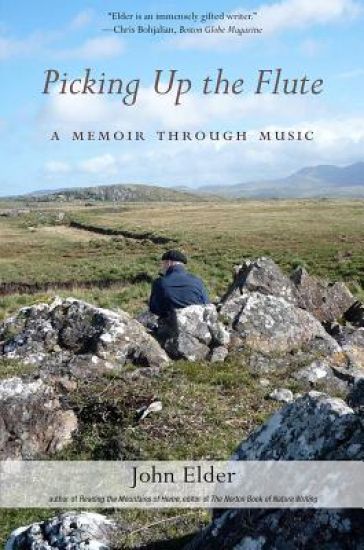
Picking Up The Flute

Picking Up The Flute

John Elder

Green Writers Press
2016
pokkari
Picking Up the Flute sets to music a former professor’s musings on retirement, marriage, literature, and the natural world. From his home in historic Bristol, Vermont to Ireland’s Connemara coast, travel through John Elder’s exquisite topography and relish his explorations of nature, poetry, and geology. John Elder’s memoir through music is permeated by his unique combination of prose and learning how to play the Irish flute. Elder revisits his time teaching at Middlebury College and explores the next phase of retirement, utilizing texts and memories from his past, whose meanings echo with a new sound now. Picking Up the Flute is an interactive, multimedia memoir that immerses the reader in Elder’s provocative prose, while offering the ability to listen to his spirited playing on his website.
The Frog Run

The Frog Run

John Elder

Milkweed Editions
2002
pokkari
The North Woods tradition of making maple syrup serves as an illuminating backdrop for John Elder’s reflections on nature, literature, playfulness, and fatherhood, as he builds a sugaring house with his sons. The tail end of the sugaring season in New England is called the “frog run,” when pools of snowmelt teem with frogs and the last run of sap good for making syrup flows from the maple trees. For John Elder, a longtime resident of Vermont, a professor of English, and a man at midlife, this moment is a metaphor of loss and resurgence. In The Frog Run, Elder describes how he found a way to balance his passions for literature and for the outdoors by building a sugarhouse with his sons in the Vermont woods. For Elder, who also writes in this book about the resurgence of New England forests and about his life as a reader—moving from the game of Go to the Psalms and Basho—the frog run is a time to savor and celebrate the fleeting beauties of his family’s place on earth. Moving and elegant, The Frog Run is a testimony to the value of embracing what seems lost.
Prophets, Idols and Diggers: Scientific Proof of Bible History
Prophets, Idols and Diggers, published in 1960, describes how the resources of modern science are used by the archeologist to reconstruct the life and times of the ancient world. It is a fascinating account of the way in which archeological discoveries confirm and support Biblical references to people, places and events.Since the discovery of the ancient civilizations of Babylon, Nineveh and Tyre, the science of Biblical archeology has assumed increased importance. Forgotten cities have been unearthed, contemporary records of Biblical events have been found and the uniqueness of Biblical revelation has been confirmed.Dr. Elder offers a rewarding reading experience to everyone interested in archeology, religion or the fabulous past. In reviewing the findings of archeology as they illuminate the Scriptures, Dr. Elder shows how science has enriched our understanding of passages once thought confusing, contradictory or obscure. Although much study remains to be done and doubtless many additional discoveries are to be made, the past is yielding up its secrets.
Pilgrimage to Vallombrosa

Pilgrimage to Vallombrosa

John Elder

University of Virginia Press
2008
nidottu
The pivotal figure in ""Pilgrimage to Vallombrosa"" is the nineteenth-century diplomat and writer George Perkins Marsh, generally regarded as America's first environmentalist. Like Elder, Marsh was a Vermonter, and his diplomatic career took him for some years to Italy, where, witnessing the ecological devastation wrought upon the landscape by runaway deforestation and the plundering of other natural resources, he was moved to produce his famous manifesto, ""Man and Nature"". Marsh drew parallels between the despoiled Italian environment and his home landscape of Vermont, warning that the latter was vulnerable to ecological woes of a similar magnitude if not carefully maintained and protected. In short, his was a prescient voice for stewardship.Elder follows in Marsh's footsteps along a trajectory running from Vermont to Italy, and at length fetches up at the managed forest of Vallombrosa. Punctuated throughout with learned and genial considerations of the poetry of Wordsworth, Basho, Dante, and Frost, Elder's narrative takes up issues of sustainability as practiced locally, reports on family doings, and returns finally - as did Marsh's - to Vermont, where he measures traditional stewardship values against more aggressive conservation-oriented measures such as the expansion of wilderness areas.