Kirjojen hintavertailu. Mukana 11 717 486 kirjaa ja 12 kauppaa.

Kirjahaku

Etsi kirjoja tekijän nimen, kirjan nimen tai ISBN:n perusteella.

12 kirjaa tekijältä John Emsley

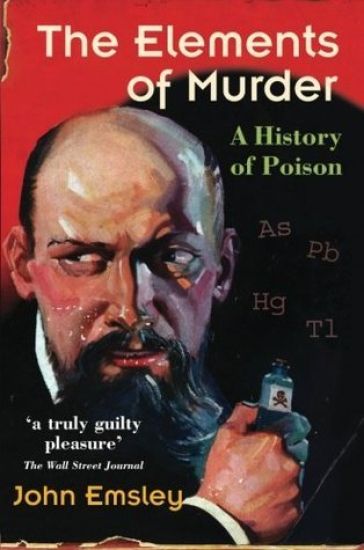
The Elements of Murder

The Elements of Murder

John Emsley

Oxford University Press
2006
nidottu
This book is about elements that kill. Mercury, arsenic, antimony, lead, and thallium can be lethal, as many a poisoner knew too well. Emsley explores the gruesome history of these elements and those who have succumbed to them in a fascinating narrative that weaves together stories of true crime, enduring historical mysteries, tragic accidents, and the science behind it all. The colourful cast includes ancient alchemists, kings, leaders, a pope, several great musicians, and a motley crew of murderers. Among the intriguing accounts is that of the 17th century poet Sir Thomas Overbury, who survived four attempts to poison him with mercury but died when given the poison in enema form - under whose direction remains uncertain. Here, too, is detailed the celebrated case of Florence Maybrick, convicted of poisoning her violent husband James with arsenic, but widely believed at the time to be innocent. The question of her guilt is still disputed. Threaded through the book alongside the history is the growing understanding of chemistry, and the effects of different chemical substances on the human body. Thousands suffered the ill effects of poisonous vapours from mercury, lead, and arsenic before the dangers were realized. Hatters went mad because of mercury poisoning, and hundreds of young girls working in factories manufacturing wallpaper in the 19th century were poisoned by the arsenic-based green pigments used for the leaves of the popular floral designs. Even in the middle of the 20th century, accidental mercury poisoning caused many deaths in Minamata Bay, while leaded petrol poisoned the whole planet, and arsenic still continues to poison millions is Asia. Through vividly told stories of innocent blunders, industrial accidents, poisoners of various hues - cold, cunning, desperate - and deaths that remain a mystery, Emsley here uncovers the dark side of the Periodic Table.
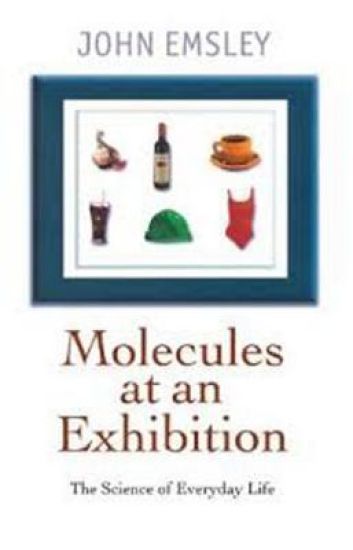
Molecules at an Exhibition

Molecules at an Exhibition

John Emsley

Oxford University Press
1999
nidottu
What is it in chocolate that makes us feel good when we eat it? What's the molecule that turns men on? What's the secret of Coca-Cola? In this fascinating book, John Emsley takes us on a guided tour through a rogue's gallery of molecules, some harmful some pleasant, showing how they affect our lives. There are eight galleries in all, full of individual portraits on molecules that are to be found on a daily basis in the home, the environment, and in our bodies–from caffeine to teflon, nicotine to zinc. Find out how Mozart met his death, how Hitler could have saved the Third Reich from defeat, and many more interesting snippets in this highly entertaining, and often surprising book. 'A broad audience, regardless of whether it has a background in chemistry, will enjoy browsing and reading it.' Nature 'a fine example of popular science writing at its best. It is educational, interesting, may prove inspirational and therefore deserves to find a very wide readership.' THES 'highly readable and entertaining' New Scientist
Nature's Building Blocks

Nature's Building Blocks

John Emsley

Oxford University Press
2011
nidottu
John Emsley's Nature's Building Bocks was published in paperback in 2003. In this readable, informative, and fascinating guide to the elements are entries on each of the 100-odd chemical elements, arranged alphabetically from actinium to zirconium. Each entry comprises an explanation of where the element's name comes from, followed by Body element (the role it plays in living things), Element of history (how and when it was discovered), Economic element (what it is used for), Environmental element (where it occurs, how much), Chemical element (facts, figures, and narrative), and Element of surprise (an amazing, little-known fact). Since publication of the first edition there have been a number of developments. Three new chemical elements have been named and validated: darmstadtium, roetgenium, and copernicium and the section on 'transfermium elements' has now been incorporated into the main part of the book. Economic uses of elements have grown, and some quite rare elements such as Scandium are now economically important, along with updates to elements such as gold due to new roles in industry. Fully revised and updated for 2010, this browsable compendium holds a wealth of useful information.
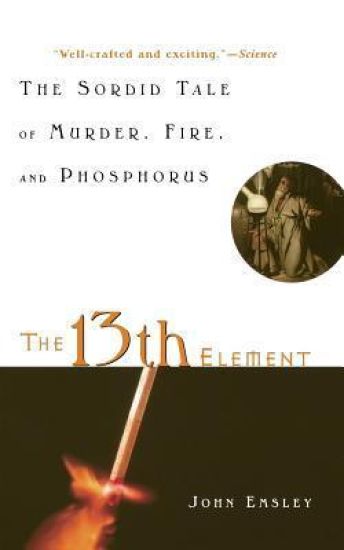
13th Element

13th Element

John Emsley

John Wiley Sons Inc
2002
nidottu
The incredible ""glowing"" history of the ""Devil's element ""phosphorus Discovered by alchemists, prescribed by apothecaries, exploited by ninth-century industrialists, and abused by twentieth-century combatants, the chemical element phosphorus has fascinated us for more than three centuries. It may even be the cause of will-o'-the wisps and spontaneous human combustion Now John Emsley has written an enthralling account of this eerily luminescent element. Shining with wonderful nuggets-from murders-by-phosphorus to a match factory strike; from the firebombing of Hamburg to the deadly compounds derived from phosphorus today-The 13th Element weaves together a rich tableau of brilliant and oddball characters, social upheavals, and bizarre events.
Nature's Building Blocks: An A-Z Guide to the Elements

Nature's Building Blocks: An A-Z Guide to the Elements

John Emsley

Audible Studios on Brilliance
2016
mp3 cd-levyllä
Written by award-winning science writer John Emsley, this informative and highly enjoyable book explains the what, the why and the wherefore of the elements. Arranged alphabetically, from Actinium to Zirconium, it is a complete guide to all the elements that are currently known, with more extensive coverage of those we encounter in our everyday life. The entry on each element reveals where it came from, what role it may have in the human body, the foods that contain it, how it was discovered, its role in human health, the uses and misuses to which it is put, and its environmental role. The new edition includes the three chemical elements discovered since the first edition--Darmstadtium, Roetgenium, and Copernicium--and the section on "transfermium elements" has now been incorporated into the main part of the book. In addition, Emsley has added new information on the economic uses of elements such as Scandium and Gold. Praised by Nature as "amusing and finely crafted," Nature's Building Blocks offers a pleasurable tour of the very essence of our material world.
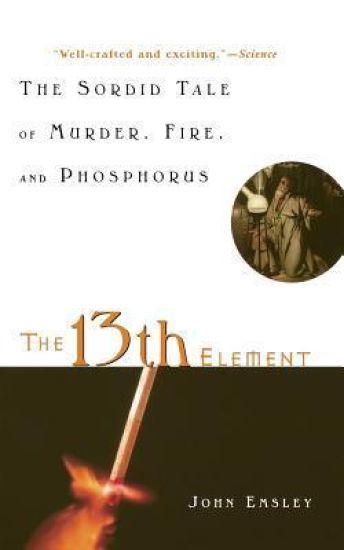
The 13th Element

The 13th Element

John Emsley

Wiley
2002
sidottu
The incredible ""glowing"" history of the ""Devil's element ""phosphorus Discovered by alchemists, prescribed by apothecaries, exploited by ninth-century industrialists, and abused by twentieth-century combatants, the chemical element phosphorus has fascinated us for more than three centuries. It may even be the cause of will-o'-the wisps and spontaneous human combustion Now John Emsley has written an enthralling account of this eerily luminescent element. Shining with wonderful nuggets-from murders-by-phosphorus to a match factory strike; from the firebombing of Hamburg to the deadly compounds derived from phosphorus today-The 13th Element weaves together a rich tableau of brilliant and oddball characters, social upheavals, and bizarre events.
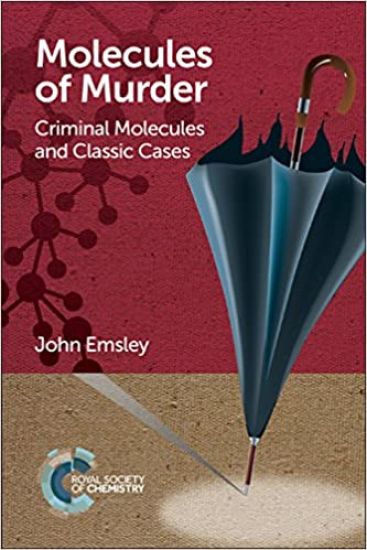
Molecules of Murder

Molecules of Murder

John Emsley

Royal Society of Chemistry
2015
nidottu
Molecules of Murder is about infamous murderers and famous victims; about people like Harold Shipman, Alexander Litvinenko, Adelaide Bartlett, and Georgi Markov. Few books on poisons analyse these crimes from the viewpoint of the poison itself, doing so throws a new light on how the murders or attempted murders were carried out and ultimately how the perpetrators were uncovered and brought to justice. Part I includes molecules which occur naturally and were originally used by doctors before becoming notorious as murder weapons. Part II deals with unnatural molecules, mainly man-made, and they too have been dangerously misused in famous crimes. The book ends with the most famous poisoning case in recent years, that of Alexander Litvinenko and his death from polonium chloride. The first half of each chapter starts by looking at the target molecule itself, its discovery, its history, its chemistry, its use in medicine, its toxicology, and its effects on the human body. The second half then investigates a famous murder case and reveals the modus operandi of the poisoner and how some were caught, some are still at large, and some literally got away with murder. Molecules of Murder will explain how forensic chemists have developed cunning ways to detect minute traces of dangerous substances, and explain why some of these poisons, which appear so life-threatening, are now being researched as possible life-savers. Award winning science writer John Emsley has assembled another group of true crime and chemistry stories to rival those of his highly acclaimed Elements of Murder.
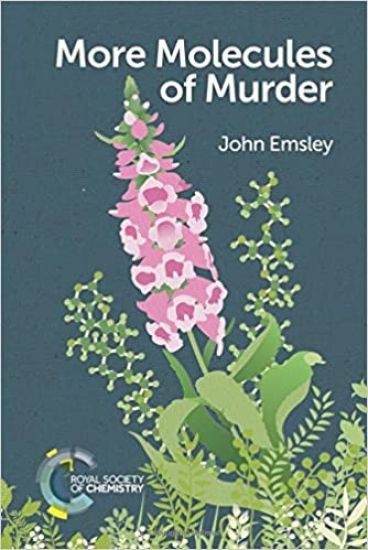
More Molecules of Murder

More Molecules of Murder

John Emsley

Royal Society of Chemistry
2017
nidottu
How can a plant as beautiful as the foxglove be so deadly and yet for more than a century be used to treat heart disease? The same is true of other naturally occurring molecules as will be revealed in this current book by award-winning author and chemist, John Emsley. More Molecules of Murder follows on from his highly-acclaimed earlier book Molecules of Murder, and again it deals with 14 potential poisons; seven of which are man-made and seven of which are natural. It investigates the crimes committed with them, not from the point of view of the murderers, their victims, or the detectives, but from the poison used. In so doing it throws new light on how these crimes were carried out and ultimately how the perpetrators were uncovered and brought to justice. Each chapter starts by looking at the target molecule itself, its discovery, its chemistry, its often-surprising use in medicine, its effects on the human body, and its toxicology. The rest of the chapter is devoted to murders and attempted murders in which it has been used. But, be reassured that murder by poison is not the threat it once was, thanks to laws which restrict access to such materials and to the skills of analytical chemists in detecting their presence in incredibly tiny amounts.
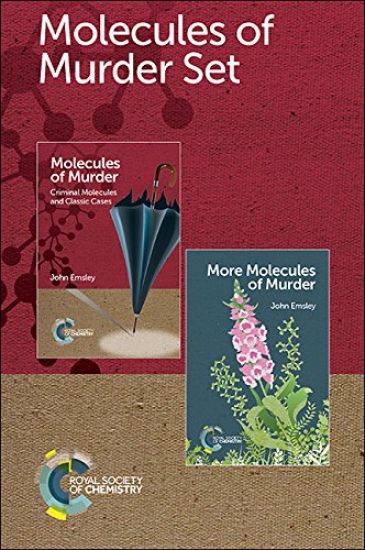
Molecules of Murder Set

Molecules of Murder Set

John Emsley

Royal Society of Chemistry
2017
muu
How can a plant as beautiful as the foxglove be so deadly and yet for more than a century be used to treat heart disease? The same is true of other naturally occurring molecules as will be revealed in these two books from award-winning author and chemist, John Emsley. Molecules of Murder and More Molecules of Murder deal with potential poisons from man-made and natural sources. Both books investigate the crimes committed with them, not from the point of view of the murderers, their victims, or the detectives, but from the poison used. In so doing the books throw new light on how these crimes were carried out and ultimately how the perpetrators were uncovered and brought to justice. The crimes include those committed by infamous murderers and also famous victims like Harold Shipman, Alexander Litvinenko and Georgi Markov. Each chapter starts by looking at the target molecule itself, its discovery, its chemistry, its often-surprising use in medicine, its effects on the human body, and its toxicology. The rest of the chapter is devoted to murders and attempted murders in which it has been used. But, be reassured that murder by poison is not the threat it once was, thanks to laws which restrict access to such materials and to the skills of analytical chemists in detecting their presence in incredibly tiny amounts.
Healthy, Wealthy, Sustainable World

Healthy, Wealthy, Sustainable World

John Emsley

Royal Society of Chemistry
2010
sidottu
This book explains to the general reader the roles of chemistry in various areas of life ranging from the entirely personal to the worryingly global. These roles are currently not widely appreciated and certainly not well understood. The book is aimed at educated laypeople who want to know more about the world around them but have little chemical knowledge. The themes relate to the importance of chemistry in everyday life, the benefits they currently bring, and how their use can continue on a sustainable basis. Topics include: Health - conquering the diseases and stresses which still threaten us. Food - the role of agrochemicals and food chemists. Water - drinking water; the seas as a resource of raw materials. Fuels - what are they and from what are they made? Plastics - what are the used for and can they be sustainable? Cities - what role has chemistry in modern life? Sport - chemistry has changed the game. The world stands at a crossroads. What route to the future should we take? The road to a sustainable city beckons, but what effect will this have on chemistry, which appears so dependent on fossil resources? Its products are part of everyday living, and without them we could regress to the world of earlier generations when lives were blighted by disease, famines, dirt, and pain. In fact the industries based on chemistry the chemical, agrochemical, and pharmaceutical industries could be sustainable and not only benefit those in the developed world but could be shared by everyone on this planet and for generations to come. This book shows how it might be achieved.
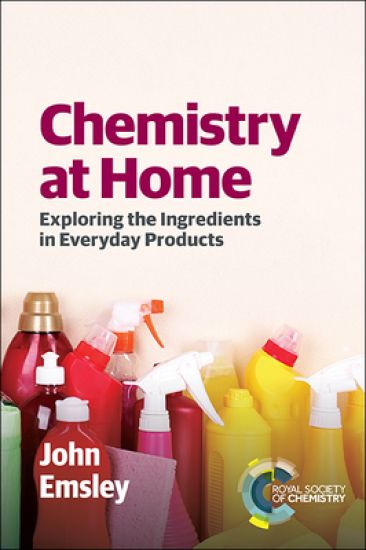
Chemistry at Home

Chemistry at Home

John Emsley

Royal Society of Chemistry
2015
nidottu
Hand cream, detergent, shower gel, toothpaste, toilet cleaner, air freshener, lipstick, perfume, low-fat spread, painkiller, diet drink, insect repellent… hundreds of everyday products that make our lives so much better than those of our forebears. And yet most of us know little about the ingredients they contain and why they deliver the benefits we enjoy. Some people find it worrying when they examine the list of ingredients on a packaging label, because all they read may be unintelligible names or E numbers. It appears to be just chemicals, chemicals, chemicals. The aim of this book is to examine the ingredients more closely and explain the reasons for their being used.Start reading and stop worrying.Chemistry at Home has been written by award-winning popular science writer and chemist, John Emsley, using non-technical language. The book has 12 chapters, each devoted to the kinds of products we are likely to find around the home, including in the garage and the garden shed. Chemistry at Home also includes a glossary which gives more technical information about the molecules mentioned in the book.
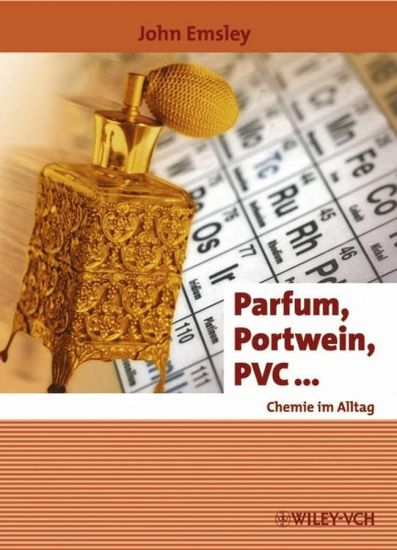
Parfum, Portwein, PVC ...

Parfum, Portwein, PVC ...

John Emsley

Wiley-VCH Verlag GmbH
2003
nidottu
Ein Hauch Chanel No. 5, ein Honigbrötchen zum Frühstück, das Bier zum Abendessen und, wenn es ein Glas zuviel war, eine Kopfschmerztablette am nächsten Morgen... Was haben diese Dinge gemeinsam? Richtig, es sind Gemische chemischer Substanzen! Ob wir sie als Genuß empfinden oder ob sie uns suspekt sind, wie PVC, Nitrat oder Kohlendioxid, sie gehören zu unserem Alltag. John Emsley vermittelt fundiertes Hintergrundwissen zu Chemikalien, mit denen wir täglich zu tun haben. Die Zusammenhänge werden einfach und locker beschrieben, so daß der Laie sie mühelos nachvollziehen kann. Die Argumentation ist stets sachlich; Risiken und Gefahren werden in Relation zum jeweiligen Nutzen bestimmter Stoffe oder Technologien dargestellt. Das Buch veranschaulicht chemische Fragen und Phänomene von der Ernährung bis zum Treibhauseffekt. Damit kann der Nichtfachmann sich eine Meinung bilden und öffentliche Diskussionen kompetent bewerten.