Kirjojen hintavertailu. Mukana 12 356 996 kirjaa ja 12 kauppaa.

Kirjahaku

Etsi kirjoja tekijän nimen, kirjan nimen tai ISBN:n perusteella.

4 kirjaa tekijältä John Fawell

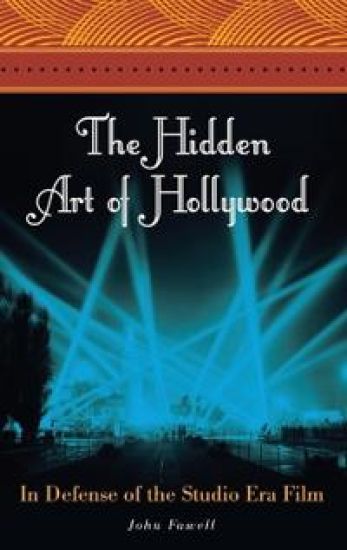
The Hidden Art of Hollywood

The Hidden Art of Hollywood

John Fawell

Praeger Publishers Inc
2008
sidottu
Although we tend to accord our highest praise to films with strong messages, Hollywood is resolutely unserious in its goals, and closer perhaps to music than to literature in this regard. Thus, in order to appreciate Hollywood's classic movies, we have to understand them as the result of a style of filmmaking that justifies itself through the grace and beauty of its form. This beauty, when seen, challenges our notion of film as the poorer cousin of the high arts, or as worthwhile only when it serves a social purpose. The Hidden Art of Hollywood draws from a huge fund of recorded interviews with the directors, writers, cinematographers, set designers, producers, and actors who were a part of the studio process, in order to give the filmmakers themselves the chance to explain a very elusive phenomenon: the glancing beauty of the Hollywood film. While the greatness of the classic Hollywood film is, for many of us, settled business, there are also a great number who have difficulty understanding why these films—which can often seem dated and unrealistic compared to modern fare—are taken as seriously as they are. Although we tend to accord our highest praise to films with strong and often didactic messages, Hollywood is resolutely unserious in its goals, and closer perhaps to music than to literature in this regard. Thus, in order to appreciate classic American movies, we have to understand them as the result of a style of filmmaking that justifies itself not through ideas or social relevance, but through the grace and beauty of its form. The beauty of the Hollywood film challenges our notion of film as the poorer cousin of the high arts, or as worthwhile only when it serves a social purpose. In his effort to answer the many questions that classic American cinema suggests, author John Fawell considers previous criticism of Hollywood, but also draws from a huge fund of recorded interviews with the directors, writers, cinematographers, set designers, producers, and actors who were a part of the studio process, in order to give the filmmakers themselves the chance to explain a very elusive phenomenon: the glancing beauty of the Hollywood film. The films of certain great auteurs, including Charlie Chaplin, Ernst Lubitsch, Preston Sturges, Alfred Hitchcock, Billy Wilder, John Ford, and Orson Welles, receive particular attention here, but this book is organized by ideas rather than films or artists, and it draws from a wide array of Hollywood films, both successes and failures, to make its points.
The Art of Sergio Leone's Once Upon a Time in the West
Few directors are characterized by both extraordinary film craft and the ironic reputation for lowbrow films. Despite his many achievements as a child of the Italian Cinecitta studios, however, Sergio Leone has been judged severely by writers who find his films lacking in ideas and moralists who find his films unduly cynical. Nevertheless, Leone's greatest cinematic achievement, Once Upon a Time in the West, served to refute these criticisms while exposing the director's unique romanticism and artistic ambition. As Leone's fourth successful American western film, Once Upon a Time in the West earned him acclaim for liberating the western genre, restoring it to a place of antique American simplicity. The principal goal of this book is to sharpen an appreciation for Sergio Leone and his most famous American western. The first two chapters deal with the relationship between Once Upon a Time in the West and the western films that preceded it, particularly those of John Ford. Subsequent chapters concentrate on the central characters of Once Upon a Time in the West, with special attention to Jill, Leone's first female protagonist and a surprisingly successful character, central to the plot and accorded a kind of existential strength usually reserved for men in Westerns. The sixth, seventh and eighth chapters address Leone's visual style, which represents a unique fusion of Hollywood classicism and modernism, and reveals the influences of Italian Surrealism and the French New Wave. The final chapters explore the rhythm, romanticism, and musical character of Once Upon a Time in the West, espousing the theory that Leone's approach to film is, above all, musical.
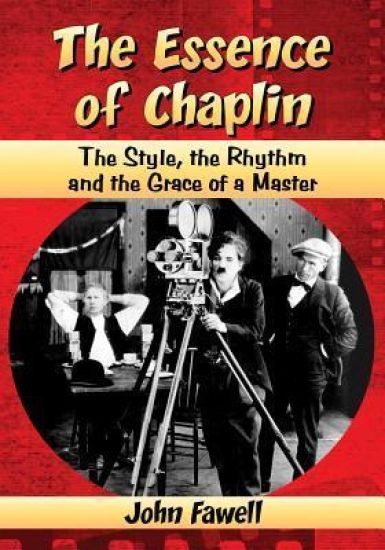
The Essence of Chaplin

The Essence of Chaplin

John Fawell

McFarland Co Inc
2014
pokkari
Charlie Chaplin's remarkable life and comedic talent have been the focus of countless popular and scholarly studies. In this groundbreaking work, Chaplin's often underrated skills as a film director take center stage. Highlighting the screen icon's significance as a filmmaker, this study focuses on the heart of Chaplin's cinema--his silent works starring his alter-ego, Charlie--and examines both his great silent film features like The Kid, The Gold Rush and Modern Times, and his shorter, earlier films like The Immigrant, The Pawn Shop, The Pilgrim and A Dog's Life. An analysis of the formal properties of Chaplin's filmmaking reveals the merit of his cinema, the depth of its emotion and the extent of its meaning. Chaplin is among the great artists of any medium, in any time, with an ability to touch on very subtle aspects of the human condition.