Kirjojen hintavertailu. Mukana 11 342 296 kirjaa ja 12 kauppaa.

Kirjahaku

Etsi kirjoja tekijän nimen, kirjan nimen tai ISBN:n perusteella.

5 kirjaa tekijältä John Finney

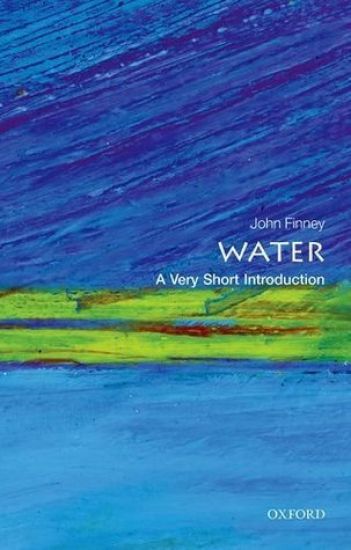
Water

Water

John Finney

Oxford University Press
2015
nidottu
Water dominates the surface of Earth and is vital to life on our planet. It is a remarkable liquid which shows anomalous behaviour. In this Very Short Introduction John Finney introduces the science of water, and explores how the structure of water molecules gives rise to its physical and chemical properties. Considering water in all three of its states as ice and steam as well as liquid, Finney explains the great importance of an understanding of its structure and behaviour to a range of fields including chemistry, astrophysics, and earth and environmental sciences. Finney describes the role of water in biology, and ends with a discussion of the outstanding controversies concerning water, and some of the 'magical' properties which have been claimed for it. ABOUT THE SERIES: The Very Short Introductions series from Oxford University Press contains hundreds of titles in almost every subject area. These pocket-sized books are the perfect way to get ahead in a new subject quickly. Our expert authors combine facts, analysis, perspective, new ideas, and enthusiasm to make interesting and challenging topics highly readable.
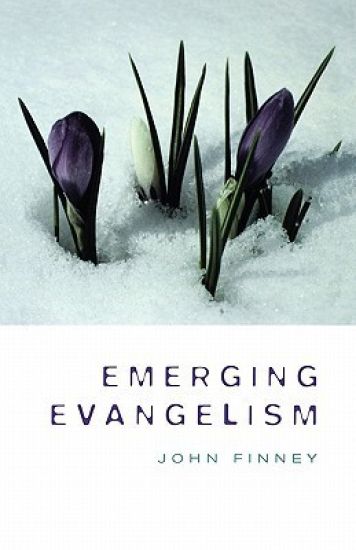
Emerging Evangelism

Emerging Evangelism

John Finney

Darton,Longman Todd Ltd
2004
pokkari
This imaginative and thought-provoking study by one of the church's most experienced and respected evangelical leaders suggests that many contemporary evangelical initiatives - and even respected and successful courses such as Alpha and Emmaus - risk diminishing the breadth and power of the gospel into a formula limited to sin and forgiveness. Emerging Evangelism accepts the reality of the decline of the churches and yet finds hope in new forms of church and monastic community life which are beginning to appear in western Europe.
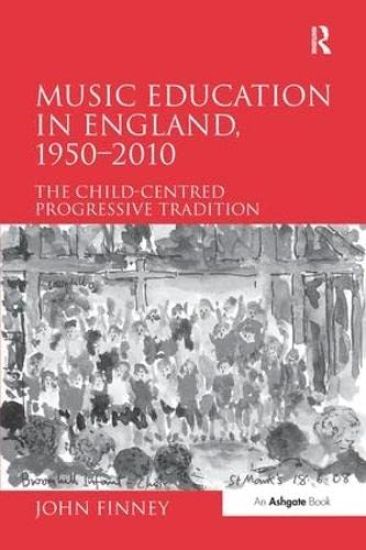
Music Education in England, 1950-2010
John Finney examines the child-centred progressive tradition to create a fresh way of evaluating ideas and practices that have evolved since 1950, that have shaped the lives of music teachers and their pupils, and that have now become disfigured, residual and altogether lost in the light of social, cultural and political change. The book is a critique of the present situation with an intention to expose the dangers in our current pursuit of future gains that are thought to serve the making and sustaining of the social order. The project draws in major debates of the period, along with their protagonists, counter-pointed by the voices of teachers and pupils. At the same time, the structuring voices of policy and governance become ever louder as we reach the present time. Finney presents a compelling, analytical account through a series of six episodes, each seeking to capture the spirit and fervour characteristic of a particular phase within the period studied. In the concluding chapter the narrative developed is reviewed. From this the idea of music education as an ethical pursuit is proposed. Finney argues that classroom relationships can be thought of as playfully dialogic, where teacher and pupil remain curious, and where there is serious attention to what is to be taught and why. This will always need to be negotiated, with the expressed and inferred needs of children working together to find a critical approach to what is being learnt. Finney's book provides fresh inspiration for practitioners and new challenges for researchers, and as such is a landmark in the field of arts and music education.
Music Education in England, 1950-2010

Music Education in England, 1950-2010

John Finney

Ashgate Publishing Limited
2011
sidottu
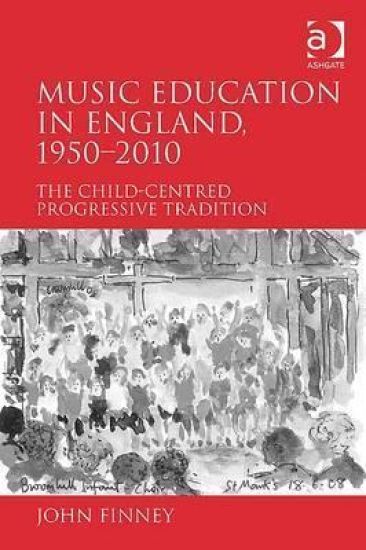
John Finney examines the child-centred progressive tradition to create a fresh way of evaluating ideas and practices that have evolved since 1950, that have shaped the lives of music teachers and their pupils, and that have now become disfigured, residual and altogether lost in the light of social, cultural and political change. The book is a critique of the present situation with an intention to expose the dangers in our current pursuit of future gains that are thought to serve the making and sustaining of the social order. The project draws in major debates of the period, along with their protagonists, counter-pointed by the voices of teachers and pupils. At the same time, the structuring voices of policy and governance become ever louder as we reach the present time. Finney presents a compelling, analytical account through a series of six episodes, each seeking to capture the spirit and fervour characteristic of a particular phase within the period studied. In the concluding chapter the narrative developed is reviewed. From this the idea of music education as an ethical pursuit is proposed. Finney argues that classroom relationships can be thought of as playfully dialogic, where teacher and pupil remain curious, and where there is serious attention to what is to be taught and why. This will always need to be negotiated, with the expressed and inferred needs of children working together to find a critical approach to what is being learnt. Finney's book provides fresh inspiration for practitioners and new challenges for researchers, and as such is a landmark in the field of arts and music education.