Kirjojen hintavertailu. Mukana 11 699 587 kirjaa ja 12 kauppaa.

Kirjahaku

Etsi kirjoja tekijän nimen, kirjan nimen tai ISBN:n perusteella.

49 kirjaa tekijältä John Fisher

English Works of John Fisher, Bishop of Rochester

English Works of John Fisher, Bishop of Rochester

John Fisher

Oxford University Press
2002
sidottu
Bishop John Fisher was a scholar and theologian of European reputation, famous as a preacher and author of the first sermon-sequence to be printed in English. He was beheaded for his opposition to Henry VIII's divorce from Catherine of Aragon and pursued after his death by the enmity of the king, who surpressed his books and sought to blacken his name. The figure of John Fisher links the age of late medieval piety with the growth of Christian humanism and the new learning, which, as a friend of Erasmus, he introduced as chancellor of Cambridge University. His English writings are distinctive for their structured elegance and clarity. This new edition contains sermons written during the last fifteen years of Fisher's life, including a previously unpublished eyewitness account of the Field of Cloth of Gold celebrations, and devotional works composed while he was a prisoner in the Tower of London.

A Treatise Concerning the Fruitful Sayings of David, the King and Prophet, in the Seven Penitential Psalms. ... By the Right Reverend Father in God John Fisher,
The 18th century was a wealth of knowledge, exploration and rapidly growing technology and expanding record-keeping made possible by advances in the printing press. In its determination to preserve the century of revolution, Gale initiated a revolution of its own: digitization of epic proportions to preserve these invaluable works in the largest archive of its kind. Now for the first time these high-quality digital copies of original 18th century manuscripts are available in print, making them highly accessible to libraries, undergraduate students, and independent scholars.The Age of Enlightenment profoundly enriched religious and philosophical understanding and continues to influence present-day thinking. Works collected here include masterpieces by David Hume, Immanuel Kant, and Jean-Jacques Rousseau, as well as religious sermons and moral debates on the issues of the day, such as the slave trade. The Age of Reason saw conflict between Protestantism and Catholicism transformed into one between faith and logic -- a debate that continues in the twenty-first century.++++The below data was compiled from various identification fields in the bibliographic record of this title. This data is provided as an additional tool in helping to insure edition identification: ++++British LibraryT081045 London]: Printed in the year, 1714. 4],342p.; 12
The Funeral Sermon of Margaret, Countess of Richmond and Derby, Mother to King Henry VII. and Foundress of Christ's, and St John's College in Cambridge,
The 18th century was a wealth of knowledge, exploration and rapidly growing technology and expanding record-keeping made possible by advances in the printing press. In its determination to preserve the century of revolution, Gale initiated a revolution of its own: digitization of epic proportions to preserve these invaluable works in the largest archive of its kind. Now for the first time these high-quality digital copies of original 18th century manuscripts are available in print, making them highly accessible to libraries, undergraduate students, and independent scholars.The Age of Enlightenment profoundly enriched religious and philosophical understanding and continues to influence present-day thinking. Works collected here include masterpieces by David Hume, Immanuel Kant, and Jean-Jacques Rousseau, as well as religious sermons and moral debates on the issues of the day, such as the slave trade. The Age of Reason saw conflict between Protestantism and Catholicism transformed into one between faith and logic -- a debate that continues in the twenty-first century.++++The below data was compiled from various identification fields in the bibliographic record of this title. This data is provided as an additional tool in helping to insure edition identification: ++++British LibraryT122116Anonymous. By John Fisher. In two parts, the second having separate titlepage, pagination and register. Titlepage to the second part: "hereafter followeth a mornynge remembrance, had at the moneth minde of the noble Prynces Margarete Countesse of RichmoLondon: printed for A. Bosvile, 1708. lxiii, 17];47, 1]p., plate: ill.; 8
Tony Hancock

Tony Hancock

John Fisher

HarperCollins
2009
nidottu
Regarded as the best radio and TV comic of his era, Tony Hancock was a man whose star burned brightly in the eyes and ears of millions before his untimely death in 1968. Now, forty years on, critically acclaimed biographer John Fisher brings the first fully authorised account of his life. Tony Hancock was one of post-war Britain’s most popular comedians – his radio show ‘Hancock’s Half Hour’ would clear the streets as whole families tuned in to listen. His peerless timing and subtle changes in intonation marked Hancock out as a comic genius. His character ‘Anthony Aloysius St John Hancock’ was an amplification of his own persona, a pompous prat whose dreams of success are constantly thwarted. The original British loser that we recognise in Victor Meldrew and Alan Partridge. Wonderfully supported by a cast including Sid James, Hattie Jacques and Kenneth Williams, and working with scripts from Ray Galton and Alan Simpson, Hancock became a huge star. The show was commisioned for TV, showcasing his talent for hilarious facial expression, and he became the first British comedian to earn a thousand pounds a week. Behind Tony Hancock’s success however hid the self-destructive behaviour that plagued him all his life. Prone to self-doubt, and wanting to be the star of his own show, he got rid of James, and finally dismissed Galton and Simpson who had created the platform for his success. His private life was wracked by his ever increasing alcoholism and bouts of depression, and his relationships shattered by his capacity for violence. His ratings fell and, feeling washed up and alone after divorcing his second wife, he committed suicide in an Australian hotel room in 1968. Now, forty years after his death John Fisher explores the turbulent life of a man regarded by his peers as one of the greatest British comics to have ever lived.
The Life and Work of James Bradley

The Life and Work of James Bradley

John Fisher

Oxford University Press
2023
sidottu
The Life and Work of James Bradley: The New Foundations of 18th Century Astronomy is the first major work on the life and achievements of James Bradley for 190 years. This book offers a new perspective and new interpretations of previously published materials, together with various insights about recently researched sources. This book is a complete account of the life and work of Bradley as discerned from surviving documents of his working archive, as well as other documents and records. In addition, it offers a new interpretation of Bradley's work as an astronomer, not merely from his observations of Jupiter and Saturn and their satellites and annual aberration and the nutation of the Earth's axis, but also his corroborative work with pendulums and other horological work with George Graham. It also explores the little amount documented about his private life including a degree of speculation about his personal relationships. This work on 18th century astronomy is intended for students of the history of science, astronomy and 18th century English society, and for scholars seeking new lines of inquiry. It contains an extensive bibliography and a detailed chronology, both of which offer support for further reading and research.
Outskirts of Empire

Outskirts of Empire

John Fisher

Routledge
2020
nidottu
Outskirts of Empire: Studies in British Power Projection investigates the substructure of Britain’s interests in the Near East and beyond during the nineteenth and twentieth centuries.Essays address themes in British power projection in a geographically wide area encompassing parts of the Ottoman Empire, Morocco and Abyssinia, illuminating interlinking elements of Britain’s power and presence through commerce, religion, consular activity, expatriates, travel and exploration and technology. Through careful investigation of the interface of these themes the book develops a deeper sense of Britain’s presence in the Near East and contiguous areas and highlights the network of Britons who were required to sustain that presence.
Curzon and British Imperialism in the Middle East, 1916-1919
John Fisher explores the acquisitive thinking which, from the autumn of 1914, drove the Mesopotamian Expedition, and examines the political issues, international and imperial, delegated to a War Cabinet committee under Lord Curzon. The motives of Curzon and others in attempting to obtain a privileged political position in the Hejaz are studied in the context of inter-Allied suspicions and Turkish intrigues in the Arabian Peninsula. This is a penetrating study of war imperialism, when statesmen contemplated strong measures of control in several areas of the Middle East.
Curzon and British Imperialism in the Middle East, 1916-1919
John Fisher explores the acquisitive thinking which, from the autumn of 1914, drove the Mesopotamian Expedition, and examines the political issues, international and imperial, delegated to a War Cabinet committee under Lord Curzon. The motives of Curzon and others in attempting to obtain a privileged political position in the Hejaz are studied in the context of inter-Allied suspicions and Turkish intrigues in the Arabian Peninsula. This is a penetrating study of war imperialism, when statesmen contemplated strong measures of control in several areas of the Middle East.
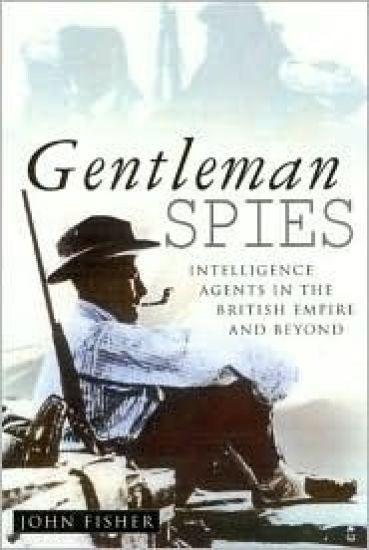
Gentleman Spies

Gentleman Spies

John Fisher

Sutton Publishing Ltd
2007
sidottu
Based on original research in the Public Records Office, this book examines the world of the secret service in the last days of the British Empire before and immediately after World War I. Beset by anti-Western and anti-imperialist movements, the Empire fought back against threats to its survival, using the SIS (Special Intelligence Service) and its cast of amateur spies. This book shows what the secret service was really up to in these years and reveals the personalities of those recruited to work as undercover agents. It explores threats to Imperial security from Islamic extremists, communists and rival Western powers. This book features psychological, as well as historical, insights and offers a novel use of archival material in the history of intelligence.
Devon and Cornwall's Oddest Historical Tales

Devon and Cornwall's Oddest Historical Tales

John Fisher

The History Press Ltd
2021
nidottu
The West Country’s colourful past encompasses a pageant of historical figures and peculiar stories – from Lawrence of Arabia’s flamboyant motorbike forays across Dartmoor and the terrifying account of a lion attack on the Exeter mail coach, to Devonian wives still being sold at auction until the 1900s and the unsolved mystery of the Devil’s footprints at Dawlish. Here too lies the truth about the location of Arthur’s Lyonesse, the devilish deeds of the murderous pirate queen of Penryn, and the Cornish knight who ordered his corpse to overlook St Mullion for eternity.All these tales and more can be found in this collection of amusing, surprising and downright odd true stories from Devon and Cornwall.
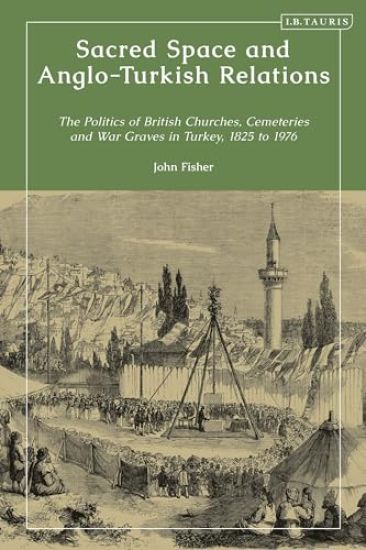
Sacred Space and Anglo-Turkish Relations

Sacred Space and Anglo-Turkish Relations

John Fisher

BLOOMSBURY PUBLISHING PLC
2024
sidottu
This work investigates how various sacred spaces in Ottoman and Republican Turkey interfaced with British foreign policy. It considers how these spaces impacted upon British prestige in the context of its dealings with Turkey chiefly, as well as other Great Powers. The period covered is from the demise of the Levant Company in 1825, to the deconsecration of the Crimean Memorial Church in Istanbul, in 1976. Other sacred spaces discussed include the British Embassy Chapel, the Crimean War cemeteries, various British churches and cemeteries in Izmir, the Gallipoli cemeteries, connected with the campaign of 1915, and the Phanar, the Ecumenical Patriarch’s home in Istanbul. The book considers how, and to what extent, the Foreign Office in London, and its staff in Turkey, intervened to secure those spaces, and why the politics of the Patriarchate intruded into the Foreign Office’s geo-strategic considerations. It considers the limits of that support, and how dealings over sacred space intermeshed generally with British policy towards Turkey. It further explores the motives, not just of diplomats and consuls, who were instrumental in establishing or safeguarding those spaces, but also the aims of other organisations and of expatriate Britons, who were similarly involved. It also considers instances where such support became attenuated or was withdrawn. The book is unique in illuminating, in a broad fashion, the role of sacred space in the context of Anglo-Turkish relations, and British power projection in the Near East.