Kirjojen hintavertailu. Mukana 11 342 296 kirjaa ja 12 kauppaa.

Kirjahaku

Etsi kirjoja tekijän nimen, kirjan nimen tai ISBN:n perusteella.

26 kirjaa tekijältä John Fleming

Stoppard's Theatre

Stoppard's Theatre

John Fleming

University of Texas Press
2001
pokkari
With a thirty-year run of award-winning, critically acclaimed, and commercially successful plays, from Rosencrantz and Guildenstern Are Dead (1967) to The Invention of Love (1997), Tom Stoppard is arguably the preeminent playwright in Britain today. His popularity also extends to the United States, where his plays have won three Tony awards and his screenplay for Shakespeare in Love won the 1998 Academy Award for Best Original Screenplay. John Fleming offers the first book-length assessment of Stoppard's work in nearly a decade. He takes an in-depth look at the three newest plays (Arcadia,Indian Ink, and The Invention of Love) and the recently revised versions of Travesties and Hapgood, as well as at four other major plays (Rosencrantz,Jumpers,Night and Day, and The Real Thing). Drawing on Stoppard's personal papers at the University of Texas Harry Ransom Humanities Research Center (HRHRC), Fleming also examines Stoppard's previously unknown play Galileo, as well as numerous unpublished scripts and variant texts of his published plays. Fleming also mines Stoppard's papers for a fuller, more detailed overview of the evolution of his plays. By considering Stoppard's personal views (from both his correspondence and interviews) and by examining his career from his earliest scripts and productions through his most recent, this book provides all that is essential for understanding and appreciating one of the most complex and distinctive playwrights of our time.
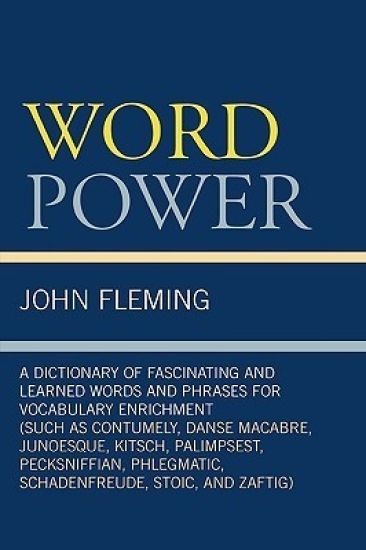
Word Power

Word Power

John Fleming

University Press of America
2007
nidottu
It would take years of reading to learn the vocabulary succinctly provided in Word Power. The dictionary contains everything from slang (cool, zulued) to scholarship (soliloquy, archaic smile), to science (azimuth), with some added hokum (Montezuma's revenge). Each entry is defined, given a pronunciation, and used in four sample sentences. Where possible, synonyms, antonyms, and etymology are provided, as well. With its painstaking selection and pithy examples, Word Power is suitable for students, professionals, and anyone interested in the storied and variegated English language.
Tom Stoppard's Arcadia

Tom Stoppard's Arcadia

John Fleming

Continuum International Publishing Group Ltd.
2009
sidottu
This title provides an accessible and informative critical introduction to Tom Stoppard's "Arcadia" - a play commonly studied at undergraduate level.Tom Stoppard is widely regarded as one of the leading contemporary British playwrights, a writer who has earned an intriguing mix of both critical and commercial success. "Arcadia" is considered by many critics to be Stoppard's masterpiece, a work that weds his early career love for words and ideas with his later career emphasis on storytelling and emotional engagement.With its engaging alteration between past and present, "Arcadia" offers a comedic and entertaining exploration of chaos theory, entropy, the Second Law of thermodynamics, iterated algorithms, fractals, and other concepts culled the realms of math and science. This guide provides a comprehensive critical introduction to the play, giving students a much-needed overview of the play's background and context including Stoppard's source material as well as full discussion of the text and its performance history to date."Continuum Modern Theatre Guides" offer concise, accessible and informed introductions to the key plays of modern times. Each book is carefully structured to offer a systematic study of the play in its biographical, historical, social and political context, an in-depth study of the text, an overview of the work's production history including screen adaptations, and practical workshopping exercises. They also include a timeline and suggestions for further reading which highlight key critical approaches. This will enable students to develop their understanding of playwrights and theatre-makers, as well as inspiring them to broaden their studies.
Tom Stoppard's Arcadia

Tom Stoppard's Arcadia

John Fleming

Continuum International Publishing Group Ltd.
2009
nidottu
This is an accessible and informative critical introduction to Tom Stoppard's "Arcadia" - a play commonly studied at undergraduate level.Tom Stoppard is widely regarded as one of the leading contemporary British playwrights, a writer who has earned an intriguing mix of both critical and commercial success. "Arcadia" is considered by many critics to be Stoppard's masterpiece, a work that weds his early career love for words and ideas with his later career emphasis on storytelling and emotional engagement.With its engaging alteration between past and present "Arcadia" offers a comedic and entertaining exploration of chaos theory, entropy, the Second Law of thermodynamics, iterated algorithms, fractals, and other concepts culled the realms of math and science. This guide provides a comprehensive critical introduction to the play, giving students a much-needed overview of the play's background and context including Stoppard's source material as well as full discussion of the text and its performance history to date."Continuum Modern Theatre Guides" offer concise, accessible and informed introductions to the key plays of modern times. Each book is carefully structured to offer a systematic study of the play in its biographical, historical, social and political context, an in-depth study of the text, an overview of the work's production history including screen adaptations, and practical workshopping exercises. They also include a timeline and suggestions for further reading which highlight key critical approaches. This will enable students to develop their understanding of playwrights and theatre-makers, as well as inspiring them to broaden their studies.
Hamas, Hezbollah and Houthis

Hamas, Hezbollah and Houthis

John Fleming

Independently Published
2024
sidottu
Unearth the truths about Hamas, Hezbollah, and the Houthis - master Middle Eastern geopolitics without wading through biased sources Are you tired of filtering biased news to grasp Middle Eastern conflicts? Struggling to find objective, well-researched material on Hamas, Hezbollah, and the Houthis? Want a comprehensive guide that uncovers these groups' origins, ideologies, and impacts?You're not alone. Military, law enforcement professionals, and curious individuals face similar challenges when seeking clarity on Middle Eastern geopolitics.What if you could unravel the complexities and understand these groups' driving forces without frustration?Hamas, Hezbollah, and Houthis: The History, Myths, Facts, and Impacts of the Three H's of the Middle East is the definitive guide you've been looking for.Inside, you'll discover: The origins of Hamas, Hezbollah, and the Houthis - tracing decades of evolutionThe cultural and religious contexts shaping their ideologiesPolitical strategies and how they differ across groupsDefining events that have reshaped their trajectoriesThe influence of global powers like the US, Israel, Iran, and Saudi ArabiaHumanitarian impacts on civilians under their influenceFunding operations and maintaining power - the economics behind themCommon myths and misconceptions you likely believePersonal stories from individuals affected by these conflictsLeadership structures and operational methodsInternational perspectives and criticismsJustifications and goals presented by the groupsBroader roles in Middle Eastern geopoliticsCurrent peace efforts and potential solutionsHow to critically navigate biased or misleading informationThis no-nonsense guide delivers a deep dive into these pivotal groups, presenting facts and analyses to broaden your understanding without the need to sift through unreliable sources.
The Philosophy of Zoology

The Philosophy of Zoology

John Fleming

Cambridge University Press
2009
pokkari
John Fleming (1785–1857) was a minister of the Church of Scotland, but in his time at the University of Edinburgh he had also studied geology and zoology. In the tradition of the country parson who was also a talented and knowledgeable naturalist, he published his first works on the geology of the Shetland Islands while serving there as a minister. His subsequent works led to his being offered the chair of natural philosophy at the University of Aberdeen, and subsequently at the newly created chair of natural history at the Free Church College in Edinburgh. The two-volume Philosophy of Zoology was published in 1822, and the young Charles Darwin is recorded as borrowing it from the library of Edinburgh University in 1825/6. His intention in the book was to 'collect the truths of Zoology within a small compass, and to render them more intelligible, by a systematical arrangement'.
The Philosophy of Zoology

The Philosophy of Zoology

John Fleming

Cambridge University Press
2009
pokkari
John Fleming (1785–1857) was a minister of the Church of Scotland, but in his time at the University of Edinburgh he had also studied geology and zoology. In the tradition of the country parson who was also a talented and knowledgeable naturalist, he published his first works on the geology of the Shetland Islands while serving there as a minister. His subsequent works led to his being offered the chair of natural philosophy at the University of Aberdeen, and subsequently at the newly created chair of natural history at the Free Church College in Edinburgh. The two-volume Philosophy of Zoology was published in 1822, and the young Charles Darwin is recorded as borrowing it from the library of Edinburgh University in 1825/6. His intention in the book was to 'collect the truths of Zoology within a small compass, and to render them more intelligible, by a systematical arrangement'.
Davies and Penhall's Sunny Afternoon
When ‘You Really Got Me’ exploded on Swinging London in 1964, the Kinks forever changed the course of rock ’n’ roll. Ray Davies and Joe Penhall’s Olivier Award-winning Sunny Afternoon (2014) covers the band’s formative years of 1964–7, when four working- class North London lads broke through to become one of the most unlikely and influential rock bands of the 1960s. Mixing the comic adventures of ‘Dave the Rave’ with the touching introspection of Ray’s sometimes fragile psyche, Joe Penhall’s script weaves Ray Davies’ songs, both the hits and lesser-known works, into one of the finest jukebox musicals of the new millennium.Drawing on a wealth of background material, John Fleming examines the blend of events and songs selected, reconsidering the relationship between biography and drama to shed new light on the Kinks and the musical that tells their story.
Davies and Penhall's Sunny Afternoon
WhenYou Really Got Me exploded on Swinging London in 1964, the Kinks forever changed the course of rockn roll. Ray Davies and Joe Penhall‘s Olivier Award-winning Sunny Afternoon (2014) covers the bands formative years of 1964-7, when four working- class North London lads broke through to become one of the most unlikely and influential rock bands of the 1960s. Mixing the comic adventures ofDave the Rave with the touching introspection of Ray‘s sometimes fragile psyche, Joe Penhall‘s script weaves Ray Davies songs, both the hits and lesser-known works, into one of the finest jukebox musicals of the new millennium. Drawing on a wealth of background material, John Fleming examines the blend of events and songs selected, reconsidering the relationship between biography and drama to shed new light on the Kinks and the musical that tells their story.
Ultimate Gig

Ultimate Gig

John Fleming

Emerald Publishing Limited
2021
sidottu
The gig economy can be viewed as the fuel that lit the fire of change in economies throughout the world. Flexible work grew out of a cultural shift in how we defined how we wished to work. The gig economy also grew out of a need, a need to earn more to keep pace with the inflation that nullified expected gains in purchasing power as wages increased. We no longer define work as related to the brick and mortar buildings that housed the traditional 9 to 5 job. Perhaps, the office-centric era is over as many companies have now made decisions relative to how and when their employees can work. Work from home is no longer a wish; it is a reality, and the gig economy has been the fuel that has helped companies realize new and better ways to engage labor and serve consumers. The future has arrived! The marketplace is favorable to new ways to purchase products and services. Gig opportunities will continue to grow as a meaningful way to earn income. The ultimate gig is ultimately the one that best matches the gig seeker's definition of what matters most. Our ultimate motivation for taking on the work of this book, this research project, is rooted in a belief that the gig economy is helping to define a new reality; flexibility and freedom in how work is done can be achieved. We believe in the free enterprise system. When we focus on contribution, we best explore the possibilities that improve the quality of any product or service and the quality of all the lives we touch.
The Complete Guide to Diesel Marine Engines

The Complete Guide to Diesel Marine Engines

John Fleming

Bristol Fashion Publications,US
2000
pokkari
After many years in the boating industry and writing countless articles for your favorite boating magazines, John Fleming has put his wealth of knowledge into his new book, The Complete Guide To Diesel Marine Engines.This book is not limited to the routine maintenance tasks or simple repairs that many engine books detail. These pages take the reader deep inside the engine by discussing the design, function and results of the entire "engine system". The book's design allows the reader to start with the basics and progress through each skill level until a thorough understanding of diesel engines is achieved. Although this book delves deeply into the technical aspects of engines, to more clearly relate the repair procedures, the information remains extremely easy to understand and follow throughout each phase. You will not find another book that will explain diesel marine engines as completely or easily as this book. One fact is clear; when you complete this book you will understand more about diesel marine engines than you ever thought possible. Illustrated The diesel engine is surrounded by a certain mystery that conjures up visions of massive motors with the ability to move mountains. The fertile mind of German engineer, Rudolph Diesel is generally conceded to be the origin of the four-stroke diesel engine in common use today. The engine was initially a rather clumsy and primitive product as were most other types of engines we have produced, in their early incarnations. The first venture Herr Diesel made into the realm of internal combustion engines ended with an explosion that tore the engine apart and nearly ended the life of the gifted inventor. The diesel is an internal combustion engine and it runs on a controlled explosion. That explosion is very real and it must truly be controlled. The second engine was an operating success. It was built and run in 1897. The diesel has performed well, ever since. The four-stroke diesel has evolved over the years and spread out to almost every area of utilization. Less common but still very important as a modern day power source is the two-stroke diesel. Invention of this engine is generally credited to an Englishman named Dugald Clark. The work of Dugald Clark won him a knighthood and he eventually became Sir Dugald Clark. The two-stroke diesel also found easy acceptance into the world of big engines and heavy loads. In this country the General Motors Corporation embraced the two-stroke diesel with open arms and Detroit Diesel was the result. There are many kinds of diesel engines that power our locomotives, submarines, towboats, and other heavy-duty vessels. There is also a new generation of high speed, high performance diesel engines that run in sport fishermen and faster yachts. As long as twenty years ago a Cummins four-stroke diesel actually ran in a racer at Indianapolis. It was so successful it was ruled out of competition. That Cummins had the potential to run the entire race without a refuel and at record speeds. Diesel engines have run at Bonneville on the Great Salt Lake where sheer, blinding, speed is the only god and men risk life and limb for that last fraction of a mile per hour. I accept this and I enjoy it at some level for I am a racer at heart but this is not the view of the diesel engine that I grew up with. The first diesel engine that I ever worked on was a 100 horsepower Atlas. This 100 horsepower engine weighed about 4,000 pounds. It turned 165 maximum RPMs and was still running in the same harbor tug after 35,000 hours. It looked as big as a house to me. In fact, it was as big as the voluminous engine room that contained it. I stood in awe and stared at that huge engine. The flywheel was as tall as I was and it had a ponderous power that seemed literally unstoppable. That was an honest hundred horsepower from a serious engine. I will always remember the smell. Diesel fuel from the engine, juniper from the planking, saltwater from the sea, and perhaps a bit of sweat from those who labored over that trusty power plant. All combined in one exotic fragrance I will never forget. Wherever men go down to the sea in real wooden ships that smell is to be found and it is never to be forgotten. As I grow older I sometimes walk aboard a modern fiberglass yacht and find myself waiting for that smell to come, but it never does. You cannot turn back the clock on the march of time and indeed, why try? Modern engines are lighter, faster and in many cases, stronger. You have only to listen to the high pitched scream of a turbo charger turning over 150,000 RPMs to know something special is going on inside the engine. Electronics have added their special twist to the new age of diesel power and as you read, you will learn what contributions to diesel operation have resulted from the marvel of electronic controls. Within these pages I will provide a detailed view of the construction, operation, and fascination of the diesel engine. I hope you will find the material within these pages to be both instructive and entertaining. AUTHBIO: John Fleming has conducted a 60 year love affair with engines and never met one he did not like. There have been a few that were so exciting he remembers them like an old flame but they all serve a purpose and they are all a part of my memories. The first engine he built was a 1948 model, 4.2 horsepower, Champion outboard engine. He was 9 years old which made it monumental task. To see and hold the parts his father had described was fascinating. He held a United States Coast Guard, 500 ton masters ticket and has a total of more than 3,000 days at sea. John has run boats of many types and varieties in 44 States and 3 countries: crossed the Okefenokee in an airboat and canoe, ran the Everglades from Flamingo Park to Chokloskee Island and from Whitewater Bay to the head of the Little Shark River. For eight years he held a State of Florida Teachers Certificate to teach engine repair in the State. John and his wife have run delivery charters across the Gulf of Mexico from Brownsville, Texas to Key West, Florida and up the Atlantic Seaboard as far as Barnegat Bay. They have owned vessels which they have operated for dive charters, fishing charters and towing services. He has written more than 3,500 articles for magazines and newspapers.
Troubleshooting Gasoline Marine Engines

Troubleshooting Gasoline Marine Engines

John Fleming

Bristol Fashion Publications,US
2000
pokkari
After many years in the boating industry and writing countless articles for your favorite boating magazines, John Fleming has put his wealth of knowledge into his new book, Troubleshooting Gasoline Marine Engines. This book is not limited to the routine maintenance tasks or simple repairs that many engine books detail. These pages take the reader through the troubleshooting and repair process in a thorough step-by-step format. The book's design allows the reader to start with the basics and progress through each skill level until the repair of the engine is complete. Although this book delves deeply into the troubleshooting and repair aspects of an engine, the information remains extremely easy to understand and follow throughout each phase. You will not find another book that will explain the troubleshooting and repair process of gasoline marine engines as completely or easily as this book. One fact is clear; when you read this book you will know more about Troubleshooting Gasoline Marine Engines than you ever thought possible. Illustrated Author Bio: John Fleming has conducted a 60 year love affair with engines and never met one he did not like. There have been a few that were so exciting he remembers them like an old flame but they all serve a purpose and they are all a part of my memories. The first engine he built was a 1948 model, 4.2 horsepower, Champion outboard engine. He was 9 years old which made it monumental task. To see and hold the parts his father had described was fascinating. He held a United States Coast Guard, 500 ton masters ticket and has a total of more than 3,000 days at sea. John has run boats of many types and varieties in 44 States and 3 countries: crossed the Okefenokee in an airboat and canoe, ran the Everglades from Flamingo Park to Chokloskee Island and from Whitewater Bay to the head of the Little Shark River. For eight years he held a State of Florida Teachers Certificate to teach engine repair in the State. John and his wife have run delivery charters across the Gulf of Mexico from Brownsville, Texas to Key West, Florida and up the Atlantic Seaboard as far as Barnegat Bay. They have owned vessels which they have operated for dive charters, fishing charters and towing services. He has written more than 3,500 articles for magazines and newspapers. Author Comments: Diagnostics is the most difficult job for the medical doctor. It's also the most difficult job facing the engine tech. Virtually any doctor can treat the patient if he/she can diagnose the problem. Not every doctor can do this. Neither can every engine technician. Today, many engine systems are electronic in nature, and diagnosis is largely done by laptop computer. Yet, many aren't electronically controlled. Starters, alternators, manifolds and even the entire engine assembly are still mechanical in nature. Problems that attack these systems and assemblies are still approached in the same manner as they have been for decades. Many engines have no electronic controls at all. I doubt there will ever come a time when basic skills aren't required of the marine mechanic. If mechanics are to be complete in knowledge and understanding of their chosen career, they must be able practitioners of the diagnostic science. There's no instrument on earth that can replace human intelligence. What are the elements of a good diagnostician? First and foremost, you must understand why the engine works. Service manuals are available to describe in detail the separate operations required to repair or service any given part of the engine. These are the skills that a majority of mechanics possess. The challenge is to decide which of these common skills are needed to restore the ailing engine to proper condition. Happily, the well-trained mechanic has many skills ready to employ, yet must decide which of these skills to use. In making this decision, you'll use the senses of sight and sound, smell and feel. When you have a complete grasp of the engine and its many moods, you'll literally be able to hear it talk and feel its pains. One who knows how to perform these functions will always have a job. However, the mechanic who knows which of them to use at a given time will always be the boss! This book will not tell you to set the ignition points at .020", nor to open the air screw on the carburetor 1-1/2 turns. It will advise how to decide if the points should be opened or closed, and whether you should turn the air screw or leave it alone. I've proposed many problems and offered my own solutions. The mechanic, amateur or professional, may have alternatives. If they work for you, and you're more comfortable in their use, employ them. If you have no solutions or simply wish to add options to your arsenal, I hope my offerings prove helpful. John Fleming

The Complete Guide to Gasoline Marine Engines

The Complete Guide to Gasoline Marine Engines

John Fleming

Bristol Fashion Publications,US
2000
pokkari
After many years in the boating industry and writing countless articles for your favorite boating magazines, John Fleming has put his wealth of knowledge into his new book, The Complete Guide To Gasoline Marine Engines. This book is not limited to the routine maintenance tasks or simple repairs that many engine books detail. These pages take the reader deep inside the engine by discussing the design, function and results of the entire "engine system". The book's design allows the reader to start with the basics and progress through each skill level until a thorough understanding of engines is achieved. Although this book delves deeply into the technical aspects of engines, to more clearly relate the repair procedures, the information remains extremely easy to understand and follow throughout each phase. You will not find another book that will explain gasoline marine engines as completely or easily as this book. One fact is clear; when you complete this book you will know more about gasoline marine engines than you ever thought possible. Illustrated John Fleming has conducted a 60 year love affair with engines and never met one he did not like. There have been a few that were so exciting he remembers them like an old flame but they all serve a purpose and they are all a part of my memories. The first engine he built was a 1948 model, 4.2 horsepower, Champion outboard engine. He was 9 years old which made it monumental task. To see and hold the parts his father had described was fascinating. He held a United States Coast Guard, 500 ton masters ticket and has a total of more than 3,000 days at sea. John has run boats of many types and varieties in 44 States and 3 countries: crossed the Okefenokee in an airboat and canoe, ran the Everglades from Flamingo Park to Chokloskee Island and from Whitewater Bay to the head of the Little Shark River. For eight years he held a State of Florida Teachers Certificate to teach engine repair in the State. John and his wife have run delivery charters across the Gulf of Mexico from Brownsville, Texas to Key West, Florida and up the Atlantic Seaboard as far as Barnegat Bay. They have owned vessels which they have operated for dive charters, fishing charters and towing services. He has written more than 3,500 articles for magazines and newspapers.