Kirjojen hintavertailu. Mukana 11 244 527 kirjaa ja 12 kauppaa.

Kirjahaku

Etsi kirjoja tekijän nimen, kirjan nimen tai ISBN:n perusteella.

21 kirjaa tekijältä John Forrest

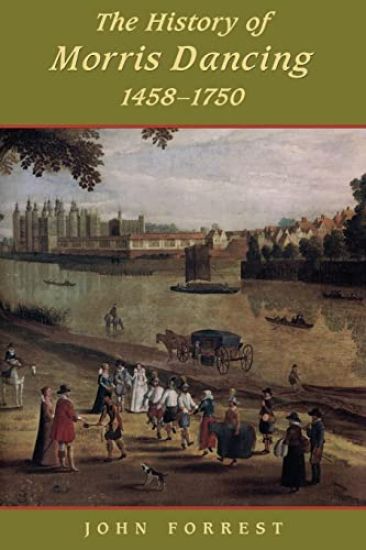
The History of Morris Dancing, 1458-1750

The History of Morris Dancing, 1458-1750

John Forrest

JAMES CLARKE CO LTD
2025
nidottu
Morris dancing, one of the more peculiar of the English folk customs, has been greatly misunderstood. In The History of Morris Dancing, 1458-1750 John Forrest analyses a wealth of evidence to show that Morris dancing does not, as is often assumed, have pagan or ancient origins. He examines early documentation to draw Morris traditions into the wide area of communal custom and public celebrations, showing the passage of dance ideas between groups previously considered folklorically distinct. Careful, detailed and encyclopaedic, The History of Morris Dancing, 1458-1750, is an essential reference work for specialists in English drama and social historians of the period, as well as offering fascinating insight for those who enjoy Morris dancing.
The History of Morris Dancing, 1458-1750

The History of Morris Dancing, 1458-1750

John Forrest

JAMES CLARKE CO LTD
2024
sidottu
Morris dancing, one of the more peculiar of the English folk customs, has been greatly misunderstood. In The History of Morris Dancing, 1458-1750 John Forrest analyses a wealth of evidence to show that Morris dancing does not, as is often assumed, have pagan or ancient origins. He examines early documentation to draw Morris traditions into the wide area of communal custom and public celebrations, showing the passage of dance ideas between groups previously considered folklorically distinct. Careful, detailed and encyclopaedic, The History of Morris Dancing, 1458-1750, is an essential reference work for specialists in English drama and social historians of the period, as well as offering fascinating insight for those who enjoy Morris dancing.
Explorations in Australia

Explorations in Australia

John Forrest

Cambridge University Press
2011
pokkari
John Forrest (1847–1918), was an Australian surveyor and explorer. At twenty-two, he led an expedition to determine the fate of Ludwig Leichardt, who had earlier disappeared in the western desert. The following year he surveyed the coastal route from Perth to Adelaide, establishing the possibility of a telegraph line. In 1874, he crossed the central western desert, a two-thousand mile journey which confirmed his heroic reputation. He received the founder's medal of the Royal Geographical Society in London and was appointed Deputy Surveyor-General. His account of these expeditions, published in 1875, is based on his diaries, with extracts from official letters and the newspapers that covered the events. Forrest became Premier of Western Australia, held several positions under the subsequent federal government, and was the first native-born Australian to be recommended for a barony. This book thus illuminates the political history of Australia and that of its geographical exploration.
Doing Field Projects

Doing Field Projects

John Forrest

JOHN WILEY AND SONS LTD
2022
nidottu
A must-read guide to conducting qualitative field research in the social sciences Doing Field Projects: Methods and Practice for Social and Anthropological Research delivers a thorough and insightful introduction to qualitative field methods in the social sciences. Ideal for undergraduate students just starting out in fields like anthropology, sociology, and related subjects, the book offers readers twenty instructive projects. Each project is well-suited as a standalone exercise, or several may be combined as a series of field work assignments. From interview techniques to participant observation, kinship analysis, spatial mapping, photo and video documentation, and auto-ethnography, Doing Field Projects covers each critical area of qualitative fieldwork students are likely to encounter. Every project also contains discussions of how to execute the research, avoid common problems and mistakes, and present the uncovered data in several different formats. This important resource also offers students: A thorough introduction to fieldwork, including the history of fieldwork methods, the shift from colonial to post-colonial anthropology, and discussion of fieldwork vs. ethnographyComprehensive explorations of getting started with fieldwork, including necessary equipment, research design, data presentation, and journal keepingPractical discussions of the ethics of fieldwork, including the "Do No Harm" principle, institutional approval, openness, and anonymityIn-depth examinations of autoethnography, proxemics, mapping, recorded interviews, participant observation, and engaged anthropologyThe opportunity to conduct a complete fieldwork course using digital and online resources onlySupporting learning material for each chapter, including a brief outline of Learning Goals and a paragraph summarizing the contents Doing Field Projects: Methods and Practice for Social and Anthropological Research is the perfect guide for undergraduate students taking courses and programs in which qualitative field methods are central to the field, like anthropology and sociology.
History of Morris Dancing, 1438-1750

History of Morris Dancing, 1438-1750

John Forrest

UNIVERSITY OF TORONTO PRESS
1999
pokkari
Morris dancing, one of the more peculiar of the English folk customs, has been greatly misunderstood. Traditional scholarship on this custom has been based on the assumption that morris dancing is one of the pagan calendar rituals, a preconception held by many folklorists of the late nineteenth and early twentieth centuries. Now, building upon his previous work with Michael Heaney of the Bodleian Library in Annals of Early Morris, John Forrest carefully analyses a wealth of evidence to show that morris dancing does not, in fact have pagan or ancient origins. His examination of early documentation draws morris traditions into the wider area of communal customs and public celebrations, showing the passage of dance ideas between groups of people who until now have been considered folklorically distinct. Careful, detailed, and encyclopedic, The History of Morris Dancing, 1458-1750 is an essential reference work for specialists in English drama and social historians of the period.
Lord I'm Coming Home

Lord I'm Coming Home

John Forrest

Cornell University Press
2018
pokkari
Lord I'm Coming Home focuses on a small, white, rural fishing community on the southern reaches of the Great Dismal Swamp in North Carolina. By means of a new kind of anthropological fieldwork, John Forrest seeks to document the entire aesthetic experience of a group of people, showing the aesthetic to be an "everyday experience and not some rarefied and pure behavior reserved for an artistic elite." The opening chapter of the book is a vivid fictional narrative of a typical day in "Tidewater," presented from the perspective of one fisherman. In the following two chapters the author sets forth the philosophical and anthropological foundations of his book, paying particular attention to problems of defining "aesthetic," to methodological concerns, and to the natural landscape of his field site. Reviewing his own experience as both participant and observer, he then describes in scrupulous detail the aesthetic forms in four areas of Tidewater life: home, work, church, and leisure. People use these forms, Forrest shows, to establish personal and group identities, facilitate certain kinds of interactions while inhibiting others, and cue appropriate behavior. His concluding chapter deals with the different life cycles of men and women, insider-outsider relations, secular and sacred domains, the image and metaphor of "home," and the essential role that aesthetics plays in these spheres. The first ethnography to evoke the full aesthetic life of a community, Lord I'm Coming Home will be important reading not only for anthropologists but also for scholars and students in the fields of American studies, art, folklore, and sociology.
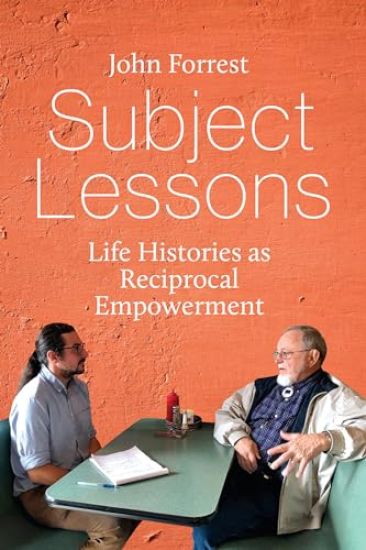
Subject Lessons

Subject Lessons

John Forrest

BERGHAHN BOOKS
2024
sidottu
Life histories are a class of oral data distinct from memoirs, autobiography, and conventional history in multiple ways. It is a way to lay out the felt experience of events in people’s everyday lives and not simply the statement of historical facts. As narrated pieces, life histories possess the unique voice of the individuals. Collecting data through life histories enables the interviewer-interviewee to develop a special bond that has the capacity to empower both in different ways. Subject Lessons examines the use of and value in using one’s life history as research within the social sciences.
Creation, Procreation and Isolation

Creation, Procreation and Isolation

John Forrest

SEAN KINGSTON PUBLISHING
2024
sidottu
Genesis is unlike any other book in the Bible. Indeed, it is unlike any other book you are likely to come across. Most people will be aware of many of its stories, such as Adam and Eve, Noah’s Ark or the Garden of Eden, even without ever having read the actual tales. Their images reside in the collective consciousness of generations, appearing in countless works of poetry, art, song, literature, advertising and film. From scholarly commentaries to internet videos, from sermons to simple story books, there is a superabundance of all kinds of exegeses for all tastes.However, Genesis is also, arguably, the most contested battleground of the entire Bible. Whatever you say about Genesis, someone will disagree with you: especially if you put a cultural anthropologist and an evangelical Christian in the same room. Undaunted, John Forrest argues that there is much to be gained from a reading of Genesis that combines the depth of biblical scholarship, motivated by faith, with anthropology’s developed understanding of the cultural contexts of societies. Demonstrating this in his careful analyses, it turns out that the stories of Genesis are a great place to start when introducing students to anthropological themes as diverse as gender roles and sexuality; state powers and exile; the transition fromforaging to herding and agriculture; kinship, marriage systems and incest laws; and religion in society. His approach bridges old disciplinary divides and reveals Genesis, and the life lessons it contains, as a ‘cultural survival manual’ for an oppressed people in exile. Its fundamental strategy becomes clear: to grow strongand numerous in complete isolation from the taints and temptations of other cultures.
Explorations in Australia

Explorations in Australia

John Forrest

Anatiposi Verlag
2023
pokkari
Reprint of the original, first published in 1875. The publishing house Anatiposi publishes historical books as reprints. Due to their age, these books may have missing pages or inferior quality. Our aim is to preserve these books and make them available to the public so that they do not get lost.
Explorations in Australia

Explorations in Australia

John Forrest

Anatiposi Verlag
2023
sidottu
Reprint of the original, first published in 1875. The publishing house Anatiposi publishes historical books as reprints. Due to their age, these books may have missing pages or inferior quality. Our aim is to preserve these books and make them available to the public so that they do not get lost.
Explorations in Australia

Explorations in Australia

John Forrest

Alpha Edition
2018
pokkari
This work has been selected by scholars as being culturally important and is part of the knowledge base of civilization as we know it.This work is in the public domain in the United States of America, and possibly other nations. Within the United States, you may freely copy and distribute this work, as no entity (individual or corporate) has a copyright on the body of the work.Scholars believe, and we concur, that this work is important enough to be preserved, reproduced, and made generally available to the public. To ensure a quality reading experience, this work has been proofread and republished using a format that seamlessly blends the original graphical elements with text in an easy-to-read typeface.We appreciate your support of the preservation process, and thank you for being an important part of keeping this knowledge alive and relevant.