Kirjahaku
Etsi kirjoja tekijän nimen, kirjan nimen tai ISBN:n perusteella.
66 kirjaa tekijältä John Freeman

In a time of contentiousness and flagrant abuse, it often feels as if our world is run on hate. Invective. Cruelty and sadism. But is it possible the greatest and most powerful force is love? In the newest issue of this acclaimed series, Freeman's Love asks this question, bringing together literary heavyweights like Tommy Orange, Anne Carson, Louise Erdrich, and Nobel Prize winner Olga Tokarczuk alongside emerging writers such as Gunnhild Oyehaug and Semezdin Mehmedinovic.Mehmedinovic contributes a breathtaking book-length essay on the aftermath of his wife's stroke, describing how the two reassembled their lives outside their home country of Bosnia. Richard Russo's charming and painful "Good People" introduces us to two sets of married professors who have been together for decades, and for whom love still exists, but between the wrong pair. Haruki Murakami tells the tale of a one-night stand that feels like a dying sun.Together, the pieces comprise a stunning exploration of the complexities of love, tracing it from its earliest stirrings, to the forbidden places where it emerges against reason, to loss so deep it changes the color of perception. In a time when we need it the most, this issue promises what only love can bring: a solace of complexity and warmth.
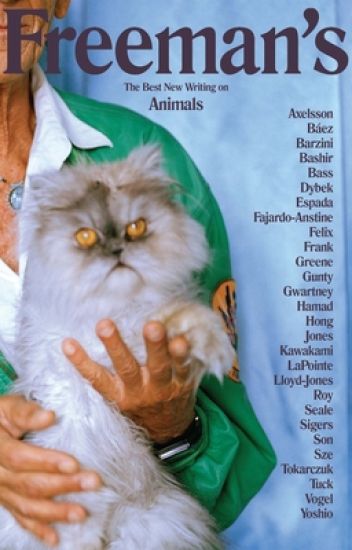
Featuring new work from Mieko Kawakami, Mart n Espada, Kali Fajardo-Anstine, Arthur Sze, Camonghne Felix, and more, the latest installment of the acclaimed literary journal Freeman's explores the irrevocably intertwined lives of animals and the humans that exist alongside themOver a century ago, Rilke went to the Jardin des Plantes in Paris, where he watched a pair of flamingos. A flock of other birds screeched by, and, as he describes in a poem, the great red-pink birds sauntered on, unphased, then "stretched amazed and singly march into the imaginary." This encounter--so strange, so typical of flamingos, with their fabulous posture--is also still typical of how we interact with animals. Even as our actions threaten their very survival, they are still symbolic, captivating and captive, caught in a drama of our framing This issue of Freeman's tells the story of that interaction, its costs, its tendernesses, the mythological flex of it. From lovers in a Chiara Barzini story, falling apart as a group of wild boars roams in their Roman neighborhood, to the soppen emergency birth of a cow on a Wales farm, stunningly described by Cynan Jones, no one has the moral high ground here. Nor is this a piece of mourning. There's wonder, humor, rage, and relief, too.Featuring pigeons, calves, stray dogs, mascots, stolen cats, and bears, to the captive, tortured animals who make up our food supply, powerfully described in Nobel Prize winner Olga Tokarczuk's essay, this wide-ranging issue of Freeman's will stimulate discussion and dreams alike.

Featuring new work from Rebecca Makkai, Aleksandar Hemon, Rachel Khong, Louise Erdrich, and more, the tenth and final installment of the boundary-pushing literary journal Freeman's, which explores all the ways of coming to an endOver the course of ten years, Freeman's has introduced the English-speaking world to countless writers of international import and acclaim, from Olga Tokarczuk to Valeria Luiselli, while also spotlighting brilliant writers working in English, from Tommy Orange to Tess Gunty. Now, in its last issue, this unique literary project ponders all the ways of reaching a fitting conclusion.For Sayaka Murata, keeping up with the comings and goings of fashion and its changing emotional landscapes can mean being left behind, and in her poem "Amenorrhea," Julia Alverez experiences the end of the line as menopause takes hold. Yet sometimes an end is merely a beginning, as Barry Lopez meditates while walking through the snowy Oregonian landscapes. While Chinelo Okparanta's story "Fatu" confronts the end of a relationship under the specter of new life, other writers look towards aging as an opportunity for rebirth, such as Honor e Fanonne Jeffers, who takes on the role of being her own elder, comforting herself in the ways that her grandmother used to. Finally, in his comic story "Everyone at Dinner Has a Max Von Sydo Story," Dave Eggers suggests that sometimes stories don't have neat or clean endings--that sometimes the middle is enough.With new writing from Sandra Cisneros, Colum McCann, Omar El Akkad, and Mieko Kawakami, Freeman's: Conclusions is a testament to the startling power of literature to conclude in a state of beauty, fear, and promise.
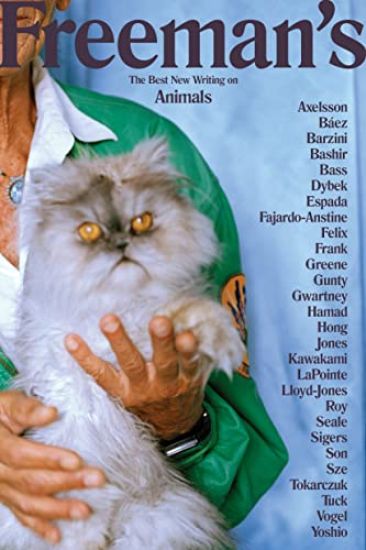
Over a century ago, Rilke went to the Jardin des Plantes in Paris, where he watched a pair of flamingos. A flock of other birds screeched by, and, as he describes in a poem, the great red-pink birds sauntered on, unphased, then 'stretched amazed and singly march into the imaginary.' This encounter - so strange, so typical of flamingos with their fabulous posture - is also still typical of how we interact with animals. Even as our actions threaten their very survival, they are still symbolic, captivating and captive, caught in a drama of our framing.This issue of Freeman's tells the story of that interaction, its costs, its tendernesses, the mythological flex of it. From lovers in a Chiara Barzini story, falling apart as a group of wild boars roams in their Roman neighbourhood, to the soppen emergency birth of a cow on a Wales farm, stunningly described by Cynan Jones, no one has the moral high ground here. Nor is this a piece of mourning. There's wonder, humour, rage and relief, too.Featuring pigeons, calves, stray dogs, mascots, stolen cats, and bears, to the captive, tortured animals who make up our food supply, powerfully described in Nobel Prize winner Olga Tokarczuk's essay, this wide-ranging issue of Freeman's will stimulate discussion and dreams alike.
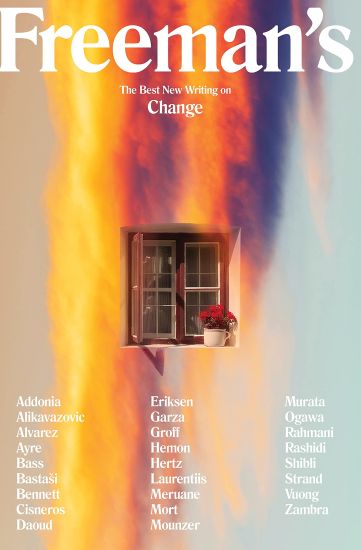
The Covid-19 pandemic forced many of us to reimagine our homes, work, relationships and adapt to a new way of life - one with far fewer possibilities for interaction. And yet, in this period of intense isolation, we've faced dilemmas which are nearly universal. How to love, to care for aging parents, to find a home, attend to a planet in flux, fight for justice. This vast range of experiences is captured by our greatest storytellers, essayists and poets in Freeman's: Change.Some pieces explore the small moments that serve as new routines in a life lived at home, as in Joshua Bennett's essay, where a Coltrane playlist sets the stage for early morning dances with his newborn son. Sometimes, it's the absence of change that drives us to the edge. In Lina Mounzer's 'The Gamble,' a father's incessant hope for a better life festers and sinks the whole family after they leave Lebanon during the Civil War. And in 'Final Days,' Sayaka Murata imagines a future without aging, where people must choose how and when they want to die, consulting guidebooks like Let's Die Naturally! Super Deaths for Adults & The Best Spots.With new writing from Julia Alvarez, Sandra Cisneros, Zahia Rahman, Yoko Ogawa, Yasmine El Rashidi, Lina Meruane and Aleksandar Hemon, and featuring work from never-before-published writers like Elizabeth Ayre, Freeman's: Change opens a window into the many-sided ways we adapt.
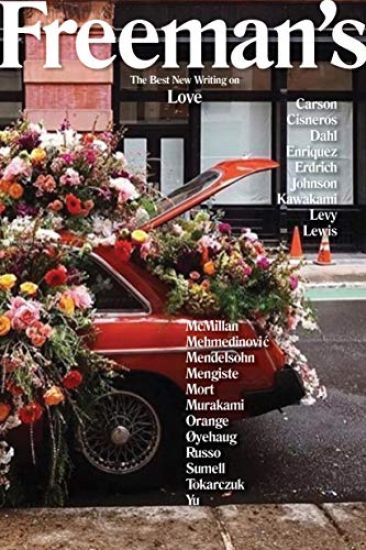
Day by day, tweet by tweet, it often feels like our world is run on hate. Invective. Cruelty and sadism. But is it possible the greatest and most powerful force is love? In the newest issue of this acclaimed series, Freeman's Love asks this question, bringing together literary heavyweights like Richard Russo, Anne Carson, Sandra Cisneros, Louise Erdrich, Haruki Murakami, Tommy Orange and Nobel Prize winner Olga Tokarczuk alongside emerging writers such as Andres Felipe Solano and Semezdin Mehmedinovic.Together, the pieces comprise a stunning exploration of the complexities of love, tracing it from its earliest stirrings, to the forbidden places where it emerges against reason, to loss so deep it changes the color of perception. In a time of contentiousness and flagrant abuse, this issue promises what only love can bring: a balm of complexity and warmth.
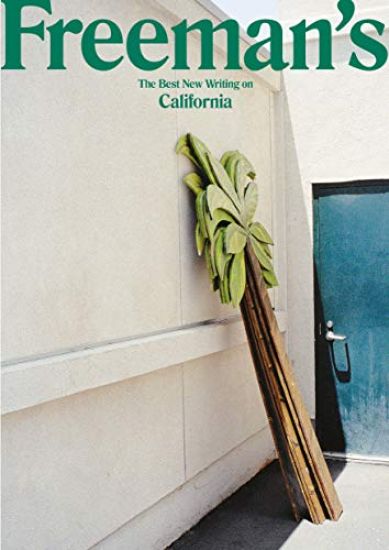
The sixth volume in the series that has been hailed by NPR, O Magazine and Vogue, Freeman's: California features stunning new work from a broad selection of writers, revealing everything that is important and fascinating about America's most populous state.In Freeman's: California, Lauren Markham describes how four generations of her family have lived in and tried to manipulate the water in one of the driest parts of the state and how water and land means everything. Rabih Alameddine recounts becoming a bartender in the mid-1980s as his friends began to die of AIDS. Rachel Kushner reminisces on all the amazing cars she's owned and their peculiar, vivid personalities. Natalie Diaz narrates the process of making her body into a professional basketball player, and how that assembly stalled some of the internal vulnerabilities she'd felt as a gay native woman growing up in California. And Elaine Castillo visits her brother in prison.Amid the raging the forest fires plaguing California, William T. Vollmann drives to the Carr fire and sees how fire has become the new state of normality for California. And Jaime Cortez riffs on pulling over at a rest-stop and smelling the fires of Paradise burning.Meanwhile home is in transition as Karen Tei Yamashita recalls a Japanese-American who goes to Japan after the dropping of the bomb, writing back and forth. Reyna Grande explores how her mother fell out of society and became a woman who collects recycling, while she and her siblings have become model immigrants.Also featuring a haunting ghost story from Oscar Villalon, bold new fiction from Tommy Orange, and stunning poems from Mai Der Vang, Juan Felipe Herrera, Maggie Millner and more, Freeman's: California assembles a diverse list of brilliant writers.

From the voices of protesters to the encroachment of a new fascism, everywhere we look power is revealed. Spouse to spouse, soldier to citizen, looker to gazed upon, power is never static: it is either demonstrated or deployed. Its hoarding is itself a demonstration. This thought-provoking issue of the acclaimed literary annual Freeman's explores who gets to say what matters in a time of social upheaval.Many of the writers are women. Margaret Atwood posits it is time to update the gender of werewolf narratives. Aminatta Forna shatters the silences which supposedly ensured her safety as a woman of colour walking in public space. Power must often be seized. The narrator of Lan Samantha Chang's short story finally wrenches control of the family's finances from her husband only to make a fatal mistake. Meanwhile the hero of Tahmima Anam's story achieves freedom by selling bull semen. Australian novelist Josephine Rowe recalls a gallery attendee trying to take what was not offered when she worked as a life-drawing model. Violence often results from power imbalances - Booker Prize winner Ben Okri watches power stripped from the residents of Grenfell Tower by ferocious neglect. But not all power must wreak damage. Barry Lopez remembers fourteen glimpses of power, from the moment he hitched a ride on a cargo plan in Korea to the glare he received from a bear traveling with her cubs in the woods, asking - do you plan me harm?Featuring work from brand new writers Nicole Im, Jaime Cortez and Nimmi Gowrinathan, as well as from some of the world's best storytellers, including US poet laureate Tracy K. Smith, Franco-Moroccan writer Leïla Slimani, and Turkish novelist Elif Shafak, Freeman's: Power escapes from the headlines of today and burrows into the heart of the issue.
'The oldest is 70. The youngest, 26. In between, the best list of this kind I have ever seen.' Marlon JamesIn three issues, the literary anthology from leading editor and literary critic John Freeman has gained an international following and wide acclaim: 'fresh, provocative, engrossing' (BBC.com), 'impressively diverse' (O Magazine), 'bold, searching' (Minneapolis Star-Tribune). Freeman's: The Future of New Writing departs from the series' progression of themes. This special fourth installment instead introduces a list - to be announced just before publication - of thirty poets, essayists, novelists and short story writers from around the world who are shaping the literary conversation right now and will continue to impact it in years to come.Drawing on recommendations from book editors, critics, translators and authors from across the globe, Freeman's: The Future of New Writing includes pieces from a select list of writers aged 25 to 70, from over a dozen countries and writing in almost as many languages. This will be a new kind of list, and an aesthetic manifesto for our times. Against a climate of nationalism and silo'd thinking, writers remain influenced by work from outside their region, genre and especially age group. Serious readers, this special issue celebrates, have always read this way too - and Freeman's: The Future of New Writing brings them an exciting view of where writing is going next.
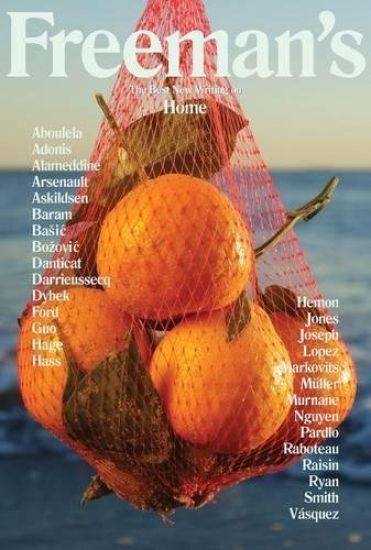
The third literary anthology in the series that has been called 'ambitious' (O Magazine) and 'strikingly international' (Boston Globe), Freeman's: Home, continues to push boundaries in diversity and scope, with stunning new pieces from emerging writers and literary luminaries alike.As the refugee crisis continues to convulse whole swathes of the world and there are daily updates about the rise of homelessness in different parts of America, the idea and meaning of home is at the forefront of many people's minds. Viet Thanh Nguyen harks to an earlier age of displacement with a haunting piece of fiction about the middle passage made by those fleeing Vietnam after the war. Rabih Alameddine brings us back to the present, as he leaves his mother's Beirut apartment to connect with Syrian refugees who are building a semblance of normalcy, and even beauty, in the face of so much loss. Home can be a complicated place to claim, because of race - the everyday reality of which Danez Smith explores in a poem about a chance encounter at a bus stop - or because of other types of fraught history. In 'Vacationland,' Kerri Arsenault returns to her birthplace of Mexico, Maine, a paper mill boomtown turned ghost town, while Xiaolu Guo reflects on her childhood in a remote Chinese fishing village with grandparents who married across a cultural divide. Many readers and writers turn to literature to find a home: Leila Aboulela tells a story of obsession with a favourite author.Also including Thom Jones, Emily Raboteau, Rawi Hage, Barry Lopez, Herta Müller, Amira Hass, and more - writers from around the world lend their voices to the theme and what it means to build, leave, return to, lose, and love a home.
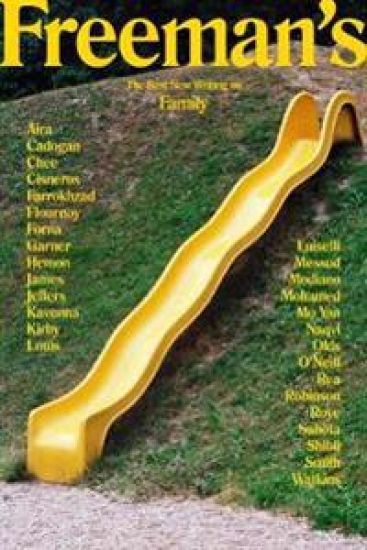
Freeman's: Family is the second literary anthology in the series reviewers are calling 'illuminating' (National Public Radio) and 'sure to become a classic in years to come' (San Francisco Chronicle). Following a debut issue on the theme arrival, Freeman circles a new topic that affects us all: family. Often family is a conduit into the past. In an essay called 'Crossroads,' Aminatta Forna muses on the legacy of slavery and her childhood in Sierra Leone as she settles her family in Washington, DC, where she is constantly accused of cutting in line whenever she stands next to her white husband. Families are hardly stable entities, so many writers discover. Award-winning novelist Claire Vaye Watkins delivers a stunning portrait of a woman in the throes of postpartum depression. Booker Prize winner Marlon James takes the focus off absent fathers to write about his mother, who calls to sing him happy birthday every year. Even in the darkest moments, humour abounds. In Claire Messud's home there are two four-legged tyrants; Sandra Cisneros writes about her extended family of past lovers; and Aleksandar Hemon tells the story of his uncle's desperate attempt to remain a communist despite decades in the Soviet gulag. With fiction, nonfiction and poetry from literary heavyweights and up-and-coming writers alike, Freeman's: Family collects the most amusing, heartbreaking and probing stories about family life emerging today.
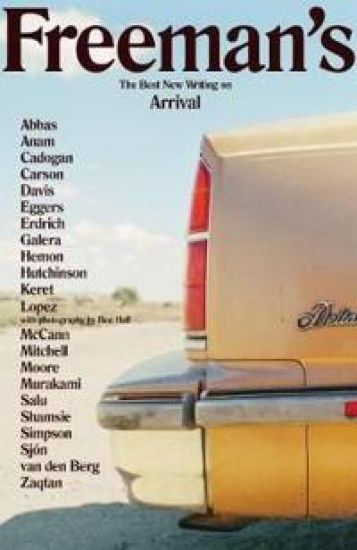
We live today in constant motion, travelling distances rapidly, small ones daily, arriving in new states. In this inaugural edition of Freeman's, a new biannual of unpublished writing, former Granta editor and NBCC president John Freeman brings together the best new fiction, nonfiction, and poetry about that electrifying moment when we arrive.Strange encounters abound. David Mitchell meets a ghost in Hiroshima Prefecture; Lydia Davis recounts her travels in the exotic territory of the Norwegian language; and in a Dave Eggers story, an elderly gentleman cannot remember why he brought a fork to a wedding.End points often turn out to be new beginnings. Louise Erdrich visits a Native American cemetery that celebrates the next journey, and in a Haruki Murakami story, an ageing actor arrives back in his true self after performing a role, discovering he has changed, becoming a new person.Featuring startling new fiction by Laura van den Berg, Helen Simpson, and Tahmima Anam, as well as stirring essays by Aleksandar Hemon, Barry Lopez, and Garnette Cadogan, Freeman's announces the arrival of an essential map to the best new writing in the world.
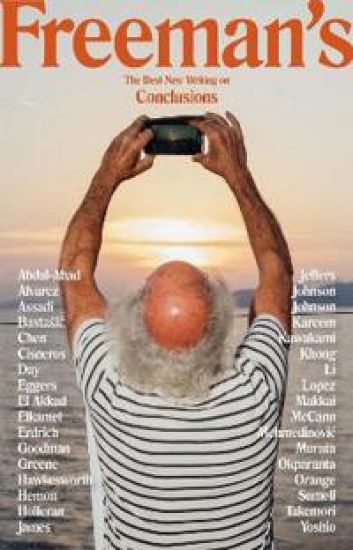
Over the course of ten years, Freeman's has introduced the English-speaking world to countless writers of international import and acclaim, from Olga Tokarczuk to Valeria Luiselli, while also spotlighting brilliant writers working in English, from Tommy Orange to Tess Gunty. Now, in its last issue, this unique literary project ponders all the ways of reaching a fitting conclusion.For Sayaka Murata, keeping up with the comings and goings of fashion and its changing emotional landscapes can mean being left behind, and in her poem 'Amenorrhea' Julia Alverez experiences the end of the line as menopause takes hold. Yet sometimes an end is merely a beginning, as Barry Lopez meditates while walking through the snowy Oregonian landscapes. While Chinelo Okparanta's story 'Fatu' confronts the end of a relationship under the spectre of new life, other writers look towards aging as an opportunity for rebirth, such as Honorée Fanonne Jeffers, who takes on the role of being her own elder, comforting herself in the ways that her grandmother used to. Finally, in his comic story 'Everyone at Dinner Has a Max Von Sydow Story,' Dave Eggers suggests that sometimes stories don't have neat or clean endings - that sometimes the middle is enough.With new writing from Sandra Cisneros, Colum McCann, Omar El Akkad and Mieko Kawakami, Freeman's: Conclusions is a testament to the startling power of literature to conclude in a state of beauty, fear and promise.
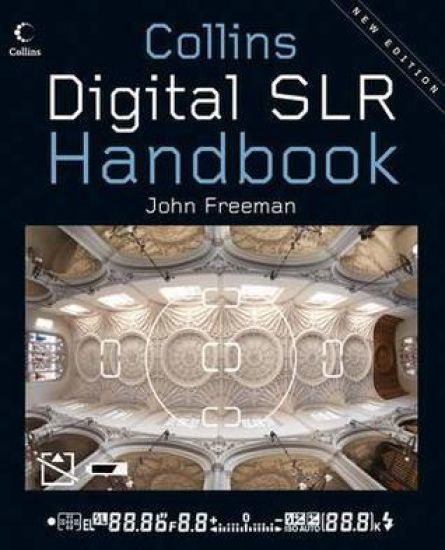
This is the definitive practical guide to getting the most out of your digital SLR camera, written by top working photographer, John Freeman. Full of inspiring photography and professional tips, it is ideal for all keen amateur photographers and those aspiring to move over from using a traditional film SLR camera. The digital single lens reflex (DSLR) camera is now the must-have camera for all serious amateur photographers. Whether you already own one or are thinking of making the move from a point-and-shoot digital camera or a film SLR, this practical guide will provide all the help, advice and inspiration you need. Chapters include: understanding the DSLR system, seeing the picture, photographing landscapes, nature, people, architecture, still life, action, getting more from your DSLR and post-production techniques. Updates include: New product images and updated technical information.

The novel is alive and well, thank you very much For the last fifteen years, whenever a novel was published, John Freeman was there to greet it. As a critic for more than two hundred newspapers worldwide, the onetime president of the National Book Critics Circle, and the former editor of Granta, he has reviewed thousands of books and interviewed scores of writers. In How to Read a Novelist, which pulls together his very best profiles (many of them new or completely rewritten for this volume) of the very best novelists of our time, he shares with us what he's learned. From such international stars as Doris Lessing, Haruki Murakami, Salman Rushdie, and Mo Yan, to established American lions such as Don DeLillo, Norman Mailer, Toni Morrison, Marilynne Robinson, Philip Roth, John Updike, and David Foster Wallace, to the new guard of Edwidge Danticat, Dave Eggers, Jonathan Franzen, and more, Freeman has talked to everyone. What emerges is an instructive and illuminating, definitive yet still idiosyncratic guide to a diverse and lively literary culture: a vision of the novel as a varied yet vital contemporary form, a portrait of the novelist as a unique and profound figure in our fragmenting global culture, and a book that will be essential reading for every aspiring writer and engaged reader--a perfect companion (or gift ) for anyone who's ever curled up with a novel and wanted to know a bit more about the person who made it possible.

For John Freeman--literary critic, essayist, editor, poet, "one of the preeminent book people of our time" (Dave Eggers)--it is the rare moment when words are not enough. But in the wake of the election of 2016, words felt useless, even indulgent. Action was the only reasonable response. He took to the streets in protest, and the sense of community and collective conviction felt right. But the assaults continued--on citizens' rights and long-held compacts, on the core principles of our culture and civilization, and on our language itself. Words seemed to be losing the meanings they once had and Freeman was compelled to return to their defense. The result is his Dictionary of the Undoing. From A to Z, "Agitate" to "Zygote," Freeman assembled the words that felt most essential, most potent, and began to build a case for their renewed power and authority, each word building on the last. The message that emerged was not to retreat behind books, but to emphatically engage in the public sphere, to redefine what it means to be a literary citizen. With an afterword by Valeria Luiselli, Dictionary of the Undoing is a necessary, resounding cri de coeur in defense of language, meaning, and our ability to imagine, describe, and build a better world.