
Kirjahaku
Etsi kirjoja tekijän nimen, kirjan nimen tai ISBN:n perusteella.
24 kirjaa tekijältä John Fry
A Serious and Affectionate Address to the People Called Quakers; Containing Some Remarks on the Present State of That People, and Some Seasonable Advice Relating Thereto; ... By John Fry
John Fry
Gale Ecco, Print Editions
2018
sidottu
The 18th century was a wealth of knowledge, exploration and rapidly growing technology and expanding record-keeping made possible by advances in the printing press. In its determination to preserve the century of revolution, Gale initiated a revolution of its own: digitization of epic proportions to preserve these invaluable works in the largest archive of its kind. Now for the first time these high-quality digital copies of original 18th century manuscripts are available in print, making them highly accessible to libraries, undergraduate students, and independent scholars.The Age of Enlightenment profoundly enriched religious and philosophical understanding and continues to influence present-day thinking. Works collected here include masterpieces by David Hume, Immanuel Kant, and Jean-Jacques Rousseau, as well as religious sermons and moral debates on the issues of the day, such as the slave trade. The Age of Reason saw conflict between Protestantism and Catholicism transformed into one between faith and logic -- a debate that continues in the twenty-first century.++++The below data was compiled from various identification fields in the bibliographic record of this title. This data is provided as an additional tool in helping to insure edition identification: ++++British LibraryT068075 Dublin]: London: printed, and Dublin reprinted by Isaac Jackson, 1768. vi, iii-35, 1]p.; 8

This book investigates the operation of two linguistic mechanisms, ellipsis and wa-marking, in a corpus of colloquial Japanese speech. Its data set is the CallHome Japanese (CHJ) corpus, a collection of transcripts and digitized speech data for 120 telephone conversations between native speakers of Japanese. To make the CHJ data useful for linguistic research, John Fry annotates the original transcripts with a comprehensive set of acoustic, phonetic, syntactic, and semantic tags.John Fry demonstrates that Japanese conversation obeys certain principles of argument ellipsis that appear to be language universal: namely, the tendency to omit transitive and human subjects and the tendency to express at most one argument per clause. He identifies a set of syntactic and semantic factors that correlate significantly with the ellipsis of grammatical particles following a noun phrase. These factors include the grammatical construction type (question, idiom), length of the NP, utterance length, proximity of the NP to the predicate, and the animacy and definiteness of the NP. The animacy and definiteness constrains are of particular interest because these too seem to reflect language-universal principles. Analyzing the CHJ data further, Fry investigates the use and function of the topic-marking particle wa. His study identifies a set of semantic and prosodic properties that tend to distinguish wa from the subject-marking particle ga. This book shows that wa-phrases exhibit more prominent intonation, as measured by peak F0, than ga-phrases in the CHJ speech data, contradicting accounts which predict that ga-phrases, because they are associated with new information, should be more prominent.

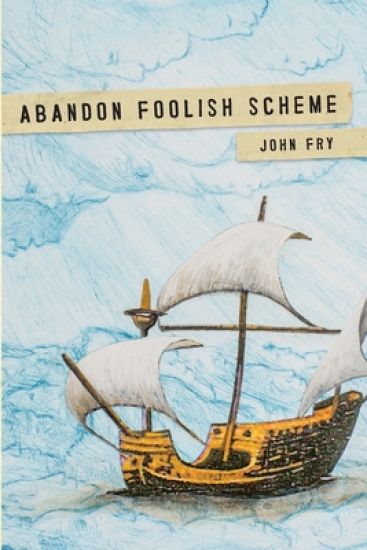

In the fall of 1913, Laura and Earle Smith, a young Iowa couple, made the gutsy—some might say foolhardy—decision to homestead in Wyoming. There, they built their first house, a claim shanty half dug out of the ground, hauled every drop of their water from a spring over a half-mile away, and fought off rattlesnakes and boredom on a daily basis. Soon, other families moved to nearby homesteads, and the Smiths built a house closer to those neighbors. The growing community built its first public schoolhouse and celebrated the Fourth of July together—although the festivities were cut short because of snow.By 1917, however, the Smiths had moved back to Iowa, leasing their land to a local rancher and using the proceeds to fund Earle's study of law. The Smiths lived in Iowa for most of the rest of their lives, and sometime after the mid-1930s, Laura wrote this clear, vivid, witty, and self-deprecating memoir of their time in Wyoming, a book that captures the pioneer spirit of the era and of the building of community against daunting odds.

In the sixth edition of this work John Fry has reverted to the format of the earlier editions published in 1965, 1970 and 1973 and has presented statistical data drawn widely from many sources. General practice in the United Kingdom and elsewhere throughout the world has undergone many changes in the past decade. This new edition brings the available statistical informa tion up to date and indicates the way ahead. General practice, the College and the National Health Service have been closely linked in effecting change. The membership of the College con tinues to grow and its influence in changing the face of general practice in the United Kingdom is significant. John Fry's new book presents that characteristic blend of fact and personal opinion which was so successful in earlier editions and so valuable to general practice and others in primary health care. Once again he has shown what can be achieved by one man based on his own work and those of others in general practice. John Lawson RCGP, 1983 President of the Royal College of General Practitioners vi Preface The Present State and Future Needs series had its roots in the dark days of the early 1960s when morale in general practice was low and when numbers of new entrants were actually going down. They were the days of mass emigration of doctors from Britain and the National Health Service. The fourth and fifth editions were entitled Trends in General Practice (1977 and 1979).


This book investigates the operation of two linguistic mechanisms, ellipsis and wa-marking, in a corpus of colloquial Japanese speech. Its data set is the CallHome Japanese (CHJ) corpus, a collection of transcripts and digitized speech data for 120 telephone conversations between native speakers of Japanese. To make the CHJ data useful for linguistic research, John Fry annotates the original transcripts with a comprehensive set of acoustic, phonetic, syntactic, and semantic tags. John Fry demonstrates that Japanese conversation obeys certain principles of argument ellipsis that appear to be language universal: namely, the tendency to omit transitive and human subjects and the tendency to express at most one argument per clause. He identifies a set of syntactic and semantic factors that correlate significantly with the ellipsis of grammatical particles following a noun phrase. These factors include the grammatical construction type (question, idiom), length of the NP, utterance length, proximity of the NP to the predicate, and the animacy and definiteness of the NP. The animacy and definiteness constrains are of particular interest because these too seem to reflect language-universal principles. Analyzing the CHJ data further, Fry investigates the use and function of the topic-marking particle wa. His study identifies a set of semantic and prosodic properties that tend to distinguish wa from the subject-marking particle ga. This book shows that wa-phrases exhibit more prominent intonation, as measured by peak F0, than ga-phrases in the CHJ speech data, contradicting accounts which predict that ga-phrases, because they are associated with new information, should be more prominent.


Bibliographical Memoranda: In Illustration Of Early English Literature (1816)
John Fry
KESSINGER PUBLISHING, LLC
2008
sidottu

A New Translation And Exposition Of The Very Ancient Book Of Job; With Notes, Explanatory And Philological (1827)
John Fry
KESSINGER PUBLISHING, LLC
2008
nidottu

A New Translation And Exposition Of The Very Ancient Book Of Job; With Notes, Explanatory And Philological (1827)
John Fry
KESSINGER PUBLISHING, LLC
2008
sidottu
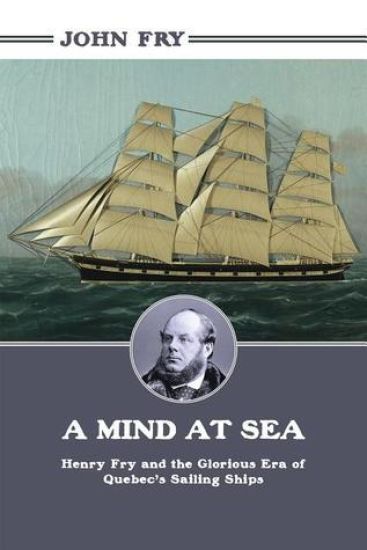
The trials and tribulations of a Canadian business titan during a fascinating period in 19th-century Quebec. A Mind at Sea is an intimate window into a vanished time when Canada was among the world’s great maritime countries. Between 1856 and 1877, Henry Fry was the Lloyd’s agent for the St. Lawrence River, east of Montreal. The harbour coves below his home in Quebec were crammed with immense rafts of cut wood, the river’s shoreline sprawled with yards where giant square-rigged ships – many owned by Fry – were built. As the president of Canada’s Dominion Board of Trade, Fry was at the epicentre of wealth and influence. His home city of Quebec served as the capital of the province of Canada, while its port was often the scene of raw criminality. He fought vigorously against the kidnapping of sailors and the dangerous practice of deck loading. He also battled against and overcame his personal demon – mental depression – going on to write many ship histories and essays on U.S.-Canada relations. Fry was a colourful figure and a reformer who interacted with the famous figures of the day, including Lord and Lady Dufferin, Sir John A. Macdonald, Wilfrid Laurier, and Sir Narcisse-Fortunat Belleau, Quebec’s lieutenant-governor.
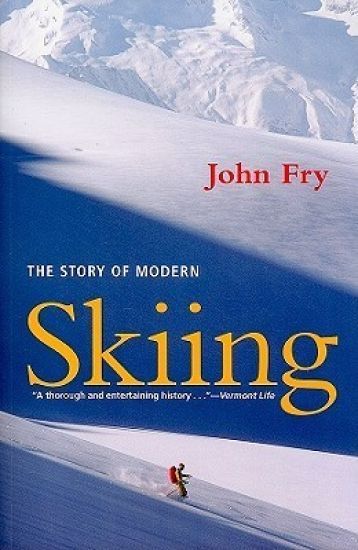
This is the definitive history of the sport that has exhilarated and infatuated about 30 million Americans and Canadians over the course of the last fifty years. Consummate insider John Fry chronicles the rise of a ski culture and every aspect of the sport's development, including the emergence of the mega-resort and advances in equipment, technique, instruction, and competition. The Story of Modern Skiing is laced with revelations from the author's personal relationships with skiing greats such as triple Olympic gold medalists Toni Sailer and Jean-Claude Killy, double gold medalist and environmental champion Andrea Mead Lawrence, first women's World Cup winner Nancy Greene, World Alpine champion Billy Kidd, Sarajevo gold and silver medalists Phil and Steve Mahre, and industry pioneers such as Vail founder Pete Seibert, metal ski designer Howard Head, and plastic boot inventor Bob Lange. Fry writes authoritatively of alpine skiing in North America and Europe, of Nordic skiing, and of newer variations in the sport: freestyle skiing, snowboarding, and extreme skiing. He looks closely at skiing's relationship to the environment, its portrayal in the media, and its response to social and economic change. Maps locating major resorts, records of ski champions, and a timeline, bibliography, glossary, and index of names and places make this the definitive work on modern skiing. Skiers of all ages and abilities will revel in this lively tale of their sport's heritage.

This fourth edition of Common Diseases comes just over 10 years after the first. There has been change and counterchange in the primary health care (PHC) field. One change has been the tendency to replace 'general practice' by 'PHC'. Vocational training has become compulsory. With larger group practices have come formalized teams and teamwork, increasing con cern with the business side of general practice and attempts to achieve best values for money and maximal profits. On the clinical side there have been enthusiasms for prevention, early diagnosis, anticipatory care, screening and quality initiatives. As a counterchange it is necessary to remind ourselves that the real essence of general practice, PHC, or whatever title we give it, is 'personal doctoring' of people as individuals in family units. All the changes mentioned will achieve less than expected without good continuing doctor/ patient personal care. But even this is not enough. Good general practice demands a sound knowledge of the nature of disease in the community. Not only are traditional diagnostic and therapeutic skills necessary, but also application of an understanding of the frequency and distribution of the diseases and an awareness of their likely natural history - their course and outcome.

This book is a personal testimony of faith in the future and in the progression to better health and a better life. It is the testament of a rough and ready measuring device - a practising physician who sought to compare and contrast three systems of medical care to see what can be distilled from them to help us all in achieving better services for medical care. Medical care as a human and civic right is the con cern of us all. Seeking to live longer and in good health we depend on medical, social and welfare services to attain this goal. Yet it is quite obvious that there are limits and dilemmas that prevent anything but an unsatisfactory compromise. The resources that are available cannot meet all the calls. How then can we make the best use of the resources that we have? This must be the theme for this book. What can we learn from each other for the com mon good? Since we all are facing the same common prob lems, how do we go about resolving them? For example, how do the medical care services in the USSR, USA and UK cope with an acute heart attack, with a middle-aged woman with depression, with a brain-damaged child, with a road accident or with a case of measles? These are the common human factors involved.