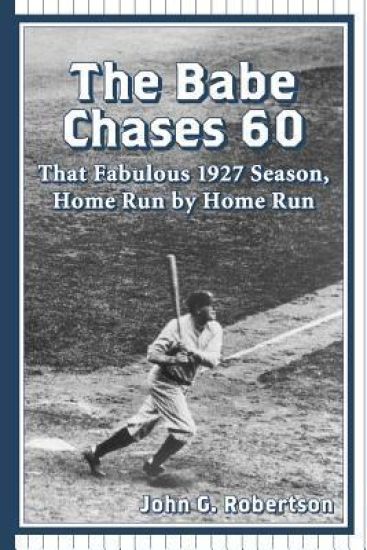
Homer-by-homer, this heavily researched work recounts the inimitable Babe Ruth's finest season. In that magical 1927 season, Ruth blasted homers off 33 different pitchers and hit at least one against every American League opponent. Two hurlers yielded four homers each to the Bambino, while seven pitchers allowed at least three. Interwoven with this recounting is the story of the budding rivalry between Ruth and teammate Lou Gehrig, as the two Yankees matched homers for much of the season. Fresh statistical analyses are provided and boxscores are included for all games in which Ruth hit a home run.
To the uninitiated, baseball is a simple sport: the pitcher throws the ball, the hitter tries to hit it, and the fielders try to catch it. But what happens before, during and after those basic actions causes more arguments than can be found in any other sport. Most of these disputes are settled quickly; a few survive for generations, still able to spark heated debate decades later. Did Babe Ruth call his home run in the 1932 World Series? Was "Shoeless" Joe Jackson a victim or a perpetrator of the Black Sox Scandal? And who really won the batting title in 1910? These and 23 other of the game's most heated controversies are analyzed in this work. The background for each of the debates is given, as well as a full discussion of the historical implications of the decisions. After all, disputes have been a part of the national pastime since Abner Doubleday laid out the first baseball diamond in 1839. Right?
Entering the 1978-1979 season, the Boston Bruins had been one of the best teams in the National Hockey League for more than a decade. Yet they could not shake the postseason jinx the Montreal Canadiens held over them--the Habs had ousted them in 13 consecutive playoff series going back to 1940s. The Bruins wanted one more shot at their nemeses, after coming up short in both the 1977 and 1978 Stanley Cup finals. They got their chance in the semifinal round. Led by the colorful but embattled coach Don Cherry, the underdog Bruins played seven heart-stopping games. Victory seemed within their grasp but was snatched away with an untimely penalty in the final minutes of game seven. The author looks back at the season from opening night at Boston Garden to the catastrophic conclusion at the Montreal Forum, with detailed accounts of the semifinal games and a post-mortem of the infamous bench penalty.
The world heavyweight boxing championship once transcended the sport, conferring global renown. This book gives detailed coverage to five legendary championship bouts that captivated audiences worldwide. Coaxed out of retirement by the press, former champ James J. Jeffries challenged black titleholder Jack Johnson--universally despised by white audiences--in 1910, in hopes of returning the title to the white race. In 1921, dapper World War I hero and light-heavyweight champion Georges Carpentier hoped to upset heavyweight champ Jack Dempsey, widely considered a draft-dodger, in a fight that garnered the first "million dollar gate." In perhaps the most politically charged bout ever, "Brown Bomber" Joe Louis, popular with both white and black America, faced Nazi Germany's Max Schmeling--the first ever to win the title by disqualification--at a sold-out Yankee stadium in 1938. A relentless brawler, undefeated Rocky Marciano in 1952 sought to bludgeon the title away from the more experienced and savvier Joe Walcott, at 38 the oldest heavyweight champ in history. In a monumental clash of two undefeated world champions, Muhammad Ali--on the comeback trail after his title was stripped from him for refusing to be drafted during the Vietnam War--squared off with titleholder Joe Frazier in 1971.
The 1969-70 season marked a turning point in the history of the National Hockey League. The season began with a near fatality and it culminated on a steamy Sunday afternoon in Boston with one of the NHL's most iconic moments. In the interim, the 12 NHL clubs staged thrilling and memorable playoff races that were not decided until the final regular-season games were played. The three traditional powerhouse teams from the Original Six era faltered while former underdog clubs began to vie for top honors. Along the way, Boston's Bobby Orr made history by becoming the first defenseman to win the NHL scoring title, three aging veterans in Detroit combined to form the most effective forward line in hockey, and a rookie goalie, Tony Esposito, lifted the Chicago Black Hawks from the basement to a divisional championship. Told here are the numerous other wonderful, strange, and captivating incidents that made the fun, fascinating, and free-wheeling 53rd NHL season one for the ages.
This work is a game-by-game account of the Philadelphia Athletics' pitiful 1916 season, in which they won just 36 of 154 games. It starts with a brief biography of the team's living symbol--A's manager and co-owner Connie Mack--and moves through the birth of the franchise and into its first era of glory in which the A's won world championships in 1910, 1911, and 1913. Following the A's stunning defeat in the 1914 World Series to the underdog Boston Braves, Mack dismantled his championship club and finished last in the American League for seven straight seasons. The 1916 campaign was the nadir. The team's few solid veterans had a supporting cast of underachievers, college boys, raw rookies, no-hopers, and sub-par pitching. The book chronicles the daily grind of a team that had no chance to begin with and quickly became the laughingstock of the AL. Many humorous anecdotes, needless to say!
The national pastime's rich history and vast cache of statistics have provided fans and researchers a gold mine of narrative and data since the late 19th century. Many books have been written about Major League Baseball's most famous games. This one takes a different approach, focusing on MLB's most historically significant games. Some will be familiar to baseball scholars, such as the October afternoon in 1961 when Roger Maris eclipsed Babe Ruth's single-season home run record, or the compelling sixth game of the 1975 World Series. Other fascinating games are less well known: the day at the Polo Grounds in 1921, when a fan named Reuben Berman filed a lawsuit against the New York Giants, winning fans the right to keep balls hit into the stands; the first televised broadcast of an MLB game in 1939; opening night of the Houston Astrodome in 1965, when spectators no longer had to be taken out to the ballgame; or the spectator-less April 2015 Orioles-White Sox game, played in an empty stadium in the wake of the Baltimore riots. Each game is listed in chronological order, with detailed historical background and a box score.
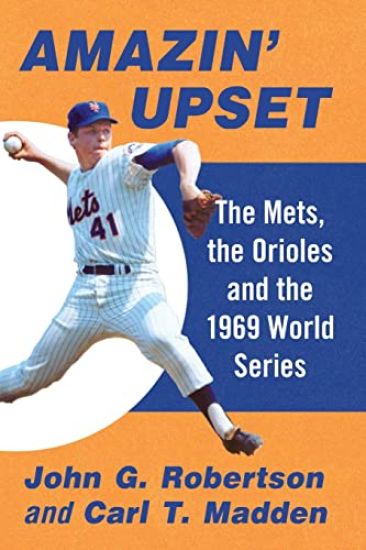
In October 1969, the New York Mets stunned the sports world by defeating the heavily favored Baltimore Orioles in a memorable World Series. Their five-game triumph capped off a true Cinderella season, when the woebegone National League franchise rose from laughingstock to popular champions. The histories of both the Mets and Orioles are traced, along with their paths to the climactic '69 Series. A batter-by-batter recap of all five games gives a box seat view to a storied moment in baseball history.
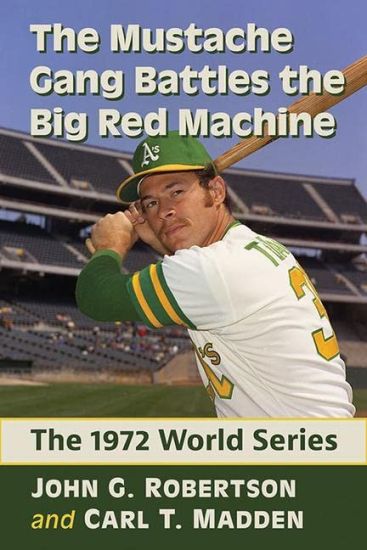
The 1972 World Series was a terrific clash between two rising Major League franchises, the Oakland A's and the Cincinnati Reds. Neither had won the pennant in decades. Twice removed from their original home in Philadelphia and unappreciated in Oakland, the A's quietly played excellent ball, their long hair and mustaches symbols of rebellion. Led by manager Sparky Anderson, the clean-cut Reds--baseball's most conservative club--were becoming a powerhouse and were the favorites entering the Series. This book chronicles both the A's and the Reds' journeys to the memorable '72 Fall Classic--where six of seven games were won by a single run--with batter-by-batter coverage of the diamond exploits of Bench, Perez, Rose, Rudi, Odom, Tenace, and others.
The 1948 World Series gave fans an unusual showdown--neither of the contestants had seen the Fall Classic for a generation. The Cleveland Indians had last won the American League pennant in 1920. The Boston Braves had not been atop the National League since 1914. Both teams featured excellent pitching. Boston's aces were Warren Spahn and Johnny Sain. Cleveland had stalwarts of the mound Bob Feller and Bob Lemon, and surprise knuckleball phenom Gene Bearden. Despite being prohibitive favorites, Cleveland battled through six hard-fought games for the championship. This book recounts every at-bat of the 1948 Series, along with key moments of the regular season, including the antics of colorful Indians' owner Bill Veeck and a near fatality on the diamond.
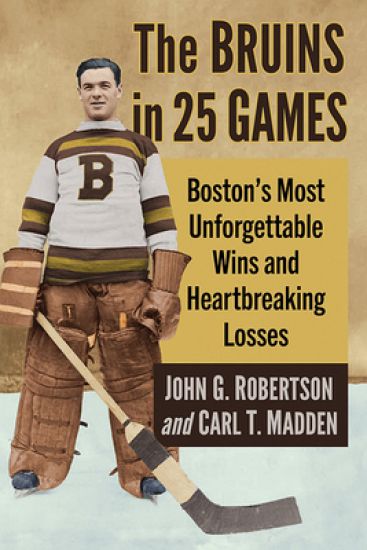
Having played more than 7,500 regular-season and playoff games since the franchise's inception in 1924, the Boston Bruins have become an iconic National Hockey League team boasting a sizable fan base well beyond Massachusetts. In a century of spirited play, the Bruins have brought great joy--and great disappointment--to their passionate legions of followers across North America. Twenty-five of these games are presented here, chronologically, in great detail. Most will be known to hardcore followers of the Bruins, others may be on the obscure side. All of them combine to create a tapestry of triumphs, travails, cheers and tears. The book follows the club's fortunes from the early days of Eddie Shore and Tiny Thompson, through the halcyon seasons of the Kraut Line, forward to the dominant renaissance years of the Orr-Esposito 1970s, and into the third decade of the 21st century.
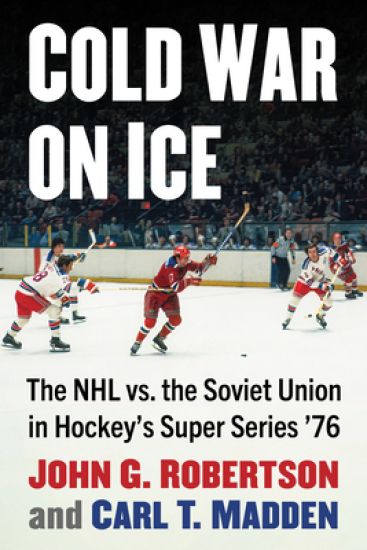
Between December 28, 1975, and January 11, 1976, a groundbreaking hockey event took place: Super Series '76. Eight National Hockey League clubs each hosted a single exhibition game against one of two touring teams from the USSR: Central Red Army or Wings of the Soviet. Officially nothing was at stake, but serious hockey fans realized that a Cold War clash of political ideologies was occurring on North American ice surfaces. The top pro teams would finally meet the best "amateurs" from the Soviet Elite League. The reputations of the NHL and Soviet hockey were both on the line. Canadians already knew how strong the Soviets were, based on the eye-opening experiences of both countries' hockey stars in the 1972 and 1974 Summit Series. For many Americans, however, the talents of the exotic, Eastern Bloc visitors provided a stunning revelation. This book outlines the history of the intense Canada-USSR hockey rivalry that preceded Super Series '76 and then focuses on those eight captivating games in New York, Pittsburgh, Montreal, Buffalo, Boston, Chicago, Long Island and Philadelphia. Two of these contests are still widely discussed today for vastly different reasons. One may have been the greatest hockey game ever played.
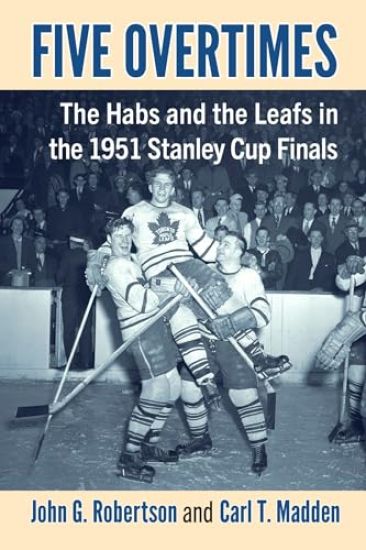
The quarter century comprising the "Original Six" years of the National Hockey League is often fondly discussed by the sport's scholarly fans. However, one surprisingly underappreciated jewel from that era is the 1951 Stanley Cup final series between the Toronto Maple Leafs and the Montreal Canadiens. It provided something that had never been seen before in the history of the NHL and has not been seen since: every one of the five games required a dramatic sudden-death overtime period to determine a winner. This book takes an in-depth look at this entertaining and exciting conclusion to the 1950-51 NHL season, as well as an examination of the two playoff semifinal series, and a general overview of the goings-on from the 210-game regular season featuring many amusing anecdotes. As an added bonus, a special chapter discusses the short life, baffling disappearance, and untimely death of Toronto defenseman Bill Barilko just four months after he notched the Cup-winning tally in April. Also examined is the recent controversy about who really possesses the historic puck with which Barilko scored his famous goal.