Kirjojen hintavertailu. Mukana 11 699 587 kirjaa ja 12 kauppaa.

Kirjahaku

Etsi kirjoja tekijän nimen, kirjan nimen tai ISBN:n perusteella.

5 kirjaa tekijältä John G. Turner

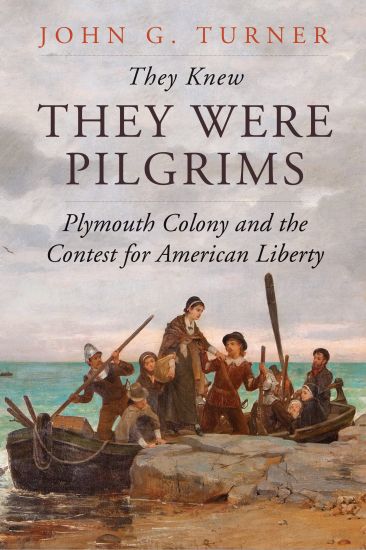
They Knew They Were Pilgrims

They Knew They Were Pilgrims

John G. Turner

Yale University Press
2020
sidottu
Published for the 400th anniversary of the Mayflower’s landing, this ambitious new history of the Pilgrims and Plymouth Colony “will become the new standard work on the Plymouth Colony” (Thomas Kidd) “Informative, accessible, and compelling. . . . A welcome invitation to rediscover the Mayflower voyage and the founding of Plymouth Colony.”—Daniel M. Gullotta, Christianity Today“[An] excellent new history. . . . [Turner] asserts that the Pilgrims matter for more than their legend, and he deftly uses the history of Plymouth to explore ideas of liberty in the American colonies.”—Nathanael Blake, National Review In 1620, separatists from the Church of England set sail across the Atlantic aboard the Mayflower. Understanding themselves as spiritual pilgrims, they left to preserve their liberty to worship God in accordance with their understanding of the Bible. There exists, however, an alternative, more dispiriting version of their story. In it, the Pilgrims are religious zealots who persecuted dissenters and decimated Native peoples through warfare and by stealing their land. The Pilgrims’ definition of liberty was, in practice, very narrow. Drawing on original research using underutilized sources, John G. Turner moves beyond these familiar narratives in his sweeping and authoritative new history of Plymouth Colony. Instead of depicting the Pilgrims as otherworldly saints or extraordinary sinners, he tells how a variety of English settlers and Native peoples engaged in a contest for the meaning of American liberty.
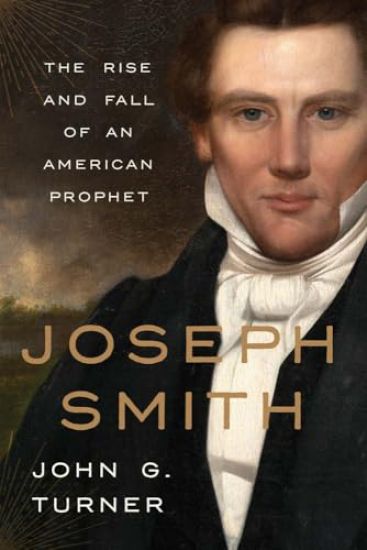
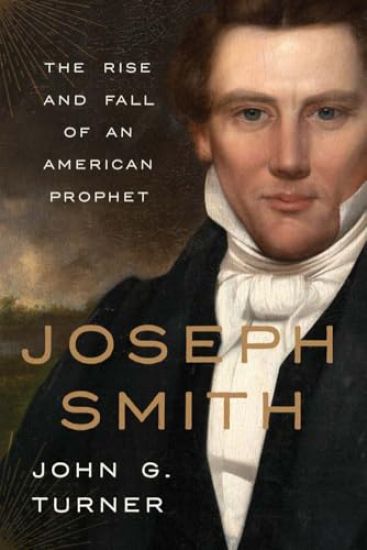
Joseph Smith

Joseph Smith

John G. Turner

YALE UNIVERSITY PRESS
2025
sidottu
From an award-winning biographer, a riveting and deeply researched portrait of Mormonism’s charismatic founder Joseph Smith Jr. (1805–1844) was one of the most successful and controversial religious leaders of nineteenth-century America, publishing the Book of Mormon and starting what would become the Church of Jesus Christ of Latter-day Saints. He built temples, founded a city-state in Illinois, ran for president, and married more than thirty women. This self-made prophet thrilled his followers with his grand vision of peace and unity, but his increasingly grandiose plans tested and sometimes shattered their faith. In this vivid biography, John G. Turner presents Smith as a consummate religious entrepreneur and innovator, a man both flawed and compelling. He sold books, land, and merchandise. And he relentlessly advanced doctrines that tapped into anxieties about the nature and meaning of salvation, the validity of miracles, the timing of Christ’s second coming, and the persistence of human relationships for eternity. His teachings prompted people to gather into communities, evoking fierce opposition from those who saw those communities as theocratic threats to republicanism. With insights from newly accessible diaries, church records, and transcripts of sermons, Turner illuminates Smith’s stunning trajectory, from his beginnings as an uneducated, impoverished farmhand to his ultimate fall at the hands of a murderous mob, revealing how he forged a religious tradition that has resonated with millions of people in the United States and beyond.
Joseph Smith: The Rise and Fall of an American Prophet
From an award-winning biographer, a riveting and deeply researched portrait of Mormonism's charismatic founder Joseph Smith Jr. (1805-1844) was one of the most successful and controversial religious leaders of nineteenth-century America, publishing the Book of Mormon and starting what would become the Church of Jesus Christ of Latter-day Saints. He built temples, founded a city-state in Illinois, ran for president, and married more than thirty women. This self-made prophet thrilled his followers with his grand vision of peace and unity, but his increasingly grandiose plans tested and sometimes shattered their faith. In this vivid biography, John G. Turner presents Smith as a consummate religious entrepreneur and innovator, a man both flawed and compelling. He sold books, land, and merchandise. And he relentlessly advanced doctrines that tapped into anxieties about the nature and meaning of salvation, the validity of miracles, the timing of Christ's second coming, and the persistence of human relationships for eternity. His teachings prompted people to gather into communities, evoking fierce opposition from those who saw those communities as theocratic threats to republicanism. With insights from newly accessible diaries, church records, and transcripts of sermons, Turner illuminates Smith's stunning trajectory, from his beginnings as an uneducated, impoverished farmhand to his ultimate fall at the hands of a murderous mob, revealing how he forged a religious tradition that has resonated with millions of people in the United States and beyond.
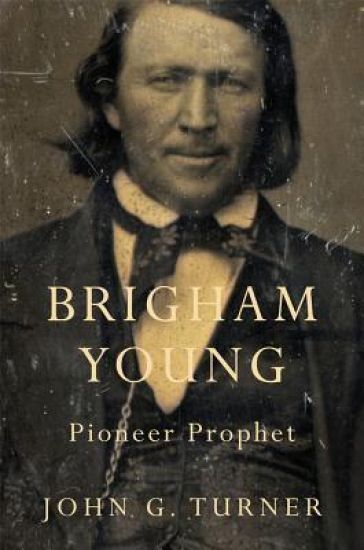
Brigham Young

Brigham Young

John G. Turner

The Belknap Press
2014
nidottu
Brigham Young was a rough-hewn craftsman from New York whose impoverished and obscure life was electrified by the Mormon faith. He trudged around the United States and England to gain converts for Mormonism, spoke in spiritual tongues, married more than fifty women, and eventually transformed a barren desert into his vision of the Kingdom of God. While previous accounts of his life have been distorted by hagiography or polemical exposé, John Turner provides a fully realized portrait of a colossal figure in American religion, politics, and westward expansion.After the 1844 murder of Mormon founder Joseph Smith, Young gathered those Latter-day Saints who would follow him and led them over the Rocky Mountains. In Utah, he styled himself after the patriarchs, judges, and prophets of ancient Israel. As charismatic as he was autocratic, he was viewed by his followers as an indispensable protector and by his opponents as a theocratic, treasonous heretic.Under his fiery tutelage, the Church of Jesus Christ of Latter-day Saints defended plural marriage, restricted the place of African Americans within the church, fought the U.S. Army in 1857, and obstructed federal efforts to prosecute perpetrators of the Mountain Meadows Massacre. At the same time, Young's tenacity and faith brought tens of thousands of Mormons to the American West, imbued their everyday lives with sacred purpose, and sustained his church against adversity. Turner reveals the complexity of this spiritual prophet, whose commitment made a deep imprint on his church and the American Mountain West.
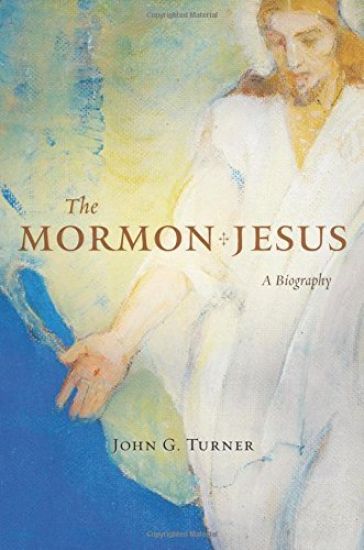
The Mormon Jesus

The Mormon Jesus

John G. Turner

The Belknap Press
2016
sidottu
The nineteenth-century Mormon prophet Joseph Smith published a new scripture dominated by the figure of Jesus Christ, dictated revelations presented as the words of the Christian savior, spoke of encountering Jesus in visions, and told his followers that their messiah and king would soon return to the earth. From the author of the definitive life of Brigham Young comes a biography of the Mormon Jesus that revises and enriches our understanding of The Church of Jesus Christ of Latter-day Saints.Over the past two hundred years, Jesus has connected the Latter-day Saints to broader currents of Christianity, even while particular Mormon beliefs and practices have been points of differentiation and conflict. The Latter-day Saints came to understand Jesus Christ as the literal son of his father, the exalted brother of God’s other spirit children, who should aspire to become like him. They gave new meaning to many titles for Jesus Christ: Father, Son of God, Lord, Savior, Firstborn, Elder Brother, Bridegroom, and Jehovah.While some early beliefs became canonized and others were discarded, Jesus Christ remains central to Latter-day Saint scripture, doctrine, and religious experience. Contemporary Mormon leaders miss no opportunity to proclaim their church’s devotion to the Christian savior, in part because evangelical Protestants denounce Mormonism as a non-Christian cult. This tension between Mormonism's distinctive claims and the church’s desire to be accepted as Christian, John G. Turner argues, continues to shape Mormon identity and attract new members to the church.