Kirjojen hintavertailu. Mukana 11 244 527 kirjaa ja 12 kauppaa.

Kirjahaku

Etsi kirjoja tekijän nimen, kirjan nimen tai ISBN:n perusteella.

74 kirjaa tekijältä John Gardner

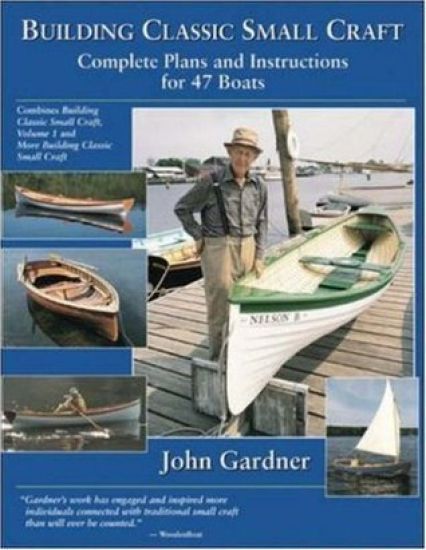
Building Classic Small Craft

Building Classic Small Craft

John Gardner

International Marine Publishing Co
2003
nidottu
This work offers plans and instructions to build 47 functional wooden boats for oar, motor, or sail. It covers flatirons, dories, semi-dories, peapods, St Lawrence River skiffs, Merrymeeting Bay duckboats, Whitehall rowing boats, Rangeley boats, herries, and Sea Bright skiffs.
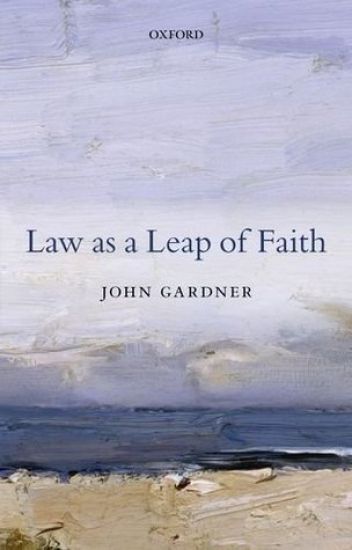
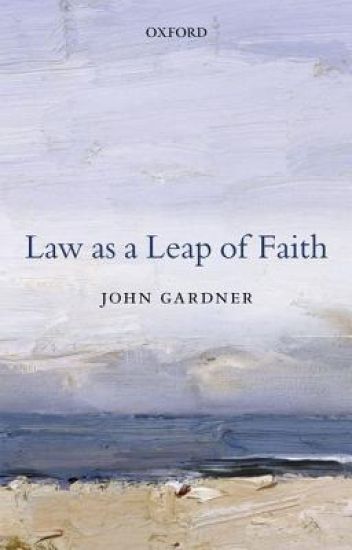
Law as a Leap of Faith

Law as a Leap of Faith

John Gardner

Oxford University Press
2014
nidottu
How do laws resemble rules of games, moral rules, personal rules, rules found in religious teachings, school rules, and so on? Are laws rules at all? Are they all made by human beings? And if so how should we go about interpreting them? How are they organized into systems, and what does it mean for these systems to have 'constitutions'? Should everyone want to live under a system of law? Is there a special kind of 'legal justice'? Does it consist simply in applying the law of the system? And how does it relate to the ideal of 'the rule of law'? These and other classic questions in the philosophy of law form the subject-matter of Law as a Leap of Faith. In this book John Gardner collects, revisits, and supplements fifteen years of celebrated writings on general questions about law and legal systems - writings in which he attempts, without loss of philosophical finesse or insight, to cut through some of the technicalities with which the subject has become encrusted in the late twentieth century. Taking his agenda broadly from H.L.A. Hart's The Concept of Law (1961), Gardner shows how the key ideas in that work live on, and how they have been and can still be improved in modest ways to meet important criticisms - in some cases by concession, in some cases by circumvention, and in some cases by restatement. In the process Gardner engages with key ideas of other modern giants of the subject including Kelsen, Holmes, Raz, and Dworkin. Most importantly he presents the main elements of his own unique and refreshingly direct way of thinking about law, brought together in one place for the first time.
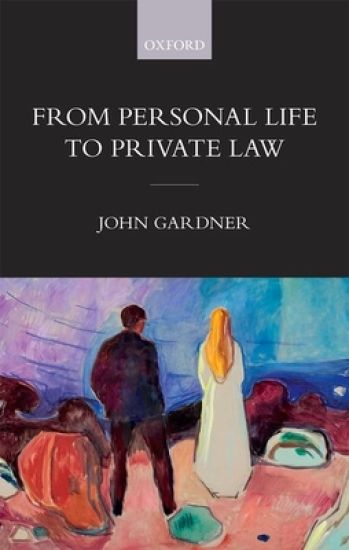
From Personal Life to Private Law

From Personal Life to Private Law

John Gardner

Oxford University Press
2018
sidottu
Mounting a lawsuit against someone who has wronged you is a prospect no less fearful than being on the receiving end of such a lawsuit. Litigation in the courts has a reputation for being a byzantine process far removed from ordinary life, often failing to address people's real grievances while adding to their pain. Yes, there is money to be had if you win. But beyond that, what is it all in aid of? In this book John Gardner argues that, in spite of their legal intricacy, many of the questions that perennially occupy the courts in civil cases are actually timeless puzzles about the human condition. The architecture of the law of torts and the law of contract turns out to track the contours of personal life much more closely than you might expect. Using a wide range of examples from literature and life as well as law, Gardner explores big questions about our relationships to our own pasts and our own futures as well as to other people. What are friends for? Why does it matter how your actions turn out? What is the good of saying sorry? Why regret your mistakes? How can anyone be compensated for an irreversible loss? Why would you want to hold onto the life you already have? And what does any of this have to do with all those protracted legal disputes about damaged cars, ruined holidays, and leaky roofs?
From Personal Life to Private Law

From Personal Life to Private Law

John Gardner

Oxford University Press
2019
nidottu
Mounting a lawsuit against someone who has wronged you is a prospect no less fearful than being on the receiving end of such a lawsuit. Litigation in the courts has a reputation for being a byzantine process far removed from ordinary life, often failing to address people's real grievances while adding to their pain. Yes, there is money to be had if you win. But beyond that, what is it all in aid of? In this book John Gardner argues that, in spite of their legal intricacy, many of the questions that perennially occupy the courts in civil cases are actually timeless puzzles about the human condition. The architecture of the law of torts and the law of contract turns out to track the contours of personal life much more closely than you might expect. Using a wide range of examples from literature and life as well as law, Gardner explores big questions about our relationships to our own pasts and our own futures as well as to other people. What are friends for? Why does it matter how your actions turn out? What is the good of saying sorry? Why regret your mistakes? How can anyone be compensated for an irreversible loss? Why would you want to hold onto the life you already have? And what does any of this have to do with all those protracted legal disputes about damaged cars, ruined holidays, and leaky roofs?
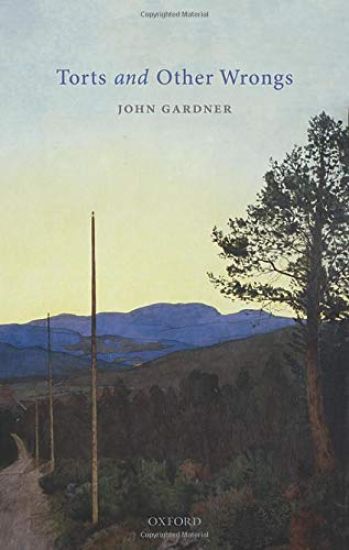
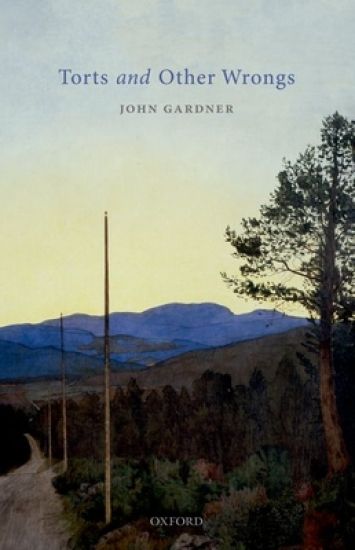
Torts and Other Wrongs

Torts and Other Wrongs

John Gardner

Oxford University Press
2019
sidottu
Torts and other Wrongs is a collection of eleven of the author's essays on the theory of the law of torts and its place in the law more generally. Two new essays accompany nine previously published pieces, a number of which are already established classics of theoretical writing on private law. Together they range across the distinction between torts and other wrongs, the moral significance of outcomes, the nature and role of corrective and distributive justice, the justification of strict liability, the nature of the reasonable person standard, and the role of public policy in tort adjudication. Though focussed on the law of torts, the wide-ranging analysis in each chapter will speak to theorists of private law more generally.
Torts and Other Wrongs

Torts and Other Wrongs

John Gardner

Oxford University Press
2021
nidottu
Torts and other Wrongs is a collection of eleven of the author's essays on the theory of the law of torts and its place in the law more generally. Two new essays accompany nine previously published pieces, a number of which are already established classics of theoretical writing on private law. Together they range across the distinction between torts and other wrongs, the moral significance of outcomes, the nature and role of corrective and distributive justice, the justification
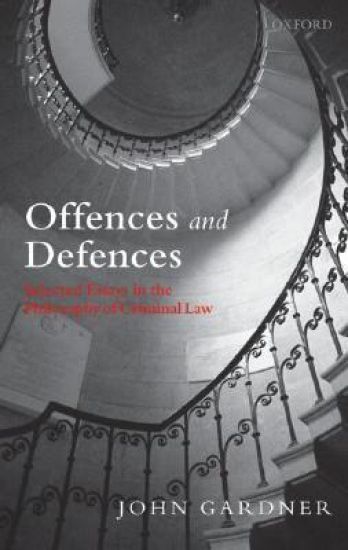
Offences and Defences

Offences and Defences

John Gardner

Oxford University Press
2007
sidottu
John Gardner's writings on the theory of criminal law have had a significant impact on the way that this subject is understood by legal scholars and philosophers. This book collects together a selection of his best-known and most provocative pieces. John Gardner tackles persistent and troublesome questions about the philosophical foundations of the criminal law. Which wrongs are suitable to be crimes and why? What are the conditions of criminal responsibility, and how do they relate to the conditions of moral responsibility? What does it take to be complicit in another's wrongdoing? Should crimes ever be excused, and if so, on what basis? How, if at all, should the criminal law adapt to conditions of social and cultural diversity? The issues raised in these essays have a significance extending beyond the law. What does it mean to be a responsible agent and why does it matter? Is my moral character only or mostly my own business? Is there a difference between being reasonable and being rational? These and many other moral problems lurk in the background of the criminal law, and the pieces in this book bring them into the foreground. Theoretical writings on the criminal law have often been dominated by a preoccupation with the justification of criminal punishment. This work is different. Although it discusses the legitimacy of criminal punishment it proceeds on the footing that the criminal law does many important things apart from punishing people. In particular, Gardner argues that the criminal law provides an important forum for people to explain themselves. Such a forum would be important, argues Gardner, even if criminal punishment were to be abolished.
Offences and Defences

Offences and Defences

John Gardner

Oxford University Press
2007
nidottu
John Gardner's writings on the theory of criminal law have had a significant impact on the way that this subject is understood by legal scholars and philosophers. This book collects together a selection of his best-known and most provocative pieces. John Gardner tackles persistent and troublesome questions about the philosophical foundations of the criminal law. Which wrongs are suitable to be crimes and why? What are the conditions of criminal responsibility, and how do they relate to the conditions of moral responsibility? What does it take to be complicit in another's wrongdoing? Should crimes ever be excused, and if so, on what basis? How, if at all, should the criminal law adapt to conditions of social and cultural diversity? The issues raised in these essays have a significance extending beyond the law. What does it mean to be a responsible agent and why does it matter? Is my moral character only or mostly my own business? Is there a difference between being reasonable and being rational? These and many other moral problems lurk in the background of the criminal law, and the pieces in this book bring them into the foreground. Theoretical writings on the criminal law have often been dominated by a preoccupation with the justification of criminal punishment. This work is different. Although it discusses the legitimacy of criminal punishment it proceeds on the footing that the criminal law does many important things apart from punishing people. In particular, Gardner argues that the criminal law provides an important forum for people to explain themselves. Such a forum would be important, argues Gardner, even if criminal punishment were to be abolished.
Law as a Leap of Faith

Law as a Leap of Faith

John Gardner

Oxford University Press
2012
sidottu
How do laws resemble rules of games, moral rules, personal rules, rules found in religious teachings, school rules, and so on? Are laws rules at all? Are they all made by human beings? And if so how should we go about interpreting them? How are they organized into systems, and what does it mean for these systems to have 'constitutions'? Should everyone want to live under a system of law? Is there a special kind of 'legal justice'? Does it consist simply in applying the law of the system? And how does it relate to the ideal of 'the rule of law'? These and other classic questions in the philosophy of law form the subject-matter of Law as a Leap of Faith. In this book John Gardner collects, revisits, and supplements fifteen years of celebrated writings on general questions about law and legal systems - writings in which he attempts, without loss of philosophical finesse or insight, to cut through some of the technicalities with which the subject has become encrusted in the late twentieth century. Taking his agenda broadly from H.L.A. Hart's The Concept of Law (1961), Gardner shows how the key ideas in that work live on, and how they have been and can still be improved in modest ways to meet important criticisms - in some cases by concession, in some cases by circumvention, and in some cases by restatement. In the process Gardner engages with key ideas of other modern giants of the subject including Kelsen, Holmes, Raz, and Dworkin. Most importantly he presents the main elements of his own unique and refreshingly direct way of thinking about law, brought together in one place for the first time.

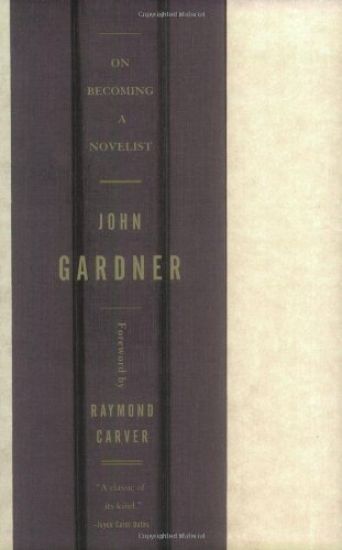
On Becoming a Novelist

On Becoming a Novelist

John Gardner

W. W. Norton Company
1999
nidottu
On Becoming a Novelist contains the wisdom accumulated during John Gardner's distinguished twenty-year career as a fiction writer and creative writing teacher. With elegance, humor, and sophistication, Gardner describes the life of a working novelist; warns what needs to be guarded against, both from within the writer and from without; and predicts what the writer can reasonably expect and what, in general, he or she cannot. "For a certain kind of person," Gardner writes, "nothing is more joyful or satisfying than the life of a novelist." But no other vocation, he is quick to add, is so fraught with professional and spiritual difficulties. Whether discussing the supposed value of writer's workshops, explaining the role of the novelist's agent and editor, or railing against the seductive fruits of literary elitism, On Becoming a Novelist is an indispensable, life-affirming handbook for anyone authentically called to the profession. "A miraculously detailed account of the creative process."--Anne Tyler, Baltimore Sun
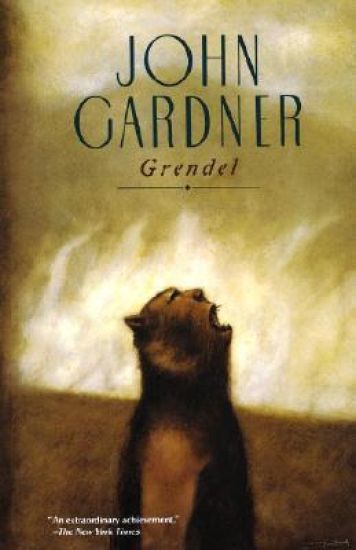
Grendel

Grendel

John Gardner

VINTAGE
1989
nidottu
This classic and much lauded retelling of Beowulf follows the monster Grendel as he learns about humans and fights the war at the center of the Anglo Saxon classic epic. "An extraordinary achievement."--New York Times The first and most terrifying monster in English literature, from the great early epic Beowulf, tells his own side of the story in this frequently banned book. This is the novel William Gass called "one of the finest of our contemporary fictions."
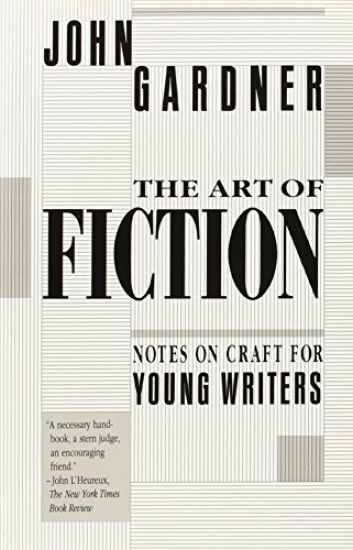
The Art of Fiction: Notes on Craft for Young Writers
This classic guide, from the renowned novelist and professor, has helped transform generations of aspiring writers into masterful writers--and will continue to do so for many years to come. John Gardner was almost as famous as a teacher of creative writing as he was for his own works. In this practical, instructive handbook, based on the courses and seminars that he gave, he explains, simply and cogently, the principles and techniques of good writing. Gardner's lessons, exemplified with detailed excerpts from classic works of literature, sweep across a complete range of topics--from the nature of aesthetics to the shape of a refined sentence. Written with passion, precision, and a deep respect for the art of writing, Gardner's book serves by turns as a critic, mentor, and friend. Anyone who has ever thought of taking the step from reader to writer should begin here.
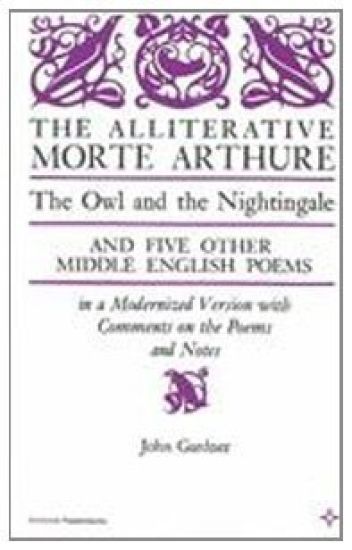
The Alliterative Morte Arthure

The Alliterative Morte Arthure

John Gardner

Southern Illinois University Press
1973
nidottu
Poets of every age deal with roughly the same human emotions, and for the experienced reader poetry is interesting or not depending upon the moment-by-moment intensity of its appeal. This skillful rendering by John Gardner of seven Middle English poems into sparklingly modern verse translation--most of them for the first time--represents a selection of poems that, generally, have real artistic value but are so difficult to read in the original that they are not as well known as they deserve to be. The seven poems are: The Alliterative Morte Arthure, Winner and Waster, The Parlia ment of the Three Ages, Summer Sunday, The Debate of Body and Soul, The Thrush and the Nightingale, and The Owl and the Nightingale.The first four poems represent high points in the alliterative renais sance of the fourteenth century. Morte Arthure, here translated for the first time in its entirety into modern verse, is the only heroic romance in Middle English--a work roughly in the same genre as the French Song of Roland. The other three poems have been included in the anthology as further poetic examples. With his employment of extensive comments and notes on the poems, Gardner provides a wealth of aids to appreciation and understanding of his outstanding translations. The anthology will be of interest to general readers as well as to students.