Kirjojen hintavertailu. Mukana 11 717 486 kirjaa ja 12 kauppaa.

Kirjahaku

Etsi kirjoja tekijän nimen, kirjan nimen tai ISBN:n perusteella.

7 kirjaa tekijältä John Gary Maxwell

The Civil War Years in Utah

The Civil War Years in Utah

John Gary Maxwell

University of Oklahoma Press
2016
sidottu
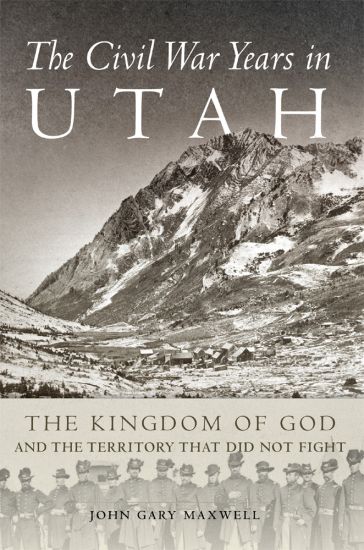
In 1832 Joseph Smith, Jr., the Mormons' first prophet, foretold of a great war beginning in South Carolina. In the combatants' mutual destruction, God's purposes would be served, and Mormon men would rise to form a geographical, political, and theocratic ""Kingdom of God"" to encompass the earth. Three decades later, when Smith's prophecy failed with the end of the American Civil War, the United States left torn but intact, the Mormons' perspective on the conflict - and their inactivity in it - required palliative revision. In The Civil War Years in Utah, the first full account of the events that occurred in Utah Territory during the Civil War, John Gary Maxwell contradicts the patriotic mythology of Mormon leaders' version of this dark chapter in Utah history. While the Civil War spread death, tragedy, and sorrow across the continent, Utah Territory remained virtually untouched. Although the Church of Jesus Christ of Latter-day Saints - and its faithful - proudly praise the service of an 1862 Mormon cavalry company during the Civil War, Maxwell's research exposes the relatively inconsequential contribution of these Nauvoo Legion soldiers. Active for a mere ninety days, they patrolled overland trails and telegraph lines. Furthermore, Maxwell finds indisputable evidence of Southern allegiance among Mormon leaders, despite their claim of staunch, long-standing loyalty to the Union. Men at the highest levels of Mormon hierarchy were in close personal contact with Confederate operatives. In seeking sovereignty, Maxwell contends, the Saints engaged in blatant and treasonous conflict with Union authorities, the California and Nevada Volunteers, and federal policies, repeatedly skirting open warfare with the U.S. government. Collective memory of this consequential period in American history, Maxwell argues, has been ill-served by a one-sided perspective. This engaging and long-overdue reappraisal finally fills in the gaps, telling the full story of the Civil War years in Utah Territory.
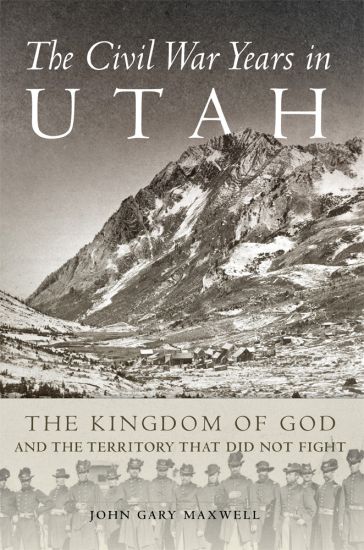
The Civil War Years in Utah

The Civil War Years in Utah

John Gary Maxwell

University of Oklahoma Press
2019
nidottu
In 1832 Joseph Smith, Jr., the Mormons' first prophet, foretold of a great war beginning in South Carolina. In the combatants' mutual destruction, God's purposes would be served, and Mormon men would rise to form a geographical, political, and theocratic ""Kingdom of God"" to encompass the earth. Three decades later, when Smith's prophecy failed with the end of the American Civil War, the United States left torn but intact, the Mormons' perspective on the conflict - and their inactivity in it - required palliative revision. In The Civil War Years in Utah, the first full account of the events that occurred in Utah Territory during the Civil War, John Gary Maxwell contradicts the patriotic mythology of Mormon leaders' version of this dark chapter in Utah history. While the Civil War spread death, tragedy, and sorrow across the continent, Utah Territory remained virtually untouched. Although the Church of Jesus Christ of Latter-day Saints - and its faithful - proudly praise the service of an 1862 Mormon cavalry company during the Civil War, Maxwell's research exposes the relatively inconsequential contribution of these Nauvoo Legion soldiers. Active for a mere ninety days, they patrolled overland trails and telegraph lines. Furthermore, Maxwell finds indisputable evidence of Southern allegiance among Mormon leaders, despite their claim of staunch, long-standing loyalty to the Union. Men at the highest levels of Mormon hierarchy were in close personal contact with Confederate operatives. In seeking sovereignty, Maxwell contends, the Saints engaged in blatant and treasonous conflict with Union authorities, the California and Nevada Volunteers, and federal policies, repeatedly skirting open warfare with the U.S. government. Collective memory of this consequential period in American history, Maxwell argues, has been ill-served by a one-sided perspective. This engaging and long-overdue reappraisal finally fills in the gaps, telling the full story of the Civil War years in Utah Territory.
Robert Newton Baskin and the Making of Modern Utah

Robert Newton Baskin and the Making of Modern Utah

John Gary Maxwell

UNIVERSITY OF OKLAHOMA PRESS
2025
nidottu
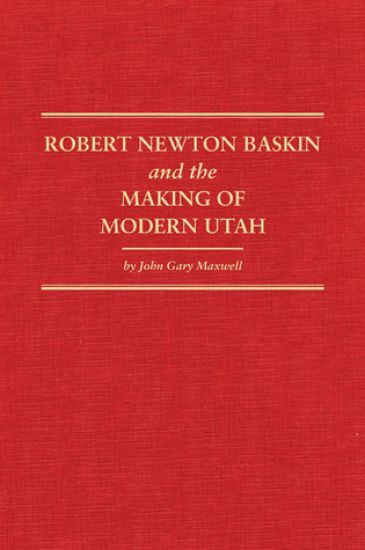
For years Robert Newton Baskin (1837–1918) may have been the most hated man in Utah. Yet his promotion of federal legislation against polygamy in the late 1800s and his work to bring the Mormon territory into a republican form of government were pivotal in Utah’s achievement of statehood. The results of his efforts also contributed to the acceptance of the Church of Jesus Christ of Latter-day Saints by the American public. In this engaging biography—the first full-length analysis of the man—author John Gary Maxwell presents Baskin as the unsung father of modern Utah. As Maxwell shows, Baskin’s life was defined by conflict and paradox.Educated at Harvard Law School, Baskin lived as a member of a minority: a “gentile” in Mormon Utah. A loner, he was highly respected but not often included in the camaraderie of contemporary non-Mormon professionals. When it came to the Saints, Baskin’s role in the legal aftermath of the Mountain Meadows massacre did not endear him to the Mormon people or their leadership. He was convinced that Brigham Young made John D. Lee the scapegoat—the planner and perpetrator of the massacre—to obscure complicity of the LDS church.Baskin was successful in Utah politics despite using polygamy as a sledgehammer against Utah’s theocratic government and despite his role as a federal prosecutor. He was twice elected mayor of Salt Lake City, served in the Utah legislature, and became chief justice of the Utah Supreme Court. He was also a visionary city planner—the force behind the construction of the Salt Lake City and County Building, which remains the architectural rival of the city’s Mormon temple.For more than a century historians have maligned Baskin or ignored him. Maxwell brings the man to life in this long-overdue exploration of a central figure in the history of Utah and of the LDS church.
Gettysburg to Great Salt Lake

Gettysburg to Great Salt Lake

John Gary Maxwell

Arthur H. Clark Company
2010
sidottu
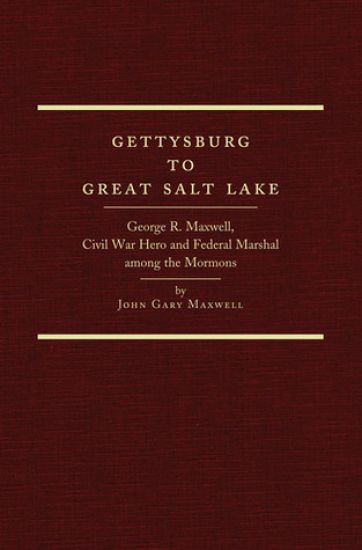
Following distinguished Civil War service that took one of his legs and rendered an arm useless, General George R. Maxwell was sent to Utah Territory and charged--first as Register of Land, then as U.S. marshal--with bringing the Mormons into compliance with federal law. John Gary Maxwell's biography of General Maxwell (no relation) both celebrates an unsung war hero and presents the history of the longest episode of civil disobedience in U.S. history from the point of view of this young, non-Mormon who lived through it. With the onset of the Civil War, Maxwell volunteered for the First Michigan Cavalry and fought in most of the war's major battles in Virginia and at Gettysburg. In his subsequent service, Maxwell waged a different war as he battled the Mormon church's leadership over ownership of land, water, and timber. In the courts, in election outcomes, and in the legislature, Maxwell fought the Mormons' affirmation that God's law was superior to federal law. And as marshal, he was the first to properly conduct a federal trial in the Utah Territory, when John D. Lee was tried for the massacre of 120 Arkansas emigrants at Mountain Meadows."Gettysburg to Great Salt Lake" recognizes Maxwell as both a bona fide Civil War hero and an unappreciated shaper of Utah history. His biography reveals this period through the eyes of a soldier and civil servant who embodied federal authority in Utah during its turbulent post-Civil War years.
Robert Newton Baskin and the Making of Modern Utah

Robert Newton Baskin and the Making of Modern Utah

John Gary Maxwell

Arthur H. Clark Company
2013
sidottu
For years Robert Newton Baskin (1837 1918) may have been the most hated man in Utah. Yet his promotion of federal legislation against polygamy in the late 1800s and his work to bring the Mormon territory into a republican form of government were pivotal in Utah s achievement of statehood. The results of his efforts also contributed to the acceptance of the Church of Jesus Christ of Latter-day Saints by the American public. In this engaging biography the first full-length analysis of the man author John Gary Maxwell presents Baskin as the unsung father of modern Utah. As Maxwell shows, Baskin s life was defined by conflict and paradox.Educated at Harvard Law School, Baskin lived as a member of a minority: a gentile in Mormon Utah. A loner, he was highly respected but not often included in the camaraderie of contemporary non-Mormon professionals. When it came to the Saints, Baskin s role in the legal aftermath of the Mountain Meadows massacre did not endear him to the Mormon people or their leadership. He was convinced that Brigham Young made John D. Lee the scapegoat the planner and perpetrator of the massacre to obscure complicity of the LDS church.Baskin was successful in Utah politics despite using polygamy as a sledgehammer against Utah s theocratic government and despite his role as a federal prosecutor. He was twice elected mayor of Salt Lake City, served in the Utah legislature, and became chief justice of the Utah Supreme Court. He was also a visionary city planner the force behind the construction of the Salt Lake City and County Building, which remains the architectural rival of the city s Mormon temple.For more than a century historians have maligned Baskin or ignored him. Maxwell brings the man to life in this long-overdue exploration of a central figure in the history of Utah and of the LDS church."
The Last Called Mormon Colonization

The Last Called Mormon Colonization

John Gary Maxwell

University of Utah Press,U.S.
2022
sidottu
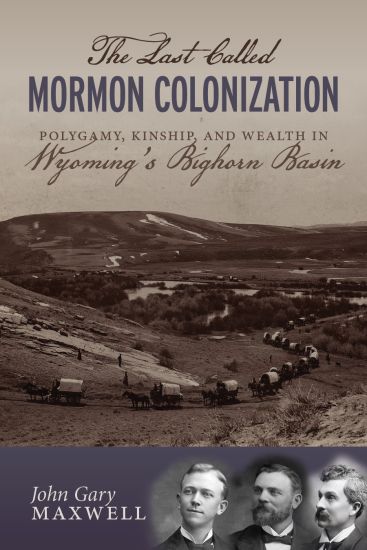
More than three hundred Latter-day Saint settlements were founded by LDS Church President Brigham Young. Colonization—often outside of Utah—continued under the next three LDS Church presidents, fueled by Utah’s overpopulation relative to its arable, productive land. In this book, John Gary Maxwell takes a detailed look at the Bighorn Basin colonization of 1900–1901, placing it in the political and socioeconomic climate of the time while examining whether the move to this out-of-the-way frontier was motivated in part by the desire to practice polygamy unnoticed. The LDS Church officially abandoned polygamy in 1890, but evidence that the practice was still tolerated (if not officially sanctioned) by the church circulated widely, resulting in intense investigations by the U.S. Senate. In 1896 Abraham Owen Woodruff, a rising star in LDS leadership and an ardent believer in polygamy, was appointed to head the LDS Colonization Company. Maxwell explores whether under Woodruff’s leadership the Bighorn Basin colony was intended as a means to insure the secret survival of polygamy and if his untimely death in 1904, together with the excommunication of two equally dedicated proponents of polygamy—Apostles John Whitaker Taylor and Matthias Foss Cowley—led to its collapse. Maxwell also details how Mormon settlers in Wyoming struggled with finance, irrigation, and farming and how they brought the same violence to indigenous peoples over land and other rights as did non-Mormons. The 1900 Bighorn Basin colonization provides an early twentieth-century example of a Mormon syndicate operating at the intersection of religious conformity, polygamy, nepotism, kinship, corporate business ventures, wealth, and high priesthood status. Maxwell offers evidence that although in many ways the Bighorn Basin colonization failed, Owen Woodruff’s prophecy remains unbroken: “No year will ever pass, from now until the coming of the Savior, when children will not be born in plural marriage.”
The Last Called Mormon Colonization

The Last Called Mormon Colonization

John Gary Maxwell

University of Utah Press,U.S.
2022
nidottu
More than three hundred Latter-day Saint settlements were founded by LDS Church President Brigham Young. Colonization—often outside of Utah—continued under the next three LDS Church presidents, fueled by Utah's overpopulation relative to its arable, productive land. In this book, John Gary Maxwell takes a detailed look at the Bighorn Basin colonization of 1900–1901, placing it in the political and socioeconomic climate of the time while examining whether the move to this out-of-the-way frontier was motivated in part by the desire to practice polygamy unnoticed.The LDS Church officially abandoned polygamy in 1890, but evidence that the practice was still tolerated (if not officially sanctioned) by the church circulated widely, resulting in intense investigations by the U.S. Senate. In 1896 Abraham Owen Woodruff, a rising star in LDS leadership and an ardent believer in polygamy, was appointed to head the LDS Colonization Company. Maxwell explores whether under Woodruff's leadership the Bighorn Basin colony was intended as a means to insure the secret survival of polygamy and if his untimely death in 1904, together with the excommunication of two equally dedicated proponents of polygamy—Apostles John Whitaker Taylor and Matthias Foss Cowley—led to its collapse.Maxwell also details how Mormon settlers in Wyoming struggled with finance, irrigation, and farming and how they brought the same violence to indigenous peoples over land and other rights as did non-Mormons.The 1900 Bighorn Basin colonization provides an early twentieth-century example of a Mormon syndicate operating at the intersection of religious conformity, polygamy, nepotism, kinship, corporate business ventures, wealth, and high priesthood status. Maxwell offers evidence that although in many ways the Bighorn Basin colonization failed, Owen Woodruff's prophecy remains unbroken: "No year will ever pass, from now until the coming of the Savior, when children will not be born in plural marriage.