Kirjojen hintavertailu. Mukana 11 342 296 kirjaa ja 12 kauppaa.

Kirjahaku

Etsi kirjoja tekijän nimen, kirjan nimen tai ISBN:n perusteella.

12 kirjaa tekijältä John Gillingham

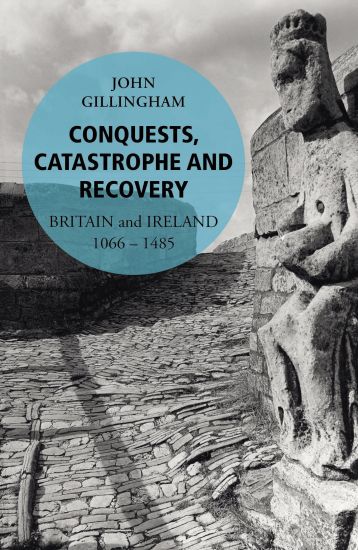
Conquests, Catastrophe and Recovery
Beginning with the Norman Conquest of England, these tumultuous centuries and their invasions shaped the languages and political geography of present-day Britain and Ireland. Tracing the political, religious and material cultures of the period, the author seeks to define the ways in which lives changed during these turbulent times.
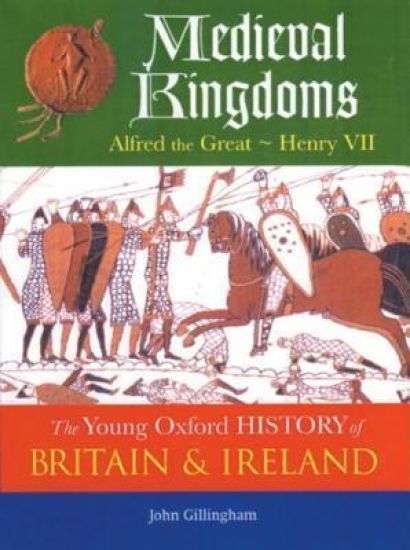
Medieval Kingdoms

Medieval Kingdoms

John Gillingham

Oxford University Press
2001
nidottu
Helps to find out how the "Magna Carta" came about, what it was like to work in a medieval town, and how the Black Death reached the British Isles. This work explores the everyday lives of people across the centuries charting the moments of social change and of discovery and invention.
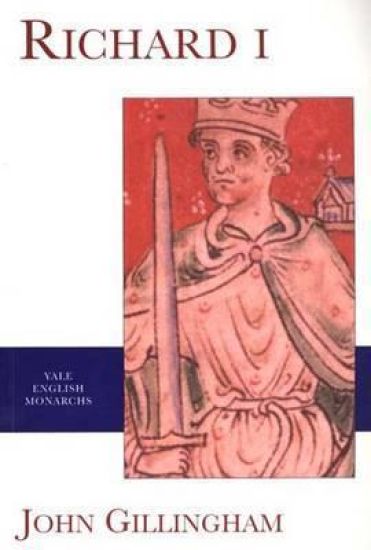
Richard I

Richard I

John Gillingham

Yale University Press
2002
pokkari
Neither a feckless knight-errant nor a king who neglected his kingdom, Richard I was in reality a masterful and businesslike ruler. In this wholly rewritten version of a classic account of the reign of Richard The Lionheart, John Gillingham scrutinizes the reasons for the King’s fluctuating reputation over successive centuries and provides a convincing new interpretation of the significance of the reign. This edition includes a complete annotation and expanded bibliography.
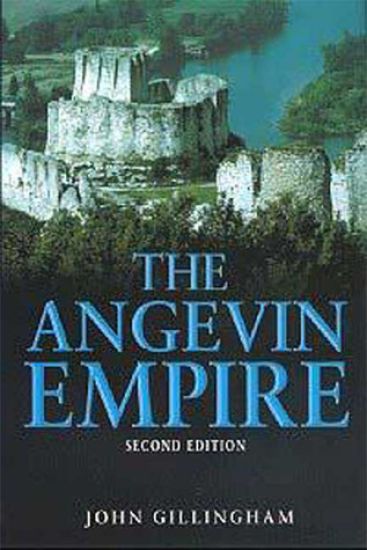
The Angevin Empire

The Angevin Empire

John Gillingham

Hodder Arnold
2000
nidottu
At its greatest extent, the Angevin Empire stretched from the Scottish border to the Pyrenees. For fifty years it was the dominant political entity and "English" and "French" history were inextricably woven together. This study looks at how these disparate territories came together, how they were ruled, and whether they truly constituted an empire.
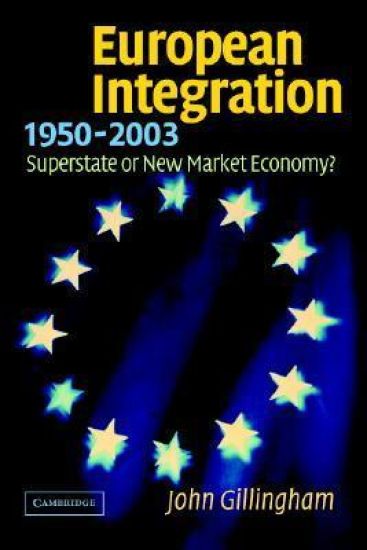
European Integration, 1950–2003

European Integration, 1950–2003

John Gillingham

Cambridge University Press
2003
pokkari
Integration is the most significant European historical development in the past fifty years, eclipsing in importance even the collapse of the USSR. Yet, until now, no satisfactory explanation is to be found in any single book as to why integration is significant, how it originated, how it has changed Europe, and where it is headed. Professor Gillingham’s work corrects the inadequacies of the existing literature by cutting through the genuine confusion that surrounds the activities of the European Union, and by looking at his subject from a truly historical perspective. The late-twentieth century has been an era of great, though insufficiently appreciated, accomplishment that intellectually and morally is still emerging from the shadow of an earlier one of depression, and modern despotism. This is a work, then, that captures the historical distinctiveness of Europe in a way that transcends current party political debate.
Coal, Steel, and the Rebirth of Europe, 1945–1955

Coal, Steel, and the Rebirth of Europe, 1945–1955

John Gillingham

Cambridge University Press
1991
sidottu
This is the first large-scale historical investigation of the critical first stage of European integration, the creation of the European Coal and Steel Community (ECSC). John Gillingham discusses the thirty year Franco-German struggle for heavy industry mastery in Western Europe, describes the dreams and schemes of Jean Monnet, who designed the heavy industry pool, reveals the American vision that inspired his work, and discloses how his transatlantic partners used their great authority to assure its completion. Gillingham also lays bare the operating mechanisms of the coal-steel pool, showing that contrary to the hopes of Monnet and his supporters, the ECSC restored rather than reformed the European economy, leaving as a legacy not a detrustified industry, but one still dominated by the giant producers of the Ruhr.
Coal, Steel, and the Rebirth of Europe, 1945–1955

Coal, Steel, and the Rebirth of Europe, 1945–1955

John Gillingham

Cambridge University Press
2004
pokkari
This is the first large-scale historical investigation of the critical first stage of European integration, the creation of the European Coal and Steel Community (ECSC). John Gillingham discusses the thirty year Franco-German struggle for heavy industry mastery in Western Europe, describes the dreams and schemes of Jean Monnet, who designed the heavy industry pool, reveals the American vision that inspired his work, and discloses how his transatlantic partners used their great authority to assure its completion. Gillingham also lays bare the operating mechanisms of the coal-steel pool, showing that contrary to the hopes of Monnet and his supporters, the ECSC restored rather than reformed the European economy, leaving as a legacy not a detrustified industry, but one still dominated by the giant producers of the Ruhr.
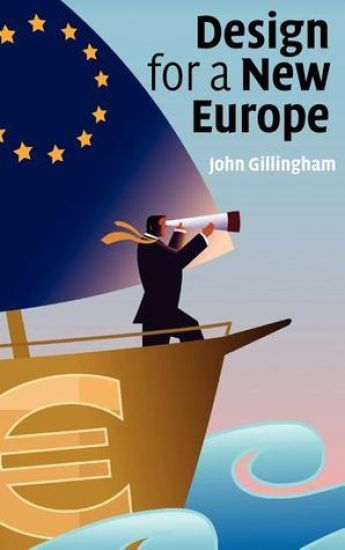
Design for a New Europe

Design for a New Europe

John Gillingham

Cambridge University Press
2006
pokkari
How did the process of European integration break down; how can it be repaired? In European Integration, 1950–2003, John Gillingham reviewed the history of the European project and predicted the rejection of the European constitution. Now the world's leading expert on the EU maps out a route to save the Union. The four chapters of this penetrating, fiercely-argued and often witty book subject today's dysfunctional European Union to critical scrutiny in an attempt to show how it is stunting economic growth, sapping the vitality of national governments, and undermining competitiveness. It explains how the attempt to revive the EU by turning it into a champion of research and development will backfire and demonstrates how Europe's great experiment in political and economic union can succeed only if the wave of liberal reform now under way in the historically downtrodden east is allowed to sweep away the prosperous and complacent west.
European Integration, 1950–2003

European Integration, 1950–2003

John Gillingham

Cambridge University Press
2003
sidottu
Integration is the most significant European historical development in the past fifty years, eclipsing in importance even the collapse of the USSR. Yet, until now, no satisfactory explanation is to be found in any single book as to why integration is significant, how it originated, how it has changed Europe, and where it is headed. Professor Gillingham’s work corrects the inadequacies of the existing literature by cutting through the genuine confusion that surrounds the activities of the European Union, and by looking at his subject from a truly historical perspective. The late-twentieth century has been an era of great, though insufficiently appreciated, accomplishment that intellectually and morally is still emerging from the shadow of an earlier one of depression, and modern despotism. This is a work, then, that captures the historical distinctiveness of Europe in a way that transcends current party political debate.
Design for a New Europe

Design for a New Europe

John Gillingham

Cambridge University Press
2006
sidottu
How did the process of European integration break down; how can it be repaired? In European Integration, 1950–2003, John Gillingham reviewed the history of the European project and predicted the rejection of the European constitution. Now the world's leading expert on the EU maps out a route to save the Union. The four chapters of this penetrating, fiercely-argued and often witty book subject today's dysfunctional European Union to critical scrutiny in an attempt to show how it is stunting economic growth, sapping the vitality of national governments, and undermining competitiveness. It explains how the attempt to revive the EU by turning it into a champion of research and development will backfire and demonstrates how Europe's great experiment in political and economic union can succeed only if the wave of liberal reform now under way in the historically downtrodden east is allowed to sweep away the prosperous and complacent west.
Industry and Politics in the Third Reich (RLE Nazi Germany & Holocaust)
When originally published in 1985 this was the first detailed study of business in Nazi Germany. Drawing on a wealth of new evidence from government and private archives, the book throws light on the important role played by Germany heavy industry in preserving traditions valuable for the post-Nazi future. Contrary to widely held beliefs, the industrialists of the Ruhr did not master-mind the economic strategy of the third Reich, nor were they the helpless victims of Hitler’s tyranny. In this penetrating study, the author reveals that while the management of the coal industry in the Ruhr certainly cooperated with Hitler, they did so only to the extent that it served their own purposes, which were far less destructive than those of the regime.
Industry and Politics in the Third Reich (RLE Nazi Germany & Holocaust)
When originally published in 1985 this was the first detailed study of business in Nazi Germany. Drawing on a wealth of new evidence from government and private archives, the book throws light on the important role played by Germany heavy industry in preserving traditions valuable for the post-Nazi future. Contrary to widely held beliefs, the industrialists of the Ruhr did not master-mind the economic strategy of the third Reich, nor were they the helpless victims of Hitler’s tyranny. In this penetrating study, the author reveals that while the management of the coal industry in the Ruhr certainly cooperated with Hitler, they did so only to the extent that it served their own purposes, which were far less destructive than those of the regime.