Kirjojen hintavertailu. Mukana 12 104 228 kirjaa ja 12 kauppaa.

Kirjahaku

Etsi kirjoja tekijän nimen, kirjan nimen tai ISBN:n perusteella.

8 kirjaa tekijältä John Goodby

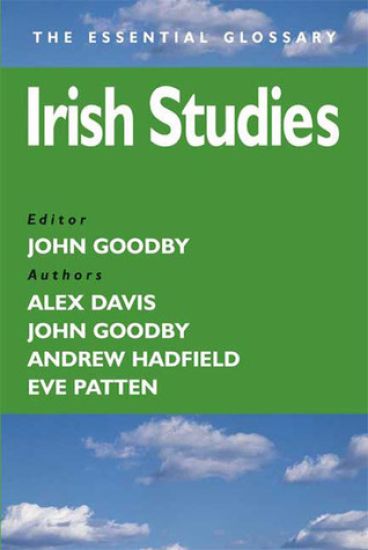
Irish Studies

Irish Studies

John Goodby

Hodder Arnold
2003
nidottu
This glossary offers an introduction to Irish culture and society and a route-map to further study. Designed specifically with undergraduates in mind, it contains around 400 short and accessible explanations of the key events, figures and concepts in Irish Studies since the pre-modern period.
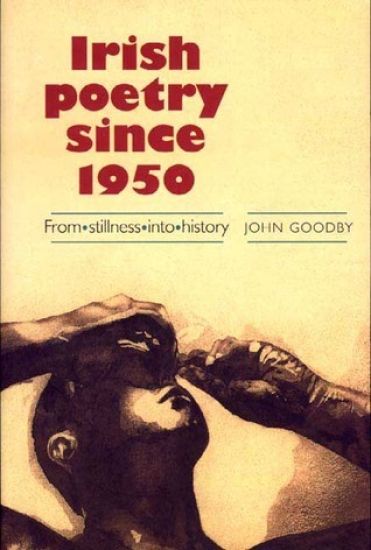
Irish Poetry Since 1950

Irish Poetry Since 1950

John Goodby

Manchester University Press
2000
nidottu
Irish Poetry since 1950 is a survey of poetry, from Northern Ireland, the Republic, Britain, and the US. The five chapters of the book cover the 1950s, the 1960s, the early troubled period to 1976, the 1980s and the 1990s. Each poet is placed firmly within his or her historical and social contexts, with an emphasis on the response to the processes of modernization, the representation of violence, poetic form, and gender.
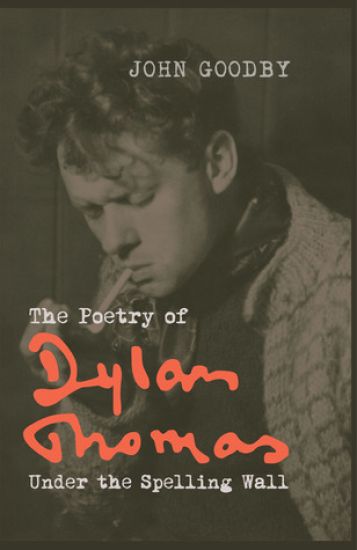
The Poetry of Dylan Thomas

The Poetry of Dylan Thomas

John Goodby

Liverpool University Press
2014
nidottu
Published in anticipation of the centenary of the poet’s birth, The Poetry of Dylan Thomas is the first study of the poet to show how his work may be read in terms of contemporary critical concerns, using theories of modernism, the body, gender, the carnivalesque, language, hybridity and the pastoral in order to view it in an original light. Moreover, in presenting a Dylan Thomas who has real significance for twenty-first century readers, it shows that such a reappraisal also requires us to re-think some of the ways in which all post-Waste Land British poetry has been read in the last few decades.
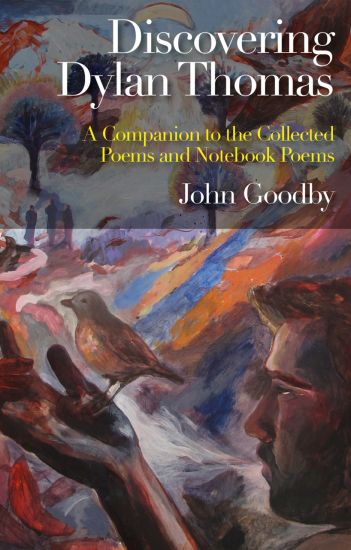
Discovering Dylan Thomas

Discovering Dylan Thomas

John Goodby

University of Wales Press
2017
nidottu
Discovering Dylan Thomas is a companion to Dylan Thomas’s published and notebook poems. It includes hitherto-unseen material contained in the recently-discovered fifth notebook, alongside poems, drafts and critical material including summaries of the critical reception of individual poems. The introductory essay considers the task of editing and annotating Thomas, the reception of the Collected Poems and the state of the Dylan Thomas industry, and the nature of Thomas’s reading, ‘influences’, allusions and intertextuality. It is followed by supplementary poems, including juvenilia and the notebook poems ‘The Woman Speaks’, original versions of ‘Grief thief of time’ and ‘I fellowed sleep’, and ‘Jack of Christ’, all of which were omitted from the Collected Poems. These are followed by annotations beginning with a discussion of Thomas’s juvenilia, and the relationship between plagiarism and parody in his work; poem-by-poem entries offer glosses, new material from the fifth notebook, critical histories for each poem, and variants of poems such as ‘Holy Spring’ and ‘On a Wedding Anniversary’ (including a magnificent, previously unpublished first draft of ‘A Refusal to Mourn’). The closing appendices deal with text and publication details for the collections Thomas published in his lifetime, the provenance and contents of the fifth notebook, and errata for the hardback edition of the Collected Poems.
The Poetry of Dylan Thomas

The Poetry of Dylan Thomas

John Goodby

Liverpool University Press
2013
sidottu
Published in anticipation of the centenary of the poet’s birth, The Poetry of Dylan Thomas is the first study of the poet to show how his work may be read in terms of contemporary critical concerns, using theories of modernism, the body, gender, the carnivalesque, language, hybridity and the pastoral in order to view it in an original light. Moreover, in presenting a Dylan Thomas who has real significance for twenty-first century readers, it shows that such a reappraisal also requires us to re-think some of the ways in which all post-Waste Land British poetry has been read in the last few decades.
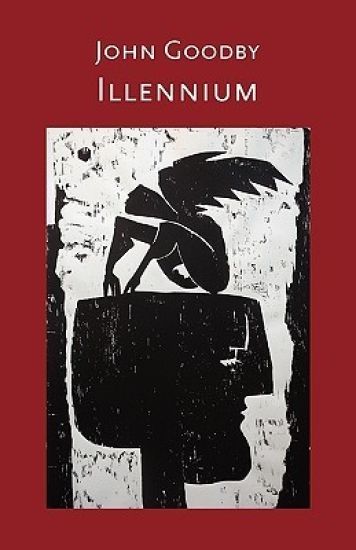
Illennium

Illennium

John Goodby

Shearsman Books
2010
pokkari
Set in 'South-Wets Wales' Illennium is a cut-up sonnet sequence which draws on recent theories about the social role of shame, as it kaleidoscopically traces the trajectory of a romantic attachment across a tangle of shifting friendships. Mixing disease and end-of-era career discontents, the personal and the personnel, its narratives constantly cohere and fracture under the blown down sign of The No Sign bar, a local watering-hole. Indeed, the more shameless the embarrassment of literary riches the poem shores up, from Shakespeare to Berrigan, Laforgue to Keats, Rimbaud to Dafydd ap Gwilym, the more the chances of emotional and poetic plenitude seem to be thwarted by 'silences stubbed out' on an 'I for an I / in the very temple of delight'. Yet, if the intersection of a personal pathology with the public ones of Clinton's Washington or Blair's Balkans disturbs us here by virtue of its apparent superficiality, it noneless sharply raises the question of how much we really wish to conceal what we think we (really) feel.Moreover, for all its fears of the 'dork inability' of the poet, even of poetry itself, to resist abject collapse, Illennium cannot help being brazen either, revealing itself over and over again to be a peach-succulent, recklessly playful work, whose blushful excesses bear witness to the 'brilliantly pointless' energies of language in lyric form.
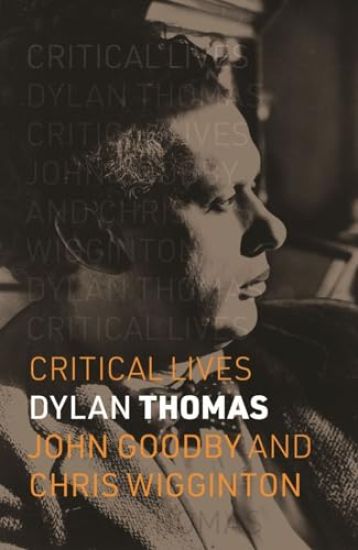
Dylan Thomas

Dylan Thomas

John Goodby; Chris Wigginton

REAKTION BOOKS
2024
nidottu
This concise biography of Dylan Thomas incorporates the most recent research, challenging the legend of the dissolute bard to reveal a diligent, professional writer, author of some of the century’s greatest lyric poetry as well as short stories, film-scripts, letters and what is commonly agreed to be the greatest radio feature ever broadcast, Under Milk Wood. Thomas is viewed primarily through the lens of his writing, and his hybrid Anglo-Welsh origins are shown to be the source of his daring stylistic inventiveness. His work is set in its historical, cultural and social contexts – Depression-era Wales and 1930s literary London, Surrealism, the rise of fascism, the Second World War and the Blitz, and the Cold War – charting the path towards his final works, which offer a unique fusion of high art and popular culture.