Kirjojen hintavertailu. Mukana 12 369 981 kirjaa ja 12 kauppaa.

Kirjahaku

Etsi kirjoja tekijän nimen, kirjan nimen tai ISBN:n perusteella.

6 kirjaa tekijältä John H. Bodley

Anthropology and Contemporary Human Problems

Anthropology and Contemporary Human Problems

John H. Bodley

AltaMira Press,U.S.
2012
sidottu
We live in a time of global mega-problems of unsustainable growth and consumption, resource depletion, ecosystem degradation, global warming, escalating energy costs, poverty, and conflict. Cultural anthropologist John H. Bodley trenchantly critiques these most pressing issues and shows how anthropology makes it possible to find solutions. The focus on culture scale suggests that many solutions may be found by developing local communities supported by regional markets and ecosystems, rather than by making the continuous accumulation of financial capital the dominant cultural process throughout the world. Now in its sixth edition, this classic textbook continues to have tremendous relevance and is more timely than ever in light of the recent global economic crisis. It exposes readers to the problems of a world out of balance with misdirected growth by the elite. Bodley offers examples from prehistoric and modern tribal societies along side of ancient imperial and contemporary commercial societies. Students will find this to be the trusted source to build a world view. Anthropology and Contemporary Human Problems is ideal for adoption in anthropology and sociology courses on globalization, cultural ecology, social class and inequality, the environment, sustainability, and development.

Anthropology and Contemporary Human Problems

Anthropology and Contemporary Human Problems

John H. Bodley

AltaMira Press,U.S.
2012
nidottu
We live in a time of global mega-problems of unsustainable growth and consumption, resource depletion, ecosystem degradation, global warming, escalating energy costs, poverty, and conflict. Cultural anthropologist John H. Bodley trenchantly critiques these most pressing issues and shows how anthropology makes it possible to find solutions. The focus on culture scale suggests that many solutions may be found by developing local communities supported by regional markets and ecosystems, rather than by making the continuous accumulation of financial capital the dominant cultural process throughout the world. Now in its sixth edition, this classic textbook continues to have tremendous relevance and is more timely than ever in light of the recent global economic crisis. It exposes readers to the problems of a world out of balance with misdirected growth by the elite. Bodley offers examples from prehistoric and modern tribal societies along side of ancient imperial and contemporary commercial societies. Students will find this to be the trusted source to build a world view. Anthropology and Contemporary Human Problems is ideal for adoption in anthropology and sociology courses on globalization, cultural ecology, social class and inequality, the environment, sustainability, and development.

The Small Nation Solution

The Small Nation Solution

John H. Bodley

AltaMira Press,U.S.
2013
sidottu
In The Small Nation Solution, eminent anthropologist John H. Bodley argues that the contemporary global problems of poverty, conflict, and environmental degradation are problems of scale and power. Bodley’s solution involves keeping nations small so as to limit the power of elite directors. It is a simple idea with profound implications. He spotlights successful small nations around the world as the best working models of sustainable sociocultural systems and shows how these diverse small nations can be the building blocks of a transformed global system that could save the world.
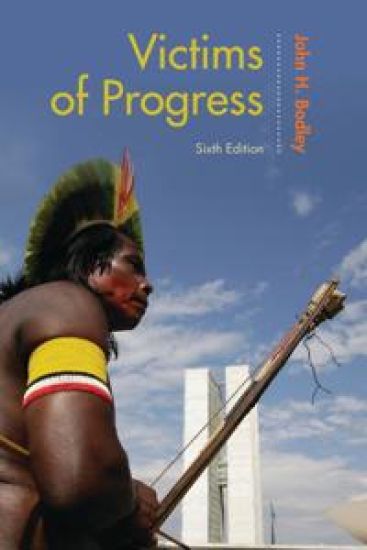
Victims of Progress

Victims of Progress

John H. Bodley

Rowman Littlefield
2014
sidottu
Victims of Progress, now in its sixth edition, offers a compelling account of how technology and development affect indigenous peoples throughout the world. Bodley’s expansive look at the struggle between small-scale indigenous societies, and the colonists and corporate developers who have infringed their territories reaches from 1800 into today. He examines major issues of intervention such as social engineering, economic development, self-determination, health and disease, global warming, and ecocide. Small-scale societies, Bodley convincingly demonstrates, have survived by organizing politically to defend their basic human rights. Providing a provocative context in which to think about civilization and its costs—shedding light on how we are all victims of progress—the sixth edition features expanded discussion of “uprising politics,” Tebtebba (a particularly active indigenous organization), and voluntary isolation. A wholly new chapter devotes full coverage to the costs of global warming to indigenous peoples in the Pacific and the Arctic. Finally, new appendixes guide readers to recent protest petitions as well as online resources and videos.
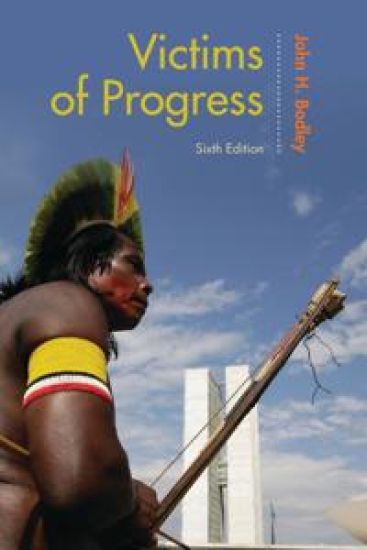
Victims of Progress

Victims of Progress

John H. Bodley

Rowman Littlefield
2014
nidottu
Victims of Progress, now in its sixth edition, offers a compelling account of how technology and development affect indigenous peoples throughout the world. Bodley’s expansive look at the struggle between small-scale indigenous societies, and the colonists and corporate developers who have infringed their territories reaches from 1800 into today. He examines major issues of intervention such as social engineering, economic development, self-determination, health and disease, global warming, and ecocide. Small-scale societies, Bodley convincingly demonstrates, have survived by organizing politically to defend their basic human rights. Providing a provocative context in which to think about civilization and its costs—shedding light on how we are all victims of progress—the sixth edition features expanded discussion of “uprising politics,” Tebtebba (a particularly active indigenous organization), and voluntary isolation. A wholly new chapter devotes full coverage to the costs of global warming to indigenous peoples in the Pacific and the Arctic. Finally, new appendixes guide readers to recent protest petitions as well as online resources and videos.
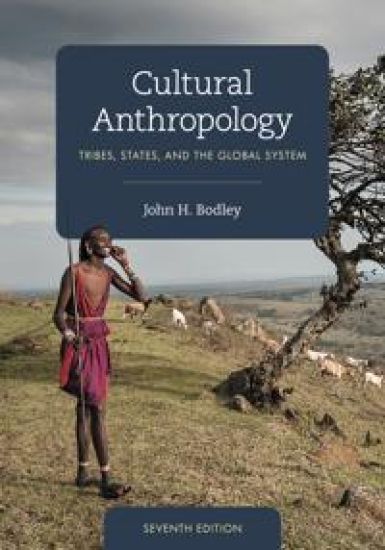
Cultural Anthropology

Cultural Anthropology

John H. Bodley

Rowman Littlefield
2019
nidottu
In introducing basic concepts of cultural anthropology, Bodley challenges students to consider "big questions" about the nature of cultural systems, to explore relationships between growth, scale, and power, and to critically assess how commercialization, development, humanitarian concerns, and environmental issues are affecting our global future.