Kirjojen hintavertailu. Mukana 11 717 486 kirjaa ja 12 kauppaa.

Kirjahaku

Etsi kirjoja tekijän nimen, kirjan nimen tai ISBN:n perusteella.

4 kirjaa tekijältä John H. Perkins

Geopolitics and the Green Revolution

Geopolitics and the Green Revolution

John H. Perkins

Oxford University Press Inc
1998
sidottu
Cereal grains like wheat and rice are important, because they are the basis of most food supplies. Yields of such crops have increased dramatically during the past 100 years and especially since 1950, leading to what was often called the Green Revolution. This book examines why the United States, India, Britain and Mexico each sought to develop high yield wheat production. Although the increase in yield has been attributed to plant breeding science, security concerns and management of foreign exchange were prime motivators of the new technologies. This relationship has not been previously developed in studies of agricultural modernization, and will plague future efforts to make agriculture equitable and sustainable.

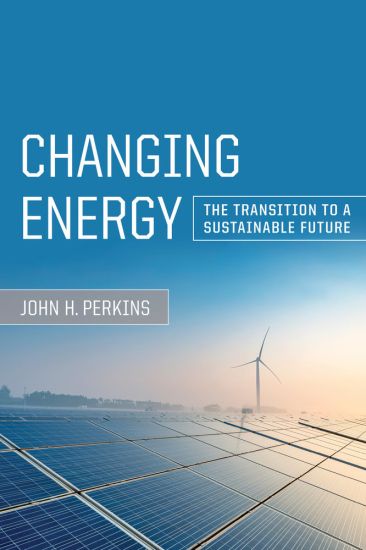
Changing Energy

Changing Energy

John H. Perkins

University of California Press
2017
sidottu
Changing Energy outlines how humanity came to its current energy economy through three previous energy transitions and now stands poised for a necessary fourth one. Despite the immense benefits conferred by a global energy economy based primarily on coal, oil, gas, and uranium, societies must now rebuild their energy economies to rely as much as possible on renewable energy used efficiently. This imperative to change comes from the risks of climate change plus the dangers of geopolitical tensions, health and environmental effects, and the long-term prospects for ever depleting sources of today's energy sources. Changing Energy argues that sustainability of the benefits from energy services will come from investments made in the technologies of the fourth transition. Perkins envisions a viable post-fossil fuel energy economy and outlines the barriers that must be resolved to reach it.
Changing Energy

Changing Energy

John H. Perkins

University of California Press
2017
pokkari
Changing Energy outlines how humanity came to its current energy economy through three previous energy transitions and now stands poised for a necessary fourth one. Despite the immense benefits conferred by a global energy economy based primarily on coal, oil, gas, and uranium, societies must now rebuild their energy economies to rely as much as possible on renewable energy used efficiently. This imperative to change comes from the risks of climate change plus the dangers of geopolitical tensions, health and environmental effects, and the long-term prospects for ever depleting sources of today's energy sources. Changing Energy argues that sustainability of the benefits from energy services will come from investments made in the technologies of the fourth transition. Perkins envisions a viable post-fossil fuel energy economy and outlines the barriers that must be resolved to reach it.
Insects, Experts, and the Insecticide Crisis

Insects, Experts, and the Insecticide Crisis

John H. Perkins

Springer-Verlag New York Inc.
2013
nidottu
Science and technology are cultural phenomena. Expert knowledge is generated amid the conflicts of a society and in turn supplies fuel to fire yet further change and new clashes. This essay on economic entomology is a case study on how cultural events and forces affected the creation of scientific and technical knowledge. The time period emphasized is 1945 to 1980. My initial premises for selecting relevant data for the story were ultimately not of much use. Virtually all debates about insect control since 1945 have been centered around the environmental and health hazards associated with insecticides. My first but inadequate conclusion was that the center of interest lay between those who defended the chemicals and those who advocated the use of nonchemical control methods. With this formulation of the problem, I was drawn to an analysis of how the chemical manufacturers had managed to dominate and even corrupt the work of entomological scientists, farmers, members of Congress, and regulators in the USDA and EPA. My own contribu­ tions to a policy study at the National Academy of Sciences were based 1 on this premise. More recently, Robert van den Bosch developed the 2 "corruption theme" in considerable detail.