Kirjojen hintavertailu. Mukana 11 627 362 kirjaa ja 12 kauppaa.

Kirjahaku

Etsi kirjoja tekijän nimen, kirjan nimen tai ISBN:n perusteella.

3 kirjaa tekijältä John H. Schroeder

Shaping a Maritime Empire

Shaping a Maritime Empire

John H. Schroeder

Praeger Publishers Inc
1985
sidottu
John H. Schroeder chronicles the expansion of the American Navy's peacetime role in developing the nation's overseas commercial empire during the thirty years before the Civil War. He demonstrates how the rapid acceleration of American commercial activity around the world increased pressure on the Navy to meet new economic and political demands. He analyzes how the Navy's haphazard development in the antebellum years paralleled and interacted with commercial activity, and how the end result impacted dramatically on the economic development of the United States.
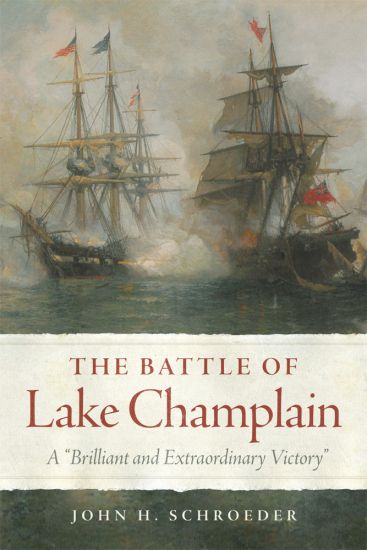
The Battle of Lake Champlain

The Battle of Lake Champlain

John H. Schroeder

University of Oklahoma Press
2015
sidottu
On September 11, 1814, an American naval squadron under Master Commandant Thomas Macdonough defeated a formidable British force on Lake Champlain under the command of Captain George Downie, effectively ending the British invasion of the Champlain Valley during the War of 1812. This decisive battle had far-reaching repercussions in Canada, the United States, England, and Ghent, Belgium, where peace talks were under way. Examining the naval and land campaign in strategic, political, and military terms, from planning to execution to outcome, The Battle of Lake Champlain offers the most thorough account written of this pivotal moment in American history. For decades the Champlain corridor - a direct and accessible invasion route between Lower Canada and the northern United States - had been hotly contested in wars for control of the region. In exploring the crucial issue of why it took two years for the United States and Britain to confront each other on Lake Champlain, historian John H. Schroeder recounts the war's early years, the failed U.S. invasions of Canada in 1812 and 1813, and the ensuing naval race for control of the lake in 1814. To explain how the Americans achieved their unexpected victory, Schroeder weighs the effects on both sides of preparations and planning, personal valor and cowardice, command decisions both brilliant and ill-conceived, and sheer luck both good and bad. Previous histories have claimed that the War of 1812 ended with Andrew Jackson's victory at the Battle of New Orleans. Schroeder demonstrates that the United States really won the war four months before - at Plattsburgh on Lake Champlain. Through a comprehensive analysis of politics and diplomacy, Schroeder shows that the victory at Lake Champlain prompted the British to moderate their demands at Ghent, bringing the war directly and swiftly to an end before Jackson's spectacular victory in January 1815.
The Battle of Lake Champlain

The Battle of Lake Champlain

John H. Schroeder

UNIVERSITY OF OKLAHOMA PRESS
2023
nidottu
On September 11, 1814, an American naval squadron under Master Commandant Thomas Macdonough defeated a formidable British force on Lake Champlain under the command of Captain George Downie, effectively ending the British invasion of the Champlain Valley during the War of 1812. This decisive battle had far-reaching repercussions in Canada, the United States, England, and Ghent, Belgium, where peace talks were under way. Examining the naval and land campaign in strategic, political, and military terms, from planning to execution to outcome, The Battle of Lake Champlain offers the most thorough account written of this pivotal moment in American history. For decades the Champlain corridor—a direct and accessible invasion route between Lower Canada and the northern United States—had been hotly contested in wars for control of the region. In exploring the crucial issue of why it took two years for the United States and Britain to confront each other on Lake Champlain, historian John H. Schroeder recounts the war’s early years, the failed U.S. invasions of Canada in 1812 and 1813, and the ensuing naval race for control of the lake in 1814. To explain how the Americans achieved their unexpected victory, Schroeder weighs the effects on both sides of preparations and planning, personal valor and cowardice, command decisions both brilliant and ill-conceived, and sheer luck both good and bad. Previous histories have claimed that the War of 1812 ended with Andrew Jackson’s victory at the Battle of New Orleans. Schroeder demonstrates that the United States really won the war four months before—at Plattsburgh on Lake Champlain. Through a comprehensive analysis of politics and diplomacy, Schroeder shows that the victory at Lake Champlain prompted the British to moderate their demands at Ghent, bringing the war directly and swiftly to an end before Jackson’s spectacular victory in January 1815.