Kirjojen hintavertailu. Mukana 11 516 277 kirjaa ja 12 kauppaa.

Kirjahaku

Etsi kirjoja tekijän nimen, kirjan nimen tai ISBN:n perusteella.

13 kirjaa tekijältä John Haines

Film Music

Film Music

John Haines

OXFORD UNIVERSITY PRESS INC
2022
nidottu
Film Music: An Introduction in 11 Takes is an introduction to film music that is global in scope as well as practical in outlook, featuring dozens of interviews with film industry insiders. This textbook teaches today's student how to better understand the conventions of film music in a global and musical context. Film Music's practical approach introduces students to a range of topics; each chapter features a full-length interview with one music professional, discussion of a musical product specific to the chapter's time period (like sheet music or DVD), one composer, one singer, a film genre, a musical instrument and two countries outside the United States.
Music in Films on the Middle Ages
This book explores the role of music in the some five hundred feature-length films on the Middle Ages produced between the late 1890s and the present day. Haines focuses on the tension in these films between the surviving evidence for medieval music and the idiomatic tradition of cinematic music. The latter is taken broadly as any musical sound occurring in a film, from the clang of a bell off-screen to a minstrel singing his song. Medieval film music must be considered in the broader historical context of pre-cinematic medievalisms and of medievalist cinema’s main development in the course of the twentieth century as an American appropriation of European culture. The book treats six pervasive moments that define the genre of medieval film: the church-tower bell, the trumpet fanfare or horn call, the music of banquets and courts, the singing minstrel, performances of Gregorian chant, and the music that accompanies horse-riding knights, with each chapter visiting representative films as case studies. These six signal musical moments, that create a fundamental visual-aural core central to making a film feel medieval to modern audiences, originate in medievalist works predating cinema by some three centuries.
Living Off the Country

Living Off the Country

John Haines

The University of Michigan Press
1981
nidottu
When he was a homesteader in Alaska, poet John Haines moved away from language and institutions to an older and simpler existence. In solitude, listening to his own voice, the events of his life reached into the past and the future.We live on the surface, he discovered. It is the land that makes people. If a poet will see, will feel, will interpret his place and then relate that experience to what he knows of the world at large, he will have a life in imagination, a vitality beyond appearances.John Haines is author of At the End of Summer: Poems 1948-1954; Fables and Distances: New and Selected Essays; and The Owl in the Mask of the Dreamer. He received the Lenore Marshall Poetry Prize in 1991.
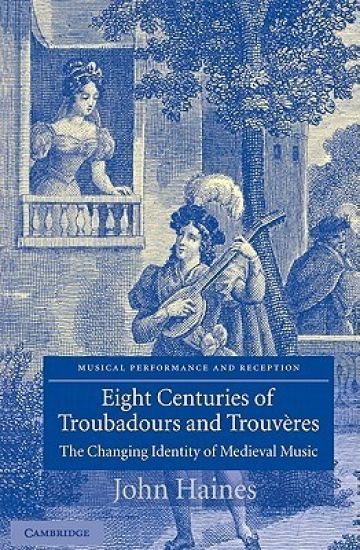
Eight Centuries of Troubadours and Trouveres

Eight Centuries of Troubadours and Trouveres

John Haines

Cambridge University Press
2009
nidottu
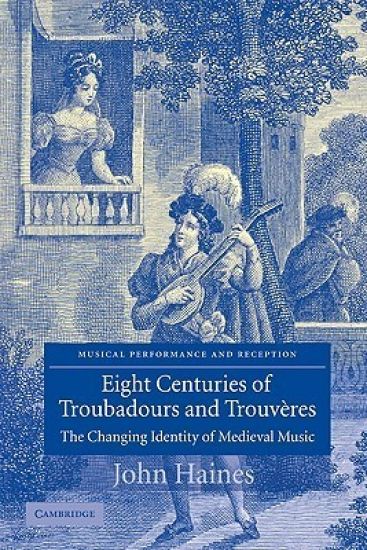
This 2004 book traces the changing interpretation of troubadour and trouvere music, a repertoire of songs which have successfully maintained public interest for eight centuries, from the medieval chansonniers to contemporary rap renditions. A study of their reception therefore serves to illustrate the development of the modern concept of 'medieval music'. Important stages include sixteenth-century antiquarianism, the Enlightenment synthesis of scholarly and popular traditions and the infusion of archaeology and philology in the nineteenth century, leading to more recent theories on medieval rhythm. More often than now, writers and performers have negotiated a compromise between historical research and a more imaginative approach to envisioning the music of troubadours and trouveres. This book points not so much to a resurrection of medieval music in modern times as to a continuous tradition of interpreting these songs over eight centuries.
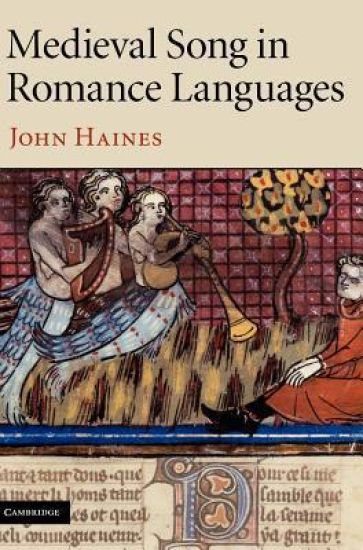
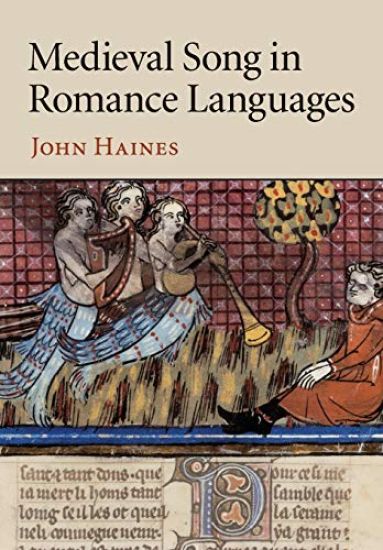
Medieval Song in Romance Languages

Medieval Song in Romance Languages

John Haines

Cambridge University Press
2010
sidottu
In this book, John Haines presents a detailed survey of songs performed in Vulgar Latin and early Romance languages from around 500 to 1200. The first part of the book discusses this enormous body of neglected songs according to the categories of lament, love song, epic and devotional song. Medieval sources - mostly condemnations - ranging from sermons to chronicles attest to the long life and popularity of this music performed all throughout this period, and predominantly by women. Performance contexts range from the burial of the dead to the nursing of infants. The study argues for the reinstatement of female vernacular song in the mainstream of medieval music historiography and ends with a discussion of the neglected medieval lullaby. The second part of the book presents an edition and informative commentary of the dozen surviving witnesses with musical notation in the early Romance period prior to 1200.
Eight Centuries of Troubadours and Trouvères

Eight Centuries of Troubadours and Trouvères

John Haines

Cambridge University Press
2004
sidottu
This 2004 book traces the changing interpretation of troubadour and trouvere music, a repertoire of songs which have successfully maintained public interest for eight centuries, from the medieval chansonniers to contemporary rap renditions. A study of their reception therefore serves to illustrate the development of the modern concept of 'medieval music'. Important stages include sixteenth-century antiquarianism, the Enlightenment synthesis of scholarly and popular traditions and the infusion of archaeology and philology in the nineteenth century, leading to more recent theories on medieval rhythm. More often than now, writers and performers have negotiated a compromise between historical research and a more imaginative approach to envisioning the music of troubadours and trouveres. This book points not so much to a resurrection of medieval music in modern times as to a continuous tradition of interpreting these songs over eight centuries.
The Last New Land

The Last New Land

John Haines

Alaska Northwest Books
2009
pokkari
Praise for The Last New Land Mergler, an Alaskan since l968 and a writer and teacher by profession, has blended his love for literature and his attachment to Alaska in one literary extravaganza. This exceptional anthology provides an exciting and comprehensive overview of the state and the scope and diversity of its literature....An enchanting sampler. - Library Journal A distinctive and engaging frontier tone, perhaps uniquely American, pervades throughout. - Publishers Weekly ...a handsomely produced anthology of stories about Alaska. Seventy-five writers ponder the grand, untrammeled beauty and tenacious cultures of this vast, still mysterious frontier...Each selection reveals a different facet of life in this harsh yet liberating land. - Booklist Alaska is a land of bitter cold, brilliant light shows in the sky, sunny summer nights, and magnificent wilderness-a worthy destination for gold seekers, rugged explorers, and adventuresome travelers. To do a little exploring of your own, leave your parka in the closet and take out The Last New Land, a collection of stories about Alaska from prehistory to present. -Hemispheres Natural history, legends, Native heritage, history, adventure, and autobiography are all a part of this hefty, impressive volume. - The Bloomsbury Review A book that can be dipped into again and again like a sparkling barrel of rain water, refreshing on each successive dip. - Writers NW Many of the best finds in The Last New Land are the voices of natives and less-famous writers, whose perspectives add depth and breadth to the Alaskan experience. - The Twin Cities Reader A milestone in Alaska literature. -The (Kenai, AK) Peninsula Clarion It's an ambitious compilation of stories and excerpts that range from legends to hunts, survival stories to current activities and stories centered on the environment. -The Herald Use this as an excellent literary introduction to Alaska writing, gathering classics of the north and blending in Native tales and legends to provide a fine, well-rounded view of the atmosphere and concerns of the north. This is an excellent collection of diverse impressions which together creates a literary and social observation of Alaska and its peoples. -Midwest Book Review
Danny Mo a Novel

Danny Mo a Novel

John Haines

Chambers Street Press
2011
pokkari
"Maybe the best novel about golf ever written."-- Gary D'Amato, Milwaukee Journal Sentinel "There are legendary tales that transcend sport, and John Haines' Danny Mo does just this with humor, heartbreak, triumph, and truth. With a tip of the visor to Dan Jenkins, it's a dead solid perfect debut." -- Gary Van Sickle, Sports Illustrated senior writer The characters in Danny Mo are entertaining, vulnerable, faulted and frequently hilarious. And though the story may revolve around a game, life 's bigger questions are not excluded. Danny Mo would make a hell of a movie John Ehle, GolfWisconsin.comDANNY MORAN found it fun and freeing to rank himself "top-five worldwide" at life's more mundane tasks (sorting socks, opening stubborn jar lids, etc.) while embracing the joys and challenges of family life, running a business, and preserving his legendary status in competitive amateur golf. But when long-made plans are destroyed and longer-held routines are rendered meaningless, it marks the beginning of a brand new life for Danny Mo.After three years away from golf to deal with a world he never could have anticipated, Danny returns to competition and to his hometown for one more, mostly ceremonial, appearance in the State Open. The championship is to be held at a controversial new course, The Majesty in Rock Harbor, situated along the bayside bluffs and dramatic shoreline property of Wisconsin's famed Door County. Possessing a significant advantage with his knowledge of the land, Danny acts on a long-harbored temptation and attempts something in the final round of the Open that no one - not Tiger, not Phil, nor Jack nor Arnie in their prime - could even think of pulling off. What transpires stuns the harbor community and puts Danny at the center of a national story in Sport's Illustrated that, even as it informs and enlightens, creates far more questions than it answers. Family, health, work and a passion for sports and competition are precariously balanced against elements of faith, regret, mortality and infinite possibility in a familiar world that becomes harder to recognize as the challenges mount. Yet hope remains and redemption beckons for a family galvanized by love and loathing and come what may.
Music in Films on the Middle Ages

Music in Films on the Middle Ages

John Haines

TAYLOR FRANCIS LTD
2024
nidottu
This book explores the role of music in the some five hundred feature-length films on the Middle Ages produced between the late 1890s and the present day. Haines focuses on the tension in these films between the surviving evidence for medieval music and the idiomatic tradition of cinematic music. The latter is taken broadly as any musical sound occurring in a film, from the clang of a bell off-screen to a minstrel singing his song. Medieval film music must be considered in the broader historical context of pre-cinematic medievalisms and of medievalist cinema’s main development in the course of the twentieth century as an American appropriation of European culture. The book treats six pervasive moments that define the genre of medieval film: the church-tower bell, the trumpet fanfare or horn call, the music of banquets and courts, the singing minstrel, performances of Gregorian chant, and the music that accompanies horse-riding knights, with each chapter visiting representative films as case studies. These six signal musical moments, that create a fundamental visual-aural core central to making a film feel medieval to modern audiences, originate in medievalist works predating cinema by some three centuries.
Medieval Song in Romance Languages

Medieval Song in Romance Languages

John Haines

Cambridge University Press
2017
pokkari
In this book, John Haines presents a detailed survey of songs performed in Vulgar Latin and early Romance languages from around 500 to 1200. The first part of the book discusses this enormous body of neglected songs according to the categories of lament, love song, epic and devotional song. Medieval sources - mostly condemnations - ranging from sermons to chronicles attest to the long life and popularity of this music performed all throughout this period, and predominantly by women. Performance contexts range from the burial of the dead to the nursing of infants. The study argues for the reinstatement of female vernacular song in the mainstream of medieval music historiography and ends with a discussion of the neglected medieval lullaby. The second part of the book presents an edition and informative commentary of the dozen surviving witnesses with musical notation in the early Romance period prior to 1200.
At the End of this Summer

At the End of this Summer

John Haines

Copper Canyon Press
1997
pokkari
Previously unpublished poems from the distinguished poet's early career exhibit the imaginative clarity and intelligence that characterized the next fifty years of his writing from his famous homestead near Fairbanks, Alaska. Original. IP.
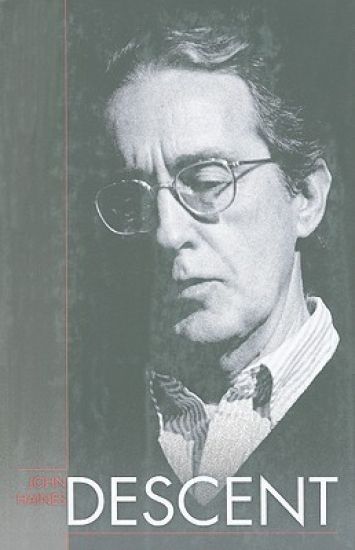
Descent

Descent

John Haines

CavanKerry Press
2010
nidottu
This volume bears witness to John Haines's position as a true man of letters. The essays, reviews, chronicles, memoirs, and poems (spanning four decades) testify to the breadth and depth of his concerns. The life – rooted for decades in Alaska – and the writing are bound together inextricably…What interests Haines throughout the various modes represented in this volume is to clear away the numerous confusing, self-justifying and downright mendacious vapors that surround various human projects – be it drilling for oil or writing poems. He is a critic in the pure sense – a truth teller who has no use for relativism. Haines's voice is an intensely American voice in the sense that it insists we can be connected to the land in ways that may redeem and vivify us. It insists that the place of poetry is central not peripheral. This volume adds to the trove that Haines has bequeathed us.