Kirjojen hintavertailu. Mukana 11 342 296 kirjaa ja 12 kauppaa.

Kirjahaku

Etsi kirjoja tekijän nimen, kirjan nimen tai ISBN:n perusteella.

20 kirjaa tekijältä John Hanson Mitchell

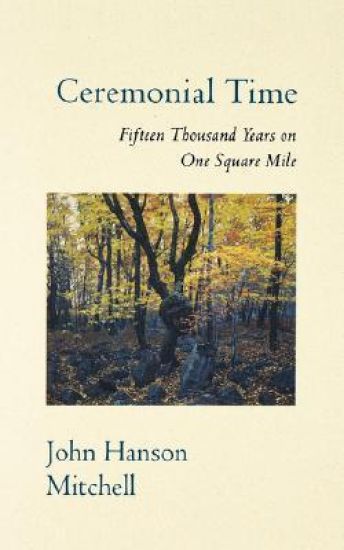
Ceremonial Time

Ceremonial Time

John Hanson Mitchell

Counterpoint
1997
nidottu
Ceremonial time is the moment when past, present, and future can be perceived simultaneously. Experienced only rarely, usually during ancient dances or rituals, this escape from time is the gift of John Mitchells extraordinary writing. In this, his most magical book, he traces the life on a single spot in New England from the last ice age through years of Indians, shamans, and bears, to the colonists, witches and farmers, and now the encroaching parks.
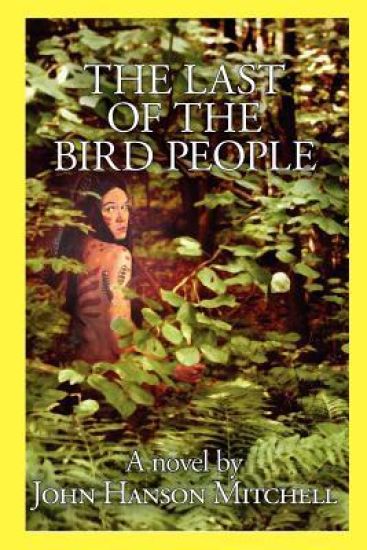
The Last of the Bird People

The Last of the Bird People

John Hanson Mitchell

ISCSPress
2012
pokkari
In 1928, Massachusetts water authorities began land takings for the construction of the Quabbin Reservoir, in the Swift River Valley. Unknown to the authorities was the fact that, subsisting in the more remote, forested tracts of the valley, there was a secretive band of mixed-race hunter-gatherers who had been there for over ten generations. Mitchell's book is the story of the exodus of this tribe and the young anthropologist who first discovers them. The novel takes the form of a legal deposition, taken at the Everglades City Court House, in 1929, concerning the fate of these people. John Hanson Mitchell (http://johnhansonmitchell.com/) is the author of Ceremonial Time: Fifteen Thousand Years on Once Square Mile (Counterpoint) and eight other books on cultural and environmental history, the most recent of which is The Paradise of All These Parts, A Natural History of Boston (Beacon Press). He is also the creator and editor of the award-winning magazine, "Sanctuary", published by the Massachusetts Audubon Society.
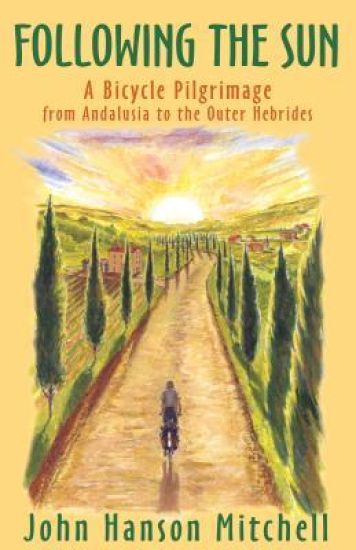
Following the Sun

Following the Sun

John Hanson Mitchell

Open Road Media
2015
pokkari
Author John Hanson Mitchell recounts a marathon bicycle trek from Andalusia to the Outer Hebrides, tracing solar myths, sun cults, birds, and flowering plants all along the way.
An Eden of Sorts

An Eden of Sorts

John Hanson Mitchell

Countryman Press Inc.
2013
sidottu
Twenty-five years ago Mitchell cut down a 1 1/2-acre stand of 75-year-old white pines and planted a garden in their place. AN EDEN OF SORTS is a history of the plants and animals that lived on the tract over the next decades, including two generations of half-wild children! What started out as a plot with no more that five or six flowering plants and shrubs, over the years grew into more than a thousand species of plants and animals inhabiting the property. This is a paradoxical yet hopeful narrative of what can happen to a plot of land when it is properly managed.
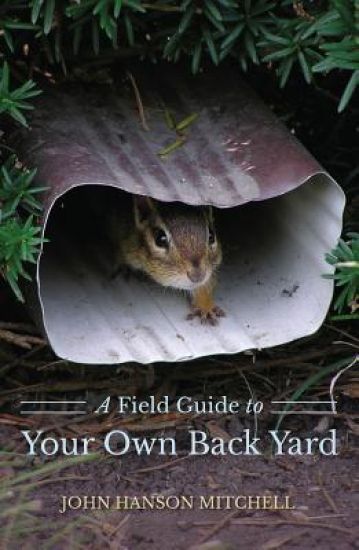
A Field Guide to Your Own Back Yard

A Field Guide to Your Own Back Yard

John Hanson Mitchell

Countryman Press Inc.
2014
nidottu
“If there is grass and a few scraggling trees, there will be wildlife,” suggests John Hanson Mitchell, an internationally recognized naturalist and advocate for tuning your senses to the wonders of your environment. Whether your yard consists of a small stretch of grass or a rambling mix of forest and field, Mitchell will introduce you to the wealth of plants, insects, and animals that share your corner of the world. Learn how the behavior at the birdfeeder mirrors that of the wild woods; get an inside view of the rich ecology of the woodpile; learn why you might want to welcome a skunk into your garden. In short, you’ll get to know the neighbors you never knew you had who make their homes all around yours. With wisdom and humor, this book reacquaints you with the denizens of your own local habitat.
Following The Sun

Following The Sun

John Hanson Mitchell

Counterpoint
2002
sidottu
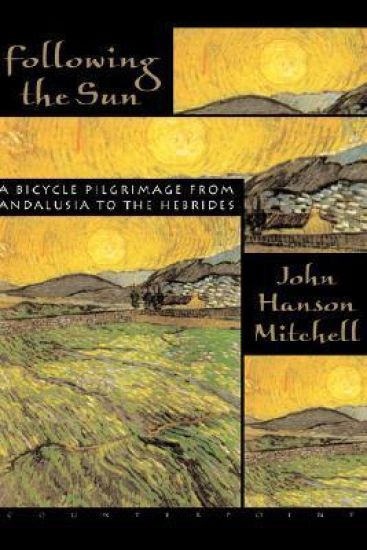
An entrancing, sun-drenched bicycle journey, from the beaches of southern Spain to solar temples in the Outer Hebrides. In this great feast of armchair travel, John Hanson Mitchell tells of his fifteen-hundred-mile ride on a trusty old Peugeot bicycle from the port of Cadiz to just below the Arctic Circle. He follows the European spring up through southern Spain, the wine and oyster country near Bordeaux, to Versailles (the palace of the "Sun King"), Wordsworth's Lake District, precipitous Scottish highlands, and finally to a Druid temple on the island of Lewis in the Hebrides, a place where Midsummer is celebrated in pagan majesty as the near-midnight sun dips and then quickly rises over the horizon. In true John Mitchell fashion this journey is interspersed with myth, natural history, and ritual, all revolving around the lure and lore of the sun, culturally and historically. The journey is as delicious as it is fascinating, with an appeal for all those who look south in February and are drawn to dunes, picnics under castle walls, spring flowers, terraced vineyards, Moorish outposts, magic and celebrations. In short, to everything under the sun. A Merloyd Lawrence Book
Wildest Place On Earth

Wildest Place On Earth

John Hanson Mitchell

Counterpoint
2002
nidottu
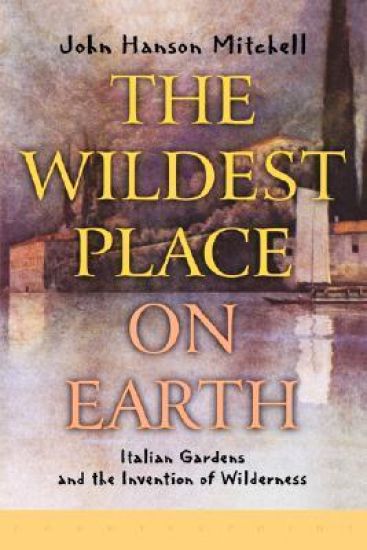
A captivating journey to uncover the essence of wilderness, by one of this country's most original nature writers. In The Wildest Place on Earth Mitchell sets out on a journey to uncover the essence of wilderness. Instead of traveling to remote, untamed parts of the world, Mitchell ends up exploring the green realms of his childhood and the gardens of Italy. He is pulled inward and toward home, back to what Thoreau called "contact"--an abiding, enduring, and daily connection with the world. He comes to realize that the wildest place may be right in his own backyard.A Merloyd Lawrence Book
The Rose Cafe

The Rose Cafe

John Hanson Mitchell

Counterpoint
2008
nidottu
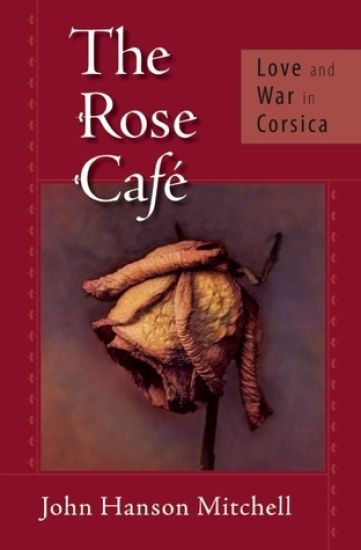
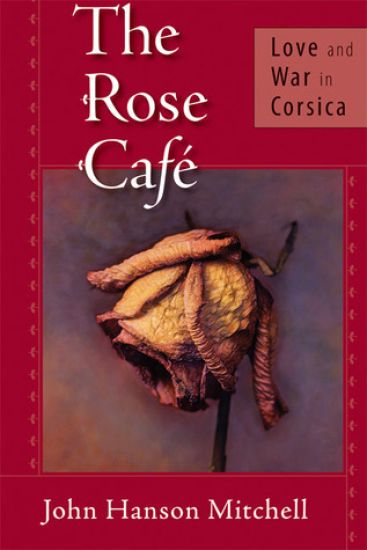
John Hanson Mitchell recounts his time in the isolated backcountry of Corsica in 1962. While working (illegally) at the Rose Cafe in Ile Rouse, Mitchell spent his days observing the lives of the regulars: a local group of card players, colorful reprobates from the continent, and a younger crowd of fellow students, all spellbound by the lush charms of the island. Depicting the pivotal role that his time in Corsica played in his own development as a writer, Mitchell captures the rhythms and intrigues of a life lived elsewhere.
Looking For Mr. Gilbert

Looking For Mr. Gilbert

John Hanson Mitchell

Counterpoint
2004
sidottu
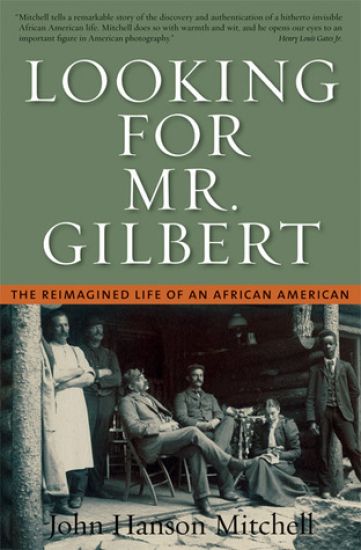
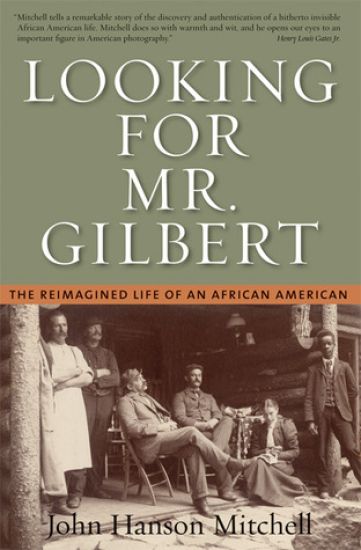
In the mid-1970s, John Hanson Mitchell discovered over two thousand antique glass plate negatives in the attic of an estate in Massachusetts. At the time, he believed the photographs to be the work of William Brewster, the nineteenth century ornithologist and conservationist. As a result of a tip from a Harvard research assistant, Mitchell came to believe that the plates were not the work of Brewster, but of his assistant, a little-known African American named Robert Gilbert. In his quest to uncover the story, Mitchell's trail leads from the archives of the Museum of Comparative Zoology at Harvard, to the countryside of Virginia; from the haunts of American expatriates in Paris, to the culturally-rich world of African Americans in Boston at the turn of the last century. Gilbert remained as illusive as the image on the original negatives that he created more than a hundred years ago, but with careful deconstruction of the photographic images, Mitchell is able to make visible this invisible man. From the investigation of the haunting photographs of landscapes and people, Gilbert slowly comes into focus as a quiet, unassuming Renaissance man who forged on in the face of social pressures and American racism.
The Rose Cafe

The Rose Cafe

John Hanson Mitchell

Counterpoint
2007
sidottu
In 1962, while he was a student in Paris, John Hanson Mitchell spent a luminous six months on the Mediterranean island of Corsica at the Rose Cafe, in Ile Rousse. Twenty-two, Mitchell spent his idyll hours there observing the lives of the people who frequented the place. These included a group of local card players (some with possible underworld connections) who visited each night, as well as colorful continental types and a younger crowd at play  all spellbound by the lush charms of the island.In the polished prose that has made his other books so distinctive and well-loved, Mitchell captures the rhythms and intrigues of a life lived elsewhere, bringing us an insider's portrait of the light and dark shadows that loomed over postwar Corsica. He reveals in the process the island's magic at work on his own life  how it cultivated the bloom of his writing talent and shaped his sense of place.
Looking For Mr. Gilbert

Looking For Mr. Gilbert

John Hanson Mitchell

Counterpoint
2006
nidottu
Thirty years ago in the attic of an old estate in Massachusetts, John Hanson Mitchell discovered over two thousand antique glass plate negatives. He was told that the photographs had been taken by nineteenth-century ornithologist and conservationist William Brewster, but as a result of a tip from a Harvard research assistant, he began to suspect that the images were actually the work of Brewster's African American assistant, Robert A. Gilbert.So begins the author's journey. From the maze-like archives at Harvard's Museum of Comparative Zoology to the Virginia countryside and haunts of American expats in 1920s Paris, as well as the rich cultural world of blacks in nineteenth-century Boston, Mitchell brings sharp focus to the figure of Mr. Gilbert, a quiet, unassuming Renaissance man who succeeded as best as he could beneath the iron ceiling of American racism. Told with Mitchell's trademark grace and style, the fascinating story of this "invisible man" deepens our understanding of the African American past as well as the history of American photography.
Ceremonial Time

Ceremonial Time

John Hanson Mitchell

Dartmouth College Press
2013
nidottu
"Ceremonial time" occurs when past, present, and future can be perceived simultaneously. Experienced only rarely, usually during ritual dance, this escape from linear time is the vehicle for John Mitchell's extraordinary writing. In this, his most magical book, he traces the life of a single square mile in New England, from the last ice age through years of human history, including bear shamans, colonists, witches, local farmers, and encroaching industrial "parks."
Living at the End of Time

Living at the End of Time

John Hanson Mitchell

Dartmouth College Press
2014
nidottu
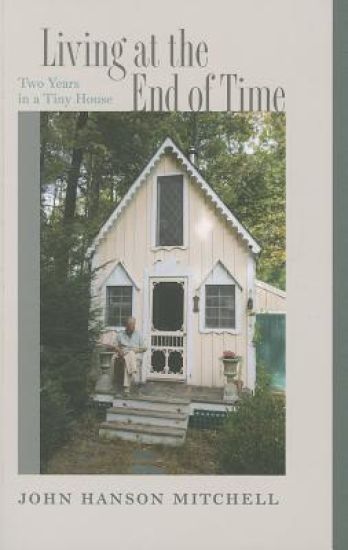
In this second book in his Scratch Flat Chronicles, John Hanson Mitchell tells how he set out to recreate Henry David Thoreau's two years at Walden Pond in a replica of Thoreau's cabin. Mitchell lived off the grid, without running water or electricity, in a tiny house not half a mile from a major highway and in the shadow of a massive new computer company. Nevertheless, his contact with wildlife, the changing seasons, and the natural world equaled and even surpassed Thoreau's. Hugely popular with the international community of Thoreau followers when it was first published, this book will now be essential reading for the growing community of people who are interested in living in a tiny house, fully experiencing the natural world, or finding self-sufficiency in an increasingly plugged-in society.
Trespassing

Trespassing

John Hanson Mitchell

Dartmouth College Press
2015
nidottu
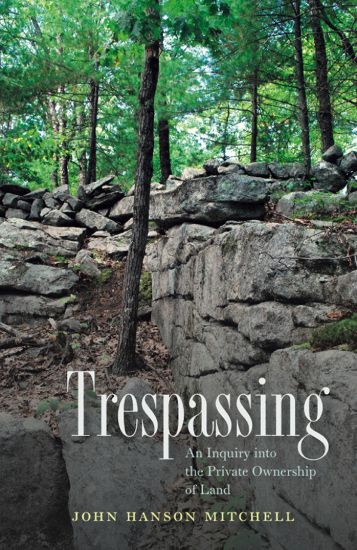
Trespassing, "a thoughtful, beautifully written addition to environmental and regional literature" (Kirkus Reviews), is a historical survey of the evolution of private ownership of land, concentrating on the various land uses of a 500-acre tract of land over a 350-year period. What began as wild land controlled periodically by various Native American tribes became British crown land after 1654, then private property under US law, and finally common land again in the late twentieth century. Mitchell considers every aspect of the important issue of land ownership and explores how our attitudes toward land have changed over the centuries.
The Wildest Place on Earth

The Wildest Place on Earth

John Hanson Mitchell

Dartmouth College Press
2015
nidottu
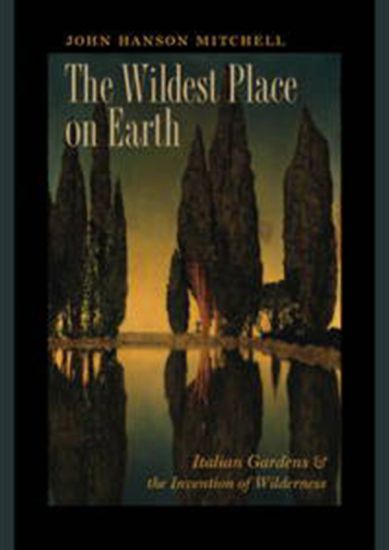
This is the ironic story of how Italian Renaissance and Baroque gardens encouraged the preservation of the American wilderness and ultimately fostered the creation of the world's first national park system. Told via Mitchell's sometimes disastrous and humorous travels - from the gardens of southern Italy up through Tuscany and the lake island gardens - the book is filled with history, folklore, myths, and legends of Western Europe, including a detailed history of the labyrinth, a common element in Renaissance gardens. In his attempt to understand the Italian garden in detail, Mitchell set out to create one on his own property - with a labyrinth.
Walking towards Walden

Walking towards Walden

John Hanson Mitchell

Dartmouth College Press
2015
nidottu
Walking towards Walden is an exploration of the sense of place, what it means, how it developed, and why it matters. Based on an eighteenth-century literary device in which a group of friends undertake a walking tour and discuss a certain subject, this wide-ranging story emerges from the author's fifteen-mile bushwhack through woods, backyards, and marshes - from a hilltop in Westford, Massachusetts, to the town of Concord, Massachusetts - trespassing all along the way. A mock epic, complete with encounters with armed mercenaries and vicious dogs, the book covers all the aspects of place - art, literature, myth, and even music.
Legends of the Common Stream

Legends of the Common Stream

John Hanson Mitchell

University of Massachusetts Press
2021
nidottu
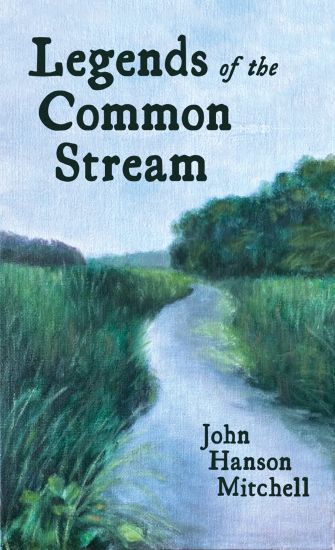
For over twenty years, John Hanson Mitchell has visited Beaver Brook almost daily. This small, slow-flowing Massachusetts stream was of vital importance for early settlers and an indispensable resource for the Native peoples who lived and fished along its shores, but it has been largely forgotten in our own time. Revisiting the river's oxbows, bends, and marshes over the course of a year, Legends of the Common Stream combines a natural history of Beaver Brook with a study of the people who lived on this land and a meandering, but stunning, examination of the myths and legends that can help us to better understand humanity's relationship to the natural world. While Mitchell never leaves the brook's shores, he draws from a range of traditions and takes readers on excursions to regions and cultures across the globe and across time, making the case that our contemporary separation from nature goes hand in hand with our alienation from the world of myth. This book seeks to restore these broken relationships and offers the reminder that while cultures may come and go, the stream goes on forever.
Legends of the Common Stream

Legends of the Common Stream

John Hanson Mitchell

University of Massachusetts Press
2021
sidottu
For over twenty years, John Hanson Mitchell has visited Beaver Brook almost daily. This small, slow-flowing Massachusetts stream was of vital importance for early settlers and an indispensable resource for the Native peoples who lived and fished along its shores, but it has been largely forgotten in our own time. Revisiting the river's oxbows, bends, and marshes over the course of a year, Legends of the Common Stream combines a natural history of Beaver Brook with a study of the people who lived on this land and a meandering, but stunning, examination of the myths and legends that can help us to better understand humanity's relationship to the natural world. While Mitchell never leaves the brook's shores, he draws from a range of traditions and takes readers on excursions to regions and cultures across the globe and across time, making the case that our contemporary separation from nature goes hand in hand with our alienation from the world of myth. This book seeks to restore these broken relationships and offers the reminder that while cultures may come and go, the stream goes on forever.
The Garden at the End of Time

The Garden at the End of Time

John Hanson Mitchell

UNIVERSITY OF MASSACHUSETTS PRESS
2025
nidottu
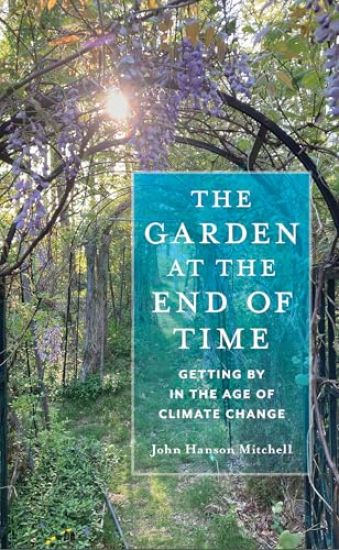
John Hanson Mitchell has long written about his garden outside of Boston, and about the plants and animals with whom he shares this land. In 2022, the United Nations and others started reporting the true severity of the climate crisis as the Earth passed a point of no return. All across the globe it was the worst year on record for climate-related disasters, including extinctions, deadly floods, massive fires, and dramatic droughts. Mitchell, like so many, felt overwhelmed. He looked to the story of Voltaire’s Candide, and settled on the famous aphorism from that book: “We must cultivate our garden.”The Garden at the End of Time features Mitchell’s trademark blend of science, literature, and anecdote as he processes both the information he is reading from various sources and what it prompts him to do in his own small corner of the world. The story that unfolds is one of Mitchell diversifying his plantings; fighting what he sees as unnecessary local development; walking through and observing changes in the wild lands nearby; continuing to read the news from around the world; and meditating on other moments, real and imagined, when people sought refuge even as they did their part to improve a personally and collectively stressful situation. Readers discover the impossibility of separating gardening from global warming, while also seeing the solace that exposure to plants can offer, in addition to their contribution to carbon consumption. With gravitas, kindness, and wit, Mitchell offers a model for maintaining a connection to nature even as it reels from manmade threats.
The Garden at the End of Time

The Garden at the End of Time

John Hanson Mitchell

UNIVERSITY OF MASSACHUSETTS PRESS
2025
sidottu
John Hanson Mitchell has long written about his garden outside of Boston, and about the plants and animals with whom he shares this land. In 2022, the United Nations and others started reporting the true severity of the climate crisis as the Earth passed a point of no return. All across the globe it was the worst year on record for climate-related disasters, including extinctions, deadly floods, massive fires, and dramatic droughts. Mitchell, like so many, felt overwhelmed. He looked to the story of Voltaire’s Candide, and settled on the famous aphorism from that book: “We must cultivate our garden.”The Garden at the End of Time features Mitchell’s trademark blend of science, literature, and anecdote as he processes both the information he is reading from various sources and what it prompts him to do in his own small corner of the world. The story that unfolds is one of Mitchell diversifying his plantings; fighting what he sees as unnecessary local development; walking through and observing changes in the wild lands nearby; continuing to read the news from around the world; and meditating on other moments, real and imagined, when people sought refuge even as they did their part to improve a personally and collectively stressful situation. Readers discover the impossibility of separating gardening from global warming, while also seeing the solace that exposure to plants can offer, in addition to their contribution to carbon consumption. With gravitas, kindness, and wit, Mitchell offers a model for maintaining a connection to nature even as it reels from manmade threats.