Kirjojen hintavertailu. Mukana 11 699 587 kirjaa ja 12 kauppaa.

Kirjahaku

Etsi kirjoja tekijän nimen, kirjan nimen tai ISBN:n perusteella.

15 kirjaa tekijältä John Harley

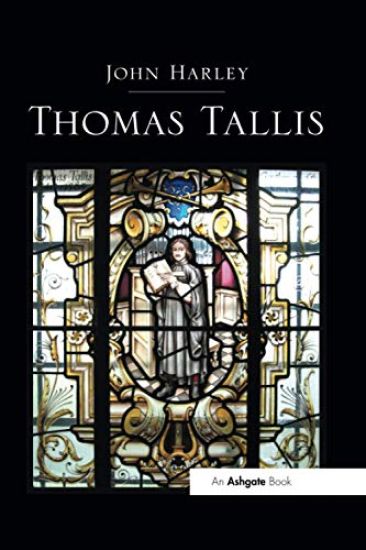
Thomas Tallis

Thomas Tallis

John Harley

Routledge
2020
nidottu
John Harley’s Thomas Tallis is the first full-length book to deal comprehensively with the composer’s life and works. Tallis entered the Chapel Royal in the middle of a long life, and remained there for over 40 years. During a colourful period of English history he famously served King Henry VIII and the three of Henry’s children who followed him to the throne. His importance for English music during the second half of the sixteenth century is equalled only by that of his pupil, colleague and friend William Byrd. In a series of chronological chapters, Harley describes Tallis’s career before and after he entered the Chapel. The fully considered biography is placed in the context of larger political and cultural changes of the period. Each monarch’s reign is treated with an examination of the ways in which Tallis met its particular musical needs. Consideration is given to all of Tallis’s surviving compositions, including those probably intended for patrons and amateurs beyond the court, and attention is paid to the context within which they were written. Tallis emerges as a composer whose music displays his special ability in setting words and creating ingenious musical patterns. A table places most of Tallis’s compositions in a broad chronological order.
Smoke

Smoke

John Harley

Xlibris Us
2001
sidottu
When Jimmy and Jenna offer to help Smoke dragon get her two cousins, still in the egg, back from the gnomes, all seems as easy as eating pie on a log. After all, what could go wrong? The gnomes are a friendly people and the whole egg-napping escapade is just a misunderstanding. Or is it? Rather than give it all away, I'll leave you to enjoy the story yourself. I wrote it for the little boy I once was, and for kids of all ages. It's a good read-aloud book that may be shared over a period of weeks. Let me know who your favorite character is.John
Smoke

Smoke

John Harley

Xlibris Us
2001
pokkari
When Jimmy and Jenna offer to help Smoke dragon get her two cousins, still in the egg, back from the gnomes, all seems as easy as eating pie on a log. After all, what could go wrong? The gnomes are a friendly people and the whole egg-napping escapade is just a misunderstanding. Or is it? Rather than give it all away, I'll leave you to enjoy the story yourself. I wrote it for the little boy I once was, and for kids of all ages. It's a good read-aloud book that may be shared over a period of weeks. Let me know who your favorite character is.John
William Byrd

William Byrd

John Harley

Ashgate Publishing Limited
1999
nidottu
This is the first comprehensive study of William Byrd’s life (1540-1623) and works to appear for sixty years, and fully takes into consideration recent scholarship. The biographical section includes many newly discovered facts about Byrd and his family, while in the chapters dealing with his music an attempt is made for the first time to outline the chronology of all his compositions. The book begins with a detailed account of Byrd's life, based on a completely fresh examination of original documents, which are quoted extensively. Several previously known documents have now been identified as being in Byrd’s hand, and some fresh holographs have been discovered. A number of questions such as his parentage and date of birth have been conclusively settled. The book continues with a survey of Byrd’s music which pays particular attention to its chronological development, and links it where possible to the events and background of his life. A series of appendices includes additional texts of important documents, and a summary catalogue of works. A bibliography and index complete the book. Besides musical illustrations there is a series of plates illustrating documents and places associated with Byrd.
The World of William Byrd

The World of William Byrd

John Harley

Routledge
2016
nidottu
In The World of William Byrd John Harley builds on his previous work, William Byrd: Gentleman of the Chapel Royal (Ashgate, 1997), in order to place the composer more clearly in his social context. He provides new information about Byrd's youthful musical training, and reveals how in his adult life his music emerged from a series of overlapping family, business and social networks. These networks and Byrd's navigation within and between them are examined, as are the lives of a number of the individuals comprising them.
Orlando Gibbons and the Gibbons Family of Musicians
First published in 1999, this volume is the first full-length study to deal with the life and music of Orlando Gibbons since E.H. Fellowes’s short book, originally published in 1923. John Harley investigates in detail the family and musical background from which Orlando Gibbons emerged, and gives a fascinating account of the activities of his father, William Gibbons, as a wait in Oxford and Cambridge. He traces, too, the activities of Orlando’s brothers – Edward, who was the master of the choristers at King’s College, Cambridge and later at Exeter Cathedral; Ferdinando, who may have taken over from his father as head of the Cambridge waits, and who became a wait in Lincoln; and Ellis, who contributed two madrigals to Thomas Morley’s collection of 1601, The Triumphs of Oriana. Attention naturally focuses principally on Orlando Gibbons. A full record is given of his remarkably youthful appointment as an organist of the Chapel Royal (he was probably less than twenty at the time) and of his life at court. His additional appointments as one of Prince Charles’s musicians and as organist of Westminster Abbey are also described, as is his sudden and premature death in his early forties. Gibbons’s music is carefully examined in a series of chapters dealing with his pieces for keyboard and for viols, his songs, his full and verse anthems, and his works for the Anglican liturgy. His development as a composer within these genres is followed, and the character of particular pieces is considered. John Harley concludes that whereas, at one time, Gibbons ‘tended to be admired as a successor to Tallis and Byrd, working in a style not essentially different from theirs’, it is now ‘easier to view him as a pioneer, whose work was cut short by his untimely death’. Orlando Gibbons’s son Christopher was only a child when his father died, but he became one of the foremost composers and keyboard players of his generation, writing and performing chamber works and music for the stage during the Commonwealth. Following the Restoration of King Charles II, Christopher Gibbons gained his father’s former posts at the Chapel Royal and Westminster Abbey, for which establishments he wrote a number of anthems. His importance is recognized by the inclusion of a long chapter on his life and works.
Orlando Gibbons and the Gibbons Family of Musicians
First published in 1999, this volume is the first full-length study to deal with the life and music of Orlando Gibbons since E.H. Fellowes’s short book, originally published in 1923. John Harley investigates in detail the family and musical background from which Orlando Gibbons emerged, and gives a fascinating account of the activities of his father, William Gibbons, as a wait in Oxford and Cambridge. He traces, too, the activities of Orlando’s brothers – Edward, who was the master of the choristers at King’s College, Cambridge and later at Exeter Cathedral; Ferdinando, who may have taken over from his father as head of the Cambridge waits, and who became a wait in Lincoln; and Ellis, who contributed two madrigals to Thomas Morley’s collection of 1601, The Triumphs of Oriana. Attention naturally focuses principally on Orlando Gibbons. A full record is given of his remarkably youthful appointment as an organist of the Chapel Royal (he was probably less than twenty at the time) and of his life at court. His additional appointments as one of Prince Charles’s musicians and as organist of Westminster Abbey are also described, as is his sudden and premature death in his early forties. Gibbons’s music is carefully examined in a series of chapters dealing with his pieces for keyboard and for viols, his songs, his full and verse anthems, and his works for the Anglican liturgy. His development as a composer within these genres is followed, and the character of particular pieces is considered. John Harley concludes that whereas, at one time, Gibbons ‘tended to be admired as a successor to Tallis and Byrd, working in a style not essentially different from theirs’, it is now ‘easier to view him as a pioneer, whose work was cut short by his untimely death’. Orlando Gibbons’s son Christopher was only a child when his father died, but he became one of the foremost composers and keyboard players of his generation, writing and performing chamber works and music for the stage during the Commonwealth. Following the Restoration of King Charles II, Christopher Gibbons gained his father’s former posts at the Chapel Royal and Westminster Abbey, for which establishments he wrote a number of anthems. His importance is recognized by the inclusion of a long chapter on his life and works.
The World of William Byrd

The World of William Byrd

John Harley

Ashgate Publishing Limited
2010
sidottu
In The World of William Byrd John Harley builds on his previous work, William Byrd: Gentleman of the Chapel Royal (Ashgate, 1997), in order to place the composer more clearly in his social context. He provides new information about Byrd's youthful musical training, and reveals how in his adult life his music emerged from a series of overlapping family, business and social networks. These networks and Byrd's navigation within and between them are examined, as are the lives of a number of the individuals comprising them.
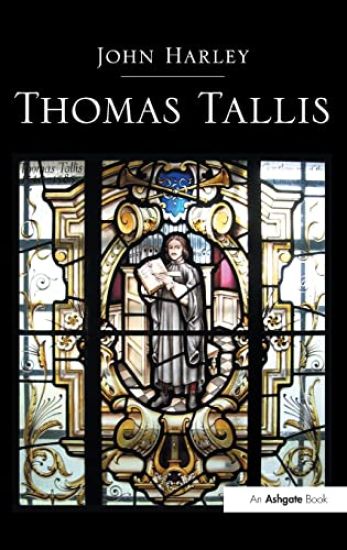
Thomas Tallis

Thomas Tallis

John Harley

Routledge
2015
sidottu
John Harley’s Thomas Tallis is the first full-length book to deal comprehensively with the composer’s life and works. Tallis entered the Chapel Royal in the middle of a long life, and remained there for over 40 years. During a colourful period of English history he famously served King Henry VIII and the three of Henry’s children who followed him to the throne. His importance for English music during the second half of the sixteenth century is equalled only by that of his pupil, colleague and friend William Byrd. In a series of chronological chapters, Harley describes Tallis’s career before and after he entered the Chapel. The fully considered biography is placed in the context of larger political and cultural changes of the period. Each monarch’s reign is treated with an examination of the ways in which Tallis met its particular musical needs. Consideration is given to all of Tallis’s surviving compositions, including those probably intended for patrons and amateurs beyond the court, and attention is paid to the context within which they were written. Tallis emerges as a composer whose music displays his special ability in setting words and creating ingenious musical patterns. A table places most of Tallis’s compositions in a broad chronological order.
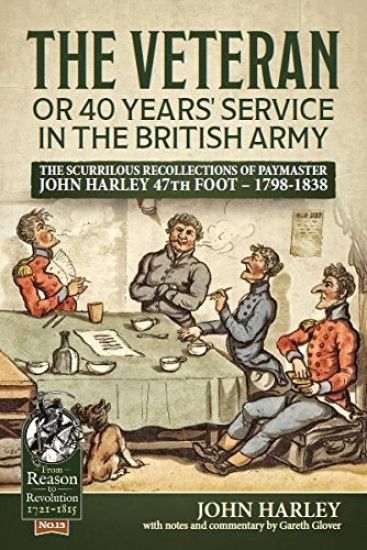
The Veteran or 40 Years' Service in the British Army
Paymaster John Harley wrote his memoirs in the mid to late 1830’s, some fifteen years after he had left the army under questionable circumstances. He apparently published this memoir privately in two volumes in 1838 a few years before his death - quite possibly as he had not found a mainstream publisher because of its potentially libellous content – and only four hundred copies were apparently printed. John Harley had a varied and interesting military career, serving in the Tarbert Fencibles, the 54th Foot in Egypt, and then the 47th Foot with Wellington in Spain and Southern France. John Harley was born in Cork, Ireland on 18 November 1769 but his father died within a few weeks, he therefore lived with his mother for most of his youth in the area of Kilkenny. At the age of fourteen he was put to work at a merchant house in the city but never really settled in this role and secured a lieutenancy in the Tarbert Fencibles on their formation in 1798. Harley gained a commission as Quartermaster of the 54th Foot on 12 June 1800 and joined his new regiment at Winchester. Soon after they were ordered to proceed abroad and within a year Harley found himself trudging through the hot sands of Egypt in the campaign of Sir Ralph Abercromby to oust the French from Africa. Thereafter, they formed part of the garrison of Gibraltar and were there during the infamous mutiny against the governor the Duke of Kent. After being placed on half-pay during the Peace of Amiens, Harley soon found a new position, as Quartermaster in the 1st Battalion 47th Foot. On 11 July 1805 John Harley gained the position of Paymaster to the regiment’s 2nd Battalion and moved with it around Ireland for the next three years, thence to England in 1807 where they remained until 1809 when they were finally ordered for foreign service. They sailed for Gibraltar in October 1809 and were then transferred to Cadiz, taking part in the defence of that place and of Tarifa in 1811. The following year the siege of Cadiz ended, the battalion marched to Seville and then joined in Wellington’s difficult retreat to Portugal. In 1813 the battalion was at the Battle of Vitoria, where John had the awful news of the death of his son; he then took part in the siege of San Sebastian. They were then involved in the crossing of the Bidassoa, the Battles of Nivelle and the Nive and finally involved in the sortie from Bayonne, when the war ended. As a Paymaster, Harley was rarely in the fighting, but he was certainly close to the action at times and also saw much of the terrible aftermath. However, some of the greatest and most entertaining memoirs have already come from non-combatants. It is a simple truth that if you want to know what it was really like in the British army for the ninety-nine percent of the time when there was no fighting, read the memoirs of such men, who had opportunity to enjoy the best of times, partook in many of the greatest adventures, and thankfully had the spare time to record them for posterity. Although he did not write his memoirs until 1830, Harley remembers a great deal; names, personalities, incidents, and tragedies and although his memory might occasionally confuse the correct ranks or some of the fine details; every one of the major incidents he recounts is to be found in the records. But the greatest joy of these pages are the various scurrilous incidents mentioned in these memoirs, which have all been found to be fully established in fact. Duels, bigamy, abductions, women tricked into marriage, sinking boats, cowardice, larceny, murder, corruption, human tragedy, bankruptcy, forgery, suicides, privateers, debtors prison, card sharks, highwaymen, prisoners of war, and Garryowen Boys, indeed the whole gambit. It truly exposes the seedy underside of Georgian life both within the army and in civilian life too. John Harley’s memoirs are a real joy and a real eye-opener on many levels – once you have read them, you will never look at Wellington’s army in the same light ever again.