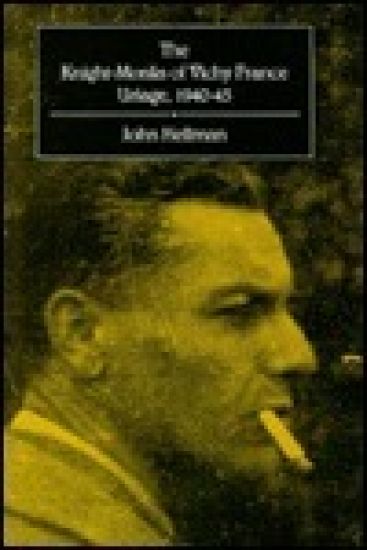
In The Knight-Monks of Vichy France John Hellman describes the founding, operation, transformation, and demise of the school, details the institution's ideological and political struggles with other segments of French society, and deals with the remarkable rise of Uriage ideas and alumni in postwar France. By focusing on the social, philosophical, and psychological concepts propounded by the staff of the school, Hellman has produced the first study that shows the Ecole Nationale des Cadres d'Uriage to have been an original educational and group experience which inspired French youth from very different backgrounds to abandon the liberal democratic tradition for a new political and social vision. Drawing on a variety of sources, including interviews, newly available archival material, Vichy publications, correspondence, and diary entries, Hellman contributes to the current, lively debate concerning the phenomenon of collaboration and the response of the French population to fascism and to the occupation during the Second World War. This book will be of particular interest to readers concerned with the intellectual and political life of modern France, modern religious thought and experience, fascism and the Vichy regime, changes in France in the prewar and postwar periods, and the "third way" political option in contemporary Europe.