Kirjojen hintavertailu. Mukana 11 627 380 kirjaa ja 12 kauppaa.

Kirjahaku

Etsi kirjoja tekijän nimen, kirjan nimen tai ISBN:n perusteella.

55 kirjaa tekijältä John Henderson

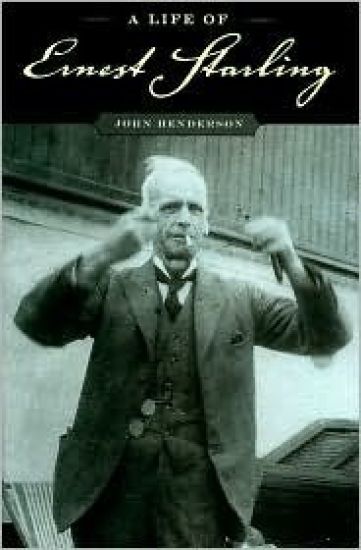
A Life of Ernest Starling

A Life of Ernest Starling

John Henderson

Oxford University Press
2008
sidottu
Ernest Starling (1866-1927) was pre-eminent in the golden age of British Physiology. His name is usually associated with his “Law of the Heart,? but his discovery of secretin (the first hormone whose mode of action was explained) and his work on capillaries were more important contributions. He coined the word 'hormone' one hundred years ago. His analysis of capillary function demonstrated that equal and opposite forces move across the capillary wall--an outward (hydrostatic) force and an inward (osmotic) force derived from plasma proteins. Starling’s contributions include:*Developing the "Frank-Starling Law of the Heart," presented in 1915 and modified in 1919.*The Starling equation, describing fluid shifts in the body (1896) *The discovery of secretin, the first hormone, with Bayliss (1902) and the introduction of the concept of hormones (1905).
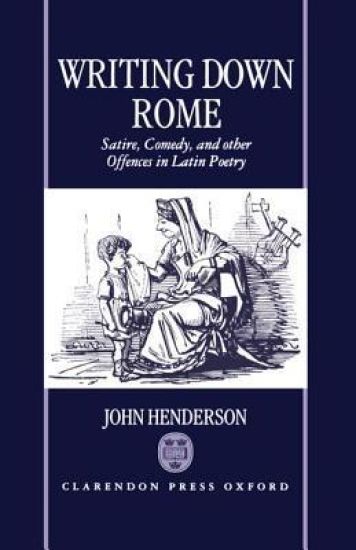
Writing Down Rome

Writing Down Rome

John Henderson

Oxford University Press
1998
sidottu
In a series of controversial essays, this book examines the Roman penchant for denigration, and in particular self-denigration, at the expense of Roman culture. Comedy in Republican Rome radically transformed both itself and the culture from which it sprang: in Poenulus, Plautus laughed at Roman depreciation of Carthage; in Adelphoe, Terence turned on his audience in provocation. The comic Roman poets played with self-mockery: in Eclogue III, Virgil tests his audience's security in judging peasant unpleasantness; in Odes III.22, Horace sends up his own pious rusticity down on the farm. In the second half of the book, Roman verse satire is the subject: the genre of male bragging mocks its own masculine aggression. The great Latin satirists make fun of making fun: Horace, Satires I.9, shows up the politics of humour, unmanned by his own good manners; Persius nails his own weaknesses in fortifying himself against the world; Juvenal, Satire 1, loathes the literary scene he bids to dominate. The book shows a vital ingredient of Roman poetry to be an energetic surge of urbane banter directed towards Roman culure.
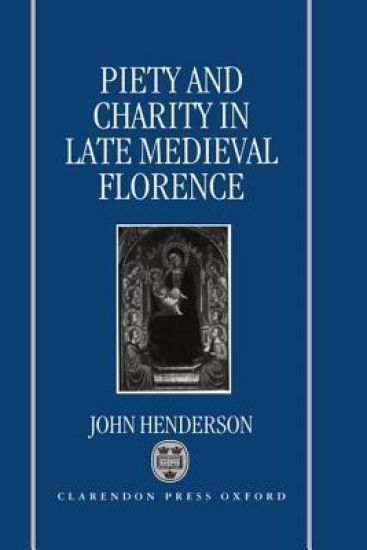
Piety and Charity in Late Medieval Florence

Piety and Charity in Late Medieval Florence

John Henderson

Clarendon Press
1994
sidottu
This book examines the relationship between the secular and sacred in late medieval Florence through the vehicle of the religious confraternity, one of the most ubiquitous and popular forms of lay association throughout Europe. Based on a wealth of new documentation Dr Henderson provides a fascinating account of the development of the major fraternities of the city in relation to other types of communal ecclesiastical institutions. The first part discusses in detail their devotional activities for living members, including the singing of lauds, self-flagellation, processions and dramatic presentations, as well as funerals and commemorative services for the dead. Secondly, this is one of the most detailed analyses of relief to the poor and sick in medieval Europe. He examines the complementary welfare roles of fraternities and hospitals, during both non-crisis years and the emergencies caused by plague and famine, all within the wider context of communal policy towards the poor. Taken together the two themes of this book, piety and charity, provide new evidence concerning the complex relationship between religion and society in both private and public life.
Piety and Charity in Late Medieval Florence

Piety and Charity in Late Medieval Florence

John Henderson

University of Chicago Press
1997
nidottu
John Henderson examines the relationship between religion and society in late medieval Florence through the vehicle of the religious confraternity, one of the most ubiquitous and popular forms of lay association throughout Europe. This book provides a fascinating account of the development of confraternities in relation to other communal and ecclesiastical institutions in Florence. It is one of the most detailed analyses of charity in late medieval Europe. "[A] long-awaited book...[It is] the most complete survey of confraternities and charity, not only for Florence, but for any Italian city state to date...This book recovers more vividly than other recent works what it meant to be a member of a confraternity in the late middle ages."--Samuel K. Cohn, Jr., Economic History Review "Henderson offers new and fascinating information...A stimulating and suggestive book that deserves a wide readership." --Gervase Rosser, Times Higher Education Supplement
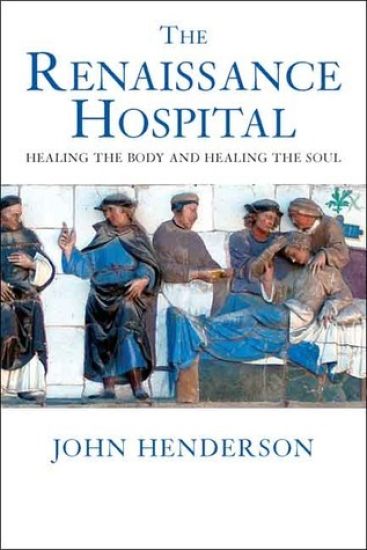
The Renaissance Hospital

The Renaissance Hospital

John Henderson

Yale University Press
2006
sidottu
In this fascinating and richly illustrated book, John Henderson takes us into the Renaissance hospitals of Florence, recreating the enormous barn-like wards and exploring the lives of those who received and those who administered treatment there. Drawing on an exceptional range of visual and documentary evidence, Henderson overturns the popular view of the pre-industrial hospital as a hellish destination for the dying poor. To the contrary, hospitals of the era developed specialized, professional care; became important centers of artistic patronage; and served a large patient population, only ten percent of whom died during their stay. The book explores the civic role of Renaissance hospitals, their beautiful architecture and interior design, and their methods of medical treatment that continue to influence healthcare practices today.
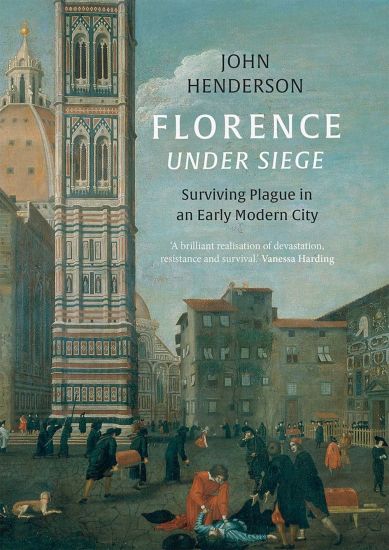
Florence Under Siege

Florence Under Siege

John Henderson

Yale University Press
2019
sidottu
A vivid recreation of how the governors and governed of early seventeenth-century Florence confronted, suffered, and survived a major epidemic of plague Plague remains the paradigm against which reactions to many epidemics are often judged. Here, John Henderson examines how a major city fought, suffered, and survived the impact of plague. Going beyond traditional oppositions between rich and poor, this book provides a nuanced and more compassionate interpretation of government policies in practice, by recreating the very human reactions and survival strategies of families and individuals. From the evocation of the overcrowded conditions in isolation hospitals to the splendor of religious processions, Henderson analyzes Florentine reactions within a wider European context to assess the effect of state policies on the city, street, and family. Writing in a vivid and approachable way, this book unearths the forgotten stories of doctors and administrators struggling to cope with the sick and dying, and of those who were left bereft and confused by the sudden loss of relatives.
The Roman Book of Gardening

The Roman Book of Gardening

John Henderson

Routledge
2004
sidottu
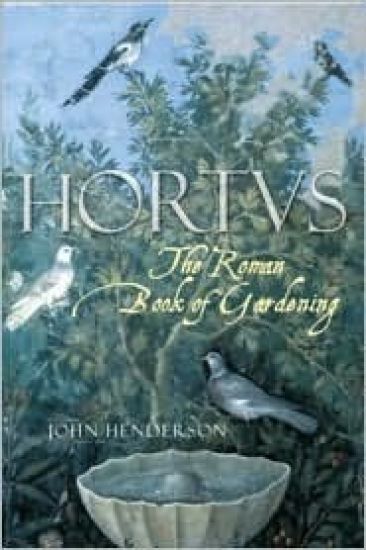
The first book to look at this particular subject, The Roman Book of Gardening brings together an extraordinarily varied selection of texts on Roman horticulture, celebrating herb and vegetable gardening in verse and prose spanning five centuries.In vivid new translations by John Henderson, Virgil's Georgics stand alongside neglected works by Columella, Pliny and Palladius, bringing to life the techniques and obstacles, delights and exasperations of the Roman gardener. We also hear of the digging, hoeing, planting and weeding which then, as now, went into creating the perfect garden.This is a timely and valuable contribution to our understanding of gardening history, Roman culture and Latin literature.
The Roman Book of Gardening

The Roman Book of Gardening

John Henderson

Routledge
2004
nidottu
The first book to look at this particular subject, The Roman Book of Gardening brings together an extraordinarily varied selection of texts on Roman horticulture, celebrating herb and vegetable gardening in verse and prose spanning five centuries.In vivid new translations by John Henderson, Virgil's Georgics stand alongside neglected works by Columella, Pliny and Palladius, bringing to life the techniques and obstacles, delights and exasperations of the Roman gardener. We also hear of the digging, hoeing, planting and weeding which then, as now, went into creating the perfect garden.This is a timely and valuable contribution to our understanding of gardening history, Roman culture and Latin literature.
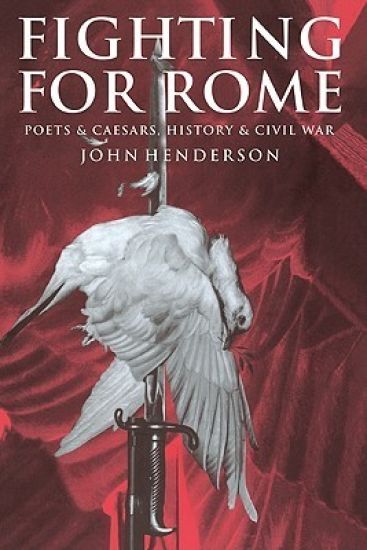
Fighting for Rome

Fighting for Rome

John Henderson

Cambridge University Press
2006
pokkari
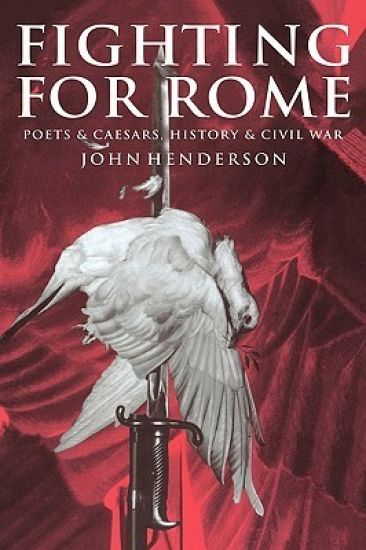
The essays in Fighting for Rome confront the traumatic disjunction between the militarist culture of classical Rome, with its heavy investment in valour, conquest and triumph, and the domination of its history by civil war, where Roman soldiers killed so many Romans for control of Rome. The essays gathered and rewritten here range across the literary forms (history, satire, lyric and epic) and work closely with the ancient texts (Appian and Julius Caesar; Horace; Lucan and Statius; Tacitus and Livy). Close reading and powerful translation communicate the ancient writers' efforts to grasp and respond to the Roman civil wars, and to their product, Roman terror under the Caesars. The book aims to bring to life strong reactions to a world order run by civil war.
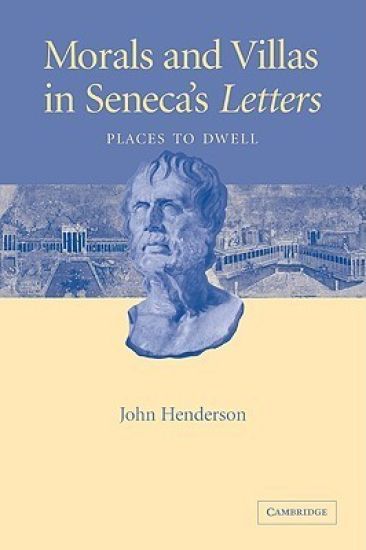
Morals and Villas in Seneca's Letters

Morals and Villas in Seneca's Letters

John Henderson

Cambridge University Press
2007
pokkari
John Henderson explores three letters of Seneca describing visits to Roman villas, and surveys the whole collection to show how these villas work as designs for contrasting lives. Seneca's own place is ageing drastically; a recent Epicurean's paradise is a seductive oasis away from the dangers of Nero's Rome; once a fortress of the dour Rome of yesteryear, the legendary Scipio's lair was now a shrine to the old morality: Seneca revels in its primitive bath-house, dark and cramped, before exploring the garden with the present owner. Seneca brings the philosophical epistle to Latin literature, creating models for moralizing which feature self-criticism, parody and re-animated myth. Virgil and Horace come in for rough handling, as the Latin moralist wrests ethical practice and writing away from Greek gurus and texts, and into critical thinking within a Roman context. Here is powerful teaching on metaphor and translation, on self-transformation and cultural tradition.
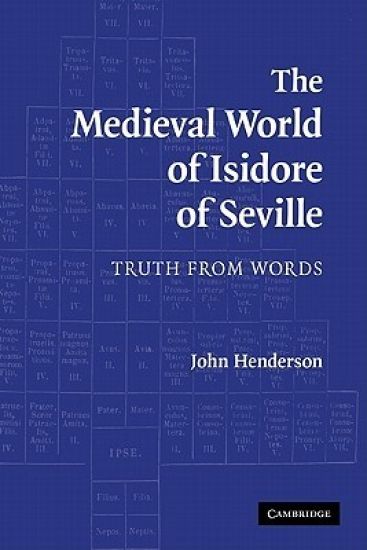
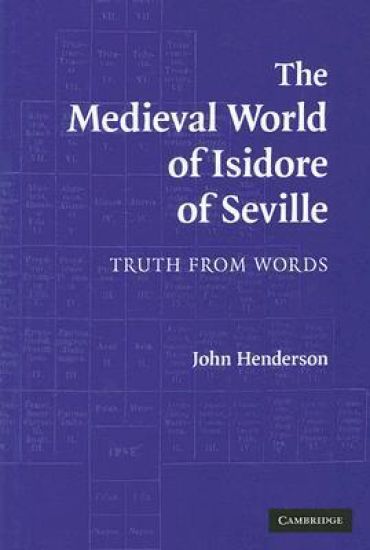
The Medieval World of Isidore of Seville

The Medieval World of Isidore of Seville

John Henderson

Cambridge University Press
2010
pokkari
In his Etymologiae, St Isidore of Seville put together a systematic survey of the world in the form of a vast thesaurus of Latin vocabulary, which supplies a more or less accepted or fanciful etymology for each term. It became one of the most influential books of European culture through the whole medieval period. This Latin 'Roget' is traditionally used as a reference work, accessed through an elaborate index system. In this book Professor Henderson, the most challenging critic writing on Latin literature and Roman culture, presents a full reading of all twenty books of the Etymologiae, showing how the material is sequenced so that its reader is treated to a thoroughgoing education in the world as it was apprehended in Jewish, Graeco-Roman and Christian culture. All Latin, including etymologies, is translated.
Fighting for Rome

Fighting for Rome

John Henderson

Cambridge University Press
1998
sidottu
The essays in Fighting for Rome confront the traumatic disjunction between the militarist culture of classical Rome, with its heavy investment in valour, conquest and triumph, and the domination of its history by civil war, where Roman soldiers killed so many Romans for control of Rome. The essays gathered and rewritten here range across the literary forms (history, satire, lyric and epic) and work closely with the ancient texts (Appian and Julius Caesar; Horace; Lucan and Statius; Tacitus and Livy). Close reading and powerful translation communicate the ancient writers’ efforts to grasp and respond to the Roman civil wars, and to their product, Roman terror under the Caesars. The book aims to bring to life strong reactions to a world order run by civil war.
Morals and Villas in Seneca's Letters

Morals and Villas in Seneca's Letters

John Henderson

Cambridge University Press
2004
sidottu
John Henderson explores three letters of Seneca describing visits to Roman villas, and surveys the whole collection to show how these villas work as designs for contrasting lives. Seneca's own place is ageing drastically; a recent Epicurean's paradise is a seductive oasis away from the dangers of Nero's Rome; once a fortress of the dour Rome of yesteryear, the legendary Scipio's lair was now a shrine to the old morality: Seneca revels in its primitive bath-house, dark and cramped, before exploring the garden with the present owner. Seneca brings the philosophical epistle to Latin literature, creating models for moralizing which feature self-criticism, parody and re-animated myth. Virgil and Horace come in for rough handling, as the Latin moralist wrests ethical practice and writing away from Greek gurus and texts, and into critical thinking within a Roman context. Here is powerful teaching on metaphor and translation, on self-transformation and cultural tradition.
The Medieval World of Isidore of Seville

The Medieval World of Isidore of Seville

John Henderson

Cambridge University Press
2007
sidottu
In his Etymologiae, St Isidore of Seville put together a systematic survey of the world in the form of a vast thesaurus of Latin vocabulary, which supplies a more or less accepted or fanciful etymology for each term. It became one of the most influential books of European culture through the whole medieval period. This Latin 'Roget' is traditionally used as a reference work, accessed through an elaborate index system. In this book Professor Henderson, the most challenging critic writing on Latin literature and Roman culture, presents a full reading of all twenty books of the Etymologiae, showing how the material is sequenced so that its reader is treated to a thoroughgoing education in the world as it was apprehended in Jewish, Graeco-Roman and Christian culture. All Latin, including etymologies, is translated.
"The Most Interesting Man in America"

"The Most Interesting Man in America"

John Henderson

Dissertation Discovery Company
2019
pokkari
Dissertation Discovery Company and University of Florida are dedicated to making scholarly works more discoverable and accessible throughout the world. This dissertation, ""The Most Interesting Man in America"" by John Henderson, was obtained from University of Florida and is being sold with permission from the author. A digital copy of this work may also be found in the university's institutional repository, IR@UF. The content of this dissertation has not been altered in any way. We have altered the formatting in order to facilitate the ease of printing and reading of the dissertation.