Kirjojen hintavertailu. Mukana 12 016 292 kirjaa ja 12 kauppaa.

Kirjahaku

Etsi kirjoja tekijän nimen, kirjan nimen tai ISBN:n perusteella.

5 kirjaa tekijältä John Hoffmann

Lincoln Hall at the University of Illinois

Lincoln Hall at the University of Illinois

John Hoffmann

University of Illinois Press
2010
sidottu
&&LI&&&&LI&&&&LI&& /* Style Definitions */ table.MsoNormalTable {mso-style-name:"Table Normal"; mso-tstyle-rowband-size:0; mso-tstyle-colband-size:0; mso-style-noshow:yes; mso-style-priority:99; mso-style-qformat:yes; mso-style-parent:"; mso-padding-alt:0in 5.4pt 0in 5.4pt; mso-para-margin-top:0in; mso-para-margin-right:0in; mso-para-margin-bottom:10.0pt; mso-para-margin-left:0in; line-height:115%; mso-pagination:widow-orphan; font-size:11.0pt; font-family:"Calibri","sans-serif"; mso-ascii-font-family:Calibri; mso-ascii-theme-font:minor-latin; mso-fareast-font-family:"Times New Roman"; mso-fareast-theme-font:minor-fareast; mso-hansi-font-family:Calibri; mso-hansi-theme-font:minor-latin;} Lincoln Hall at the University of Illinois, named to commemorate the centennial of Abraham Lincoln's birth, has long been a familiar landmark on the Urbana-Champaign campus and the home for undergraduate and graduate work in the liberal arts and communication. Funded by the Illinois State Legislature in 1909, the building was dedicated in 1913 on Lincoln's birthday, February 12.In addition to its function as space for offices, classrooms, and departmental libraries, Lincoln Hall was commissioned, designed, and built to convey \u0022the wisdom and patriotism of the democracy of learning.\u0022 That spirit of freedom and equality in education was manifest in Lincoln Hall's artistic design, which features terra cotta panels depicting Lincoln's life, quotations from his writings, and portraits of prominent figures of his day. At the outset of the building's conception, Evarts B. Greene, professor of history and dean of the College of Literature and Arts, provided detailed information about Lincoln that defined the building's artistic program. Wishing to retain the dignified simplicity of the overall design, he conferred with W. Carbys Zimmerman, the State Architect, about the nature and placement of the panels and other ornamental details that have become key features of the building's design. Commemorating the bicentennial of Lincoln's birth, this magisterial volume chronicles the history of Lincoln Hall from its conception to its expansion and its present role on the campus.John Hoffmann identifies each of the building's historical panels and the portraits of Lincoln's contemporaries. Lavishly illustrated to show how much care was taken with the details of the design, this book provides a lasting historical record of the building's century-long place at the University of Illinois. Supported by the Office of the Chancellor of the University of Illinois at Urbana-Champaign

A Guide to the History of Illinois

A Guide to the History of Illinois

John Hoffmann

Greenwood Press
1991
sidottu
A guide to the literature and sources of Illinois history. It includes descriptions of both primary and secondary sources. The first part of the book consists of bibliographical essays that focus on particular periods and topics in Illinois history. The second part includes 12 reports on the principal archival and manuscript repositories for documentation in the field of Illinois history. A final chapter surveys Illinois-related collections in the Library of Congress and the National Archives. Reference & Research Book NewsJohn Hoffmann's volume is the first comprehensive guide to the literature and sources of Illinois history. It includes full and careful descriptions of both primary and secondary sources. The first part of the book consists of bibliographical essays that focus on particular periods and topics in Illinois history. Eight chapters are devoted to specific areas, from 1673 to the present, while six chapters are thematic in nature, covering, for instance, the religious and educational history of the state, the voluminous literature on Chicago, and the subject of Abraham Lincoln in Illinois. These essays are preceded by introductory remarks on historical surveys, reference books, and periodicals in the field, studies of such topics as the medical and legal history of the state, and publications relating to maps and newspapers of Illinois. This long overdue guide will bring together the vast accumulation of primary and secondary materials that defines Illinois history.The nature and scope of this guide is unmatched by any previous work. The second part includes twelve reports on the principal archival and manuscript repositories for documentation in the field of Illinois history. This section provides detailed information on specific collections within the context of related sources on particular periods and topics. A final chapter surveys Illinois-related collections in the Library of Congress and the National Archives. As part of the series Reference Guides to State History and Research, this book provides a valuable resource for researchers, students, genealogists, and the interested public, and is an appropriate selection for reference collections in American, regional, or Illinois history.
Delinquency Theories

Delinquency Theories

John Hoffmann

Routledge
2011
sidottu
Delinquency Theories: Appraisals and applications provides a fulsome and accessible overview of contemporary theories of juvenile delinquency.The book opens with a comprehensive description of what a theory is, and explains how theories are created in the social sciences. Following on, each subsequent chapter is dedicated to describing an individual theory, broken down and illustrated within four distinct sections. Initially, each chapter tells the tale of a delinquent youth, and from this example a thorough review of the particular theory and related research can be undertaken to explain the youth’s delinquent behaviour. The third and fourth sections of each chapter critically analyze the theories, and provide a straightforward discussion of policy implications of each, thus encouraging readers to evaluate the usefulness of these theories and also to consider the relationship between theory and policy.This text is an invaluable resource for both undergraduate and graduate students of subjects such as youth justice, delinquency, social theory, and criminology.
Delinquency Theories

Delinquency Theories

John Hoffmann

Routledge
2011
nidottu
Delinquency Theories: Appraisals and applications provides a fulsome and accessible overview of contemporary theories of juvenile delinquency.The book opens with a comprehensive description of what a theory is, and explains how theories are created in the social sciences. Following on, each subsequent chapter is dedicated to describing an individual theory, broken down and illustrated within four distinct sections. Initially, each chapter tells the tale of a delinquent youth, and from this example a thorough review of the particular theory and related research can be undertaken to explain the youth’s delinquent behaviour. The third and fourth sections of each chapter critically analyze the theories, and provide a straightforward discussion of policy implications of each, thus encouraging readers to evaluate the usefulness of these theories and also to consider the relationship between theory and policy.This text is an invaluable resource for both undergraduate and graduate students of subjects such as youth justice, delinquency, social theory, and criminology.
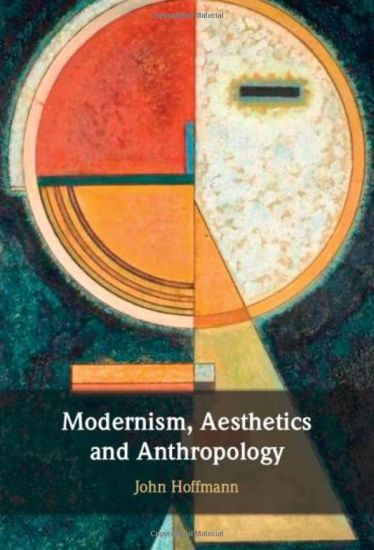
Modernism, Aesthetics and Anthropology

Modernism, Aesthetics and Anthropology

John Hoffmann

Cambridge University Press
2025
sidottu
John Hoffmann argues that a combination of aesthetics and anthropology allowed modernist writers to challenge social hierarchies they associated with the nineteenth century. He shows how Enlightenment philosophers synthesized the two discourses and how modernists working in the early twentieth century then took up this synthesis to dispute categories of social difference that had been naturalized, and thus legitimized, by pre-evolutionary and Darwinian anthropological theories. The book brings a range of new insights to major topics in modernist studies, revealing neglected continental sources for Irish anti-colonialism, the aesthetic contours of Zionism in the era of Mandatory Palestine, and the influence of German idealism on critiques of racism following World War I. Working over a long historical durée, Hoffmann surveys the ways aesthetics has been used, and misused, to construct and contest social hierarchies grounded in anthropological distinctions.