
Kirjahaku
Etsi kirjoja tekijän nimen, kirjan nimen tai ISBN:n perusteella.
37 kirjaa tekijältä John Holmes
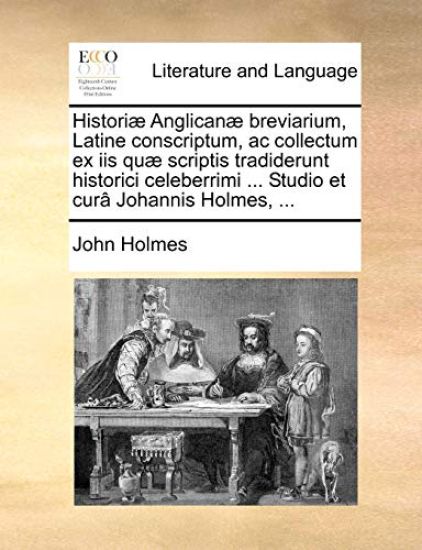
Histori? Anglican? Breviarium, Latine Conscriptum, AC Collectum Ex IIS Qu? Scriptis Tradiderunt Historici Celeberrimi ... Studio Et Cur? Johannis Holmes, ...
John Holmes
Gale Ecco, Print Editions
2010
pokkari
Historiæ Anglicanæ breviarium, Latine conscriptum, ac collectum ex iis quæ scriptis tradiderunt historici celeberrimi ... Studio et curâ Johannis Holmes, ...
John Holmes
Gale Ecco, Print Editions
2018
sidottu
The 18th century was a wealth of knowledge, exploration and rapidly growing technology and expanding record-keeping made possible by advances in the printing press. In its determination to preserve the century of revolution, Gale initiated a revolution of its own: digitization of epic proportions to preserve these invaluable works in the largest archive of its kind. Now for the first time these high-quality digital copies of original 18th century manuscripts are available in print, making them highly accessible to libraries, undergraduate students, and independent scholars.Western literary study flows out of eighteenth-century works by Alexander Pope, Daniel Defoe, Henry Fielding, Frances Burney, Denis Diderot, Johann Gottfried Herder, Johann Wolfgang von Goethe, and others. Experience the birth of the modern novel, or compare the development of language using dictionaries and grammar discourses. ++++The below data was compiled from various identification fields in the bibliographic record of this title. This data is provided as an additional tool in helping to insure edition identification: ++++British LibraryT090628Londini: prostant venum apud A. Bettesworth et C. Hitch; Cantabrigi et Norvici bibliopolas; et A. Feazer, in Holt, 1737. 32p.; 8
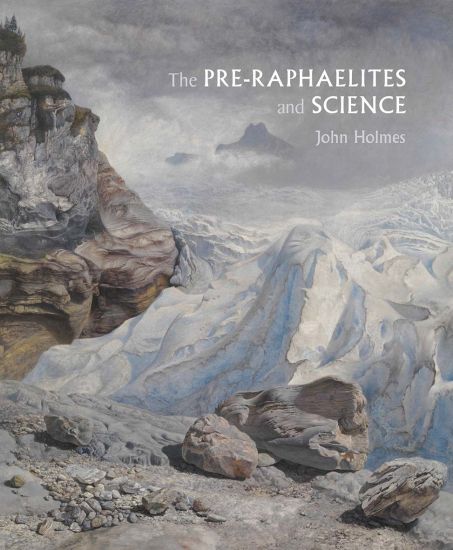
This revelatory book traces how the Pre-Raphaelite Brotherhood and their close associates put scientific principles into practice across their painting, poetry, sculpture, and architecture. In their manifesto, The Germ, the Pre-Raphaelites committed themselves to creating a new kind of art modeled on science, in which precise observation could lead to discoveries about nature and humanity. In Oxford and London, Victorian scientists and Pre-Raphaelite artists worked together to design and decorate natural history museums as temples to God’s creation. At the same time, journals like Nature and the Fortnightly Review combined natural science with Pre-Raphaelite art theory and poetry to find meaning and coherence within a worldview turned upside down by Darwin’s theory of evolution. Offering reinterpretations of well-known works by John Everett Millais, William Holman Hunt, Dante Gabriel Rossetti, Ford Madox Brown, and William Morris, this major revaluation of the popular Victorian movement also considers less-familiar artists who were no less central to the Pre-Raphaelite project. These include William Michael Rossetti, Walter Deverell, James Collinson, John and Rosa Brett, John Lucas Tupper, and the O’Shea brothers, along with the architects Benjamin Woodward and Alfred Waterhouse. Published in association with the Paul Mellon Centre for Studies in British Art
In 1870, Dante Gabriel Rossetti published the first version of his sonnet sequence The House of Life. The next thirty years saw the greatest flourishing of the sonnet sequence since the 1590s. John Holmes's carefully researched and eloquent study illuminates how leading sonneteers, including the Rossettis, John Addington Symonds, Wilfrid Blunt and Augusta Webster, and their early twentieth-century successors Rosa Newmarch and Rupert Brooke, addressed the urgent questions of selfhood, religious belief and doubt, and sexual and national identity which troubled late Victorian England. Drawing on the heritage of the sonnet sequence, the poetic self-portraits they created are unsurpassed in their subtlety, complexity, courage, and honesty.
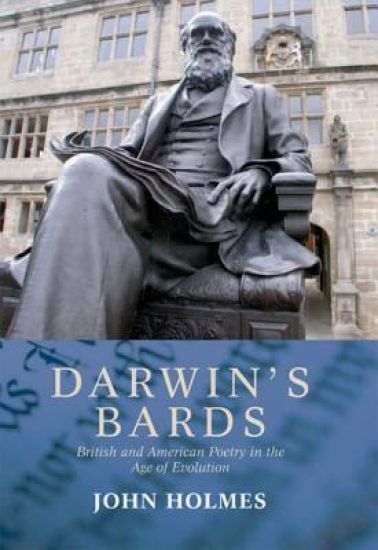
Darwin's Bards is the first comprehensive study of how poets have responded to the ideas of Charles Darwin in over fifty years. John Holmes argues that poetry can have a profound impact on how we think and feel about the Darwinian condition. Is a Darwinian universe necessarily a godless one? If not, what might Darwinism tell us about the nature of God? Is Darwinism compatible with immortality, and if not, how can we face our own deaths or the loss of those we love? What is our own place in the Darwinian universe, and our ecological role here on earth? How does our kinship with other animals affect how we see them? How does the fact that we are animals ourselves alter how we think about our own desires, love and sexual morality? All told, is life in a Darwinian universe grounds for celebration or despair? Holmes explores the ways in which some of the most perceptive and powerful British and American poets of the last hundred-and-fifty years have grappled with these questions, from Alfred Tennyson, Robert Browning and Thomas Hardy, through Robert Frost and Edna St Vincent Millay, to Ted Hughes, Thom Gunn, Amy Clampitt and Edwin Morgan. Reading their poetry, we too can experience what it can mean to live in a Darwinian world. Written in an accessible and engaging style, and aimed at scientists, theologians, philosophers and ecologists as well as poets, critics and students of literature, Darwin's Bards is a timely intervention into the heated debates over Darwin's legacy for religion, ecology and the arts.
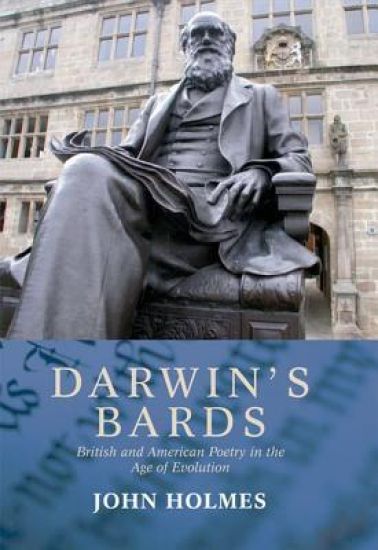
This is a comprehensive study of Darwin's Legacy for relegion, ecology and the arts. In Darwin's Bards John Holmes argues that poetry can have a profound impact on how we think and feel about the human condition in a Darwinian world. Including over 50 complete poems and substantial extracts from several more, Holmes shows how poets from Tennyson and Browning, through Hardy and Frost, to Ted Hughes, Pattiann Rogers and Edwin Morgan have responded to the discovery of evolution. Written for scientists, philosophers and ecologists, as well as poets, critics and students of literature, Darwin's Bards is a timely intervention into the heated debates over Darwin's legacy for religion, ecology and the arts. The book will appeal to readers for its discussion of the existential implications of Darwinism, for its close readings of poetry, and for the reprinted poems themselves.
Dante Gabriel Rossetti and the Late Victorian Sonnet Sequence
John Holmes
Ashgate Publishing Limited
2005
sidottu
In 1870, Dante Gabriel Rossetti published the first version of his sonnet sequence The House of Life. The next thirty years saw the greatest flourishing of the sonnet sequence since the 1590s. John Holmes's carefully researched and eloquent study illuminates how leading sonneteers, including the Rossettis, John Addington Symonds, Wilfrid Blunt and Augusta Webster, and their early twentieth-century successors Rosa Newmarch and Rupert Brooke, addressed the urgent questions of selfhood, religious belief and doubt, and sexual and national identity which troubled late Victorian England. Drawing on the heritage of the sonnet sequence, the poetic self-portraits they created are unsurpassed in their subtlety, complexity, courage, and honesty.
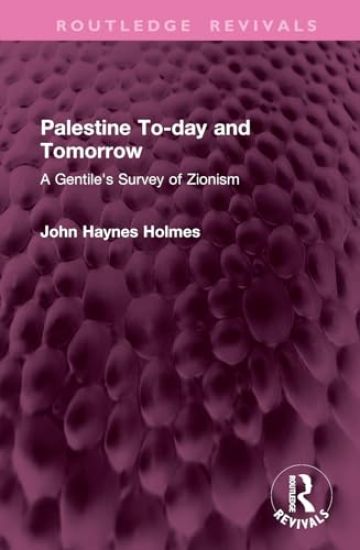
First published in 1930, Palestine To-day and Tomorrow provides a comprehensive overview of John Haynes Holmes’s experiences in Palestine. Chapter one is a running account, written on the spot, of his experiences in Palestine. Chapter two presents a brief statement of the facts and forces in Jewish history culminating in Zionism, is intended primarily for readers who may not be familiar with them. Chapter three is intended to be a careful and rather elaborate presentation of the difficulties and dangers which beset the path of Zionism in Palestine. Chapter four is an account of what has been done by the Jews in Palestine during a period of fifty years. And finally chapter five, in many ways the most important in the book is a discussion of the ideas and ideals of Zionism as these have appeared again and again in author’s presentation of the more practical aspects of the movement. This book is an important historical reference work to understand the history of the Arab - Jewish situation and the question of the English mandate.
![The Grammarian's Geography and Astronomy Ancient and Modern, Exemplified in the Use of the Globes Terraqueous and C]lestial. ... in Two Parts. ... the Geographical Part Comprehending the Ancient and Modern Names](/covers/9781171000020.jpg)
![Catalogue of French Ambassadors to England [Extracted from the Gentleman's Magazine], Etc.](/covers/9781241419851.jpg)
Catalogue of French Ambassadors to England [Extracted from the Gentleman's Magazine], Etc.
John Holmes
British Library, Historical Print Editions
2011
pokkari
Title: Catalogue of French Ambassadors to England extracted from the Gentleman's Magazine], etc.Publisher: British Library, Historical Print EditionsThe British Library is the national library of the United Kingdom. It is one of the world's largest research libraries holding over 150 million items in all known languages and formats: books, journals, newspapers, sound recordings, patents, maps, stamps, prints and much more. Its collections include around 14 million books, along with substantial additional collections of manuscripts and historical items dating back as far as 300 BC.The GENERAL HISTORICAL collection includes books from the British Library digitised by Microsoft. This varied collection includes material that gives readers a 19th century view of the world. Topics include health, education, economics, agriculture, environment, technology, culture, politics, labour and industry, mining, penal policy, and social order. ++++The below data was compiled from various identification fields in the bibliographic record of this title. This data is provided as an additional tool in helping to insure edition identification: ++++ British Library Holmes, John; 1840. 8 . 807.d.17.
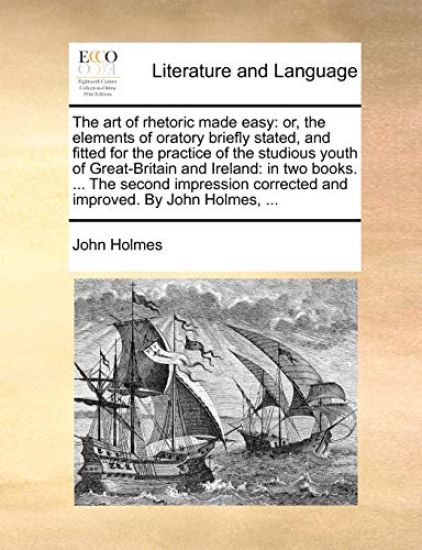
The 18th century was a wealth of knowledge, exploration and rapidly growing technology and expanding record-keeping made possible by advances in the printing press. In its determination to preserve the century of revolution, Gale initiated a revolution of its own: digitization of epic proportions to preserve these invaluable works in the largest archive of its kind. Now for the first time these high-quality digital copies of original 18th century manuscripts are available in print, making them highly accessible to libraries, undergraduate students, and independent scholars.Western literary study flows out of eighteenth-century works by Alexander Pope, Daniel Defoe, Henry Fielding, Frances Burney, Denis Diderot, Johann Gottfried Herder, Johann Wolfgang von Goethe, and others. Experience the birth of the modern novel, or compare the development of language using dictionaries and grammar discourses. ++++The below data was compiled from various identification fields in the bibliographic record of this title. This data is provided as an additional tool in helping to insure edition identification: ++++British LibraryT090583The second book has its own titlepage: 'The art of rhetoric made easy: or, the elements of oratory. Book II. .. ' London: re-printed in the year M.DCC.LV., and its own pagination and register. With a final advertisement leaf.London: printed for and sold by C. Hitch, and L. Hawes, and the booksellers in Cambridge, Norwich and Dublin, 1755. 18],96;71, 7]p.; 8
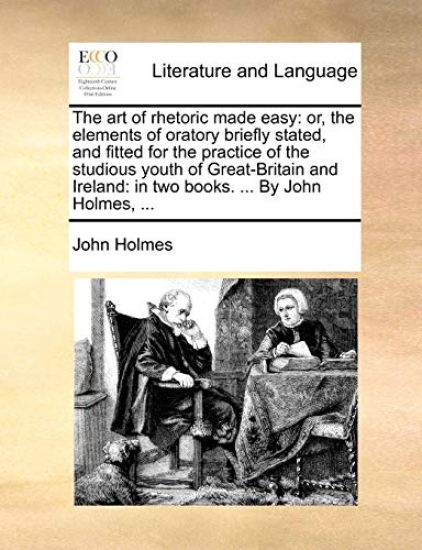
The 18th century was a wealth of knowledge, exploration and rapidly growing technology and expanding record-keeping made possible by advances in the printing press. In its determination to preserve the century of revolution, Gale initiated a revolution of its own: digitization of epic proportions to preserve these invaluable works in the largest archive of its kind. Now for the first time these high-quality digital copies of original 18th century manuscripts are available in print, making them highly accessible to libraries, undergraduate students, and independent scholars.Western literary study flows out of eighteenth-century works by Alexander Pope, Daniel Defoe, Henry Fielding, Frances Burney, Denis Diderot, Johann Gottfried Herder, Johann Wolfgang von Goethe, and others. Experience the birth of the modern novel, or compare the development of language using dictionaries and grammar discourses. ++++The below data was compiled from various identification fields in the bibliographic record of this title. This data is provided as an additional tool in helping to insure edition identification: ++++British LibraryT090627Titlepage in red and black. Dedication of Book I dated "Die ante calendas Octobres, MCCXXXVIII." The second book has a separate titlepage: 'The art of rhetoric made easy: or, the elements of oratory. Book II. .. ', London, "printed in the year," 1738, aLondon: printed by A. Parker; and sold by A. Bettesworth and C. Hitch, and the booksellers in Cambridge, Norwich, and Dublin, 1738-39. 18],96;71, 7]p.; 8